
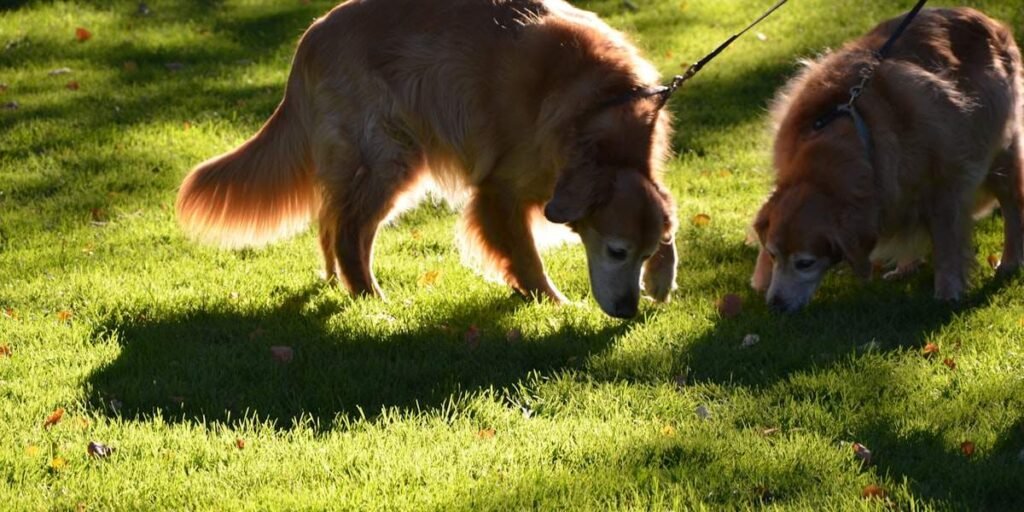

Most dogs eat grass because they like it, and the habit is normal, common, and usually harmless. The idea that a dog eats grass to make itself vomit is mostly folklore: in the largest survey of the behavior, fewer than one in four grass-eating dogs vomited afterward and only around one in ten seemed unwell beforehand. Grass is fiber, texture, and something to do, and dogs have eaten plants since before they were dogs.
The version worth paying attention to is narrow: sudden, frantic gulping paired with other symptoms. Everything else is a dog being a dog on a lawn.
The Vomiting Myth, and the Numbers Behind It
The self-medication story goes: dog feels sick, eats grass, throws up, feels better. It falls apart on the data. Per VCA Animal Hospitals’ review of the research, fewer than 25% of dogs vomit after eating grass and only about 10% show any sign of illness before they graze; the great majority are healthy going in and healthy coming out. The underlying survey, published in Applied Animal Behaviour Science by a University of California, Davis team, asked over a thousand owners and found plant-eating was so common and so rarely tied to illness that the authors treated it as normal canine behavior, not a symptom.
Vomiting after grass does happen, and when it does, it is more likely the grass tickling the throat on the way down than a planned purge. Correlation runs the wrong way for the folklore: the grass causes the vomit more often than the nausea causes the grass.
The Real Reasons Dogs Graze
Fiber and roughage
Dogs are not obligate carnivores. Wild canids eat the stomach contents of prey, plants, and fruit, and stool studies cited by VCA put grass in the diet of somewhere between 11% and 47% of wolves. Grass is roughage; a dog on a diet light on fiber may graze more, and switching to a higher-fiber food sometimes reduces it. Sometimes. Plenty of dogs on excellent diets graze anyway.
Taste and texture
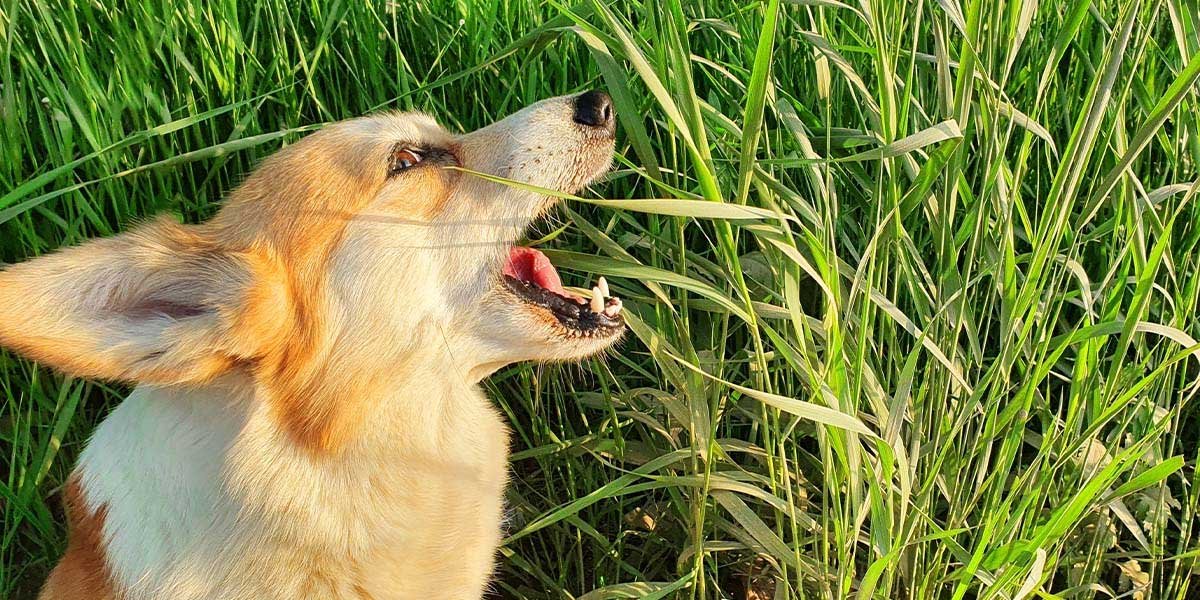
Spring grass is sweet, wet, and satisfyingly tearable, and many dogs prefer specific patches: the tall stuff at the fence line, the fresh growth after rain. A dog that grazes selectively, chewing slowly, is eating grass the way you eat celery, because it is there and it feels good.
Boredom, habit, and mild anxiety
Grazing fills time. Dogs left alone in yards graze more, dogs on under-stimulating walks graze more, and some dogs graze as a displacement behavior when mildly stressed, the way a person picks at a label. If the grass-eating spikes when your dog is bored or on edge, the fix is exercise and enrichment, not a diet change.
Puppies and young dogs
Young dogs graze most. The UC Davis survey found plant-eating declined with age, which fits a picture of exploration and mouth-everything curiosity more than illness. A puppy eating grass on every walk is running the standard puppy program.
Normal Grazing vs. a Warning Sign
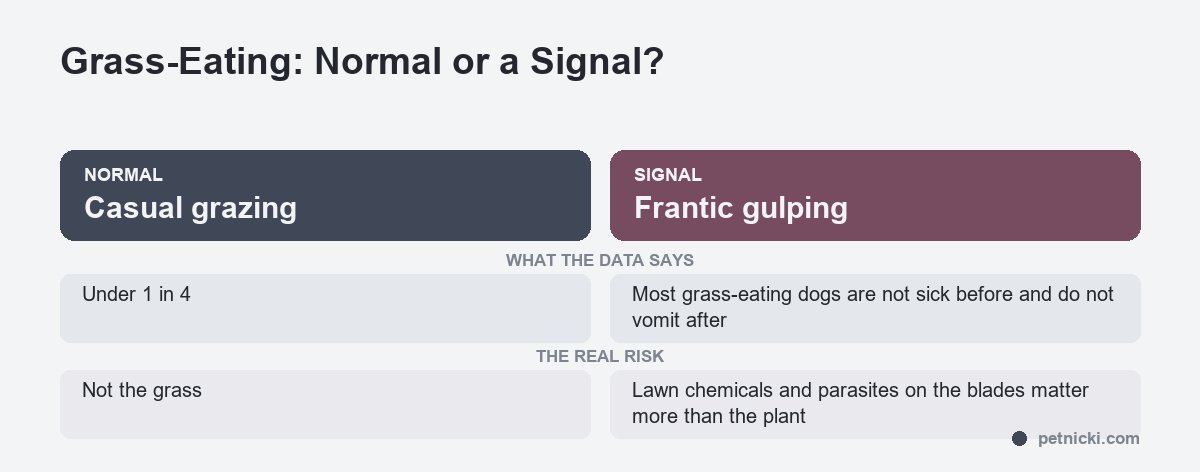
Two patterns are worth acting on. The first is a sudden change: a dog that never ate grass and now bolts it urgently, or a dog whose casual grazing turns frantic. The second is grass-eating that arrives with company: repeated vomiting, diarrhea, lethargy, drooling, or a dog that stops eating its actual food. Either of those points at nausea, a stomach upset, or occasionally something stuck, and it is the vet’s call, not the lawn’s. On its own, without those signals, grass-eating does not mean anything is wrong.
Bile-colored vomit after grazing on an empty stomach in the morning is its own common pattern; our guide on dogs vomiting yellow foam covers when that one matters.
The Actual Risk Is Not the Grass
Grass itself does not hurt a healthy dog. What can hurt is what is on it: lawn herbicides, pesticides, and fertilizers, which are the reason vets flinch at grazing on treated lawns, plus parasites. Grass at ground level is where other animals leave feces, and roundworm and hookworm eggs travel on blades and soil, so a habitual grazer earns a regular deworming schedule. Some ornamental plants along the lawn edge are toxic outright; the grass is safe, the lily beside it may not be.
Practical rule: let your dog graze your own untreated lawn freely, steer it off unknown lawns and parks that post chemical-treatment signs, and keep the parasite prevention current.
Should You Stop Your Dog Eating Grass?
Not for its own sake. Managing a harmless habit costs more than it saves, and yanking a dog off every patch turns walks into a fight. If the grazing is compulsive, tied to boredom, or aimed at treated lawns, address the cause: more exercise, more chewing outlets, a fiber bump in the diet if the food is low, and a route that avoids the sprayed lawns. If it comes with the warning signs above, address the symptom with a vet. Otherwise, let the dog have its salad; the same instinct that has it licking your hands for salt has it tasting the yard.
FAQ: Dogs Eating Grass
What should I give my dog if they keep eating grass?
Try a higher-fiber diet or a spoon of plain canned pumpkin, plus more exercise and chew toys, since fiber shortfall and boredom are the two most fixable drivers. If the grazing stays constant, it is likely just preference and needs no fix at all.
What is a dog lacking when he eats grass?
Usually nothing. The nutritional-deficiency theory is not supported by the survey data; most grazers are on complete diets. Fiber is the one exception worth checking, and even that explains only a share of dogs.
Should you let your dog eat grass if they want to?
Yes, on untreated grass with parasite prevention up to date. Steer them off chemically treated lawns and stop them if the eating turns frantic or comes with vomiting and lethargy; casual grazing needs no intervention.
Does my dog eating grass mean anything?
By itself, no; it is one of the most common dog behaviors and rarely tied to illness. A sudden change in the pattern, or grass-eating alongside vomiting, diarrhea, or appetite loss, is what carries meaning and deserves a vet visit.