
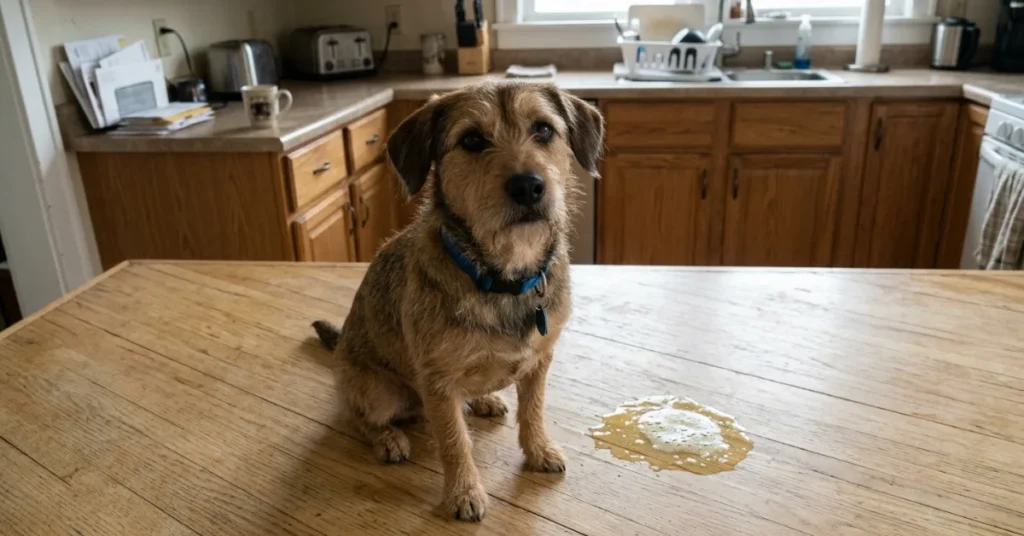

Dog vomiting yellow foam is most often bile, a digestive fluid made by the liver, and PetMD says a single episode in a dog that is otherwise eating and acting normally can be watched at home. If your dog vomits more than once in 24 hours, or shows any other symptom, PetMD says to see the vet the same day.
That covers most mornings, but yellow vomit has less common causes too. Below are what bile is, why an empty stomach brings it up, the other causes the vet pages list, the signs that mean ring now and what the sources say about home care. This is general information, not a diagnosis. If you are unsure how urgent it is, our pet symptom checker sorts symptoms into emergency, same-day vet and watch-at-home.
What Dog Vomiting Yellow Foam Actually Is
PetMD says a dog’s yellow vomit is commonly bile, which the liver and gallbladder produce to break down fats in the small intestine. Bile is very alkaline, so it also neutralises acidic stomach contents. When it leaks into the stomach, it reacts with stomach acid, and your dog may vomit.
PetMD describes bile as typically yellow or greenish and usually odourless. It can be full of mucus, bubbly or foamy, and often comes in one pile or a couple of small ones, sometimes mixed with water.
Why It Often Happens in the Morning
PetMD describes bilious vomiting syndrome (BVS) as bringing up bile or froth, but not food, after going without a meal for a while, most often early in the morning. It’s thought that fluid from the intestine flows backwards into the stomach and irritates it. Dogs may lick their lips, drool, pant or lose interest in food first.
BVS isn’t typically life-threatening, PetMD says, but a vet still needs to rule out other causes — and only an exam can do that. If a blood panel and exam point to BVS, a late-evening meal frequently relieves it, possibly because food defends against refluxed bile or helps the stomach move. Antacids or drugs that increase stomach motility are used if feeding changes do not work.
Owners on Reddit describe the same pattern. Two replies from different threads, in their own words:
“Has nothing to do with being a golden but a lot of dogs have gastric upset when they haven’t eaten in awhile. Try a small meal at night before bed.”
– r/DogHealth (11 upvotes)
“Can also happen after sleep and going too long on an empty stomach. It builds up and needs to go somewhere. Small amount of food before sleep of shorty after waking helps my dog not have this happen.”
– r/AskDogOwners (5 upvotes)
Those are owners, not vets, and two threads are a small sample. They line up with PetMD on the bedtime meal, but only a vet can say whether that is what is going on.
Other Causes Vets List
PetMD and VCA name a longer set of possible causes behind yellow vomit, from mild to serious. Which one applies depends on what else your dog is doing, so the red-flag section below matters more than the cause list itself.
| Possible cause | What the source says |
|---|---|
| Gut inflammation, ulcers, infections, parasites, certain cancers | PetMD: the underlying condition needs to be diagnosed and treated by a vet |
| Pancreatitis | PetMD: vomiting yellow with intense abdominal pain and diarrhoea; usually three to five days after fatty food, as early as 24 hours; about 90% of cases have no cause found |
| Addison’s disease | PetMD: an adrenal disorder often marked by vomiting |
| Intestinal blockage | PetMD: bile with extreme lack of energy and severe abdominal pain may mean a blockage, a medical emergency |
| Food allergy | PetMD: vomiting may include bile, often after a diet switch; a strict 12-week diet trial may be needed |
| Dietary indiscretion, toxins, liver or kidney disease, inflammatory bowel disease | VCA: listed among the minor and serious causes of vomiting |
A dog that has eaten something it shouldn’t, or may have swallowed an object, is in a different category from a dog with morning bile. VCA says to seek care immediately if you suspect something got stuck or is toxic.
Signs That Mean Call the Vet
The sources agree more here than anywhere else: how often your dog vomits and what comes with it decide the urgency, not the colour. VCA’s page on vomiting, PetMD and the Merck Veterinary Manual each draw the line a little differently.
| Source | See a vet when |
|---|---|
| PetMD (reviewed by Barri J. Morrison, DVM, updated June 2024) | More than once in 24 hours, or with other symptoms: same day. Bile that keeps coming back, even once a morning over a period of time: a visit is needed. |
| VCA Animal Hospitals | Immediately with fever, lethargy, loss of appetite, abdominal pain, diarrhoea, dehydration, blood in the vomit, or a suspected stuck or toxic item. If your dog otherwise seems well but vomiting continues for more than one to two days. |
| Merck Veterinary Manual (Craig Webb, DVM, Colorado State University, updated September 2024) | Vomiting more often than once or twice daily, or with blood, abdominal pain, depression, dehydration, weakness, fever or weight loss, needs a more detailed examination. |
Blood, pain, no energy and repeated vomiting turn up on every list. If any of those fit, the home care below stops being the plan.
Home Care for a Single Mild Episode
For one episode in a dog that is otherwise bright and eating, PetMD says it’s fine to keep monitoring at home. If the vomit comes in the morning, a small late-evening meal is the practical step. Jot down when it happens, how often and what else changes. That note helps if you end up calling the vet.
Sources differ on what to do right after vomiting. PetMD lists fasting for 12 to 24 hours, probiotics, ice cubes and canned or powdered pumpkin as ways to settle a stomach, always after checking with your vet. The Merck manual says food is generally withheld for 24 hours but water shouldn’t be withheld unless a dog is getting supplemental fluids, and VCA says water should be freely available. So ask before you fast a dog, especially if the vomiting continues.
For what’s worth offering once your vet agrees, our page on what to give a dog for an upset stomach goes through the options. If the real worry is that your dog won’t eat at all, see why a dog stops eating.
What the Vet May Do
VCA says that if your dog isn’t lethargic and has no other signs, the cause may not be serious, and the vet will run a minimal number of tests, mainly to rule out parasites and infections. With more signs, tests can include blood and urine tests, X-rays, ultrasound and sometimes endoscopic biopsies.
For minor cases, VCA lists anti-nausea drugs such as maropitant (Cerenia) and antacids such as famotidine and omeprazole. Dosing is the vet’s call, so the medicine cabinet shouldn’t be your first move.
The Short Version
Yellow foam is usually bile, and one morning episode in a bright, eating dog is the common version. Repeat vomiting, blood, pain, no energy or a swallowed object turn it into a same-day call. When in doubt, ring your vet.
Sources: PetMD, “Why Is My Dog Throwing Up Yellow? Is It an Emergency?” (reviewed by Barri J. Morrison, DVM, updated 25 June 2024); VCA Animal Hospitals, “Vomiting in Dogs”; Merck Veterinary Manual, “Vomiting in Dogs” (Craig B. Webb, DVM, updated September 2024). All read on 8 November 2026.