







A kitten that suddenly stops eating, hides under the couch, or cries out when picked up can turn a normal afternoon into a crisis fast. When a vet says the word surgery, most owners feel a mix of fear and confusion about what happens next. Knowing what causes these emergencies, how treatment actually works, and what recovery looks like can make the whole experience far less overwhelming.
Kitten emergency surgery refers to any operation performed urgently to address a sudden, life-threatening problem rather than a planned procedure. These surgeries usually deal with blocked intestines, ruptured organs, traumatic injuries, or birth defects that become dangerous as the kitten grows. Because kittens are small and have very limited energy reserves, problems that an adult cat might handle for a day or two can turn critical within hours. Vets focus first on stabilizing the kitten, then move to surgery once it’s safe to proceed.
Why Kittens End Up Needing Emergency Surgery
Kittens explore the world with their mouths and paws, and that curiosity is often what lands them on an operating table. Their small bodies also mean minor problems escalate much faster than they would in an adult cat.
Common reasons kittens need emergency surgery include:
- Swallowing string, hair ties, ribbon, or small toy parts that block the intestines
- Falling from balconies, stairs, or tall furniture, causing fractures or internal injuries
- Umbilical or inguinal hernias that trap tissue and cut off blood flow
- Deep bite wounds from another animal
- Urinary blockages, which show up more often in young male kittens
- Birth defects affecting the digestive or urinary tract that surface after weaning
Some of these situations build up over days, while others, like a fall or a swallowed object, can go from fine to critical within hours. That unpredictability is exactly why emergency vet clinics stay open around the clock.
Warning Signs That Point To A Surgical Emergency
Most emergencies don’t come out of nowhere. There are usually signals beforehand, even if they’re easy to miss in a young, active kitten.
Pay attention to:
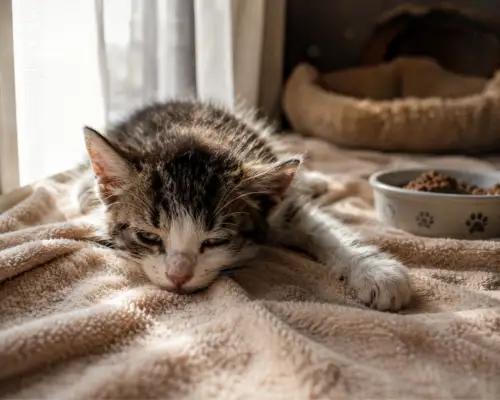
- Sudden lethargy or refusal to play
- A hard, swollen, or tender belly
- Pale or white gums instead of healthy pink
- Straining in the litter box without producing urine or stool
- Crying out when touched or picked up
Repeated vomiting is another sign worth taking seriously, especially if your kitten can’t keep food down or brings it back up shortly after eating. Our guide on why cats throw up food explains the difference between occasional regurgitation and vomiting that points to something more serious, like a blockage.
If a kitten shows several of these signs together, a same-day vet visit is the safer choice over waiting to see if things improve on their own.
How Vets Decide Whether Surgery Is Necessary
Not every kitten that comes in vomiting or acting off needs to go straight into surgery. Vets weigh a few factors before making that call, and understanding this process explains why some kittens go home with medication while others are prepped for the operating room within the hour.
- How severe and how long the symptoms have lasted: a single episode of vomiting may just be monitored, while repeated vomiting with a painful belly usually means imaging right away
- What the X-rays or ultrasound show: a clear obstruction, abnormal gas pattern, or fluid in the abdomen often confirms surgery is needed
- How the kitten responds to initial treatment: if fluids, pain control, and anti-nausea medication don’t stabilize things within a few hours, surgery becomes more likely
- The type of object involved: linear items like string or thread are treated more urgently, since they can cut through the intestinal wall the longer they stay in place
This step-by-step evaluation lets vets avoid surgery when it isn’t needed, while still moving fast when waiting would put the kitten at risk.
What Happens During The Treatment Process
Once a kitten arrives in critical condition, treatment starts well before anyone discusses surgery. The first priority is stabilizing the body so it can handle anesthesia safely.
This stage usually involves:
- IV fluids to correct dehydration and support blood pressure
- Pain relief suited to the kitten’s size and condition
- Bloodwork to check organ function and blood sugar levels
- X-rays or an ultrasound to locate the source of the problem
Once the kitten is stable, the surgical team moves forward. The exact procedure depends on what’s found: removing a swallowed object, repairing a hernia, setting a fracture, or addressing internal bleeding.
Anesthesia Risks in Young Kittens
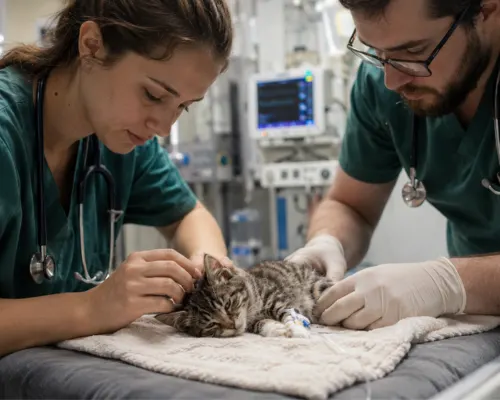
Anesthesia carries extra weight in kittens younger than a few months old, mainly because their bodies regulate temperature and blood sugar very differently from adult cats. Blood sugar is also the reason a kitten this age eats little and often, which the feeding amounts for a 3 month old are built around.
- Body temperature drops fast during surgery, so warming pads and blankets run throughout the procedure
- Blood glucose is checked regularly since kittens have almost no fat reserves to draw on
- Drug doses are calculated precisely by weight and adjusted in real time
- Recovery happens under close supervision until the kitten is fully alert and able to maintain its own body heat
A skilled surgical team plans for all of this before the first incision, which is part of why pre-surgical bloodwork matters so much in young animals.
Recovery After Surgery: What To Expect At Home
Getting through surgery is a major milestone, but recovery is where most owners feel the most unsure. The first two weeks at home set the tone for healing.
- Keep the kitten in a small, quiet space away from other pets
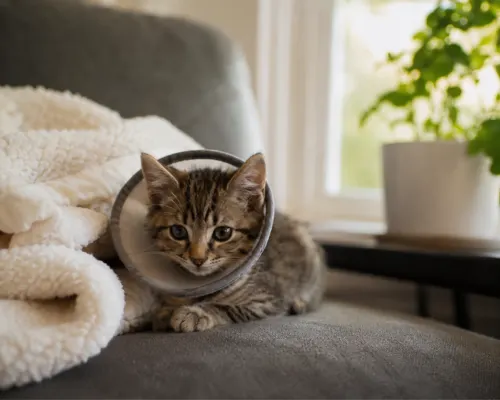
- Use an e-collar or recovery suit so the incision can’t be licked
- Check the incision daily for redness, swelling, or discharge
- Offer small, easily digestible meals once the kitten is fully awake and alert
- Limit jumping, climbing, and rough play for at least ten to fourteen days
Watch the kitten’s breathing closely during this period as well. Fast, shallow, or open-mouth breathing can point to pain, fluid buildup, or a lingering anesthesia effect, and our article on heavy breathing in cats explains what different breathing patterns can mean and when it’s time to call the vet again.
The Cost of Emergency Surgery And How Pet Insurance Helps
Emergency surgery costs vary a lot depending on what’s being treated and how complicated the case turns out to be. For something like an intestinal blockage caused by a swallowed object, surgery typically costs between $500 and $4,000, averaging close to $2,400, and the outlook depends heavily on whether the object is linear, since those cases carry a notably lower success rate around 63 percent. Fractures and hernia repairs tend to fall on the lower end if caught early, while complicated abdominal surgeries with extended hospitalization push costs toward the higher end. PetMD
For a broader breakdown of what emergency vet visits cost across different situations, our guide to emergency vet costs in the US covers typical price ranges by procedure and region, which can help you budget even before an emergency happens.
This is where pet insurance becomes worth a serious look. Treatment for sudden injuries, swallowed objects, or urinary blockages is exactly the kind of situation most policies are built to cover. Enrolling a kitten while it’s young and healthy usually means lower premiums and fewer exclusions down the road, since pre-existing conditions haven’t had a chance to appear yet.
Reducing The Risk of Future Emergencies
Not every emergency can be predicted, but several habits lower the odds significantly.
- Kitten-proof the home by removing string, rubber bands, hair ties, and small chewable items
- Block off balconies, open windows, and high furniture edges
- Schedule a vet check early on to catch hernias or birth defects before they worsen
- Spay or neuter at the age your vet recommends
Household hazards are one of the biggest contributors to kitten emergencies, and many of them hide in plain sight. The ASPCA’s overview of common feline hazards in the home covers items like certain houseplants and small objects that owners often don’t think twice about, and it’s a useful checklist when setting up a kitten-safe space.
Routine wellness visits also give your vet a chance to spot small issues, like a slow-growing hernia or early urinary changes, long before they turn into a midnight emergency. A kitten that’s used to regular check-ups tends to be calmer and easier to examine quickly if something does go wrong later.
Frequently Asked Questions
How much does kitten emergency surgery typically cost?
Costs depend heavily on the procedure, but most emergency surgeries fall somewhere between a few hundred and a few thousand dollars, with complicated cases costing more due to extended hospital stays and follow-up care.
How long does it take for a kitten to recover from surgery?
Most kittens recover from minor procedures within ten to fourteen days, while more involved surgeries, such as fracture repair, can take several weeks of restricted activity before a full return to normal.
Is anesthesia safe for very young kittens?
Yes, when performed by an experienced vet with proper monitoring, weight-based dosing, and warming support, anesthesia is generally safe even for small kittens, though the margin for error is smaller than in adult cats.
What’s the first thing I should do if I think my kitten needs emergency surgery?
Call your vet or the nearest emergency animal hospital right away and describe the symptoms clearly. Don’t give food, water, or medication unless a vet tells you to, since this can complicate anesthesia and treatment.
Can a kitten eat normally again after surgery?
Most kittens can eat small amounts of soft, easily digestible food a few hours after waking up from anesthesia, with a gradual return to their regular diet over the following days.
Should I get pet insurance before bringing a kitten home?
Getting insurance early, ideally before any symptoms or diagnoses appear, gives the broadest coverage and avoids exclusions for conditions that might develop later.
Wrapping Up
Emergency surgery in a kitten is frightening, but most kittens recover well when problems are caught early and treatment begins without delay. Knowing the warning signs, understanding how vets decide on surgery, and thinking about pet insurance ahead of time all make a real difference if an emergency ever happens. With the right care and a little patience, most kittens go on to live full, healthy lives afterward.
