

You clean it up, wonder if your cat is okay, and then it happens again the next morning. A cat throwing up food is one of the most common concerns cat owners bring to the vet, and it can mean very different things depending on how often it happens and what else you notice. Diet is the usual first suspect, down to single ingredients such as raw egg yolk.
This guide covers the real reasons behind cat vomiting, what each situation signals, and when to act fast.
What It Means When a Cat Throws Up Food
Cat throwing up food is a sign that something interrupted the normal digestive process. The cause might be as simple as eating too fast, or as serious as kidney disease or inflammatory bowel disease. Vomiting once a month or less is generally not alarming. Vomiting more than twice a month, or vomiting that comes with weight loss, lethargy, or blood always needs a vet visit.
Vomiting and Regurgitation Are Not the same thing.
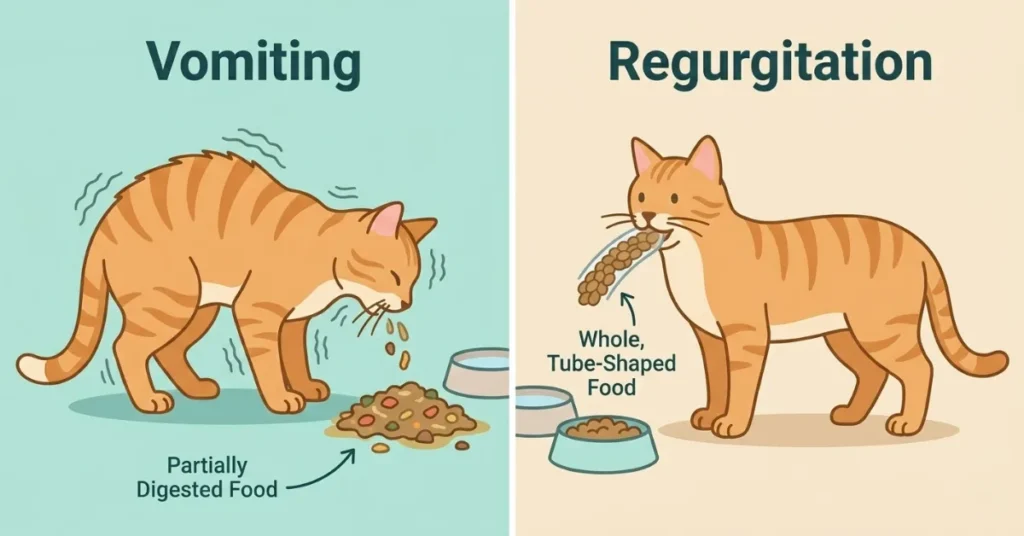
When a cat vomits, you will see heaving, abdominal contractions, and retching before anything comes up. The material looks soft or discolored, sometimes mixed with yellow bile, because it has started to digest.
Regurgitation is completely different. There is no warning, no effort. Food slides out tube-shaped and whole because it never reached the stomach. It usually happens within minutes of eating.
Telling your vet which one you saw will help them reach the right diagnosis faster.
Why Is My Cat Throwing Up Food? 6 Real Causes
These are the reasons that explain most cases, written so you can match them to what you are actually seeing.
1. Your Cat Is Eating Too Fast
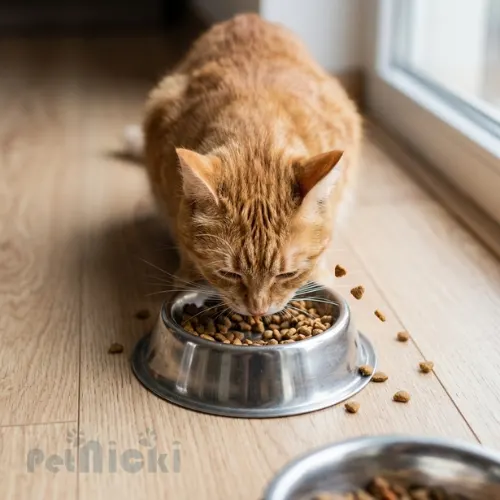
This is the most common cause of regurgitation. When a cat eats at full speed, unchewed food goes down before the esophagus is ready and comes right back up within minutes of the meal.
This happens often in multi-cat homes where food competition creates mealtime anxiety. A slow feeder bowl, a flat lick mat, or splitting one meal into two smaller ones throughout the day usually solves it.
2. Hairballs Building Up in the Stomach
Every time a cat grooms, the rough tongue pulls in loose hair that collects in the stomach. Most passes through naturally, but when too much builds up it forms a hairball the stomach has to expel. Food often comes up with it.
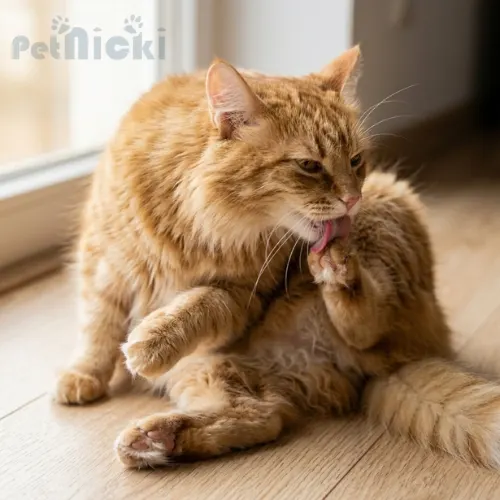
Once or twice a month is within normal range. More frequent than that, especially in long-haired breeds, means the cat likely needs dietary support. Regular brushing and a hairball-control diet can both help.
3. Switching Food Too Quickly
A cat’s digestive system is tuned to whatever it has been eating for a while. Change the food abruptly and the gut cannot handle the new ingredients. Nausea and vomiting follow within days.
The right approach is transitioning over 10 days. Start with 80 percent old food and 20 percent new, then shift the ratio slowly until the switch is complete.
4. A Food Ingredient the Cat Cannot Tolerate
Some cats develop intolerances or true allergies to specific proteins. Beef, chicken, fish, and dairy are the most common triggers. Unlike speed-related regurgitation, this vomiting happens after every meal regardless of how fast the cat eats, and it does not improve on its own.
Other signs include loose stool and skin irritation around the face or neck. A vet-guided elimination diet is the most reliable way to identify the problem ingredient.
5. Stress Affecting the Gut
The gut and brain are directly connected, and cats are more stress-sensitive than most owners realize. A house move, a new pet, a change in routine, or even rearranged furniture can push a sensitive cat into digestive distress.
Stress-related vomiting comes and goes. It often worsens during the stressful period and settles once the cat adjusts. If your cat is also hiding more or grooming excessively, anxiety is very likely part of the picture. This article on heavy breathing in cats explains how stress affects feline physiology in useful detail.
6. Swallowing Something That Should Not Be Eaten
String, ribbon, rubber bands, hair ties, and small plastic pieces are all common causes. Grass eating is usually harmless and the body clears it with a quick vomit. The real danger is a partial or complete intestinal blockage from a solid object. If your cat vomits repeatedly and cannot keep water down, or if you see a string hanging from the mouth or rear, go to a vet immediately.
When Vomiting Points to a Medical Condition
If none of the causes above fit and vomiting has continued for more than a week, a health condition is likely involved.
Inflammatory Bowel Disease: Chronic intestinal inflammation causes regular vomiting, gradual weight loss, and loose stool. Managed with a specialized diet and low-dose steroids.
Chronic Kidney Disease: Very common in older cats. As kidney function drops, waste builds up in the blood and triggers nausea. Also causes increased thirst and a dull coat. Annual bloodwork catches this early.
Hyperthyroidism: An overactive thyroid speeds up digestion. Affected cats eat well but lose weight steadily and become restless. Highly treatable once confirmed.
Pancreatitis: Causes sudden repeated vomiting, abdominal pain, and low energy. Cats often stop eating and hide. Requires veterinary care.
According to VCA Animal Hospitals, chronic vomiting in cats almost always has an identifiable cause, and most conditions respond well to treatment once properly diagnosed.
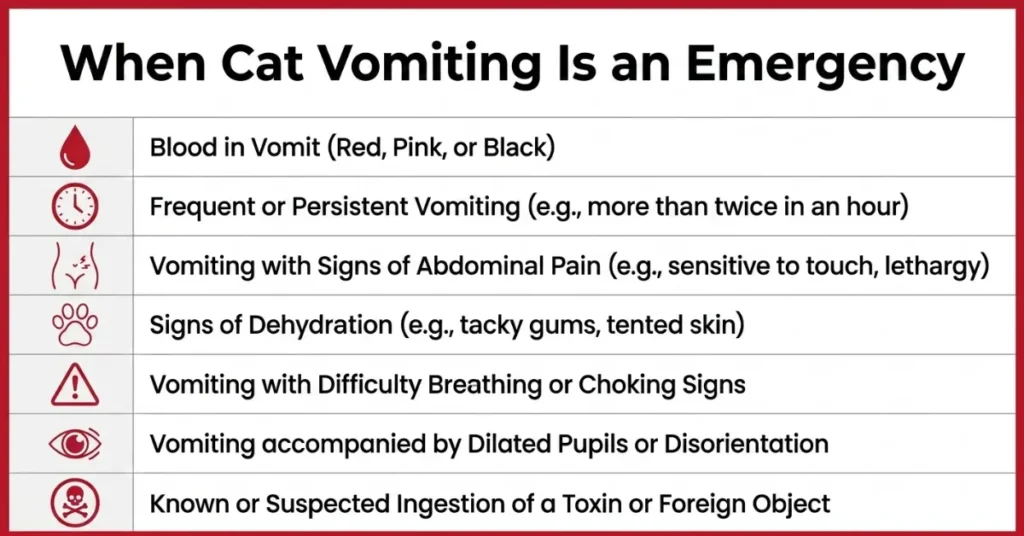
Signs That Mean Go to the Vet Now
Do not wait if your cat shows any of these:
- Vomiting more than three times in one day
- Blood in the vomit, bright red or dark brown like coffee grounds
- No food or water taken in for more than 24 hours
- A bloated or painful belly
- Gums that are pale, white, or grey instead of pink
- Extreme weakness or difficulty standing
- Known or suspected ingestion of a foreign object or toxic substance
Frequently Asked Questions
Why does my cat throw up right after eating every day? Daily post-meal vomiting is not normal. Fast eating is one cause, but when it happens every single day it more often points to a food intolerance, esophageal problem, or a condition like IBD. See a vet.
My cat vomits but acts totally fine. Should I worry? Cats are good at hiding how they feel. Once or twice a month without other symptoms is usually low concern. More frequent than that should always be checked, even when your cat seems healthy.
What does yellow vomit mean in cats? Yellow liquid is bile from an empty stomach. The cat is likely going too long between meals. Try feeding a small portion before bedtime and again first thing in the morning.
Can stress cause a cat to throw up? Yes. Stress disrupts normal gut function through the gut-brain connection. Environmental changes are a common trigger. Consistent schedules and calm feeding spots both reduce stress-related symptoms.
When is cat vomiting a genuine emergency? Go immediately if your cat vomits blood, has a swollen or hard belly, shows severe weakness, or you suspect it swallowed something toxic or a physical object like string or plastic.
Final Thoughts
A cat throwing up food once in a while is something most owners face. Eating too fast, hairballs, a diet switch, or a stressful stretch at home are the most common causes. Medical conditions like IBD, kidney disease, and hyperthyroidism are less common but important to rule out when the pattern does not stop.
Watch carefully, note the pattern, and trust your instincts. If something feels off, a vet visit is always the right call.
For more honest, vet-informed guides on cat health and behavior, explore the full resource library at Petnicki.