
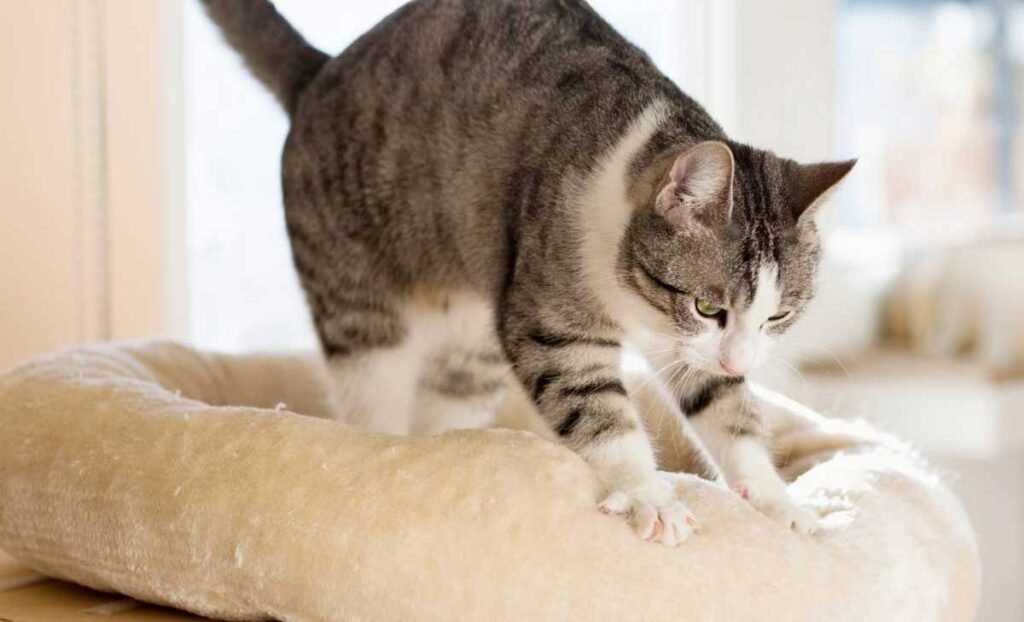

The biting and the kneading are two halves of one nursing reflex. A kitten pushes at his mother with his front paws to start the milk flowing and keeps his mouth clamped on her the whole time. Your adult cat still has both halves wired together, so when the paws start working, the mouth goes looking for something to hold.
The blanket is whatever was nearest. That is the entire mystery, and for most cats it needs no fixing at all.
There is one version of this that does need attention, and it is not the wet patch on your duvet. It is the cat who swallows what he chews.
Why the biting and kneading arrive together
Kneading and suckling were never separate behaviors. They fire as one sequence during nursing, and cats who keep the habit into adulthood usually keep both parts. This is why you rarely see a cat bite a blanket while standing still, and why the paws almost always start first.
What triggers the sequence is comfort. Most owners notice it at the same point every evening, when the cat settles on a lap or a folded throw and something in him drops down a gear. If you want the fuller picture of the paw half of this, we covered why cats make biscuits separately.
Early weaning does raise the odds. A review of separation anxiety in the Journal of the American Veterinary Medical Association connects it to persistent suckling and kneading in adult cats. It is not a requirement, though. The TheCatSite thread that ranks for this question opens with an owner who kept the mother cat and did not fully wean the litter until about 16 weeks, and the habit turned up anyway. Further down the same thread, another owner describes the pattern most people will recognize:
My male cat does suck on a blanket and kneed up and down though. He does it every night. He’s 3 years old too.
Every night, on a schedule, at three years old. That is the shape of the normal version.
The difference is whether the fabric goes down
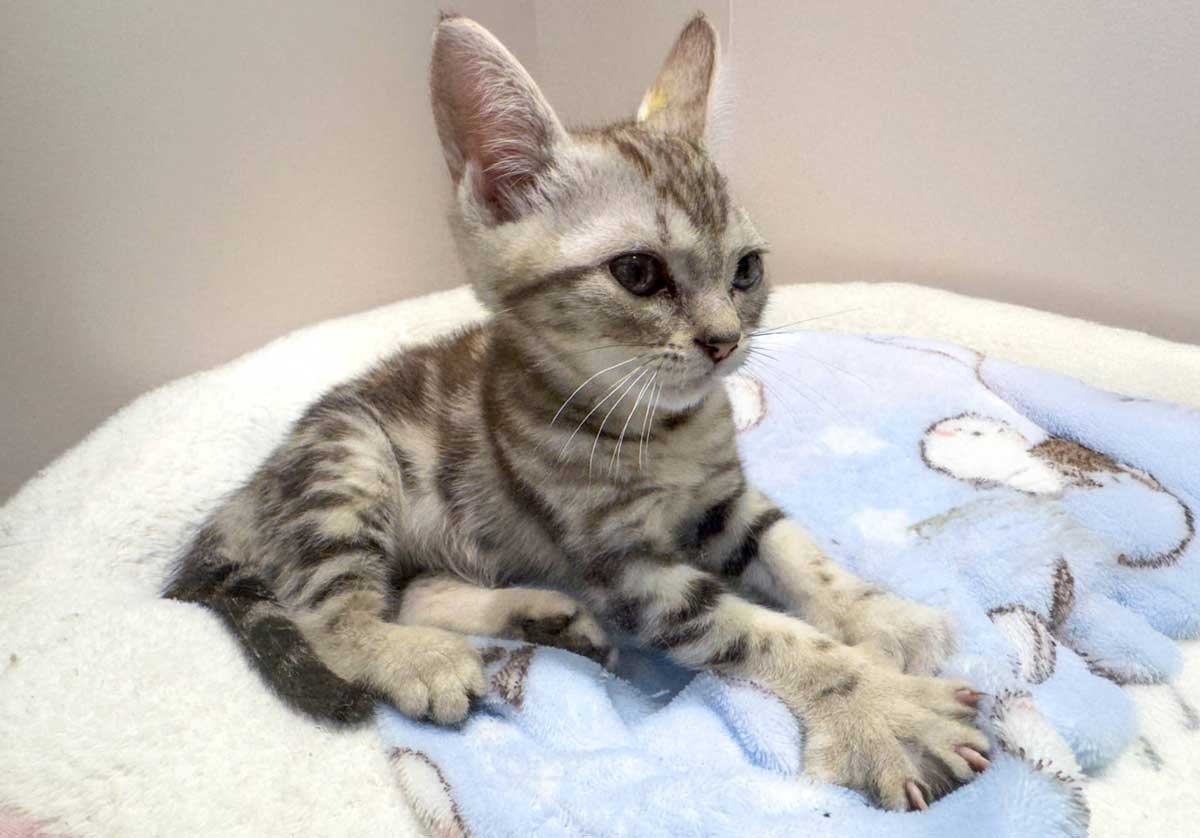
Comfort suckling leaves the blanket wet; pica leaves it damaged. A cat soothing himself mouths a fold and sucks, and the fabric stays where it is. A cat with pica holds the material, tilts his head to one side, and grinds it with his back molars before swallowing, which is a different jaw action you can see from across the room.
That grinding detail comes from International Cat Care, and it is the single most useful thing to know here, because it separates a harmless bedtime habit from a behavior that puts fabric into the gut. Cats playing predator also chew and tear at things, but they rip pieces off and leave them. Swallowing is the line.
| What you are watching | Comfort suckling | Pica |
|---|---|---|
| Jaw action | Sucking and soft mouthing on a fold | Holding, head tilted, grinding with back molars |
| Does fabric go down | No | Yes, pieces are swallowed |
| The blanket afterwards | A damp patch, sometimes matted fibers | Holes, chewed corners, missing thread |
| When it happens | Settling, relaxed, usually on you or a soft spot | Sought out deliberately, at any hour |
| What it needs from you | Nothing | A vet visit and restricted access |
Check the blanket, not the cat. Two minutes running your hand over the fabric he uses tells you more than a week of watching him, because the damage accumulates where the behavior repeats. A cat who has been suckling the same throw for a year leaves a stiff, matted patch and nothing else. A cat eating it leaves a hole that grows.
One theory for why some cats get so locked into chewing is that the act releases neurotransmitters that feel intensely good, which turns it into something closer to an addiction than a preference. That would explain why pica cats seek fabric out instead of only reaching for it when they are already relaxed.
Which cats are most likely to eat the fabric
Breed carries real weight here. International Cat Care reports pica is more common in Siamese, Burmese, Tonkinese and other Oriental types, enough that the wool-directed version of it goes by the name wool eating. Any cat can develop it, so a domestic shorthair chewing his bed is not exempt from checking. But if you have a Siamese, the odds shift.
Age gives you the other clue. Kittens as young as three months can start chewing bedding, sometimes earlier, and many grow out of it as they mature. A six-month-old working on a blanket corner is on a well-worn path. The cats who need a closer look are the ones who carry it into adulthood or who start it suddenly having never done it before.
A sudden start in an adult cat is worth a call, because pica can come from a medical problem instead of a habit. Anemia is one, and cats affected that way tend to go for concrete or litter more than fabric.
When blanket chewing needs a vet
Swallowed fabric does not digest. It can lodge in the intestines and block them, which is life-threatening if it goes untreated and often needs surgery to remove; in severe cases a section of gut comes out with it. Most cats recover fully, but the route to that recovery is an operation you would rather avoid.
So the moment you find a hole rather than a damp patch, the question stops being behavioral. Watch for these, and treat any two together as urgent.
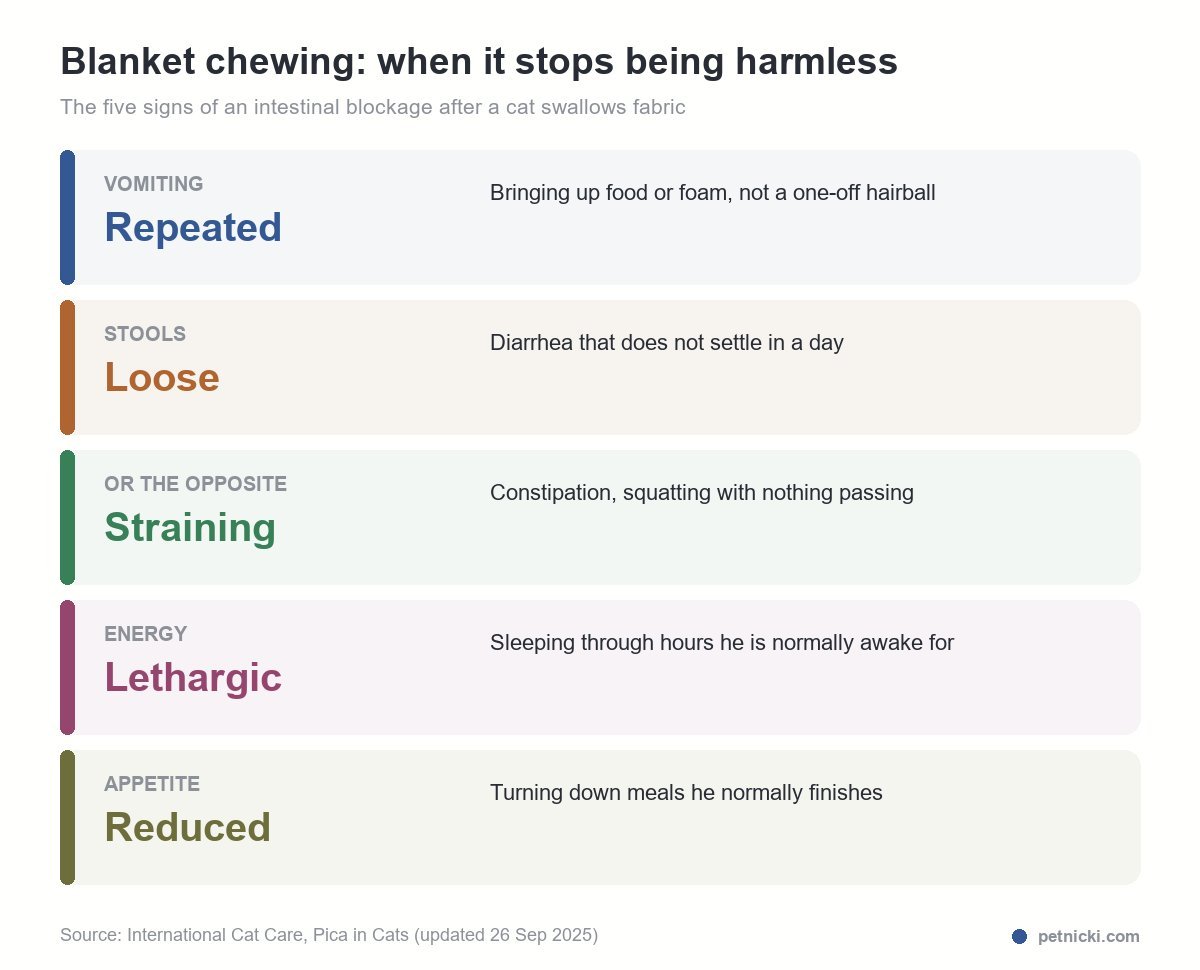
None of these are specific to blockages on their own. A cat vomits for a hundred reasons. What makes the list load-bearing is the combination with known fabric eating, which turns a vague symptom into a working theory your vet can act on quickly.
Bring the blanket, or a photo of it. Showing a vet the size of the missing piece changes what they look for on the X-ray.
As for stopping him, that depends on which cat you have. If he only wets the fabric, leave him to it; you would be removing a self-soothing tool and getting nothing back. If he swallows, take away access instead of correcting him. Wool blankets go in a closed cupboard, the bed gets a cover he cannot get a molar into, and the vet visit happens regardless, because the eating usually has a driver underneath it that a closed cupboard does not reach.
Frequently asked questions
Why does my cat chew the blanket while kneading?
Chewing and kneading are the two halves of the nursing sequence, so they fire together. The paws push the way they did against his mother, and the mouth reaches for the nearest thing to hold. The blanket is a stand-in, not a target.
Why does my cat bite the blanket while kneading?
Biting during kneading is nearly always suckling that looks harder than it is. Real biting leaves holes and frayed edges; suckling leaves a damp, matted patch. Check the fabric after he moves off and you will know which one you have.
Why does my cat make biscuits with a blanket in his mouth?
Holding fabric in the mouth completes the nursing posture for him. Kittens knead and suckle at the same time, and cats who keep the habit keep both halves of it, so the blanket ends up filling the role his mother’s fur once did.
Should I pet my cat while he’s kneading?
Petting during kneading is fine and most cats welcome it, though some break the trance and stop. If he keeps going, he is comfortable. If he gets up and leaves, he wanted the ritual rather than the attention, and there is nothing to read into it.
Will my cat grow out of biting the blanket?
Many kittens who start chewing bedding at three months or so drop it as they mature. Cats still doing it at two or three years old have generally kept it for life, and that is fine as long as the fabric is not going down.
Run your hand over his blanket tonight. Damp means leave him alone; a hole means book the vet.
General information only, not veterinary advice. If you think your cat has swallowed fabric, contact your vet or an emergency animal hospital.