
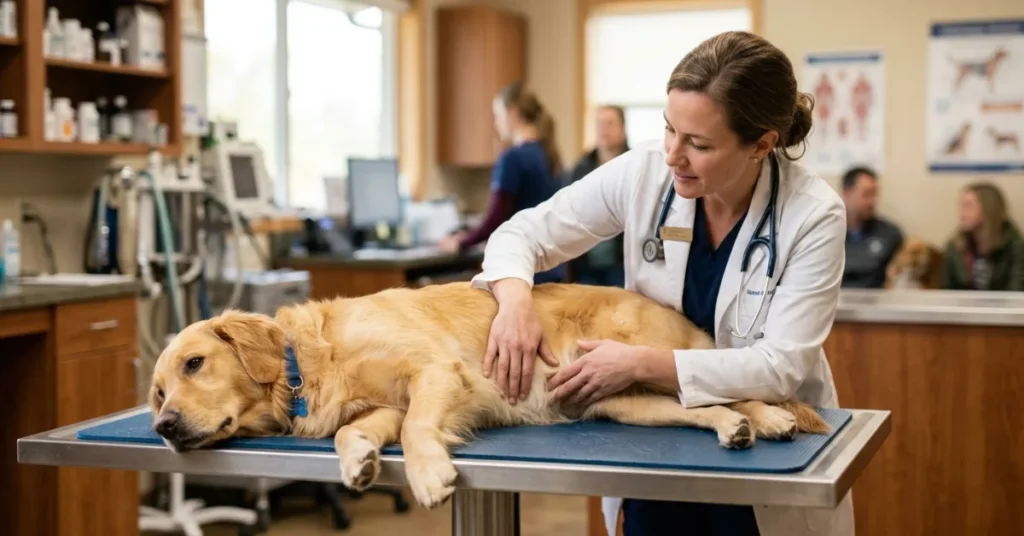

Most dog owners find out about pyometra the hard way. Their dog seems a little off after a heat cycle, a vet visit follows, and suddenly they are dealing with a serious infection nobody warned them about.
This guide will change that. By the time you finish reading, you will know exactly what pyometra is, which signs to catch early, how vets treat it, and what you can do today to protect your dog.
What Is Pyometra in Dogs?
Pyometra is a bacterial infection of the uterus in unspayed female dogs. After a heat cycle, the uterine lining thickens and bacteria begin to grow inside it. Pus builds up in the womb, toxins enter the bloodstream, and surrounding organs come under pressure. Without treatment, the condition is nearly always fatal. Any intact female can develop it, but dogs over six years old carry the highest risk.
Why Does Pyometra Happen?
Each heat cycle raises progesterone in your dog’s body. That hormone tells the uterine wall to thicken, getting ready for a pregnancy that never happens. This cycle repeats year after year.
Over time, the uterine lining becomes abnormally thick, small cysts form inside it, and the tissue loses its ability to fight off bacteria. The most common bacteria involved is Escherichia coli, which travels from the urinary tract into the womb. As the Cornell University College of Veterinary Medicine explains in their canine health guide, pyometra is entirely preventable through early spaying but can be deadly when left unaddressed.
Factors that increase the risk further:
- Remaining unspayed throughout life
- Passing five or six years of age
- Receiving progesterone-based hormone treatments
- A recurring pattern of false pregnancies
- Multiple heat cycles with no pregnancy
Open Pyometra vs Closed Pyometra
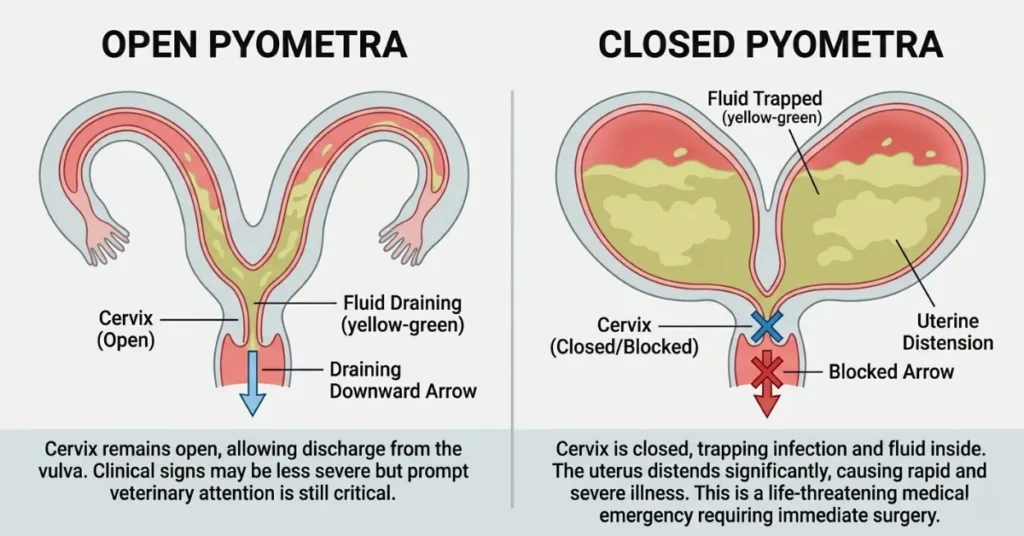
Vets classify pyometra into two types based on whether the cervix is open or closed. This difference directly affects how quickly the situation becomes dangerous.
Open Pyometra
When the cervix stays open, infected fluid drains from the vagina. You will usually notice a foul-smelling discharge, yellowish, greenish, or streaked with blood, near your dog’s vulva. The drainage reduces internal pressure somewhat and gives owners a slightly wider window to seek care. It is still urgent, but open pyometra moves a little slower than its counterpart.
Closed Pyometra
When the cervix stays shut, nothing escapes. Pus accumulates rapidly inside the uterus, bacterial toxins flood the bloodstream, and the abdomen swells. A dog with closed pyometra can go into septic shock within 24 to 48 hours. If your dog recently finished a heat cycle, looks bloated, and is suddenly weak or disoriented, treat it as an emergency and get to a vet the same day.
Early Signs of Pyometra in Dogs
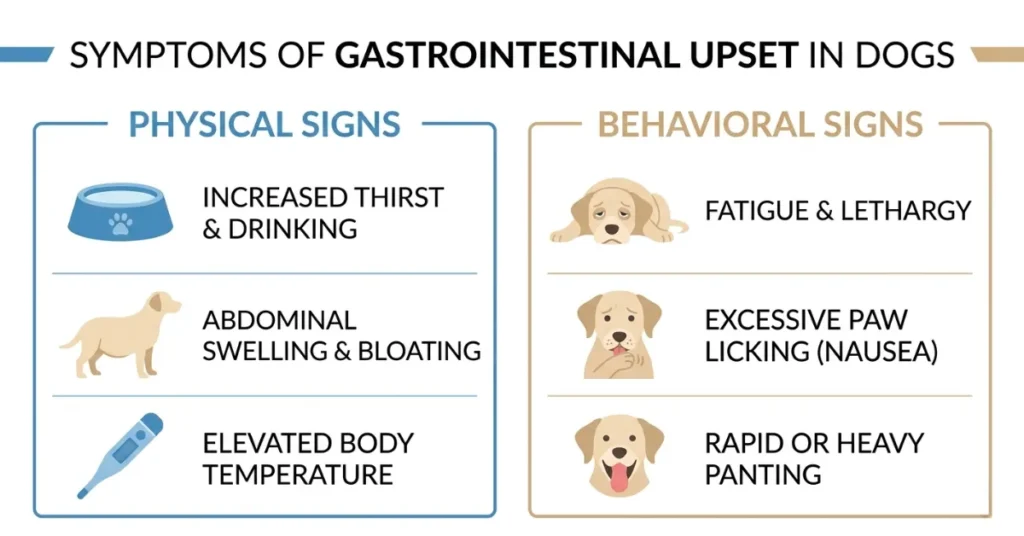
Symptoms typically appear two to eight weeks after a heat cycle ends. Early signs can look like ordinary tiredness or a mild stomach upset, which is exactly why so many owners miss them at first.
Physical signs to watch for:
- Drinking noticeably more water than usual
- Urinating more frequently
- Discharge from the vulva in any color
- Swollen or visibly rounded belly
- Vomiting
- Reduced appetite or refusing food altogether
Behavioral signs to watch for:
- Unusual tiredness and low interest in activity
- Reluctance to go on walks or climb stairs
- Repeated licking of the vulva area
- Unexplained panting or restlessness
- Collapse in advanced cases
No single symptom tells the full story. But two or three of these appearing within a few weeks of a heat cycle is enough reason to call your vet that same day without waiting to see if things improve on their own.
How Vets Diagnose Pyometra
Your vet will begin by asking when your dog last had a heat cycle, whether her appetite has changed, and if she has been grooming her vulva more than usual. The physical exam and tests that follow typically include:
- Abdominal palpation to feel for uterine swelling or tenderness
- Complete blood count to check for elevated white blood cells signaling active infection
- Biochemistry panel to assess kidney and liver function
- Urinalysis to distinguish pyometra from a urinary tract infection
- Ultrasound which provides the clearest view of how enlarged the uterus is and how much fluid has built up inside
Catching the infection before it progresses to organ damage gives your dog a much smoother path to recovery. Delayed diagnosis raises the risk of uterine rupture, blood poisoning, and kidney failure.
Treatment Options for Pyometra
Once pyometra is confirmed, treatment begins the same day. The vet will assess how sick your dog is, whether the pyometra is open or closed, and whether you want to preserve her ability to breed. Two treatment paths exist, and each carries different risks and outcomes.
Surgical Treatment (Recommended)
The standard treatment is a surgery called ovariohysterectomy, which removes the uterus and ovaries entirely. Because the source of infection is gone, pyometra has no way to return.
This operation is more complex than a routine spay. The infected uterus is swollen and its walls are fragile, so surgeons take extra care not to rupture it during removal. Dogs typically receive intravenous fluids and antibiotics before the procedure starts, and continue antibiotics at home for one to two weeks after. Most dogs handled early in the infection come through surgery well and recover fully.
Timing matters here. A dog treated within the first few days of symptoms faces far better odds than one whose infection has been building for a week.
Medical Treatment (Limited Use Only)
For younger dogs with open pyometra where the owner wants to breed in the future, vets may try hormone-based medications called prostaglandins. These cause the cervix to open wider and the uterus to contract, pushing infected material out.
This approach is not safe for dogs with closed pyometra or those already seriously ill. According to VCA Animal Hospitals, relapse rates after medical management can be as high as 77% if the dog is not bred on her very next heat cycle. Most vets who go this route still recommend spaying the dog after completing her litter.
Before heading to the clinic, it helps to be financially prepared. This breakdown of emergency vet costs in the US can help you understand what to expect so the bill does not come as a shock.
What Recovery Looks Like After Surgery
Most dogs recover well from pyometra surgery, particularly when it happens before the infection spreads to other organs.
- Clinic stay runs one to two days in most cases
- Oral antibiotics continue at home for one to two weeks
- Physical activity stays restricted for two to three weeks
- A follow-up appointment confirms the incision is healing and infection is fully cleared
Dogs who were severely ill before surgery, or whose kidneys or liver were affected, may need a longer recovery. Close monitoring at home during the first week makes a genuine difference in how smoothly things go.
Can Pyometra Return?
If the uterus and ovaries were fully removed, pyometra cannot come back. There is nothing left for the infection to grow in.
A small risk of recurrence exists if uterine tissue was accidentally left behind during surgery. For dogs treated with medication rather than surgery, relapse is common and often happens at the very next heat cycle. These dogs should be spayed once they have stabilized and, if breeding was the goal, after completing their litter.
How to Prevent Pyometra in Dogs
Spaying is the only method that eliminates pyometra risk entirely. No uterus means the infection has no place to start. Spaying also removes the risk of ovarian tumors and lowers the lifetime risk of mammary cancer significantly.
Vets generally recommend spaying before the first heat cycle, but the procedure is safe at any age. If breeding is part of your plan, a veterinarian who specializes in canine reproduction can monitor your dog closely between litters and catch early warning signs before they become emergencies.
One thing many owners get wrong is assuming that a dog who has already been pregnant is protected from pyometra. She is not. Hormonal exposure continues with every heat cycle, and older intact females face the same risk regardless of how many litters they have had. If you want to understand canine reproduction more broadly, this complete guide to how long dogs are pregnant covers gestation, stages, and what to expect.
Which Dogs Are at Greatest Risk?
All intact female dogs carry some level of risk, but certain dogs face higher odds. Age is the biggest factor. Dogs past six years old have accumulated years of hormonal exposure to their uterine lining. Breeds including Rottweilers, Golden Retrievers, Bernese Mountain Dogs, and Cavalier King Charles Spaniels appear in clinical studies at higher rates, though all intact breeds remain vulnerable.
Dogs who have received hormone injections or tablets, and those with a pattern of false or phantom pregnancies, also sit in a higher risk category and deserve closer monitoring after each heat cycle.
When to Go to the Vet Without Waiting
If your dog finished a heat cycle within the past two months and you notice any combination of the following, call your vet right away:
- Discharge from the vulva in any color or amount
- Drinking or urinating significantly more than normal
- A belly that looks bigger or feels firm
- Vomiting, especially without a clear cause
- Sudden fatigue, weakness, or trouble getting up
Pyometra does not slow down or stabilize on its own. A dog who seems only mildly off in the morning can deteriorate sharply by that same evening. Acting quickly is what keeps a treatable infection from becoming something far worse.
Frequently Asked Questions
Can pyometra develop in a young dog? Yes. While older dogs face higher risk, any intact female who has had at least one heat cycle is vulnerable. Age affects likelihood but does not protect younger dogs.
How quickly does closed pyometra become life-threatening? It can become critical within 24 to 48 hours. Because nothing drains out, toxins enter the bloodstream faster and the uterus risks rupturing without warning.
Will my dog show signs of pain? Not always visibly. Dogs often mask pain well. Lethargy, restlessness, and reluctance to move are common signs of internal discomfort even when a dog is not whimpering or crying.
My dog is eating normally. Could she still have pyometra? Yes. Appetite often holds in the early stages. Increased thirst tends to appear before appetite loss. As the infection progresses, most dogs stop eating.
What happens if pyometra is not treated? The uterus can rupture, releasing infected material into the abdomen. Sepsis, kidney failure, and organ shutdown follow. Without treatment, the outcome is nearly always fatal.
How long does it take to recover from pyometra surgery? Most dogs return to normal within two to three weeks. Dogs with more advanced infections or organ involvement may need longer. With proper post-operative care, full recovery is the most common outcome.
Final Thoughts
Pyometra is a condition every owner of an intact female dog should understand before it ever happens. It is more common than most people expect, and it responds well to treatment when caught in the early window.
If your dog is unspayed, the most protective step you can take right now is booking a spay consultation with your vet. If she shows any of the warning signs covered in this article after a recent heat cycle, call your vet that same day.
For more practical and honest guides on dog health, care, and what to expect as a pet owner, visit Petnicki.
Sources: Cornell University College of Veterinary Medicine (vet.cornell.edu), VCA Animal Hospitals (vcahospitals.com)