


You just brought your puppy home. The first day went fine. But now it is 2 AM and your puppy has been crying for the past hour.
You are exhausted. You do not know whether to go in or stay out. And every minute feels longer than it should.
You are not doing anything wrong. Puppy crying at night is something almost every new dog owner goes through. Here is what is actually happening and what genuinely helps.
Quick Answer: Puppies cry at night because they have left their mother and littermates and are now alone in a strange place for the first time. Most puppies settle within one to two weeks when they feel safe, have a consistent routine, and know someone will come when they call.
Why Is Your Puppy Crying at Night?
Puppies do not cry to be difficult. They cry because something feels wrong. Here are the real reasons behind it.
They Just Lost Their Entire Family

Two days ago your puppy slept in a pile with its mother and siblings every night. It knew those smells, those sounds, and those faces.
Now all of that is gone. Your puppy does not understand what happened or whether it is safe. For a dog between 8 and 12 weeks old, that is a genuinely frightening experience.
The crying is a distress signal, the same way a baby cries when it needs someone. The American Veterinary Medical Association confirms that separation-related distress in young dogs comes from a hardwired need for social contact, not from bad behavior or poor training.
Your Home Feels Strange to Them
Your house is completely normal to you. To your puppy it is full of unfamiliar smells, odd sounds, and nothing they recognise.
Puppies go through a fear sensitivity period between 8 and 11 weeks old. During this time new things feel threatening much more easily than they will later. A creak in the floor, a distant car, the hum of the fridge — any of these can genuinely unsettle a young dog at this stage.
They Might Simply Need the Toilet
Young puppies cannot hold their bladder longer than three to four hours. If your puppy wakes at roughly the same time each night, their body is probably just telling them they need to go outside.
Always check for a physical need first before assuming the crying is about anxiety or attention.
Something Could Be Hurting Them
If your puppy cries intensely and your presence does not calm them at all, a health issue could be involved. Digestive discomfort, intestinal worms, ear infections, and joint pain can all cause crying, especially when a puppy is lying still with nothing to distract them.
According to PetMD, a vet check within the first 48 to 72 hours of bringing a new puppy home can catch things like parasite loads or nutritional issues that might be making your puppy uncomfortable at night.
If the crying comes with vomiting, loose stools, a swollen belly, or refusal to eat, call your vet that same day.
Should You Let Your Puppy Cry It Out?
No.
When a young puppy cries and nobody comes, it does not learn to cope on its own. It learns that asking for help is pointless. The crying eventually stops, but only because the puppy has given up, not because it feels safe.
Dogs that go through this early on tend to grow into more anxious adults. The security your puppy builds with you in these first weeks is exactly what allows them to handle being alone later in life.
Go to your puppy when they cry. You are building trust, not creating a spoiled dog.
There is also a practical reason to go early. A puppy that is just starting to stir is still calm and sleepy. A quick check and a toilet trip and they will drift back off easily. But if you wait until they are howling, they have worked themselves into a real stress state. Getting them back down at that point can take a long time.
What to Do When Your Puppy Cries at Night
Most owners feel stuck choosing between going in and feeling like they are encouraging the crying, or staying out and listening to their puppy suffer. There is a better path, and none of it is complicated.
Sleep in the Same Room for the First Few Nights
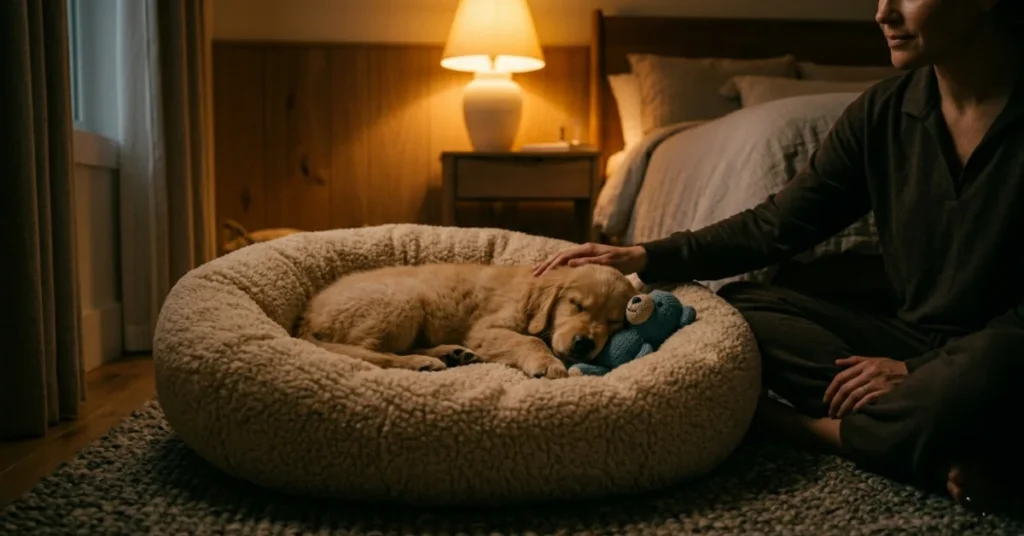
This one change helps more than anything else. You do not need to share your bed. A crate or dog bed on the floor next to you is enough.
Your smell and your breathing alone tell your puppy’s nervous system that it is safe. You will also hear the first soft whimpers before they turn into full distress, which means you can respond quickly and both of you get back to sleep faster.
Stay in the same room for at least the first three to five nights. Once your puppy is settling well, you can gradually move their sleeping spot if needed.
Make the Crate Feel Safe Before You Use It at Night
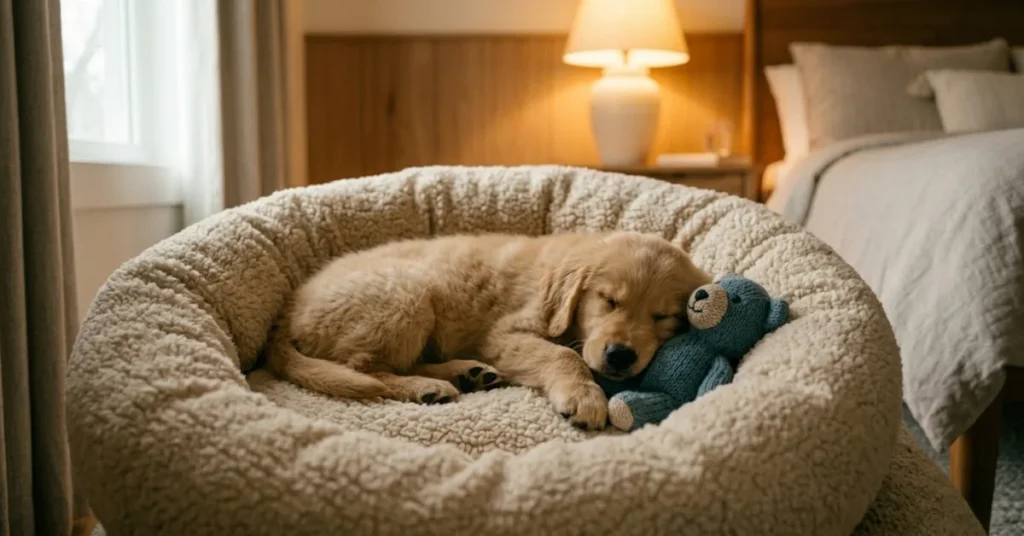
A crate works well, but only if your puppy does not see it as a place they get locked into when they are already upset.
Build the association during the day. Leave the door open, put a few treats inside, and let your puppy go in and out freely. Feed meals near the entrance. Once your puppy walks in on their own, start closing the door for short periods with you still in the room.
At night keep the crate next to your bed, cover three sides to make it feel enclosed and den-like, and put something inside that smells like you. Never shut your puppy in and leave when they are already crying. That teaches them that the crate means abandonment.
Put Something With Your Scent in Their Sleeping Area
A t-shirt or piece of clothing you wore that day in your puppy’s bed costs nothing and genuinely helps. Your scent is one of the most calming things for a young dog.
Some owners also use a heartbeat toy that mimics a mother dog’s rhythm. These can help in the first week, especially for puppies that seem very unsettled when there is no physical contact. The separation runs both ways, and a mother dog calling for a pup she cannot reach is its own kind of distress.
Keep Bedtime the Same Every Night
Puppies build expectations quickly. When the same things happen in the same order each night, their brain starts connecting that pattern with sleep.
Keep it simple: a calm play session, a toilet trip outside, then quiet time with low lights. Within a week or two your puppy will start settling before you have even finished the routine.
Check the Basics Before Assuming It Is Anxiety
When your puppy wakes and cries, run through the simple things first. Do they need the toilet? Is it too cold or too warm? Is a noise bothering them? Do they seem physically uncomfortable?
Most nighttime wakings have a straightforward cause. Finding it fast means you both get back to sleep quickly.
Go In Quietly and Leave Quietly
When you check on your puppy at night, keep everything low-key. No bright lights, no excited voice, no playing. A calm hand on their back, a quiet word, a toilet trip if needed, then back to bed.
The goal is to reassure them without waking them fully. A calm response at 3 AM teaches your puppy that night is for sleeping, not for interaction.
Build Confidence During the Day
A puppy that feels secure during the day sleeps better at night. Short training sessions, learning their name, practicing brief separations while you are still home — all of this builds the kind of calm confidence that carries into bedtime.
If you want proper guidance with this from the start, check out puppy training options and pricing at Petnicki to find the right fit for your puppy’s age and needs.
Things That Make the Crying Worse
Some habits accidentally drag the problem out longer than it needs to be:
- Putting your puppy alone in a separate room on the very first night
- Using the crate as a punishment during the day, so they dread going in at night
- Playing or making a fuss during night visits, which teaches your puppy that waking up gets rewarded
- Waiting until the crying peaks before going in, so your puppy learns to escalate before anyone comes
- Changing the bedtime routine every night so your puppy never knows what to expect
How Long Will It Last?
Most puppies improve noticeably within five to seven days when the approach is consistent. By the end of two weeks the majority sleep through with little disturbance.
The first three nights are usually the worst. That is normal. It does not mean things are going wrong.
If your puppy is still crying just as intensely after two full weeks, speak to your vet. There may be a health issue or the early signs of separation anxiety worth looking at properly.
When It Crosses Into Separation Anxiety
Normal puppy crying settles with time and routine. Separation anxiety is different. It is a condition where a dog panics whenever they are left alone, not just at night.
Watch for these signs:
- Crying that does not improve at all after two or more weeks
- Destructive behavior during the day when you step out of the room
- Panting, shaking, or pacing before bedtime even starts
- Refusing to eat unless you are right there
- Following you everywhere throughout the day without being able to settle
If several of these are happening together, speak to your vet or a certified dog behaviorist. Caught early it responds well to treatment. Left too long it tends to get harder to manage.
Frequently Asked Questions
Is it normal for a puppy to cry every night the first week?
Yes. The first few nights are the hardest part of the adjustment. Stick to your routine and most puppies turn a corner by the end of the first week.
Will responding to the crying make it worse?
No. Going to a distressed young puppy builds security, not dependency. A puppy whose needs are met consistently becomes less anxious over time, not more demanding.
My puppy only cries in the crate. What is going on?
The crate feels threatening to them right now. Go back to daytime introduction with treats and open access. Never close the door when they are already upset. The goal is for your puppy to choose to go in on their own.
Can my puppy sleep in my bed?
Yes, if that is your long-term plan. Just be consistent. Letting it happen some nights and not others creates confusion and makes settling harder.
How do I know if the crying is pain?
Pain crying is usually more urgent and intense, and your presence does not calm it the way emotional distress crying does. If your puppy seems rigid, bloated, or not interested in comfort, contact your vet.
When do puppies start sleeping through the night?
Most puppies get there between 12 and 16 weeks of age. The biggest factor is not age but how consistently the routine has been in place.
Final Thoughts
Puppy crying at night is hard. The broken sleep, the guilt, the uncertainty about what to do — it all adds up.
But it does not last long when you handle it the right way. Stay close in the first week. Respond calmly. Keep the routine the same every night. That is genuinely all it takes for most puppies.