

My neighbor’s cat purrs so loud you can hear it from across the room. She always says “he’s happy” and leaves it at that. That’s part of the story, but only part.
Most of us hear purring and assume the cat is fine. Sometimes that’s true. Here’s what’s actually going on.
What Is Cat Purring, Exactly? (Featured Snippet)
Cat purring is a low, continuous sound made when a cat rapidly tightens and releases the muscles inside its larynx. This movement disturbs airflow on both the inhale and exhale, which creates that familiar humming vibration. The frequency usually sits somewhere between 25 and 150 Hz, and depending on the situation, it can mean your cat is relaxed, hungry, scared, or trying to physically heal itself.
So How Does the Sound Actually Come Out?
Most cat sounds only happen on the exhale. Purring is different – it runs on both the inhale and exhale, which gives it that continuous, motorlike quality.
Here’s what’s happening:
- Laryngeal muscles in the throat rapidly open and close the glottis
- This happens about 25 times per second
- Each breath passes through that moving gap and vibrates
Big cats like lions can’t do this. Their hyoid bone is structured for roaring. In domestic cats, it’s rigid, which enables purring instead.
5 Real Reasons Cats Purr
1. They Feel Safe and Content
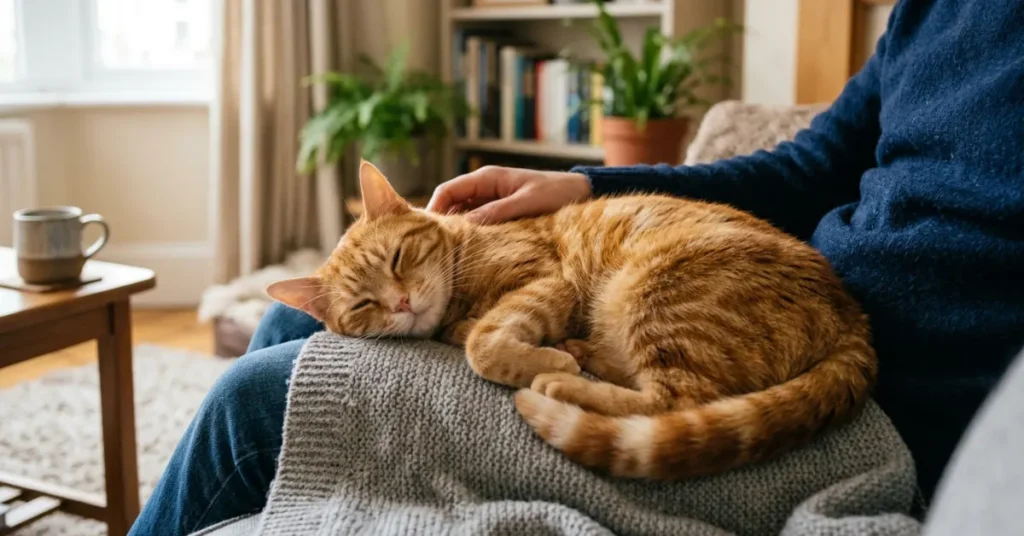
This is the one everyone knows. Cat curled up in a warm spot, eyes half closed, slow rhythmic purring. That’s genuine contentment.
You’ll usually notice:
- A relaxed, even purr with no variation in pitch
- Soft body posture, maybe kneading
- Slow blinking or fully closed eyes
This kind of purring is your cat saying, without words, that right now everything is fine.
2. Kittens Use It to Talk to Their Mothers
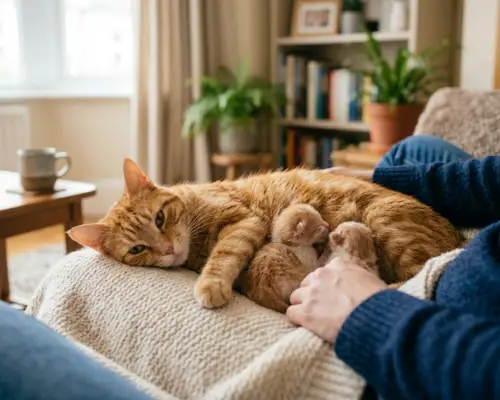
Cats start purring within the first few days of life. Not weeks, days.
The reason is pretty practical. A kitten can’t meow and feed at the same time. But it can purr while nursing, and that gentle vibration tells the mother the kitten is there, latched on, and okay. The mother often purrs back. The same infant program surfaces later in life, which is why an adult cat will bite a blanket while making biscuits.
That call-and-response rhythm is one of the first things a cat ever learns. Many adult cats never really stop – they just redirect it toward their owners.
3. There’s a Specific “I’m Hungry” Purr
This one surprised researchers when they first studied it properly.
A team at the University of Sussex found that cats produce a noticeably different purr when they want something, usually food. They called it solicitation purring. It has a higher-pitched cry tucked inside the regular purring sound, almost like a whimper layered underneath.
Most cat owners pick up on it without realizing what they’re hearing. It feels more insistent, harder to tune out. That’s probably not a coincidence. According to aspca.org/pet-care/cat-care/common-cat-behavior-issues, that embedded frequency sits close to the range of a human infant’s cry, which we’re naturally wired to respond to.
Cats didn’t plan this. But over generations, the ones who got fed faster passed the trait on.
4. Cats Also Purr When They’re Stressed or Hurting
This is the part a lot of people miss.
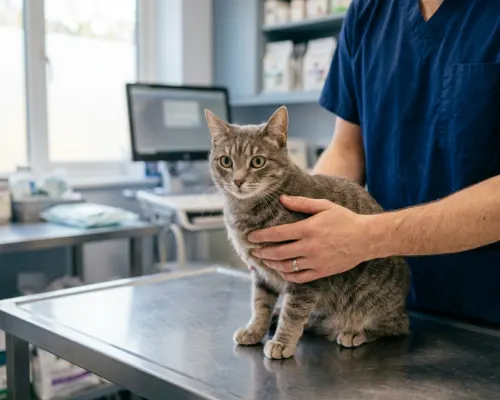
A cat at the vet, riding in a car, recovering after surgery, or sitting through a thunderstorm may purr the entire time. That’s not happiness. That’s self-regulation. The same way a person might hum to themselves, tap their foot, or take slow breaths when anxious, purring helps a cat manage its own nervous system.
If your cat is purring but something seems off, look at the full picture:
- Are they hiding or pulling away from touch?
- Have they stopped eating or drinking?
- Is their breathing faster or more shallow than normal?
- Are they unusually still?
A purring cat can absolutely be a cat in pain. Don’t let the sound alone reassure you.
5. Purring May Actually Help Them Heal
This is the part of cat purring that genuinely surprised me when I first came across it.
Vibrations in the 25 to 50 Hz range have been studied for their effect on living tissue. Research has shown that frequencies in this range can support bone density, reduce swelling, and help soft tissue repair faster. A cat’s purr lands right in that window.
Some veterinary researchers have pointed out that cats tend to bounce back from fractures and injuries faster than other animals of comparable size. The running theory is that purring contributes to this, giving the body low-level vibrational stimulation during rest that nudges the healing process along.
The frequency match is real. Cats purr when they rest, recover, and give birth – all situations where that kind of support would be useful.
Purring Between Cats
It’s not just a human thing. Cats purr around each other too, mostly during close contact like grooming or sleeping pressed together.
If you’ve seen one cat purring while grooming another, that’s the same social language at work – trust and comfort rolled into one behavior. Our piece on why cats lick each other covers that bonding side in more detail.
When Should You Actually Be Concerned?
Most purring is nothing to worry about. But a few situations are worth acting on.
Talk to your vet if:
- Your cat hasn’t eaten in more than 24 hours but keeps purring
- The purr sounds raspy, wet, or crackly and that’s new
- Purring is accompanied by labored breathing
- Your cat suddenly stops purring entirely after years of being a regular purrer
- They’re purring but hiding, limping, or acting withdrawn
A change in how a cat purrs, especially in older cats, can sometimes point to a respiratory issue, pain, or something else worth checking out. You know your cat’s normal. Trust that.
FAQ
Q: My cat purrs incredibly loud. Is that normal? Yes. Volume varies by body size and anatomy. If it’s always been loud, no issue. If it suddenly sounds wet or labored, get it checked.
Q: Could purring ever hurt my cat? No. It’s a natural, low-effort behavior with no physical strain.
Q: Why does my cat purr and then bite me? Overstimulation. The cat was content and then hit their threshold. Watch for tail flicking or skin twitching – those usually come right before the bite.
Q: Do cats purr while they sleep? Sometimes, during light sleep. It usually means they feel safe.
Q: My cat purrs when I’m sick or upset. Why? Cats notice changes in your movement, tone, and breathing. Purring near you is likely a comfort response, the same thing they’d do for another cat they’re bonded with.
Q: How early do kittens start purring? Within a few days of birth, as a direct way to communicate with their mother.
Wrapping Up
Purring is genuinely one of the more interesting things cats do. It’s not just a happiness signal. It can mean contentment, hunger, fear, pain, or an active physical response to stress or injury, sometimes all in the same cat on the same day, depending on context.
The more you pay attention to what’s happening around the purr, the better you get at reading what your cat actually needs.
For more on how cats communicate, check out our article on why cats lick each other.