






Some dogs trot into the vet clinic with tails wagging. Others tremble, hide behind their owners, or plant their paws firmly at the door. If your dog falls into the second category, you’re far from alone and the good news is that veterinary care has evolved to meet anxious pets exactly where they are.
Understanding what makes a vet visit “gentle” and how to sustain that level of care over your dog’s lifetime is something every pet owner should know. That includes planning ahead, financially and practically.
What Is a Gentle or Fear-Free Vet Visit?
A gentle vet visit is designed around a dog’s emotional and physical comfort, not just clinical efficiency. It draws from techniques developed under the Fear Free® and Low Stress Handling® frameworks, both of which are now widely adopted by veterinary practices across the United States.
At its core, a gentle vet visit minimizes fear, anxiety, and stress (FAS) through deliberate environmental design, calm handling techniques, and sometimes mild sedation or anti-anxiety medication when needed. The goal isn’t just a nicer experience. It’s medically meaningful. Stress during exams can spike cortisol levels, elevate heart rate, and affect diagnostic accuracy.
Why Vet Anxiety Is More Common Than You Think
Fear of the vet isn’t a personality flaw in your dog. It’s often a conditioned response built from past experiences: the smell of antiseptic, the slippery exam table, strangers in unfamiliar clothing.
According to the American Veterinary Medical Association (AVMA), reducing patient stress during veterinary visits improves both the quality of care and the safety of veterinary staff.
Common signs your dog is stressed at the vet include:
- Lip licking, yawning, or excessive panting
- Tucked tail and flat ears
- Refusal to walk forward or freezing
- Shaking or trembling in the waiting room
- Growling or snapping during handling
Recognizing these signals early allows you and your vet to intervene before stress escalates.
What Happens During a Gentle Vet Visit
A gentle vet visit isn’t just about soft voices and treat jars. It follows a deliberate structure from the moment you leave home to the moment you walk back out the door. Each stage matters and knowing what to expect makes the whole process easier to manage.
Before the Appointment
Preparation starts at home. Many veterinarians now recommend:
- Carrier conditioning leaving the crate out so your dog associates it with comfort, not capture
- Practice visits brief, treat-heavy trips to the clinic with no examination
- Pre-visit medication your vet may prescribe a short-acting anti-anxiety medication like trazodone or gabapentin for dogs with moderate-to-severe anxiety
Skipping meals before the appointment (unless medically contraindicated) can also help. A slightly hungry dog is more motivated by high-value treats during the visit.
During the Examination
Fear-free certified clinics structure the environment intentionally:
- Separate waiting areas for dogs and cats
- Non-slip mats on exam tables
- Calming pheromone diffusers (Adaptil for dogs)
- Soft voices, slow movements, minimal restraint
- Frequent treat reinforcement during handling
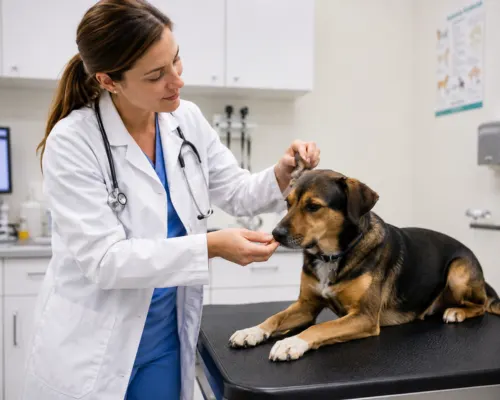
Veterinarians trained in low-stress handling work at the dog’s pace. If a dog is too stressed to complete an exam safely, the visit may be paused or rescheduled rather than forced through, which actually produces better outcomes over time.
After the Visit
Positive reinforcement doesn’t stop at the clinic door. Rewarding your dog after the visit, even with a short play session or a special treat, helps build a positive association with the experience.
Choosing the Right Veterinary Practice
Not every clinic offers the same level of fear-free care. When evaluating a practice, ask:
- Are any staff members Fear Free® or Low Stress Handling® certified?
- Do they offer separate waiting areas or direct-to-room check-ins?
- Is pre-visit anti-anxiety medication available for anxious patients?
- How do they handle dogs that become reactive during exams?
Mobile veterinary services are also growing in popularity. For highly anxious dogs, an in-home visit removes the travel and waiting room stress entirely, making the exam far easier on both the dog and the owner.
The Role of Insurance in Sustaining Long-Term Wellness Care
Gentle vet care isn’t a one-time fix. It’s a long-term relationship between your dog, your veterinarian, and a consistent care philosophy. That means regular wellness visits, potential behavioral consultations, occasional pre-visit medications, and routine diagnostics, all of which add up.
This is where pet insurance becomes genuinely useful, not just for emergencies.
Many modern pet insurance plans now include wellness or preventive care add-ons that help cover the cost of:
- Annual and semi-annual wellness exams
- Vaccines and parasite prevention
- Dental cleanings
- Behavioral consultations
- Prescription medications, including anti-anxiety drugs
If you’re comparing plans or exploring your options for the first time, reviewing a guide to the best pet insurance options in the USA can help you find a plan that supports ongoing wellness, not just emergency treatment.
The earlier you enroll, the better. Most insurers exclude pre-existing conditions, so insuring a young or newly adopted dog gives you the broadest coverage window.
Building a Routine Your Dog Can Trust
Dogs are creatures of habit. When vet visits happen consistently, same clinic, same staff, same calm handling, anxiety tends to decrease over time. The unpredictability of sporadic visits is part of what makes them stressful.
Aim for at least one wellness exam per year for adult dogs, and twice yearly for seniors (typically 7 years and older, though this varies by breed). Between visits, regular at-home handling, touching paws, ears, and mouth gently, helps desensitize dogs to the kind of contact that happens during exams.
FAQ: Gentle Dog Vet Visits
Q: Can any vet provide a gentle or fear-free visit, or do I need a specialist?
Many general practice veterinarians are trained in low-stress handling. Look for Fear Free® certification, or simply ask your vet about their approach to anxious patients before booking.
Q: How much does pre-visit anti-anxiety medication cost?
A single dose of trazodone or gabapentin typically costs between $5 and $20, depending on your dog’s weight and your pharmacy. Some pet insurance wellness plans cover prescription medications.
Q: My dog has always been reactive at the vet. Is it too late to change?
No. With consistent effort, gradual desensitization, and the right veterinary team, most dogs improve. Even senior dogs can learn new associations.
Q: Are mobile vet services covered by pet insurance?
Coverage varies. Some plans cover mobile or house-call veterinary services; others restrict coverage to licensed clinic visits. Check your policy’s definitions carefully.
Q: What breeds tend to be most anxious at the vet?
Herding breeds (Border Collies, Australian Shepherds), some hounds, and rescue dogs with unknown histories tend to show higher vet-related anxiety. However, individual temperament matters far more than breed.
Q: Should I stay with my dog during the exam? In most cases, yes. Your presence is calming. Some clinics may request you step out for specific procedures, but for routine exams, being present typically reduces a dog’s stress response.
Final Thoughts
A gentle vet visit isn’t a luxury. It’s a smarter approach to veterinary care that leads to better diagnostics, safer handling, and healthier dogs long-term. Pairing that approach with a solid wellness-oriented pet insurance plan means you’re not forced to skip or delay visits because of cost.
The foundation of good canine health is consistency: consistent care, consistent handling, and consistent financial planning. Start with finding a fear-free practice, talk to your vet about your dog’s specific needs, and make sure your coverage is in place before you need it.
