
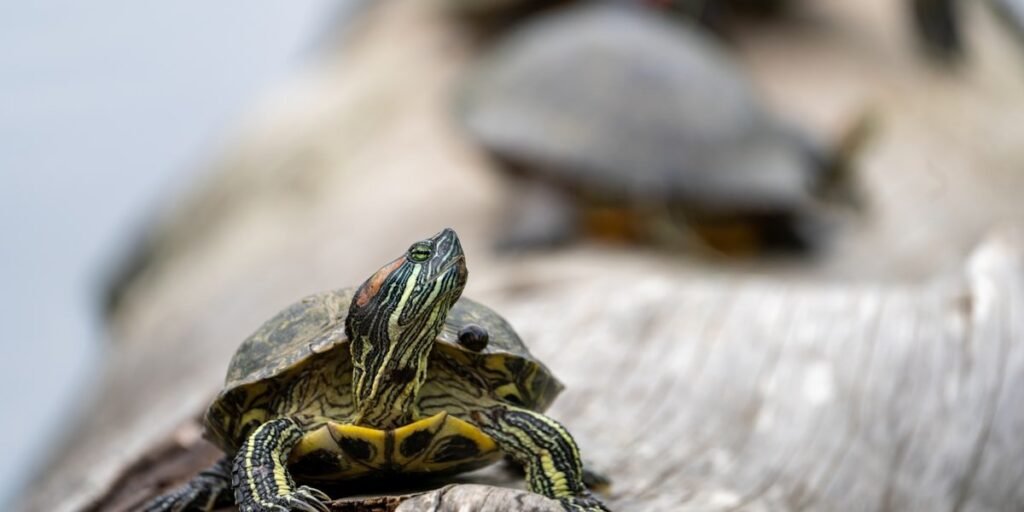

Most pet turtles eat a mix of leafy greens, turtle pellets, and live protein like worms and feeder fish, with the balance shifting from meat-heavy in youth to plant-heavy in adulthood. That one sentence covers red-eared sliders, painted turtles, and most of what lives in a home tank, and if the animal is new enough to still need a name, our turtle names list sorts a few hundred by shell and species. Box turtles lean carnivorous, tortoises are grazers, and sea turtles range from jellyfish specialists to seagrass mowers, so the honest answer depends on which turtle is in front of you.
The pet-turtle plate comes first, because that is what most people asking actually own. Wild and sea turtles follow.
The Pet Turtle Plate
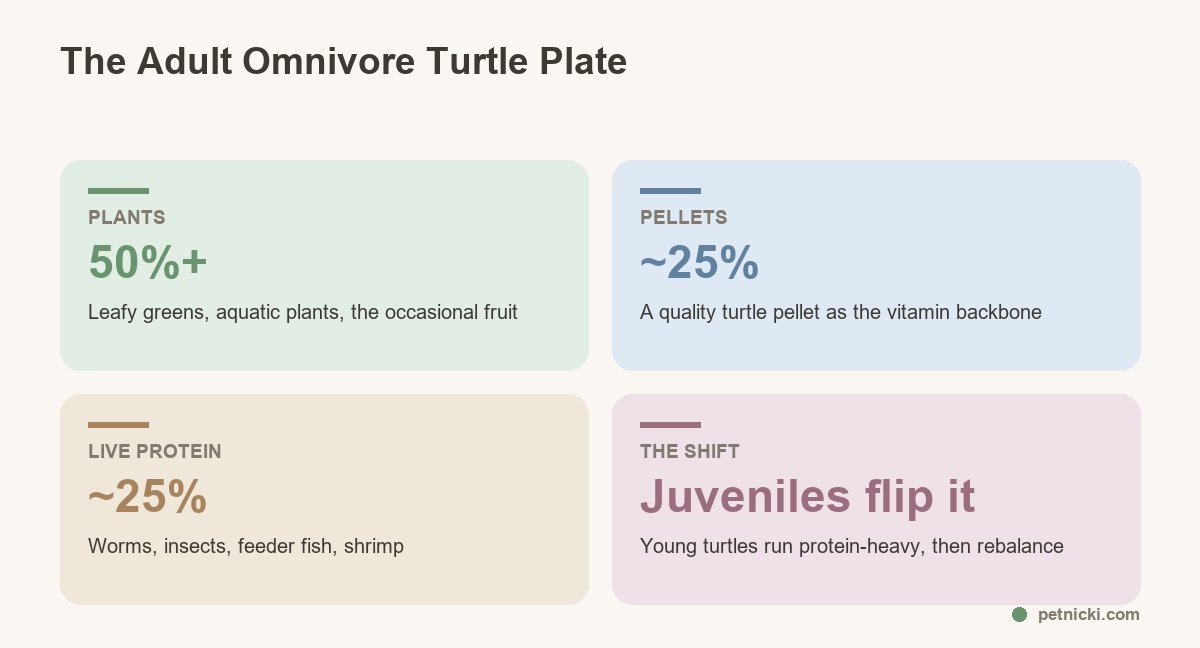
For an adult omnivorous aquatic turtle, PetMD’s nutrition guide puts the ratio at more than half plant material, around a quarter commercial pellets, and around a quarter live animal protein. The pellets carry the vitamins; the greens carry the fiber and calcium; the live food carries the enrichment and the reason your turtle notices you walk in.
Greens that work: romaine, red-leaf lettuce, dandelion greens, collards, mustard greens, and aquatic plants like duckweed and anacharis. Protein that works: earthworms, crickets, dubia roaches, feeder guppies, frozen or dried shrimp and krill. Fruit is a treat, not a staple (the same rule our guinea pig pumpkin guide applies to small mammals). What to skip: iceberg lettuce (water and nothing else), spinach and rhubarb (bind calcium), raw meat from the fridge, bread, dairy, and anything processed for humans.
The Protein Trap
The single most common feeding mistake with pet turtles is letting a young one eat protein only. Juveniles genuinely need more animal protein than adults, and they love it, which is exactly how owners end up with a two-year-old slider on a shrimp-and-mealworm diet:
“A friend of mine is seeking advice to feed the turtle 🐢 . The red ear slider is about two years old of human age in which he got it as a gift from a friend. Now he had me what’s a good brand of food, but at the same time what will it enjoy eating the most. He usually feeds it some food sticks by the brand of Tetra. Plus he feeds it shrimp with mealworms. I like to know for I to inform my friend what fhis type of turtle enjoy eating the most for it to eat of it’s favorite meal. If there’s other….”
– r/turtles, July 2026 (28 upvotes)
The thread’s answer was blunt and correct: start the greens now, or the turtle gets spoiled on protein and refuses everything else. A slider fed like a carnivore for years grows too fast, pyramids its shell, and strains its kidneys. Offer greens first at every feeding, before the protein appears, and let hunger do the negotiating.
Which Turtle Do You Have?
| Turtle | Diet type | Staples | Feed how often |
|---|---|---|---|
| Red-eared slider, painted, cooter | Omnivore | Greens, pellets, worms, feeder fish | Adults every 2-3 days; greens always available |
| Box turtle | Omnivore, protein-leaning | Insects, worms, berries, some greens | Adults every other day |
| Musk, mud, snapping | Mostly carnivore | Fish, insects, snails, meat-heavy pellets | Adults every 2-3 days |
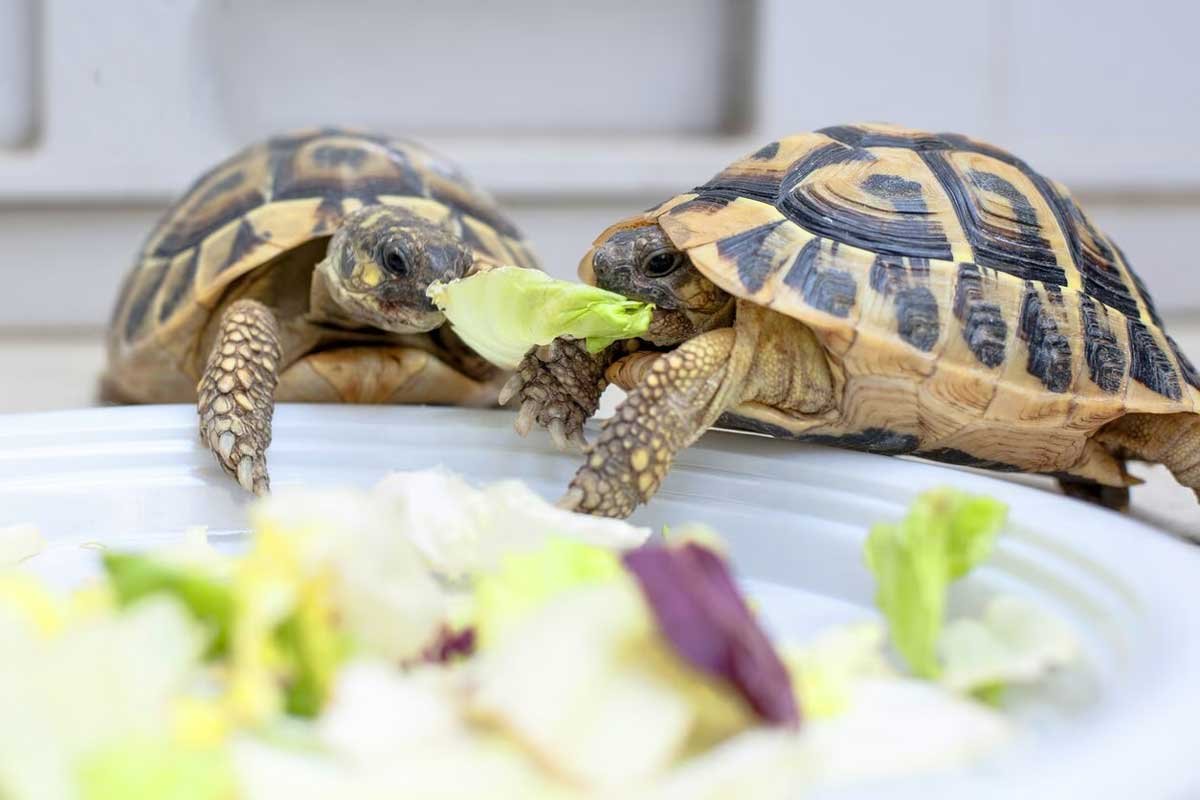
| Tortoise (Russian, sulcata) | Herbivore | Grasses, weeds, hay, leafy greens; no animal protein | Daily grazing |
Box turtles trip up new owners the opposite way from sliders: instead of refusing greens for protein, many refuse everything except live insects, and that is closer to their nature than a problem:
“3-toeds are especially carnivorous turtles. Offer more variety of insects. Think earth worms, super worms, dubia roaches, wax worms. Mazuri croc chow is also fantastic for box turtles. Dust food with a calcium and multivitamin. My ornate box turtle likes strawberries and blueberries, sometimes romaine from time to time. They really thrive off of protein from insects.”
– r/Boxturtles, May 2026 (3 upvotes)
The calcium-dusting detail is the part to copy. Insects are calcium-poor. Turtles are, structurally, mostly calcium, so any turtle eating a lot of bugs needs the supplement, and a soft or pyramided shell is the bill for skipping it.
What Wild Turtles Eat
Freshwater turtles in ponds and rivers eat what the water offers: aquatic plants, algae, insects and their larvae, snails, tadpoles, small fish, and carrion. The juvenile-to-adult shift happens in the wild too; a young slider hunts, an old one grazes. Wild box turtles work the forest floor for slugs, earthworms, mushrooms, and fallen berries, and are among the few animals that eat some mushrooms poisonous to humans without harm.
The wild diet is the argument for variety in the tank, the same lesson that runs through what raccoons and squirrels forage. A turtle that would encounter forty foods in a pond gets bored and unbalanced on two. Rotate.
What Sea Turtles Eat
Sea turtles are specialists, and per the conservation group SEE Turtles, each species has its own menu. Adult green sea turtles graze seagrass and algae with a serrated beak, hawksbills eat almost nothing but sponges on coral reefs, loggerheads crush crabs and conchs with heavy jaws, and leatherbacks are gelatinivores that dive deep to eat jellyfish and little else.
The jellyfish diet is why plastic bags kill leatherbacks: a drifting bag and a drifting jellyfish look identical to an animal that has eaten jellyfish for a hundred million years. Sea turtles are also not pets, and it is illegal in the United States to keep one, so the feeding question for them ends at the aquarium glass.
FAQ: Feeding Turtles
What should you not feed turtles?
Skip iceberg lettuce, spinach, rhubarb, raw meat, dairy, bread, processed human food, and dog or cat kibble as a staple. Avoid feeding wild-caught insects from sprayed areas, and never feed a tortoise animal protein.
What is the best turtle food?
A quality pellet formulated for your turtle’s type, as roughly a quarter of the diet, with fresh greens and live protein making up the rest. Reptile owners commonly name Mazuri and Zoo Med lines; the brand matters less than not making pellets the whole meal.
What kind of people’s food can turtles eat?
Leafy greens, shredded carrot, squash, and small amounts of berries or melon are safe human foods for omnivorous turtles. Cooked plain fish or chicken can be an occasional protein; seasoned, fried, or processed food should never go in the tank.
Can a turtle recognize a person?
Yes, pet turtles learn to recognize the person who feeds them and will swim to the glass or beg at feeding time. It is food association more than affection, but long-kept turtles clearly distinguish their owner from strangers.