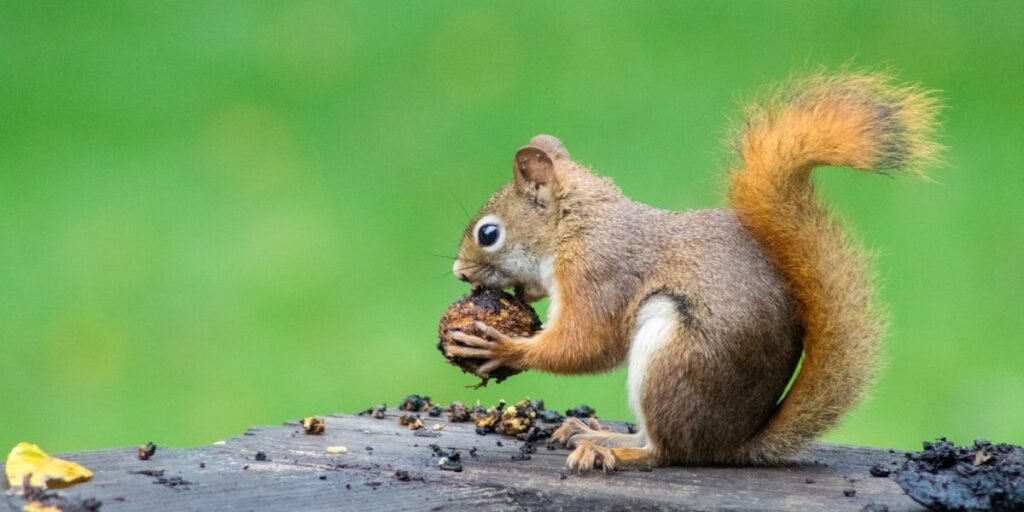

Squirrels eat nuts, seeds, fruit, fungi, buds, and the occasional insect or egg, and they bury surplus for later the same way foxes cache food. Being buried is not the only risk to a squirrel, since large owls take them regularly and crows will take nestlings from a drey. The famous acorn is real, but it is one item on a long omnivorous menu that shifts with the season and with whatever your yard, feeder, or trash situation offers. A gray squirrel is less a picky forager than a small, athletic opportunist with excellent memory and no shame.
The diet itself takes one section to cover. The more interesting parts are what squirrels do with the food, and what happens when people start feeding them. On the second question, every wildlife group says the same word: don’t.
The Core Menu
Hard mast leads: acorns, walnuts, hickory nuts, beechnuts, and pine seeds are the calorie backbone, joined by tree buds and flowers in spring, berries and orchard fruit in summer, and fungi whenever it appears. Per the natural history of the eastern gray squirrel, the diet also stretches to bark, seeds, insects, and occasionally bird eggs and nestlings when protein runs short; squirrels are herbivore-leaning omnivores, not strict vegetarians.
Water matters more than people assume. Squirrels drink daily, more in summer and lactation season, which is why a birdbath gets as much squirrel traffic as the feeder above it.
Season by Season
| Season | What dominates | Signature behavior |
|---|---|---|
| Spring | Tree buds, flowers, early fungi | Raiding maples for sap and buds |
| Summer | Berries, fruit, insects | Stripping garden tomatoes at exactly half-ripe |
| Fall | Nuts and acorns in bulk | Burying far more than they eat |
| Winter | Cached nuts, bark, feeder raids | Digging up caches by smell through snow |
The Buried-Nut Economy
A fall squirrel is not eating most of what it collects; it is banking.
Grays scatter-hoard, spreading single nuts across hundreds of shallow caches instead of one vault, and they relocate the stock later mostly by smell and spatial memory. The behavior comes with a security system: watched squirrels dig empty decoy holes and pretend to bury, a documented move called deceptive caching.
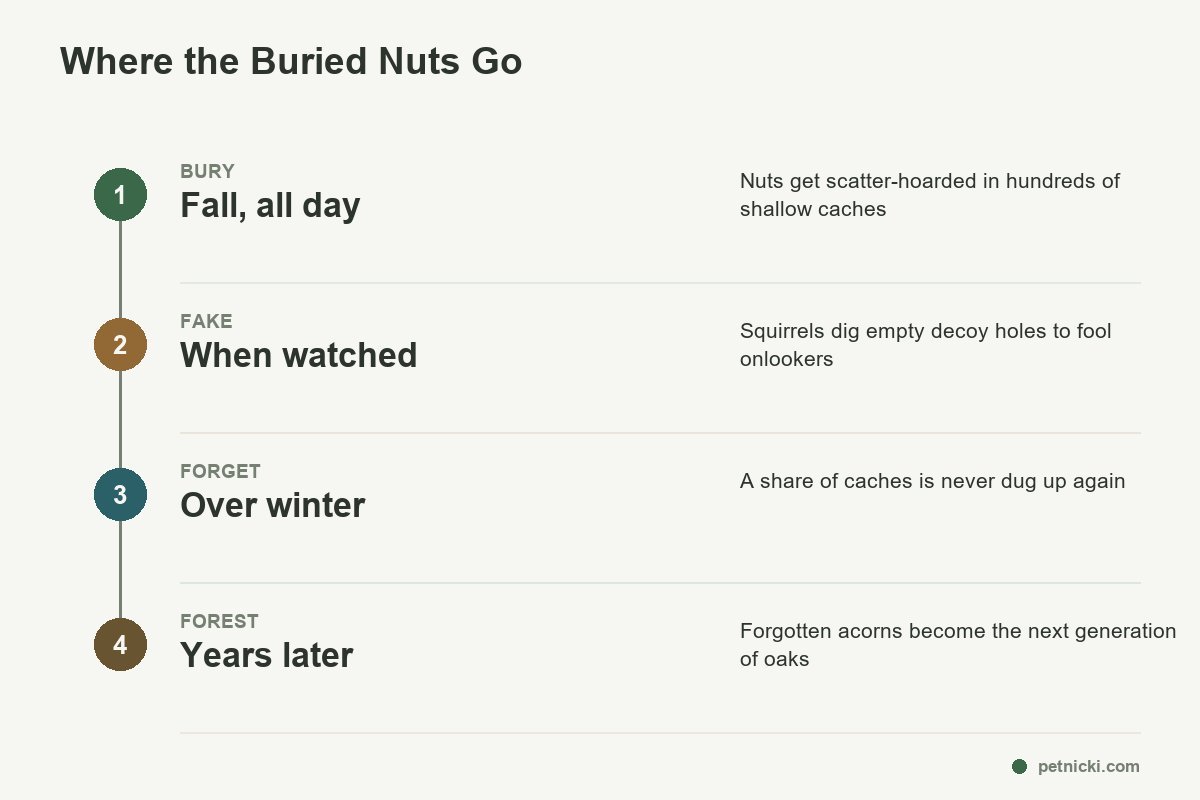
The caches that never get recovered are the ecological punchline.
A share of every autumn’s buried acorns simply stays in the ground, and those become oak seedlings; squirrels plant forests the way clumsy bankers fund cities, by losing track of deposits.
Should You Feed Backyard Squirrels?
No, not deliberately. The Humane Society’s squirrel guidance centers on coexistence and removing attractants, not feeding; hand-fed squirrels lose wariness, chew into attics with new confidence, and concentrate in numbers a yard cannot support. This is the same verdict wildlife agencies give for the rest of the backyard cast, from deer to raccoons, and squirrels earn no exception for being cuter about it.
If squirrels already visit and you refuse to give them up, feed indirectly and imperfectly: plant oaks and hazels, leave a wild corner, and accept feeder losses. What rehabbers ask you to skip entirely is bread, salted or flavored nuts, and corn as a staple; all three fill squirrels up without feeding them, and bread in quantity does the same harm it does to ducks.
Squirrels vs. Your Bird Feeder
The feeder war has an actual engineering answer, and it is the one piece of squirrel lore worth memorizing: the 5-7-9 rule. Mount the feeder at least 5 feet off the ground, 7 feet from the nearest launch point (fence, branch, railing), and with 9 feet of clearance above, because a gray squirrel jumps roughly those distances from a standstill, a wall, and a drop. Feeders inside that envelope are not protected; they are garnished.
Baffles below, capsaicin-treated seed, and safflower-heavy mixes all help at the margins. Squirrels taste capsaicin no more than any mammal enjoys it, while birds do not register it at all, which is why hot-pepper seed is the one trick that keeps working after the squirrels have solved everything else.
FAQ: Feeding and Squirrel Diets
What can I feed squirrels with?
If you feed at all, unsalted nuts in shells, squash seeds, and chunks of apple or carrot are the least harmful picks, offered rarely and never by hand. Skip bread, salted or seasoned nuts, and corn as a staple; rehabbers see the damage from all three.
Do squirrels recognize people?
Yes, backyard squirrels learn to tell individual humans apart and remember who feeds them, which is exactly the problem. A squirrel that recognizes you as the food source will greet strangers with the same expectation, and bold squirrels are the ones that end up trapped as pests.
Should I feed the squirrels in my yard?
No, wildlife groups consistently advise against it: feeding builds dependence, boldness, and unnatural crowding. Planting nut and fruit trees feeds squirrels the way their ecology expects, without teaching them that humans are vending machines.
What is the 5-7-9 rule for squirrels?
The 5-7-9 rule is feeder placement: 5 feet up, 7 feet from any horizontal launch point, 9 feet below overhead access. It maps the outer edge of a gray squirrel’s jumping ability, and a feeder outside that envelope defeats most squirrels without any further gadgets.