
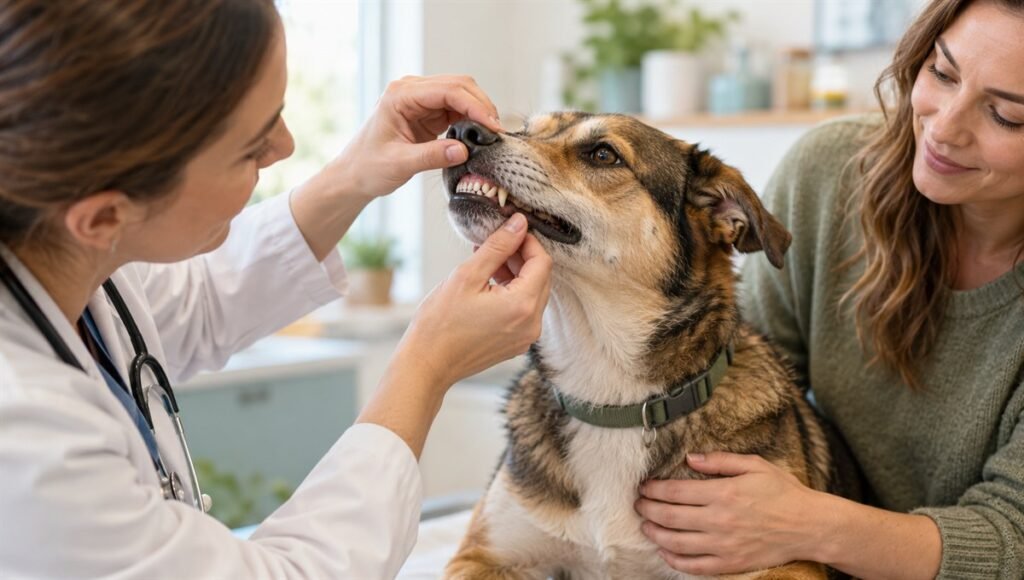

The teeth give the best clue to a dog’s age, and they are precise only during the first year. VCA Animal Hospitals says most puppies have all 42 adult teeth by 6 to 7 months. After that, wear, tartar and a few body signs narrow the age to a range of years, not a date.
That’s the whole method: read the mouth first, use the eyes, coat and muscle as tie-breakers, and accept a range instead of a birthday. How to tell how old a dog is with any confidence depends mostly on how young the dog is.
How to Tell How Old a Dog Is: Start With the Teeth
Teeth give the narrowest answer, and only in a young dog. PetMD’s vet-reviewed guide says a puppy with fewer than 28 small, sharp teeth is 8 weeks old or younger, and that estimates become more subjective once the adult set is in.
Lift the lip gently while the dog is calm, with a treat ready, and work through the mouth in this order.
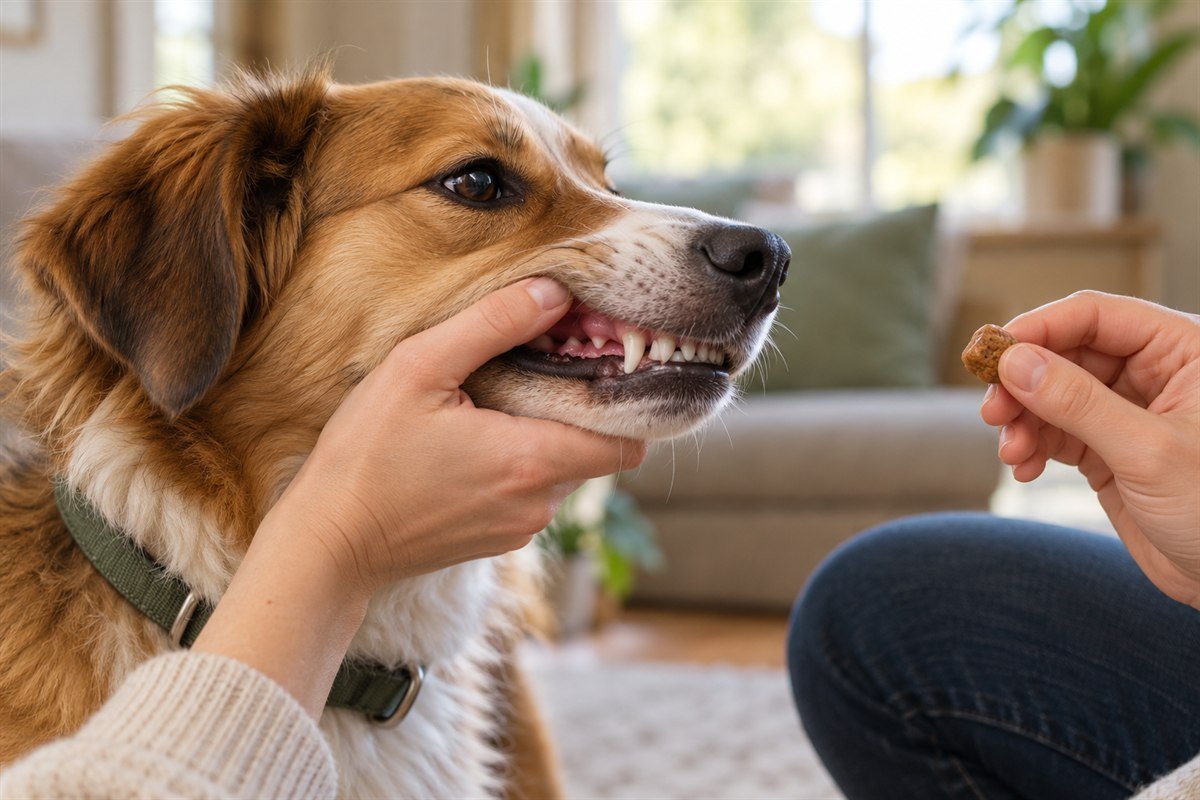
- Look for baby teeth. You will see small, narrow, sharp teeth. VCA dates the first of them to about three weeks and has the full set of 28 through by six weeks, so a complete baby set puts a puppy somewhere between six weeks and four months.
- Check for a mixed mouth. Teething begins at about 3.5 to 4 months, when adult incisors start replacing the baby ones, and PetMD puts the loss of baby teeth at around 3 to 7 months. If you see baby and adult teeth side by side, you are looking at a puppy in that window.
- Count to 42. Adult dogs have 42 teeth, and VCA says most puppies have every one of them by 6 to 7 months. A full adult set tells you the dog is past early puppyhood, and nothing more.
- Judge the surface. At one year most dogs have white teeth with no wear, according to Tallahassee Regional Animal Hospital. From one to two years the teeth may yellow and tartar may appear, and wear and gum disease become more common between five and ten. Elderly dogs can lose teeth altogether.
- Cross-check. Compare what the teeth say with the eyes, coat and muscle below before you settle on a range, and write down the range rather than a single number.
Treat the surface step with suspicion, because teeth record care and breed as well as age. The Tallahassee hospital lists pugs, Yorkshire terriers, greyhounds, poodles and Maltese as more likely to have dental disease or to lose baby teeth late, and PetMD says small breeds can show periodontal disease from around one year. Daily brushing stops plaque from hardening into tartar, so a well-kept mouth can look younger than it is. A professional cleaning does the same, since the hospital says it removes both plaque and tartar, and a cleaned mouth can hide the tartar you would otherwise expect.
What the Eyes, Coat and Body Add
Eyes, grey hair and muscle show that a dog is no longer young, but none of them gives you a year. They work as tie-breakers after the teeth, and each has a trap.
Eyes are the most misread clue. A blue haze over the pupil points to a middle-aged or older dog, and the Tallahassee hospital names it lenticular sclerosis, adding that it needs no treatment and does not interfere with vision. Cataracts — a clouded lens — do affect sight and can be removed if they cause significant problems. Because the AKC notes that cloudiness may be harmless or a sign of cataracts or other eye disease, a hazy eye says the dog isn’t young and nothing more exact, and it deserves a vet’s look before you put it down to age.
Grey hair is the bluntest clue. PetMD calls it rare in young adults, which makes a grey muzzle useful for ruling out a puppy but poor for counting years, so don’t read a number into it. The hospital adds that some dogs go grey from five years old, depending on breed, while others show only a few grey hairs at ten or beyond.
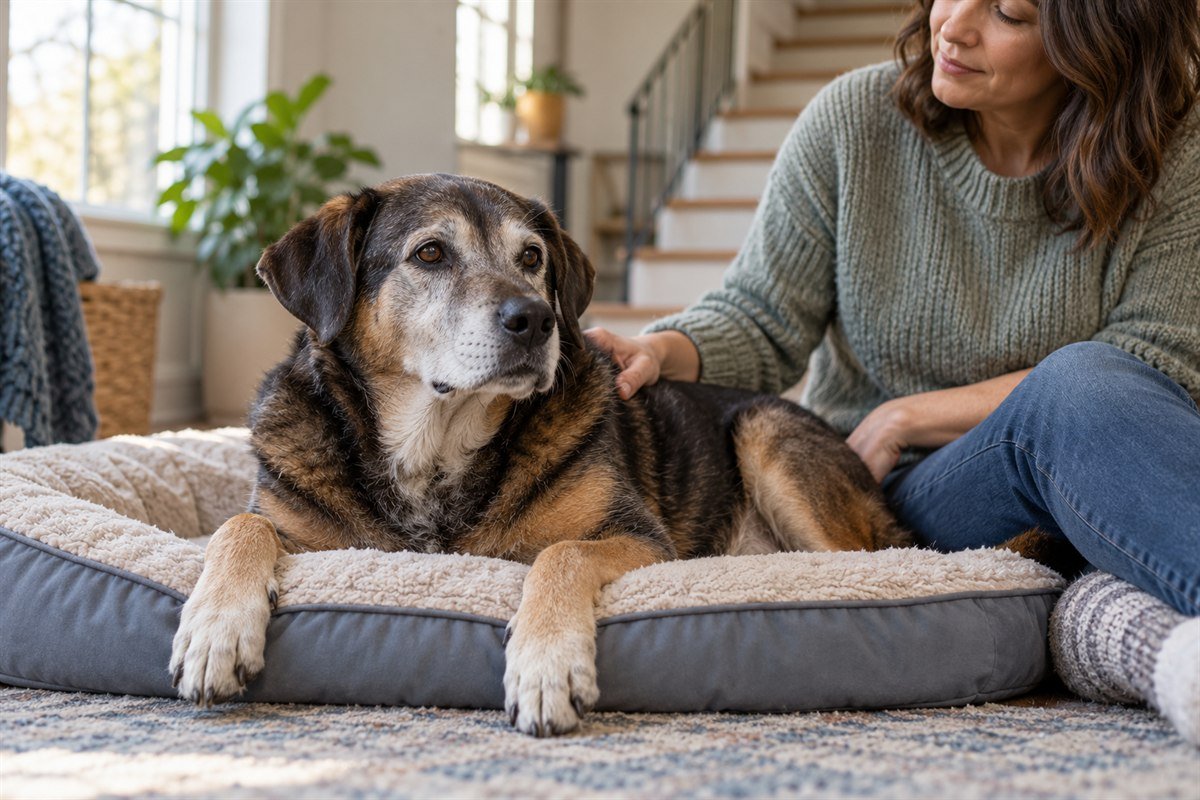
Muscle and movement come last. PetMD calls muscle loss very common in older dogs, and the AKC lists trouble with stairs, jumping into vehicles and getting up after a nap. Stiffness first thing in the morning is another sign the hospital ties to age, although it points out that arthritis can affect younger pets too.
Which Clue to Trust at Which Age
Trust the teeth for puppies and dogs under a year, expect a wide band for adults, and use eyes, grey hair and muscle only to confirm a dog that already looks senior.
In a puppy the teeth give an age in weeks: baby teeth are in by six weeks and adult incisors arrive from about 3.5 to 4 months. Up to 6 or 7 months you can expect an age in months. Between one and two years the surface starts to change, but only by a tinge of yellow or a little tartar. After that the mouth can sort a dog into broad bands and little else.
Adults between two and eight are the hardest group. Jim’s Dog Wash, an Australian grooming franchise, says it is difficult to be completely sure of the age of dogs in that range because some dogs mature faster than others. A grey muzzle, hazy eyes or a stiff gait can tip a dog towards the older end, yet none of them is reliable alone, and breeds that go grey early or lose teeth early can mislead you in either direction.
When Two Guesses Disagree: A Shelter Dog on Reddit
A thread on r/DOG shows how far estimates drift. The owner had adopted a dog from a shelter two weeks earlier, the shelter had guessed three years old, and the owner posted pictures of the dog and its teeth to get a second opinion. Two replies came back.
“Teeth, paw size relative to body, and fur texture will give you the best clues, but something about him looks very young to me. Like only a little over a year if I were to guess without any other info.”
– r/DOG (7 upvotes)
“I would say he’s probably 2years old or younger. His teeth look pretty good, unless they were brushed daily. His face looks young too. I think 2 years old would be a good guess”
– r/DOG (4 upvotes)
The shelter said three, one commenter saw a little over one, and the other settled on two or younger, all from the same photographs. The second reply also raised the brushing problem from earlier. None of the three figures was a measurement.
What to Do With the Estimate
You can ask a vet to look at the mouth, eyes and joints, and to give you a range. Use the middle of that range as the working age, because a single number is what age tools and care schedules need.
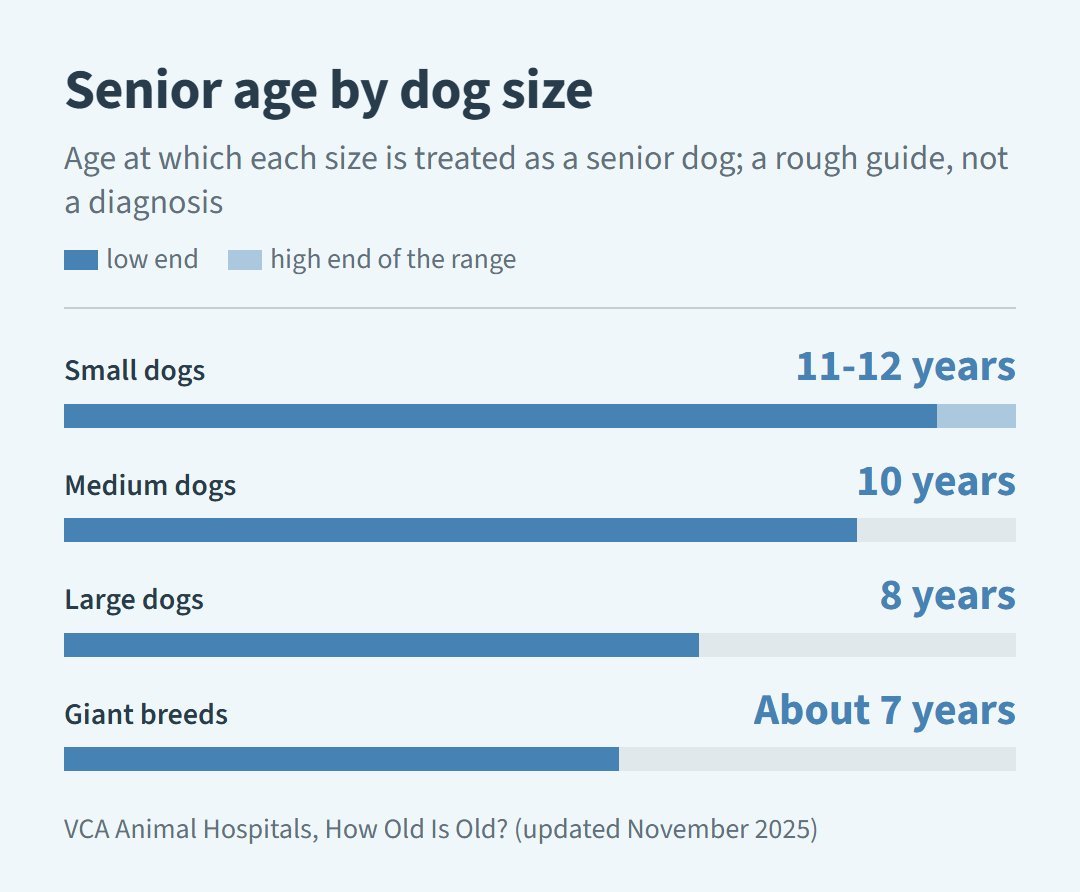
Size changes what an age means. VCA’s age guide puts senior status at 11 to 12 years for small dogs, 10 for medium dogs, 8 for large dogs and around 7 for giant breeds, and it calls its human-year conversion only a rough estimate.
Once you have the range, you can enter it in our dog age calculator to convert it into human years, and the dog age chart sets out the same conversion by size. For a puppy, our puppy growth chart lines weight up against age as a second check.