

The saddest part of canine arthritis isn’t the limp; it’s the giving up. The ball that stops being chased, the couch that stops being jumped on, and the walk that quietly gets shorter until it’s a loop around the yard.
Dog owners from Massachusetts to everywhere else often assume that decline is just what aging looks like, when much of it is actually pain, and pain is treatable. Modern arthritis care doesn’t cure the joint, but it changes what daily life feels like inside it, and dogs respond by taking their old lives back piece by piece.
Here’s how the improvement actually happens.
Build a Personalized Treatment Plan With Veterinary Guidance
Every arthritic dog is arthritic in their own way, which is why the plan comes before any therapy. A veterinarian starts with a hands-on exam and, where needed, imaging, then weighs the dog’s age, weight, affected joints, and daily life to decide which tools to reach for first. A ninety-pound retriever with sore hips needs a different program than a dachshund with a stiff elbow.
The personalized plan is also a living one. Good veterinary care sets a baseline, tries a combination, and adjusts at follow-ups based on how the dog actually responds. Owners are the eyes between visits, reporting what improved and what didn’t, so the plan keeps fitting the patient rather than the textbook.
Use Red Light Therapy to Support Joint Comfort
Red and near-infrared light therapy, known clinically as photobiomodulation, has moved from rehab clinics into living rooms, and it earns its place in many arthritis plans as a gentle, drug-free layer. Delivered properly, the light supports circulation and comfort in the treated tissue, and sessions are short enough to feel like attention rather than treatment. The practical side is simple:
- Sessions of a few minutes per joint, several times a week
- Devices designed for dogs handle fur, which blocks much of the light
- Best used consistently over weeks rather than as a one-off
- Discuss with your vet first, particularly if your dog has a tumor, is pregnant, or has another condition that may affect treatment suitability.
Many dogs come to enjoy the ritual, presenting the sore hip on cue. A therapy the dog likes is a therapy that actually happens.
Manage Pain With Medications and Joint Injections
Pain control is the engine of the whole plan, because a dog in pain protects the joint by refusing to use it. The condition is common enough that the medical playbook is deep: research published through the National Institutes of Health cites prevalence estimates as high as 20 to 30 percent of dogs over the age of one year.
Veterinarians can layer anti-inflammatory medications, newer monoclonal antibody injections given monthly, and joint injections for targeted relief, choosing combinations that suit the individual dog’s health. Owners usually notice the change behaviourally first: deeper sleep, easier stairs, and the grumpiness fading as the ache does. Comfort is the foundation every other therapy builds on.
Improve Strength and Mobility Through Physical Rehabilitation
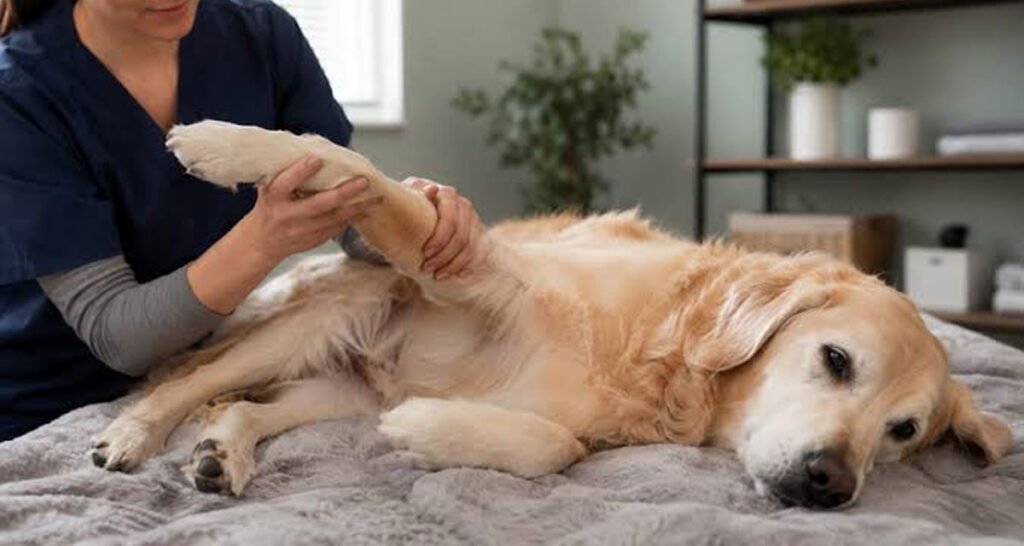
Once pain is managed, movement switches sides and starts working for the joint instead of against it. Rehabilitation rebuilds the muscle that stabilizes joints, using controlled leash walks, underwater treadmill work, and simple home exercises a rehab vet can demonstrate in one visit. A complete dog arthritis treatment guide walks owners through how these approaches can fit alongside medication and home therapies.
MedcoVet similarly emphasizes a multimodal approach, bringing together pain management, weight control, physical therapy, and non-invasive therapies. The key is consistency over intensity the same modest walk daily beats an ambitious weekend outing that leaves the dog sore for two days. Owners often describe a turning point a few weeks in, when the dog starts requesting the walk again. That request is the treatment working.
Support Healthier Movement With Weight Management
Weight is the quiet multiplier in arthritis, because every extra kilogram presses on sore joints thousands of times a day. For heavier dogs, slimming down is often the single most powerful therapy on the whole list, and it costs nothing but consistency:
- A measured daily food amount instead of free feeding
- Treats budgeted into the day’s calories, not added on top
- A target weight and monthly check-ins set with the vet
- Low-impact activity that burns energy without pounding joints
The payoff compounds: less weight means less pain, which allows more movement, which builds muscle and burns more weight. Few medical interventions offer a cycle that generous.
Combine Home Care With Professional Arthritis Treatment
The real secret of successful arthritis care is that the clinic and the living room work the same case. Professional pieces, like medication reviews, rehab sessions, and progress exams, set the direction, while home pieces, like light therapy sessions, daily walks, orthopedic bedding, ramps, and rugs on slippery floors, deliver the daily dose of comfort.
Neither half works well alone. A clinic plan without home follow-through fades between appointments, and home enthusiasm without veterinary direction wanders. Together they form a routine the dog can feel every single day, which is what long-term comfort actually is: not a procedure, but a well-run life.
Conclusion
Ask owners what successful treatment looks like and they rarely mention the medicine; they describe a personality returning. The ball gets brought back unprompted, the window seat is reclaimed, and the walk stretches past the corner it had shrunk to. That’s the honest promise of arthritis care: not a young dog again, but this dog, comfortable in their own body, doing the things that make them who they are. It takes a veterinarian’s plan, a few habits, and some patience while the layers take hold. The reward wags its tail at the door with the leash-look you thought was gone. Age was never the whole story. Pain was, and pain can be answered.