
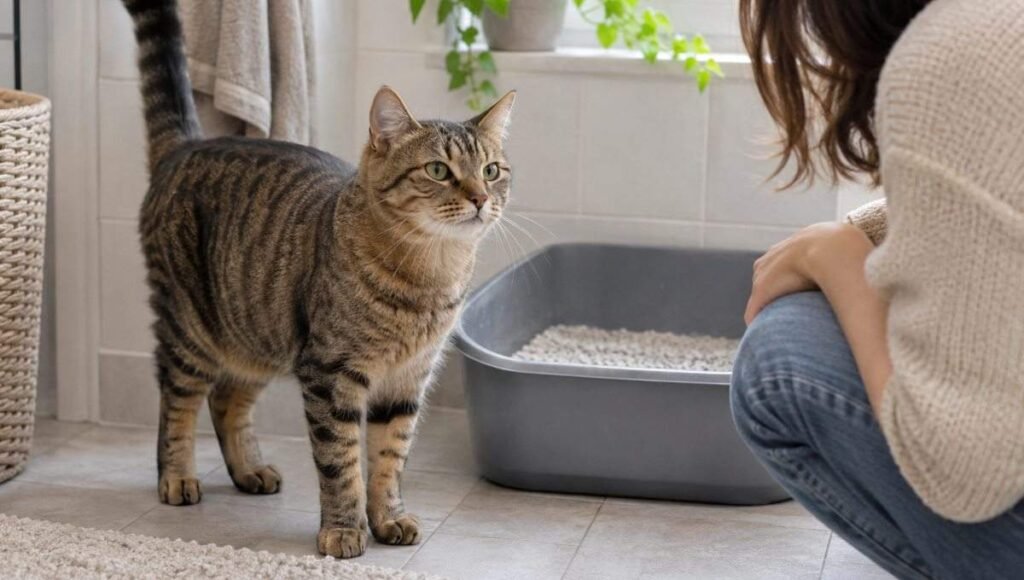

Cat UTI symptoms are frequent trips to the litter tray, straining, small amounts of urine, blood and peeing outside the tray, and bacteria cause only 1 to 3 per cent of this kind of illness in young to middle-aged cats, according to Cornell’s Feline Health Center. A male cat that strains and passes little or no urine is an emergency, whatever the cause.
Vets use a wider label than UTI, because an infection, a bladder stone, a urethral plug and a painful bladder with no known cause all look the same from the living room. Below, the signs come first, then the emergency, then what the sources say lies behind them and what a vet tests. It’s general information, not a diagnosis, so ring your vet if you’re worried.
Cat UTI Symptoms Vets List
Cornell’s Feline Health Center lists six signs of lower urinary tract disease in cats: difficult or painful urination, urinating more often, crying out while peeing, blood in the urine, peeing outside the litter box and frequent licking of the genital area.
PetMD’s page on the same disease, written by Jamie Lovejoy, DVM, and updated in December 2025, describes the signs in an owner’s terms: peeing on clothes, bedding or rugs, frequent trips to the box, small amounts and vocalising. Peeing outside the tray is on both lists, so a cat that suddenly avoids the box may have a medical reason, not a behaviour problem.
A second PetMD page, on urinary blockage, was written by Veronica Higgs, DVM, and reviewed by Brittany Kleszynski, DVM, in March 2026. It adds lethargy, hiding, lower appetite, vomiting and diarrhoea. The iCatCare guidelines say signs of illness beyond the bladder, such as vomiting, lethargy and weakness, appear once a blockage has lasted more than 24 hours. If your cat has stopped eating, the site’s page on how long a cat can go without eating covers that side.
When a Male Cat Needs an Emergency Vet
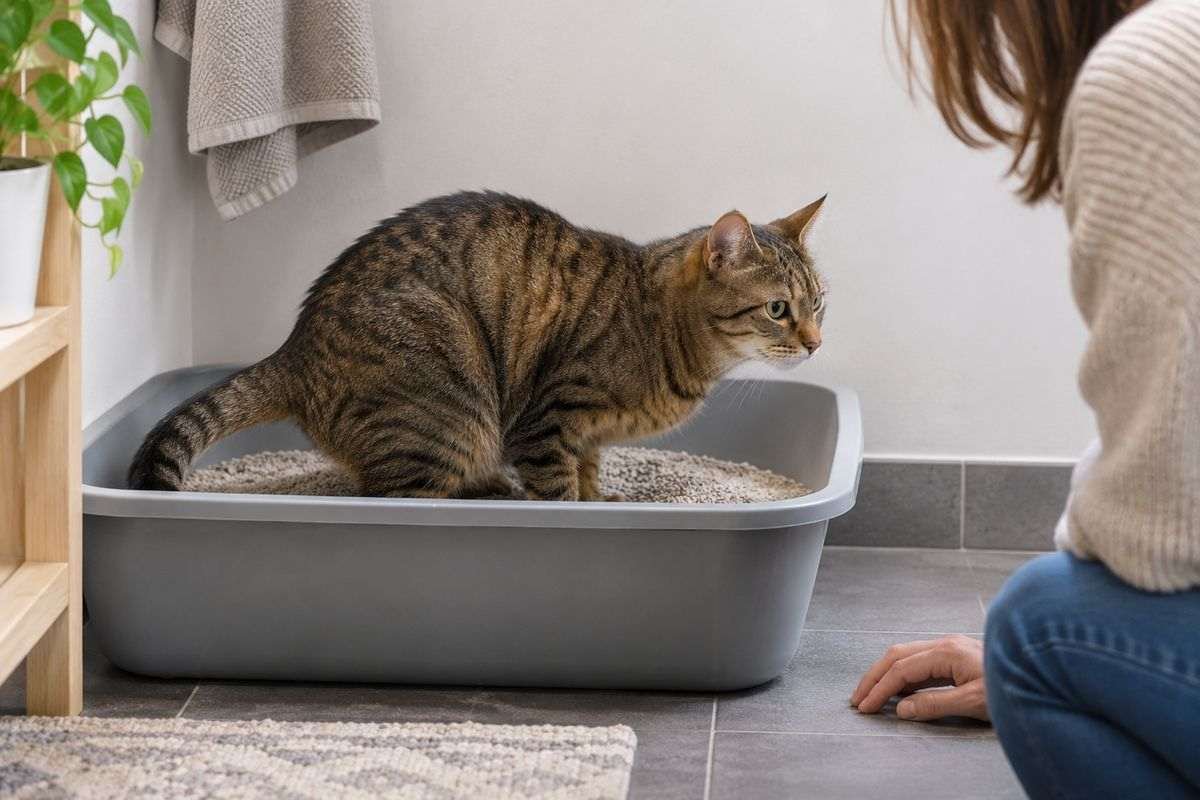
Cornell calls urethral obstruction an absolute emergency that needs immediate veterinary treatment, and says the time from complete blockage to death may be less than 24 to 48 hours. Male and neutered male cats are at risk because their urethra is longer and narrower than a female’s.
The defining sign, in PetMD’s words, is straining to pee with little or no urine, or only a few drops. The iCatCare guidelines describe the trap: caregivers may mistake the straining for constipation, because the cat crouches and pushes in the tray and nothing comes out. If you can’t tell whether your cat is making urine, PetMD says to treat it as an emergency.
A commenter in r/AskVet drew the line like this, and it matches the vets’ sources:
“If he’s not passing any urine at all that’s an emergency. If he is passing urine but not a lot that’s an urgent visit to the vet.”
– r/AskVet, May 2026 (16 upvotes)
That’s a commenter, not the vet treating the cat. A female cat can block too, PetMD says, though it’s more common in males. Call an emergency practice and say what you’ve seen — don’t wait for the regular clinic to open.
Is It Really a UTI? What Else Causes the Same Signs
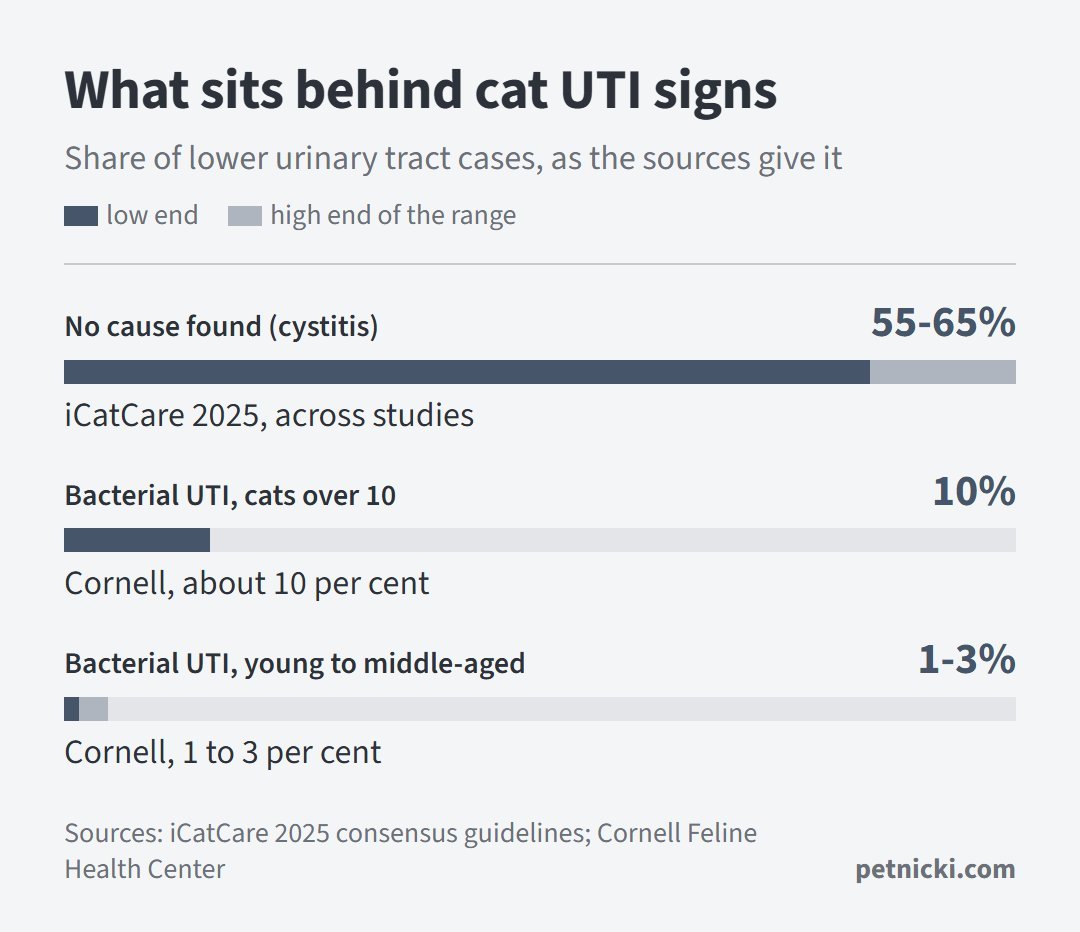
A bacterial UTI is the less common explanation. Across studies in the 2025 iCatCare consensus guidelines, around 55 to 65 per cent of cats with lower urinary signs had no cause found and were classed as having idiopathic cystitis, while infection explained under 3 per cent of otherwise healthy adults.
| Source | What it says about bacterial infection | Cats it covers |
|---|---|---|
| Cornell Feline Health Center | 1 to 3 per cent of lower urinary tract disease | Young to middle-aged cats |
| Cornell Feline Health Center | About 10 per cent | Cats over 10 |
| iCatCare guidelines, 2025 | Under 3 per cent of cases; “uncommon” | Otherwise healthy adult cats |
| PetMD, December 2025 | Lists UTI as a cause; gives no percentage | Cats in general |
Cornell’s other causes are bladder stones, urethral plugs and cystitis with no identified cause. The two common stone types are struvite and calcium oxalate, and a plug is soft material made of minerals, cells and mucus-like protein. PetMD adds tumours, structural problems and injuries, but calls them less common.
One poster in r/cats asked whether a cat peeing on a litter box liner meant a UTI and whether it could wait until the morning. The update after the emergency visit:
“Update #2: looks like she has bladder stones. Will need surgery. So glad I brought her in tonight.”
– r/cats, September 2026 (25 upvotes)
Which Cats Get Bacterial Infections More Often
Cornell says bacterial infections are more common in cats over 10 years old, at about 10 per cent against 1 to 3 per cent in young to middle-aged cats. The iCatCare guidelines add that prevalence is higher in cats with chronic kidney disease.
Cornell also names bladder stones and diabetes mellitus as conditions to look for when a cat gets an infection. Its advice is to correct any underlying condition alongside the antibiotic, choose the drug from laboratory results and treat for an appropriate length of time, usually several weeks. An older cat with a first infection may therefore get more than a prescription — the vet may go looking for the reason it happened.
What a Vet Tests Before Calling It a UTI
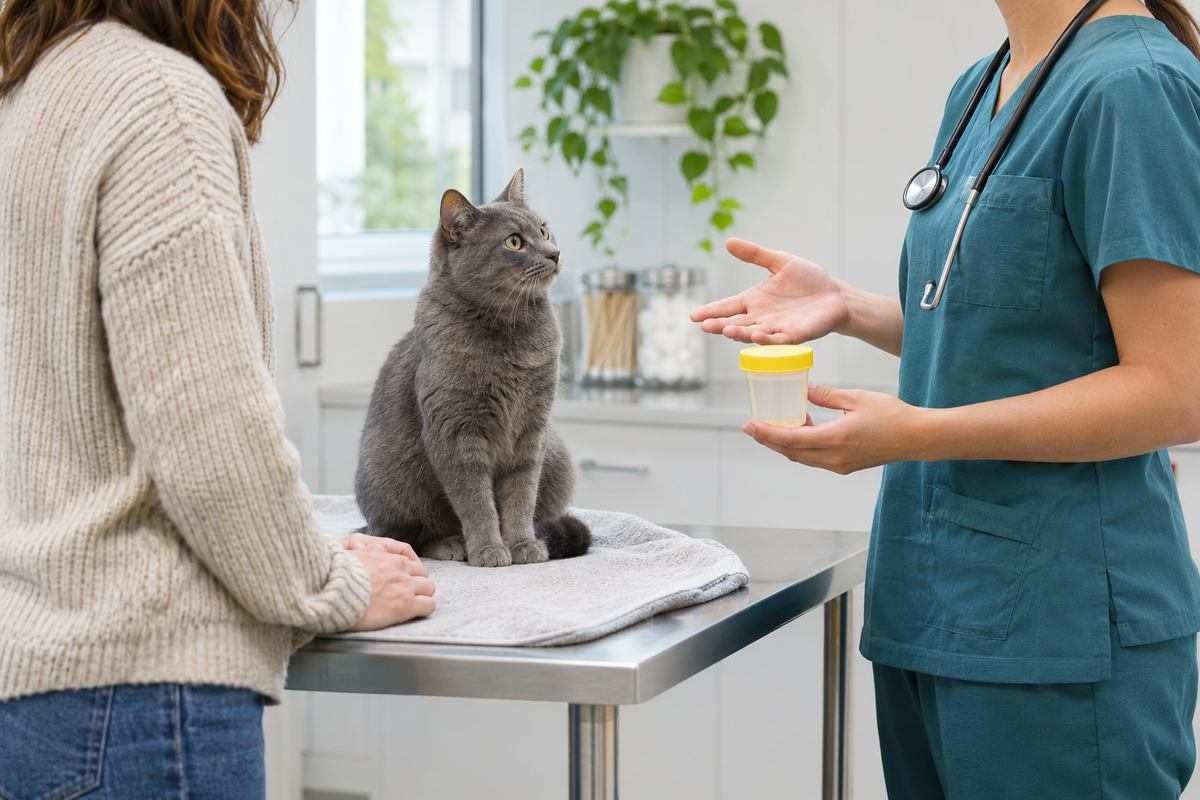
The iCatCare guidelines call urinalysis a vital part of investigating every lower urinary tract disease, and Cornell says urine for a bacterial culture is best drawn straight from the bladder with a sterile needle, because bacteria normally live in the lower urethra and a free-catch sample can pick them up.
The guidelines ask for the dipstick and sediment exam within an hour of collection, since crystals can appear artificially in urine that’s been refrigerated or left standing. A culture sample should come before any antibiotic, and squeezing the bladder to collect urine isn’t recommended. PetMD adds that blood work looks for systemic infection, diabetes and kidney disease, X-rays usually show stones, and ultrasound is preferred for kidney or bladder abnormalities.
Cornell flags one more trap. Temporary improvement on antibiotics doesn’t prove a bacterial infection, because many lower urinary tract cases wax and wane on their own. The same urine test sits at the centre of the dog version of this question, which dog UTI symptoms covers.
What Treatment Looks Like Once the Cause Is Known
PetMD says treatment depends on the cause: antibiotics for a UTI, surgery or a veterinary diet for bladder stones, and pain relief, diet and stress management for idiopathic cystitis. Which of those your cat needs is exactly what the tests settle.
The strategies PetMD lists for the long run are wet food, a water fountain, more litter box options and weight loss for overweight cats. Symptoms can improve within days, but the condition often returns, so management may be lifelong, and a cat that responds to a veterinary diet should stay on it indefinitely, according to the same page.
None of the pages used here gives a dose or tells owners to treat a suspected UTI before a test. Cornell, PetMD and iCatCare each single out one sign: a cat that strains and produces little or no urine. That’s the one to act on tonight.