
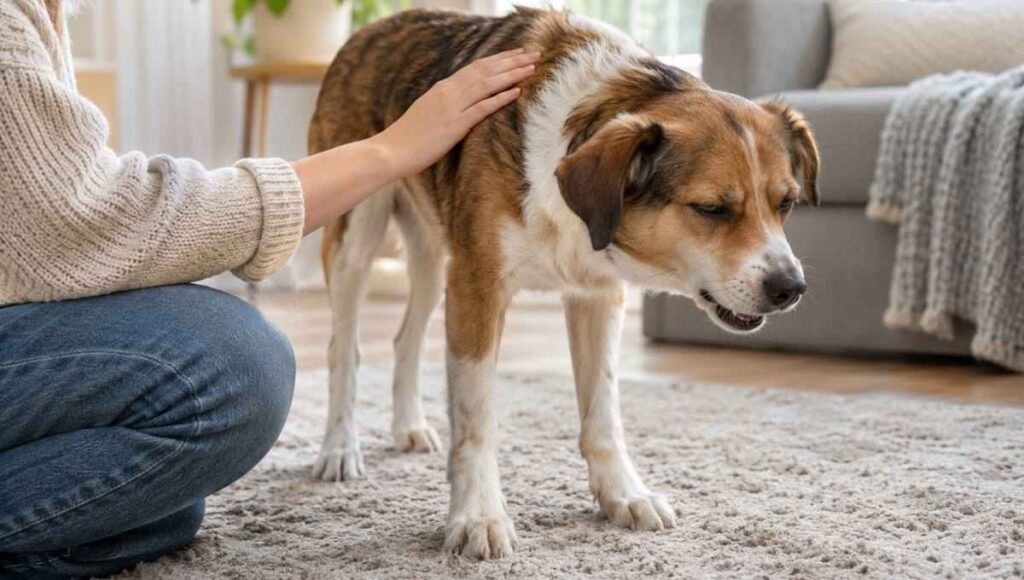

Kennel cough symptoms are a persistent, dry, honking cough, sometimes with gagging, sneezing, a runny nose and low energy, and most dogs recover within 10 to 14 days, according to PetMD. The American Kennel Club says one to three weeks, and both pages list trouble breathing as a reason to see a vet.
Kennel cough isn’t one illness. Cornell’s Riney Canine Health Center calls it a collection of diseases, and PetMD lists several viruses and bacteria that can cause it, often more than one at once. Below, the signs come first, then how long each source says it lasts, when to see a vet, what else can sound the same and why a vaccinated dog can still cough. It’s general information, not a diagnosis, so ring your vet if you’re worried.
Kennel Cough Symptoms Vets List
PetMD’s main sign is a persistent, dry, honking cough, the AKC calls it forceful, and Cornell’s Riney Canine Health Center describes a dry, harsh, non-productive cough. Gagging, retching, sneezing, a runny nose and eye discharge can come with it.
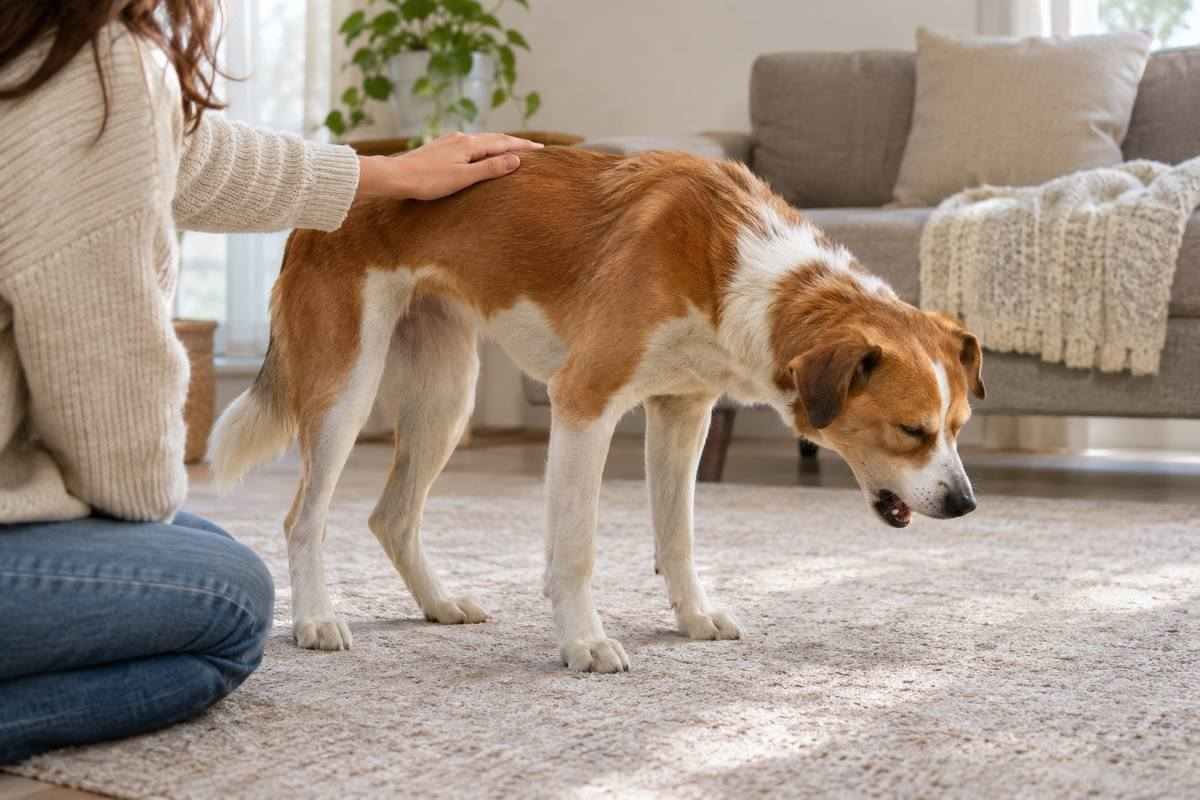
PetMD, whose page was written by Melissa Boldan, DVM, reviewed by Teresa Manucy, DVM, and updated in October 2025, adds decreased energy and, less often, vomiting. The AKC says some dogs have a low fever, mild lethargy or a reduced appetite. Cornell says nasal discharge may or may not be present, so if your dog coughs without a runny nose, you can’t rule it out.
How Long Kennel Cough Lasts, Source by Source
PetMD says most dogs recover within 10 to 14 days. The AKC says one to three weeks, with severe cases taking longer, and gives an incubation of 2 to 14 days where Cornell gives 2 to 10. PetMD does not state an incubation period.
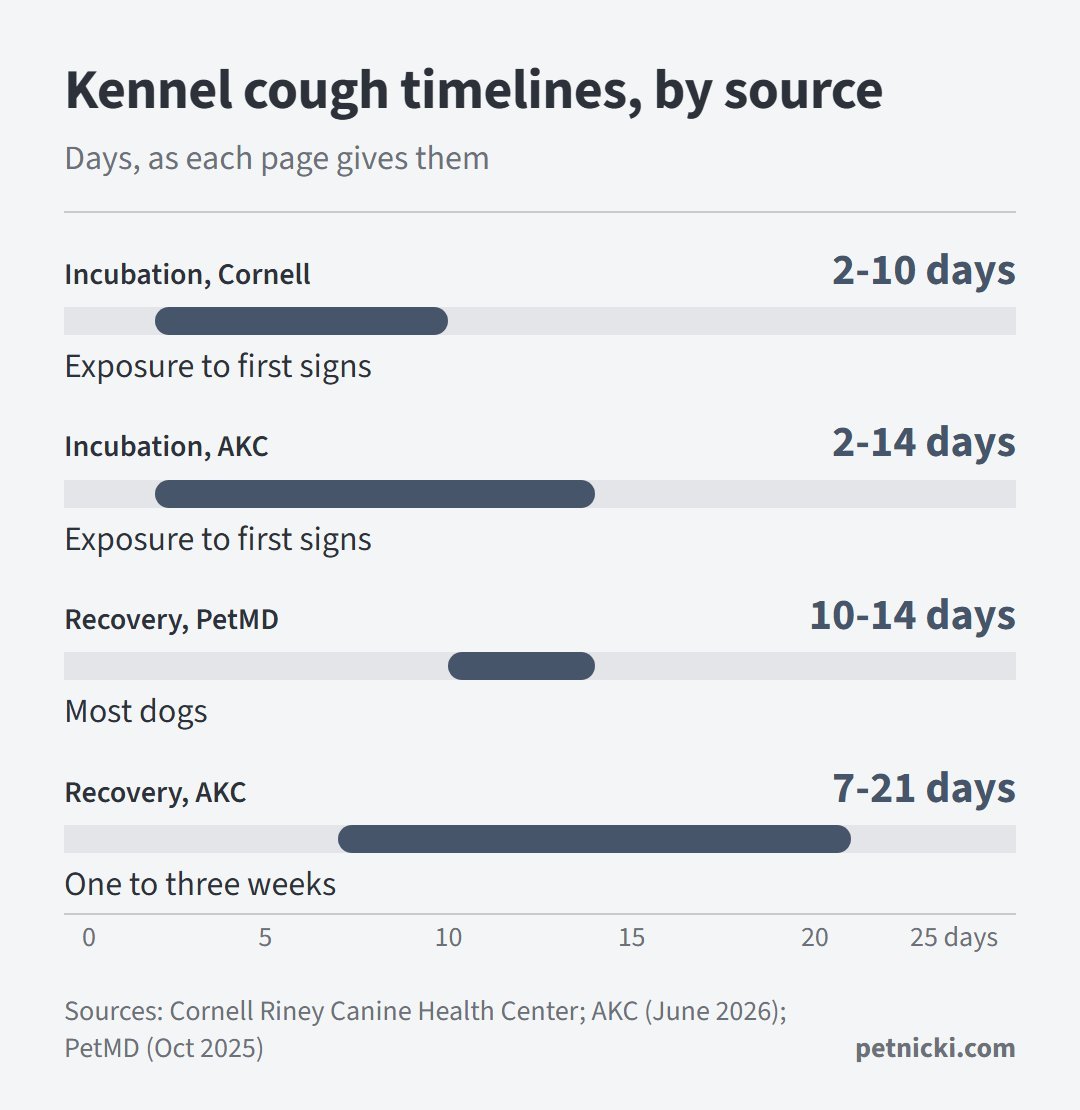
The AKC says dogs generally need at least a week of reduced activity, and that a coughing dog should stay away from other dogs while it has symptoms and for at least two weeks after the cough stops. Most cases are managed with rest and supportive care, according to PetMD, with a vet prescribing a cough suppressant if needed and antibiotics when a bacterial infection is suspected. Cornell notes that the cough can keep a dog from resting, which is when anti-tussives may be prescribed.
PetMD’s supportive care list covers watching your dog’s food and water intake, encouraging eating, probiotics if a vet recommends them and steam from a bathroom shower. If you’re counting days from the first cough, the sources’ windows run from a week to three weeks.
When Kennel Cough Needs a Vet
PetMD says kennel cough is generally not a medical emergency, but lethargy, green or yellow nasal discharge, a productive cough, difficulty breathing or refusing food and water means contacting a vet. Puppies, senior dogs and dogs with other conditions should be seen sooner.
PetMD also lists brachycephalic breeds such as English Bulldogs, French Bulldogs and Pugs among the dogs at higher risk. If your dog is one of those breeds, ring early. Cornell says kennel cough can progress to pneumonia, with laboured breathing, a moist cough, a high fever and nasal discharge, and that pneumonia needs more aggressive treatment, sometimes including hospital care.
Call before you go — the AKC says to ring the clinic ahead so staff can limit exposure to other pets, and it calls kennel cough highly contagious.
When It Isn’t Kennel Cough
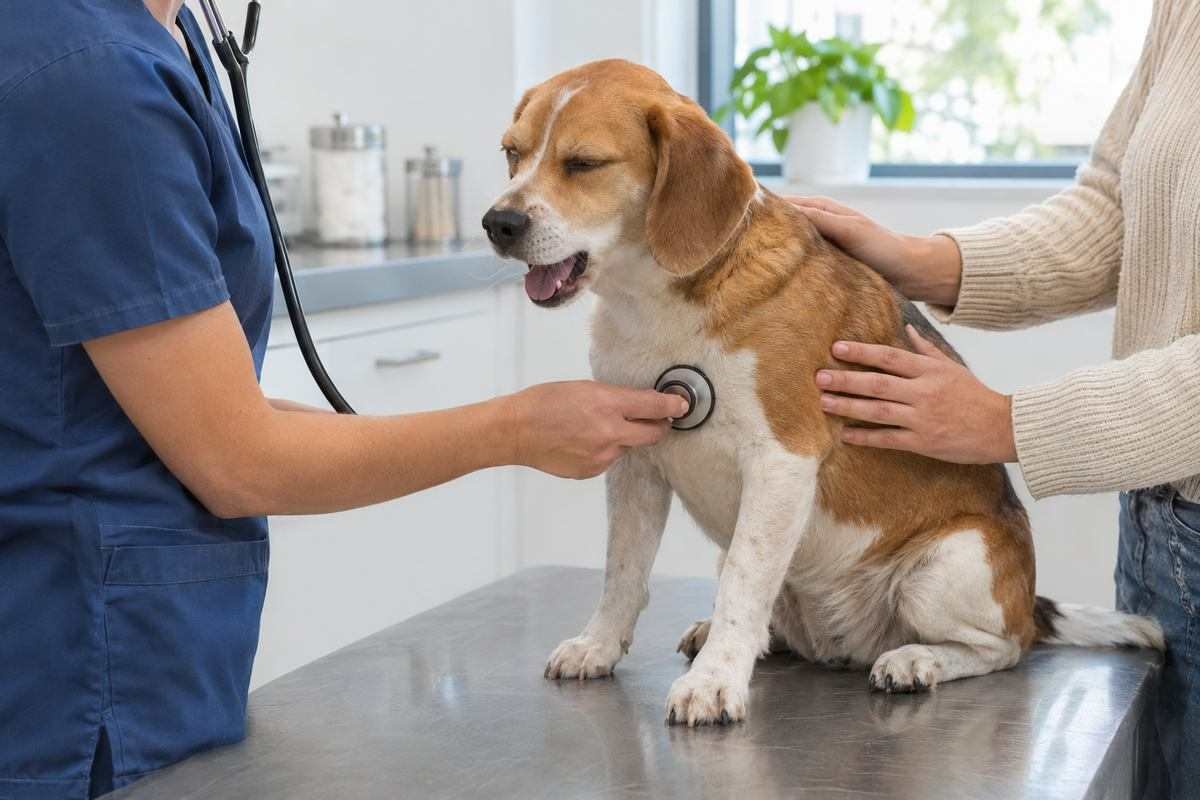
The AKC says coughing can also signal a collapsing trachea, bronchitis, asthma, heart disease, canine distemper or canine influenza. A vet’s diagnosis rests on exposure history and the typical cough, and may add swabs, cultures, bloodwork or chest X-rays.
A poster in r/DogAdvice described a 9-year-old Australian Shepherd with a dry heaving, gagging motion that had started the day before, and asked whether it was kennel cough. A reply with 108 upvotes was a warning:
“That looks nearly identical to my dog that had heart failure… Keeping in mind I’ve never dealt with kennel cough before though. Get a vet to tell you which one it is.”
– r/DogAdvice, December 2025 (108 upvotes)
That’s a commenter’s experience, not a diagnosis, and the commenter says as much. Only a vet can tell which. A noisy burst that isn’t a cough at all is covered on the site’s page about reverse sneezing in dogs, where Veterinary Partner says it can sound like the honking of a collapsing trachea.
Why Vaccinated Dogs Can Still Cough
The Bordetella vaccine covers one of many possible causes. PetMD says it can reduce the risk or severity of illness but doesn’t protect against every organism, so a vaccinated dog can still get kennel cough.
| Source | What it says the vaccine does |
|---|---|
| PetMD, October 2025 | Helps protect against Bordetella bronchiseptica; can reduce risk or severity; doesn’t cover every organism |
| AKC, June 2026 | Boosters typically every 6 to 12 months; vaccinated dogs more likely to have milder signs and recover faster |
| Cornell Riney Canine Health Center | Doesn’t prevent infection but can lessen severity, including pneumonia and the need for emergency care |
PetMD names influenza, coronavirus, adenovirus, parainfluenza, herpesvirus, distemper, Mycoplasma and Streptococcus zooepidemicus among the other possible causes. A poster in r/DogAdvice put the worry plainly:
“She’s 3 months old and fully vaccinated, very energetic and full appetite.”
– r/DogAdvice, April 2026 (14 upvotes)
Cornell calls the Bordetella vaccine a lifestyle vaccine for dogs at least 12 weeks old that board, visit groomers or play at dog parks. Timing for puppies is on the site’s pet vaccination schedule.
Is Kennel Cough Contagious to People?
PetMD says kennel cough isn’t contagious to people. The AKC says some related pathogens can rarely infect people, mainly those with weakened immune systems. Between dogs, the AKC calls it highly contagious, which is why your coughing dog is the one to keep away from the park.
The AKC lists direct contact, airborne droplets from coughing or sneezing, and shared bowls, toys and bedding. Cornell adds door handles and names close-contact places: grooming facilities, shelters, competitions and parks. The AKC’s practical advice is to keep a coughing dog away from other dogs while it has symptoms and for at least two weeks after the cough stops.