
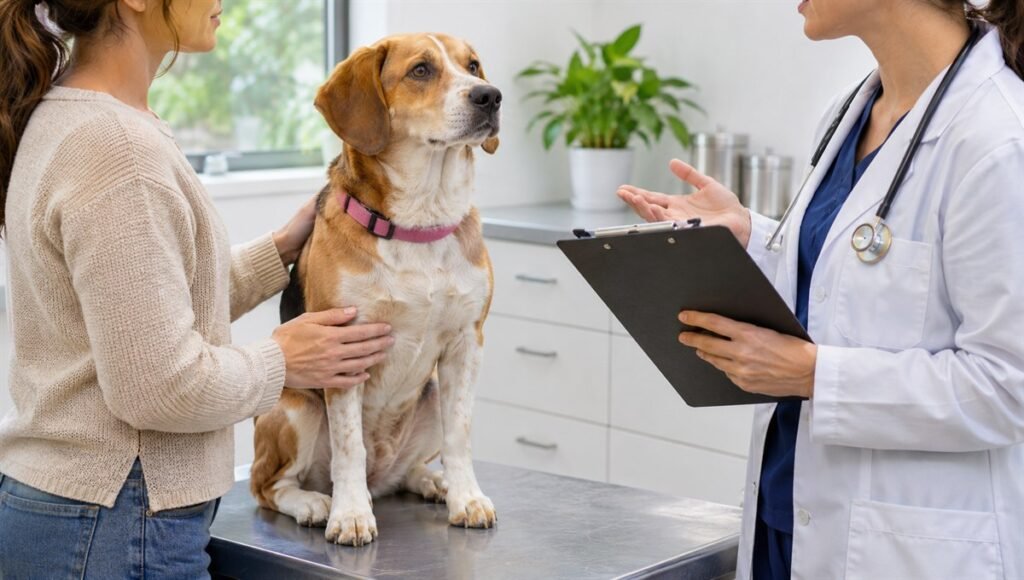

Dog UTI symptoms most often include frequent urination in small amounts, straining or pain while peeing, indoor accidents, blood in the urine and licking of the genital area, according to PetMD. Providence Vet’s pet guide adds that straining with little or no urine coming out is an emergency.
Most vet pages give a list and stop there. Below, four of them are compared sign by sign, followed by the emergency signs, the tests behind a diagnosis and why home remedies aren’t the plan. It’s general information, not a diagnosis, so ring your vet if you’re worried.
Dog UTI Symptoms That Four Vet Pages Agree On
Six signs appear on every page compared here: frequent urination, straining or pain, blood, indoor accidents, genital licking and unusual urine odour, and PetMD, which is written by Michael Kearley, DVM, and reviewed by Melissa Boldan, DVM, adds thirst, lethargy and fever while the other pages split on those.
| Sign | PetMD | Newport Veterinary Hospital | Harvester Veterinary Hospital | Providence Vet |
|---|---|---|---|---|
| Frequent urination, small amounts | Yes | Yes | Yes | Yes |
| Straining or pain | Yes | Yes | Yes | Yes |
| Blood in the urine | Yes | Yes | Yes | Yes |
| Indoor accidents | Yes | Yes | Yes | Yes |
| Licking the genital area | Yes | Yes | Yes | Yes |
| Strong or foul urine odour | Yes | Yes | Yes | Yes |
| Increased thirst | Yes | Yes | Not listed | Not listed |
| Lethargy | Yes, in severe cases | Yes | Not listed | Emergency list only |
| Fever | Yes, in severe cases | Yes | Not listed | Not listed |
PetMD also lists genital discharge, swelling of the genital region and copper-coloured saliva staining on the fur. That’s a longer list than most owners expect. A dog that drinks more, urinates more and licks the vulva may not have a UTI at all, since the same signs appear on this site’s pyometra signs page for unspayed females.
When a Dog UTI Is an Emergency
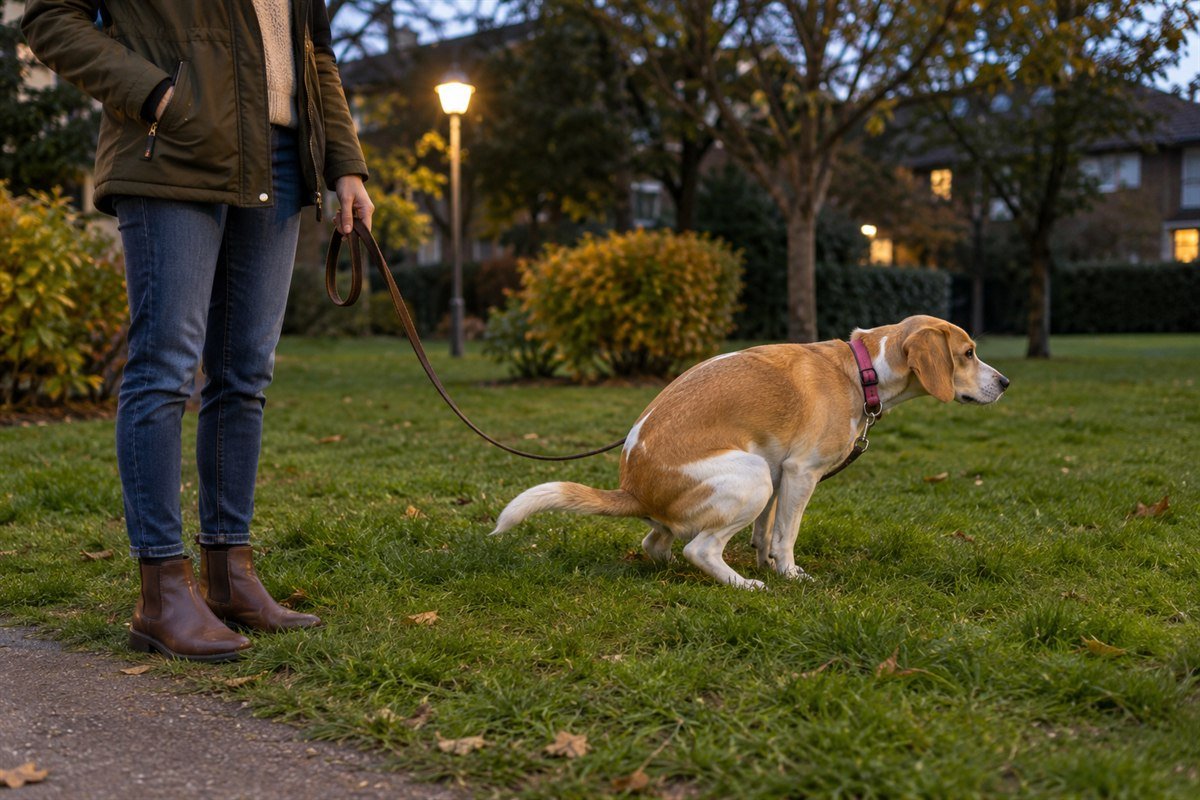
PetMD says a UTI in a dog can be a veterinary emergency, because left untreated it can lead to a kidney infection, sepsis or kidney failure — and Providence Vet’s pet guide lists the signs that mean immediate care.
- Straining to urinate with little or no output
- Crying out in pain while urinating
- A firm, bloated abdomen
- Becoming lethargic or starting to vomit
- Refusing food or drink
That list covers dogs and cats, so use it as a floor, not a ceiling. If your dog is lethargic, stops eating or can’t pass urine, ring an emergency clinic straight away. Don’t wait for the next appointment.
Which Dogs Get UTIs More Often
PetMD puts the figure at about 14% of dogs, with female dogs affected more often than males and middle-aged to older dogs at higher risk. Diabetes, Cushing’s disease, kidney disease and a recessed vulva all raise the odds, and Harvester Veterinary Hospital says a female dog’s shorter urethra gives bacteria easier access to the bladder.
Breeds prone to crystals and bladder stones, which PetMD lists as Schnauzers, Dalmatians, Yorkshire Terriers, Shih Tzus and Poodles, are also more exposed, and Harvester says stones can trap bacteria against the bladder wall, which makes infections more frequent and harder to clear.
What a Vet Tests Before Treating a Dog UTI
PetMD says a vet will examine the dog and test a urine sample, and may send it off for culture to find which bacteria are growing and which antibiotic suits them. Blood work and imaging such as X-rays or ultrasound may follow, and Providence Vet says imaging can show stones, tumours or structural problems.
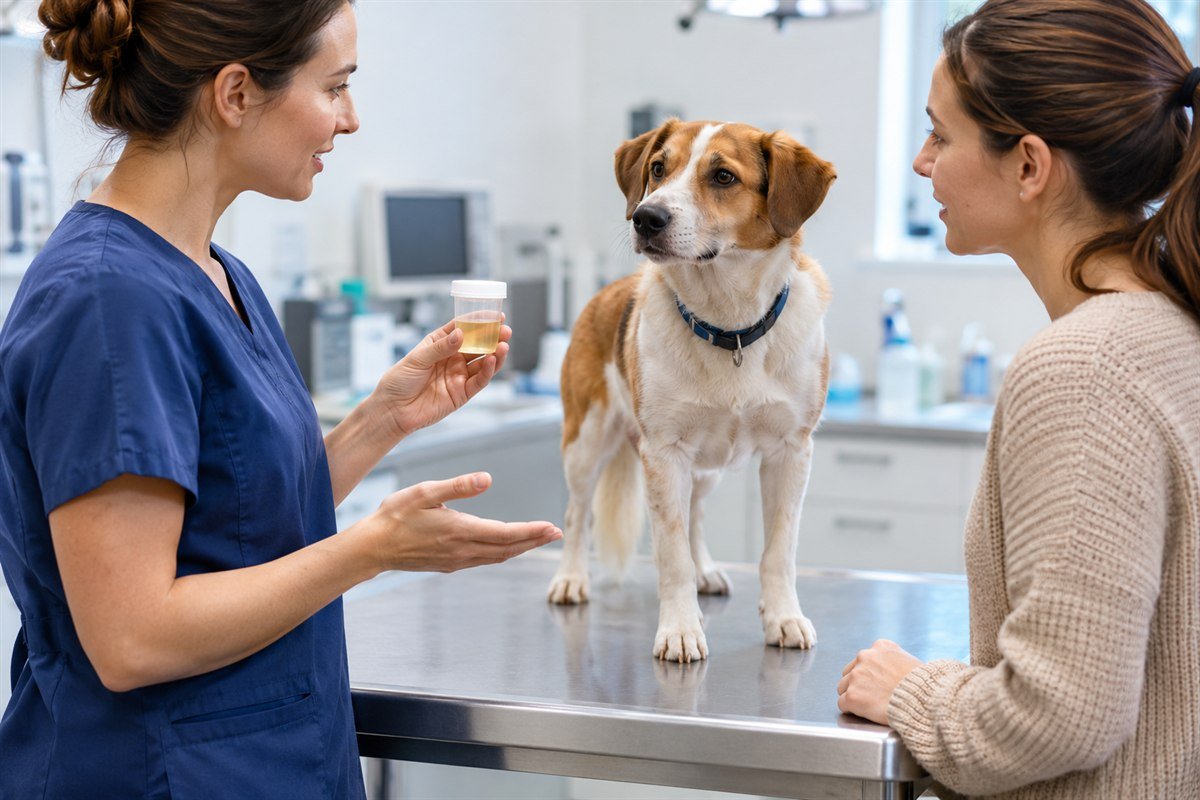
The test matters because other conditions can mimic a UTI, as Newport Veterinary Hospital points out, and because the result sorts the case into one of two kinds. PetMD calls a UTI simple when the dog has no predisposing factors and fewer than three infections in 12 months, and complicated or recurrent when there is an underlying condition, recent antibiotic use or more than three infections in a year.
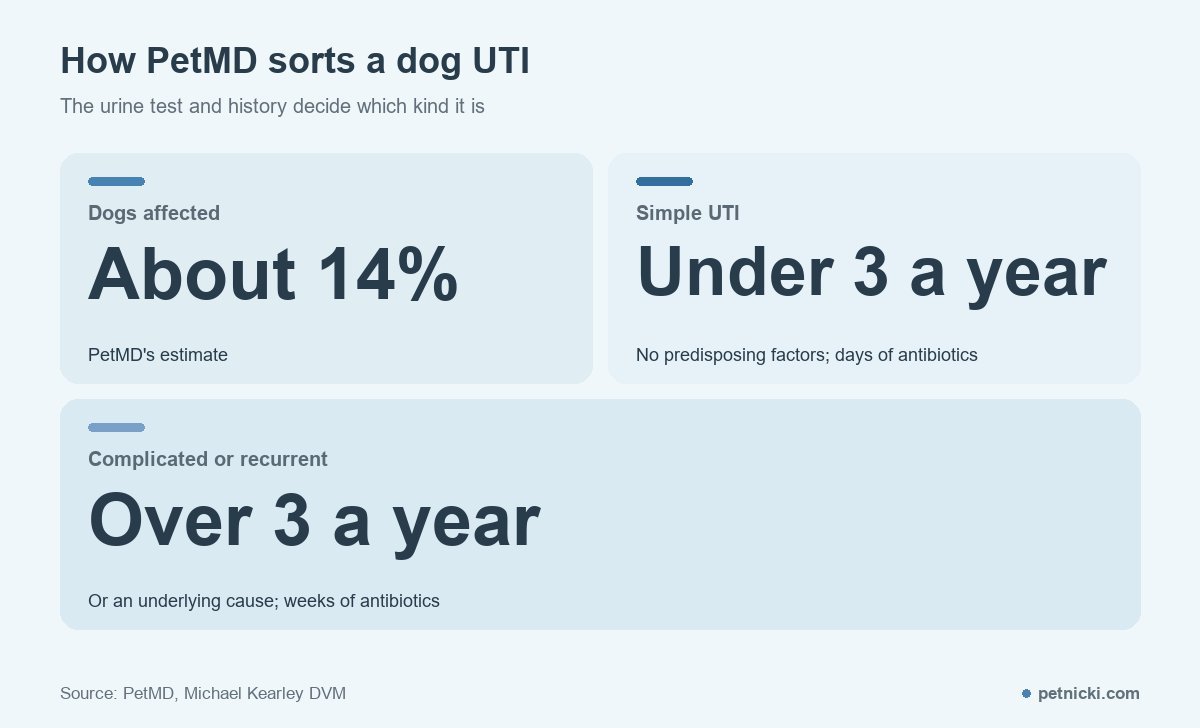
Simple cases get a broad-spectrum antibiotic for several days. Complicated ones can run to several weeks while the underlying cause is treated, and PetMD says to finish the whole course even when the dog seems better after a few doses. Two commenters in r/AskVet explained why the culture and the sample matter:
“A culture determines what specific bacteria is the culprit and the best antibiotic to use for the infection.”
– r/AskVet, 2026 (4 upvotes)
“The key question is how the urine sample was obtained. It is normal to have some white blood cells and sometimes bacteria in urine collected by free catch or catheterization.”
– r/AskVet, 2026 (2 upvotes)
Those are commenters, not the vets treating the dog. PetMD’s own follow-up advice is to recheck the urine a few weeks after treatment and, in complicated cases, to repeat the culture during treatment and again a week or two after it ends.
Can a Dog UTI Go Away on Its Own?
PetMD says a dog with symptoms needs prescription antibiotics and may need pain relief, probiotics or a diet change, and that left alone the infection will progress. Harvester Veterinary Hospital says it will not clear on its own, and McGee Street Animal Hospital says bacterial infections rarely clear completely without appropriate care.
For home treatment, PetMD says probiotics and cranberry extract may help but the evidence is lacking, so it recommends a vet. What you can do alongside treatment is simple: McGee Street suggests fresh water at all times and frequent bathroom breaks, and PetMD adds that more drinking means more urinating, which lowers the chance of crystals staying put. None of the pages compared here names a food to avoid, so ask your vet before changing the diet.