
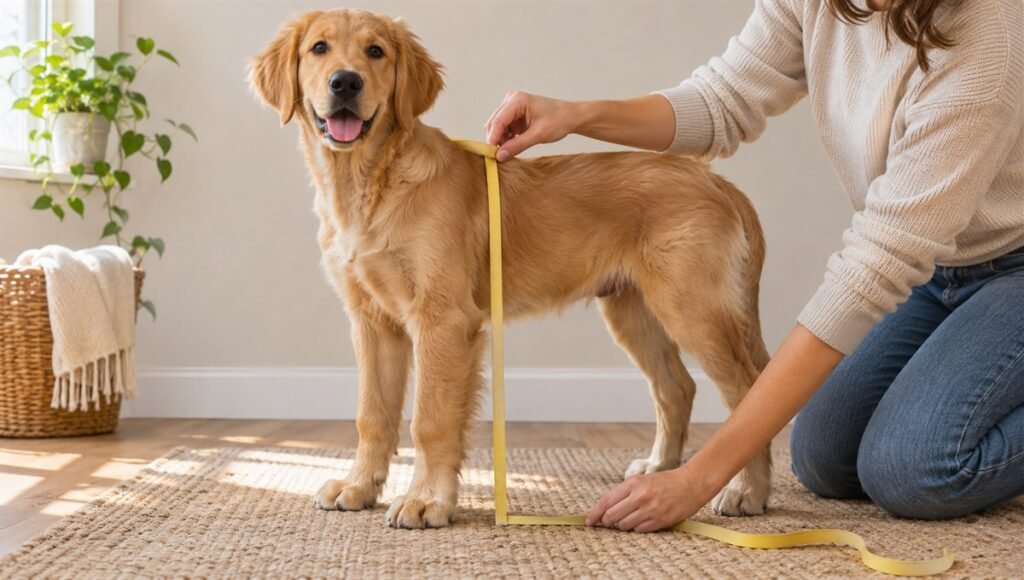

When do puppies stop growing? The American Kennel Club puts small breeds at 6 to 8 months, medium breeds at about 12 months and giant breeds at 12 to 18 months, with Mastiff-type dogs taking up to about 24. PetMD’s table runs a few months later for the same sizes, and both agree that the answer depends on how big the adult will be.
Below, the two sets of numbers sit side by side, followed by what carries on changing after a puppy stops getting taller and what to hold back until the growth plates close. Weights are in pounds, as both sources give them.
When Do Puppies Stop Growing? AKC and PetMD Compared
The AKC page, updated on 23 June 2026 and quoting its chief veterinarian, Dr Jerry Klein, gives one age for when height stops and a second set of ages for when weight reaches its adult figure. PetMD, written by Sandra C. Mitchell, DVM, and published on 20 May 2025, gives a single range per size.
| Adult size | AKC: stops growing | AKC: weight reaches 100% | PetMD: fully grown |
|---|---|---|---|
| Toy or small | 6 to 8 months | 12 months (0 to 20 lb) | 8 to 12 months (toy, 5 to 12 lb); 9 to 12 months (small, 12 to 24 lb) |
| Medium | About 12 months, possibly later | 15 months (21 to 50 lb) | 12 to 15 months (24 to 59 lb) |
| Large | Not given separately | 18 months (51 to 100 lb) | 15 to 18 months (59 to 99 lb) |
| Giant | 12 to 18 months; Mastiffs about 24 | 18 months (over 100 lb) | 18 to 24 months (over 100 lb) |
The gaps come partly from how each page cuts the size classes. AKC uses four weight bands and PetMD uses five, so a 22-pound dog is simply small to one and in a different row of the other. Both pages give ranges rather than study data, and AKC calls adult size in mixed breeds a bit of a guessing game.
AKC’s two columns also say something on their own. Read together, a small-breed puppy can be finished getting taller at 8 months and still be adding weight until about 12, though that is an inference from the page, not a line it states.
Stopped Growing Taller Is Not the Same as Finished
After the bones stop lengthening, AKC says puppies keep developing muscle and body fat as they move into adulthood. A trainer’s guide from Gentle Beast puts the same point another way: height and shape arrive by about 12 months, then growth shifts to muscle and fat, and the larger the dog, the slower it goes.
If you’ve wondered whether a lanky 10-month-old is finished, one Cavalier owner in r/cavaliers, in a post with 19 upvotes, described a dog who had stopped getting taller but wasn’t done:
“Our 10 month old is a lanky boy. He’s basically full-grown, though he’ll look a bit bigger as his coat matures. He weighs 14.5 lbs.”
– r/cavaliers, 2026 (19 upvotes)
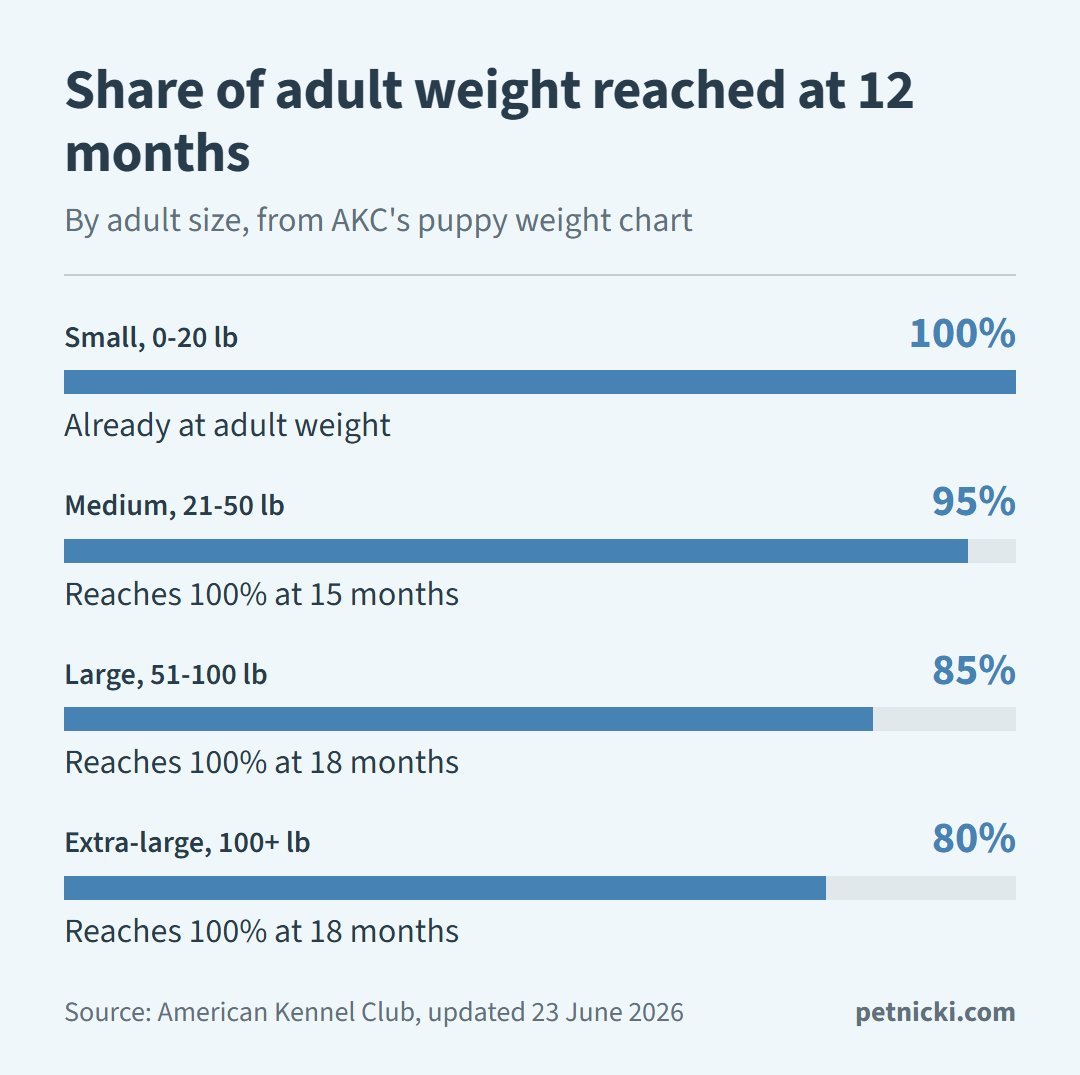
AKC’s weight chart shows the same pattern in numbers — at 12 months a small dog has reached 100% of its adult weight, a medium dog 95%, a large dog 85% and a dog over 100 pounds about 80%.
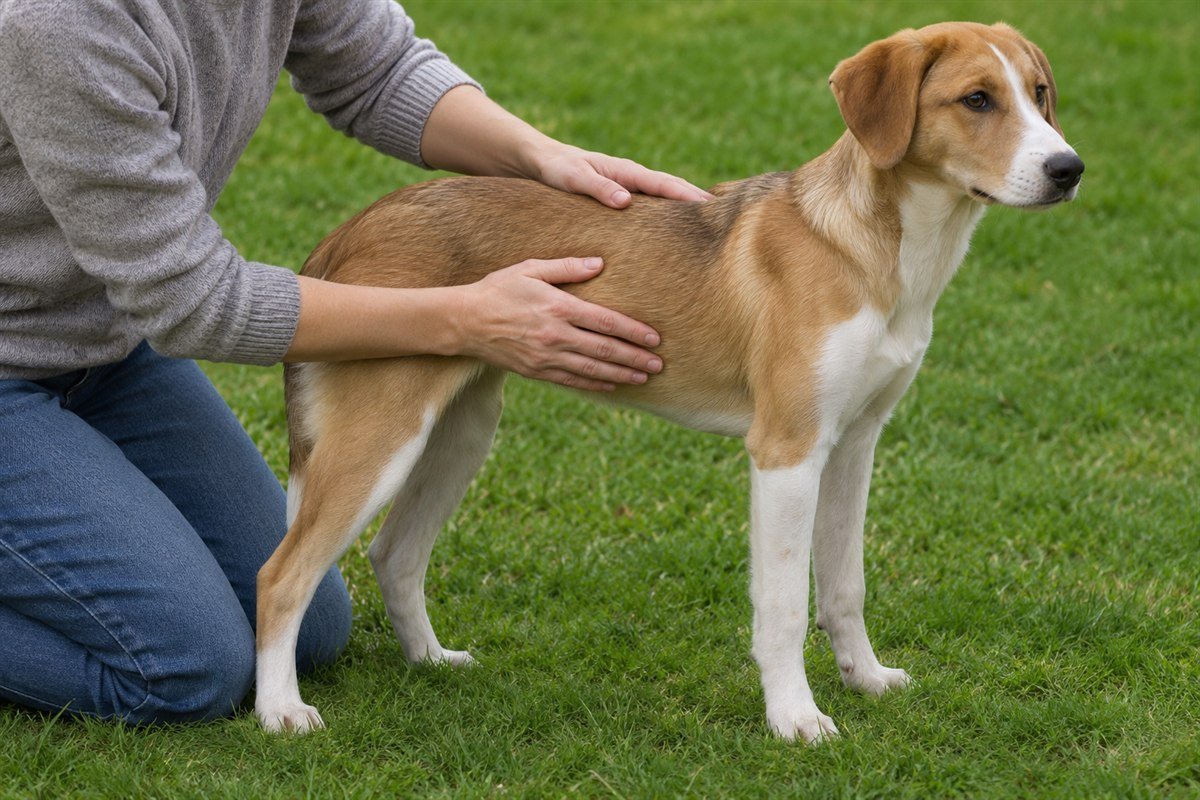
To tell whether your own puppy is done, AKC suggests feeling the ribs: if you can still feel the rib knobs, the dog will probably keep growing in height. PetMD says the surest way is an X-ray of the growth plates, and that without one a dog is generally finished once it has reached the age for its size and no longer looks as if it is getting bigger.
What to Hold Back Until the Growth Plates Close
Growth plates are the soft, actively growing ends of the long bones. AKC says they stay flexible during puppyhood and close once they stop producing tissue and harden, which is why both AKC and PetMD urge caution with hard exercise before then.
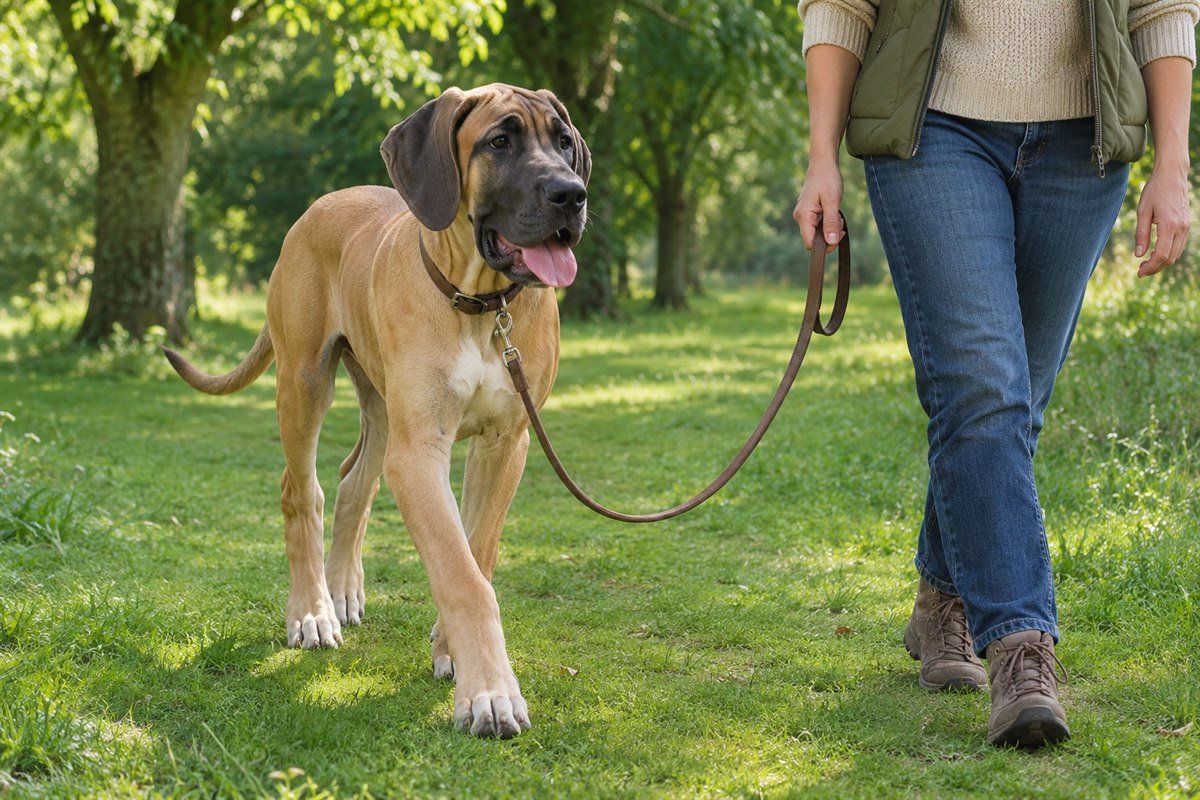
AKC says road work or jogging isn’t recommended for dogs under 14 to 18 months, especially large and giant breeds, and that short walks on softer surfaces such as grass are safer. PetMD gives the same warning about too much jumping or running early on. Food matters as well: AKC says puppy formulas are typically fed until about 11 to 14 months, that large and giant breeds are more sensitive to too much or too little calcium, and that a fit, leaner puppy is preferable to a chubby one because obesity can predispose to hip dysplasia.
Spay and neuter timing is a separate question, and PetMD says the age at which a dog is neutered can affect when the plates close, and Gentle Beast says early neutering is believed to delay closure and give a taller dog, while waiting can raise the risk of cancer later, so both pass the decision to your vet.
When to Ask Your Vet About Puppy Growth
PetMD says a puppy that isn’t growing normally, is gaining weight too quickly or seems to have pain in the bones or joints may have a growth problem, and that vets check growth at each wellness visit. It also lists intestinal worms and chronic illness as possible causes, and says growth-plate injuries can lead to uneven limbs. This is general information, not a diagnosis.
If you want to guess adult size before growth ends, the puppy size guide on this site covers the rules of thumb and where they fail, and the puppy growth chart gives the week-by-week weights.