
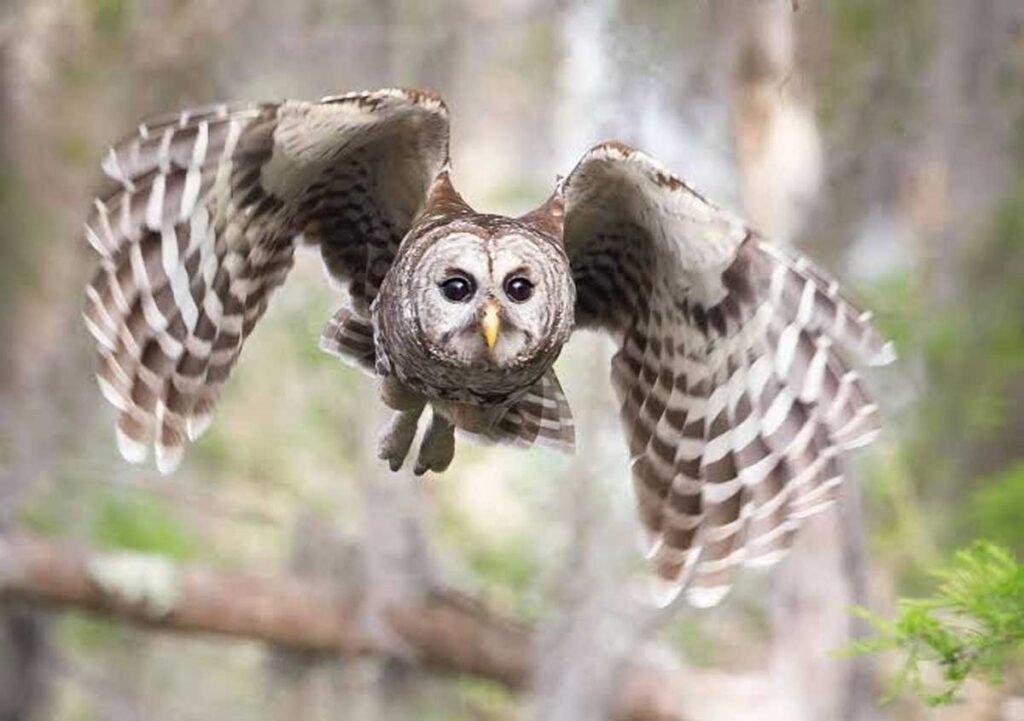

Owls eat live animals and almost nothing plant-based. The menu runs from moths and earthworms up through voles, rats, rabbits, snakes, fish, and other birds, and which of those an owl takes depends almost entirely on how big the owl is. A screech owl works on beetles. A great horned owl works on skunks.
The useful part is that owls leave a receipt. Every few hours an owl coughs up a compact pellet of the fur, bone, and teeth it could not digest, and a dissected pellet tells you precisely what that bird ate, down to the species of mouse.
Prey Scales With the Owl
Owl diet sorts by body size more cleanly than by habitat or region. Three rough tiers cover most species:
- Small owls (elf, screech, scops, pygmy) eat insects first: moths, beetles, crickets, spiders, plus earthworms and the occasional lizard or nestling. An elf owl weighs about as much as a golf ball and hunts accordingly.
- Mid-size owls (barn, long-eared, short-eared, tawny) live on small mammals. Voles, mice, shrews, and young rats make up the bulk, with small birds taken opportunistically.
- Large owls (great horned, eagle owl, snowy) take rabbits, hares, ducks, other raptors, and even the snakes people keep as pets, whose own rodent-based diet puts them in direct competition, along with mammals that most predators leave alone.
A few species specialise sideways instead of upward. Asian fish owls and African fishing owls wade or skim for fish and crayfish. Snowy owls on the tundra run on lemmings and rise or crash with the lemming cycle. What stays constant is that owls are obligate carnivores: no fruit, no seeds, no grain, at any size.
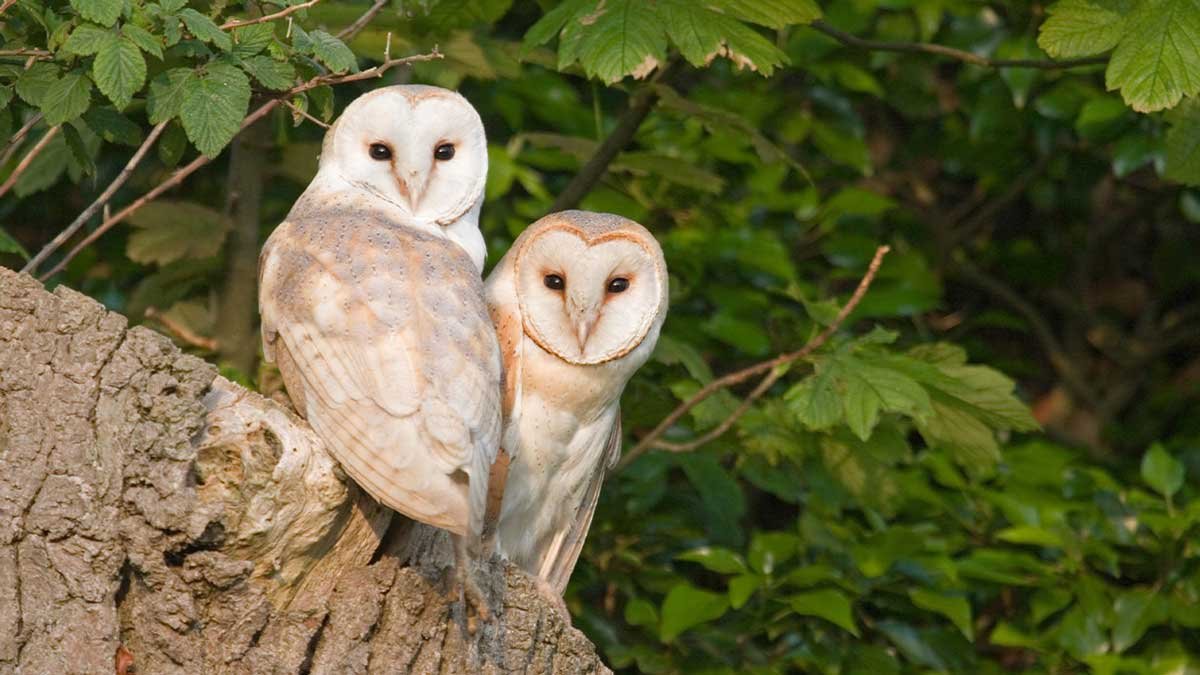
What Barn Owls Eat
Barn owls are rodent specialists, and in much of their range the field vole dominates the diet to the point that vole population crashes drive barn owl breeding failure. Wood mice, shrews, and young brown rats fill the rest, with birds and insects as minor additions.
A hunting barn owl quarters low over rough grass, listening more than looking. Its facial disc funnels sound to asymmetrically placed ear openings, which lets the bird pinpoint a vole under snow or thick grass in complete darkness. The strike is silent because the leading edge of an owl’s flight feathers is combed into a fringe that breaks up the rush of air.
This is also why mowed lawns hold no barn owls. Voles need long grass; barn owls need voles. Rough field margins are the whole habitat requirement, compressed.
What Great Horned Owls Eat
Great horned owls take the widest prey range of any North American owl, and the list is startling: rabbits and hares, squirrels, rats, ducks and geese, herons, other owls, hawks, snakes, frogs, and domestic poultry. They hunt from a perch, drop with talons spread, and kill by grip pressure.
The species is also one of the few regular predators of skunk, which most mammalian predators avoid entirely. Owls have a poor sense of smell, so the skunk’s defence carries no weight against them. Nest sites of great horned owls sometimes smell of it.
Poultry keepers learn this the hard way, and the encounter is common enough to go viral:
“This farmer caught the owl eating his chickens”
– r/nextfuckinglevel, November 2025 (32,005 upvotes)
Owls also take the blame for damage crows caused, since crows raid nests and coops in daylight while owls work the dark. A roofed run solves both. Owls hunt at dusk and dawn, so a coop that is closed before sunset removes the opportunity window without harming a protected bird.
Owl Pellets: The Diet Record You Can Hold
Owls swallow small prey whole and lack a crop, so food passes into the gizzard, where bone, fur, teeth, and feathers get filtered out. Several hours later the gizzard compresses the residue into a pellet, pushes it back up, and the bird drops it at its roost. Until the pellet is out, the owl physically cannot swallow the next meal.
Pull one apart and the diet becomes literal. Inside a typical barn owl pellet you will find:
- Skulls, often intact, identifiable to species by tooth pattern
- Jawbones in matched pairs, the fastest way to count individual prey
- Femurs, ribs, and vertebrae, mostly unbroken
- Fur compacted into a dense grey matrix holding everything together
Owl pellets hold more intact bone than hawk or falcon pellets because owl stomach acid is weaker and owls pluck their prey less. That difference is what makes owl pellets the ones used in classrooms, and it is why researchers can reconstruct local rodent populations from a roost’s pellet pile without trapping a single mouse.
Can an Owl Carry Off a Cat?
An owl can kill an animal that size, but it cannot fly away with one. The distinction matters and most answers skip it. Published figures for the great horned owl put mean body weight at about 3.5 pounds for females and 2.7 pounds for males, while estimated prey mass for the species runs from a fraction of a gram to roughly 15 pounds at the extreme.
So a bird weighing three pounds does sometimes kill prey several times its own weight. What follows is not a dramatic flight into the night with a cat in its talons; it is the owl feeding on the ground where the kill happened, because lift capacity is far below kill capacity. Reports of owls flying off with heavy pets are almost always mistaken about the weight or about what happened next.
Practically, the animals at risk are kittens, very small cats, small dogs left out at dusk, and free-ranging poultry. Adult cats over about eight pounds are outside the normal range. Bringing pets in around sunset removes essentially all of the exposure, which is the same schedule that protects them from foxes working the same hours.
What Do Baby Owls Eat?
Owlets eat the same prey their parents do, torn into swallowable pieces and delivered to the nest. There is no milk stage and no separate baby food; a two-week-old barn owl is eating vole, just in fragments. Adults switch to whole prey once the chick can manage it, and swallowing a mouse whole is a normal milestone rather than an accident.
Development runs fast. According to the Owl Research Institute, short-eared owlets leave the nest at around two weeks and fly at four to five, quicker than any other North American species. Because eggs hatch on different days, the oldest chick in a brood is meaningfully larger than the youngest, and in a poor prey year the smallest one starves. That asynchrony is a feature: it guarantees some chicks survive instead of the whole brood failing together.
If you find a grounded owlet with feathers, leave it. Branching young spend days out of the nest before flying and are still being fed by parents watching from cover.
Is It Good to Have Owls Around Your House?
Yes, with one condition that decides everything. A resident pair of barn owls removes rodents continuously and at no cost, which is the entire argument for putting up a nest box on a farm or a large property.
The condition is poison. Rodenticides kill slowly, and a poisoned rat stays out in the open for hours while it dies, which makes it the easiest prey in the field. The owl eats it, takes on the dose, and repeated meals build up until the bird bleeds internally. Secondary poisoning of raptors is well documented, and it means you get to pick one method: an owl box or bait stations, never both.
Beyond that, owls want rough grass for prey, a cavity or box for nesting, and to be left alone. Squirrels and mice do the rest of the work by showing up, which is the same food chain running through what squirrels eat in your yard.
FAQ: Owl Diet
What is an owl’s favorite food?
Small rodents, and voles above all. Given a choice, most mid-size owls take voles and mice over birds or insects because the calorie return per hunt is higher and the prey is easier to swallow whole.
Do owls eat fruit or plants?
No. Owls are obligate carnivores with a digestive system built for meat, bone, and fur. Plant matter that turns up in a pellet arrived inside the stomach of a mouse.
What do owls eat during the day?
The same prey, hunted less often. Most owls hunt at dusk, dawn, and through the night, though short-eared and snowy owls hunt in daylight regularly, and any owl will take an easy daytime meal it stumbles across.
Do owls eat snakes and squirrels?
Larger species do, routinely. Great horned owls take both, along with rabbits, ducks, and other raptors. Barn owls and screech owls are too small for adult squirrels and stick to rodents and insects.
Can you keep an owl as a pet?
In the United States, no. Native owls are protected under the Migratory Bird Treaty Act, and possession requires federal and state permits issued for rehabilitation, falconry, or education. Keeping one as a companion animal is illegal, and the diet alone rules it out for most households.