
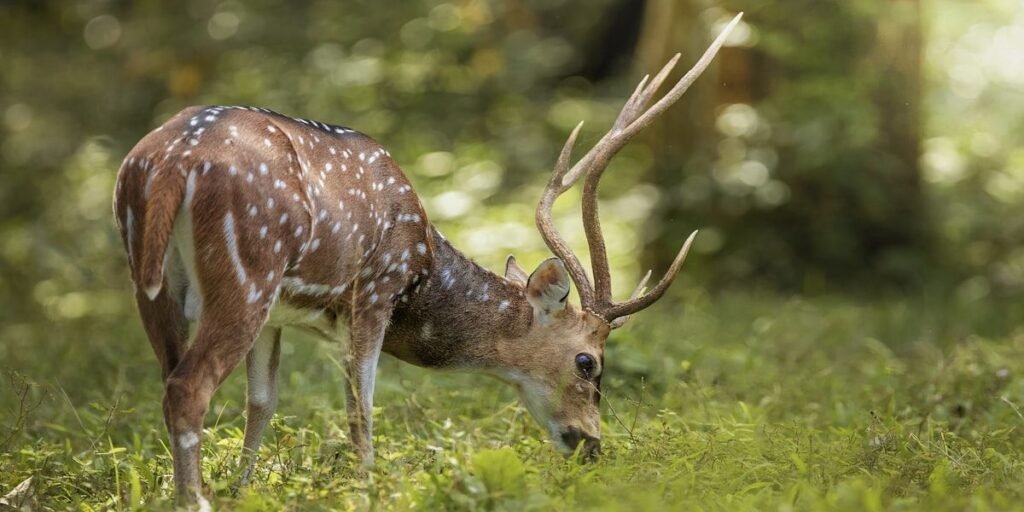

Deer mainly eat browse, forbs, and mast such as acorns. Those three categories, the leafy parts of woody plants, broad-leaved herbs, and tree seeds, make up more than 85% of a white-tailed deer’s diet across its range, per Mississippi State University’s Deer Lab. Grass, the thing everyone pictures, is a minor item; a deer grazing a lawn is usually picking out clover and young shoots, not the grass itself.
The seasonal shifts are big, the list of plants is enormous, and the most useful thing to know is the one most pages bury: feeding wild deer, especially in winter, does real harm. That part gets its own section, and the same warning applies to feeding garden foxes.
The Core Diet: Browse, Forbs and Mast
The menu is wider than almost any other North American herbivore’s. The MSU Deer Lab notes whitetails have been documented eating over 400 plant species in the Southeast alone, yet the bulk of the diet stays narrow: in one study the lab cites, deer ate more than 140 species, but about a third of those accounted for 93% of everything consumed.
Browse and forbs supply over 80% of the diet in every season except autumn, when mast takes over. Mast consumption climbs from roughly 11% of the summer diet, mostly soft mast like berries, to about 28% in fall, mostly acorns. Agricultural crops get eaten enthusiastically wherever fields border cover, which is why soybeans and corn country grows the biggest deer.
Season by Season
A deer’s diet tracks what the ground offers, and each season has a signature food that dominates until it runs out.
| Season | What dominates | Signature foods |
|---|---|---|
| Spring | New green growth | Fresh forbs, young shoots, clover, early crops |
| Summer | Forbs and soft mast | Broadleaf plants, berries, garden vegetables, soybeans |
| Fall | Hard mast | Acorns above all, plus apples, chestnuts, standing corn |
| Winter | Woody browse | Twigs, buds, evergreen leaves, bark in hard years |
Winter is the bottleneck. Northern deer survive on leaf buds and evergreen browse while burning fat reserves built in the acorn months, and their digestive system retunes itself to that coarse diet, which is exactly why sudden handouts backfire.
Built to Eat What Would Sicken a Cow
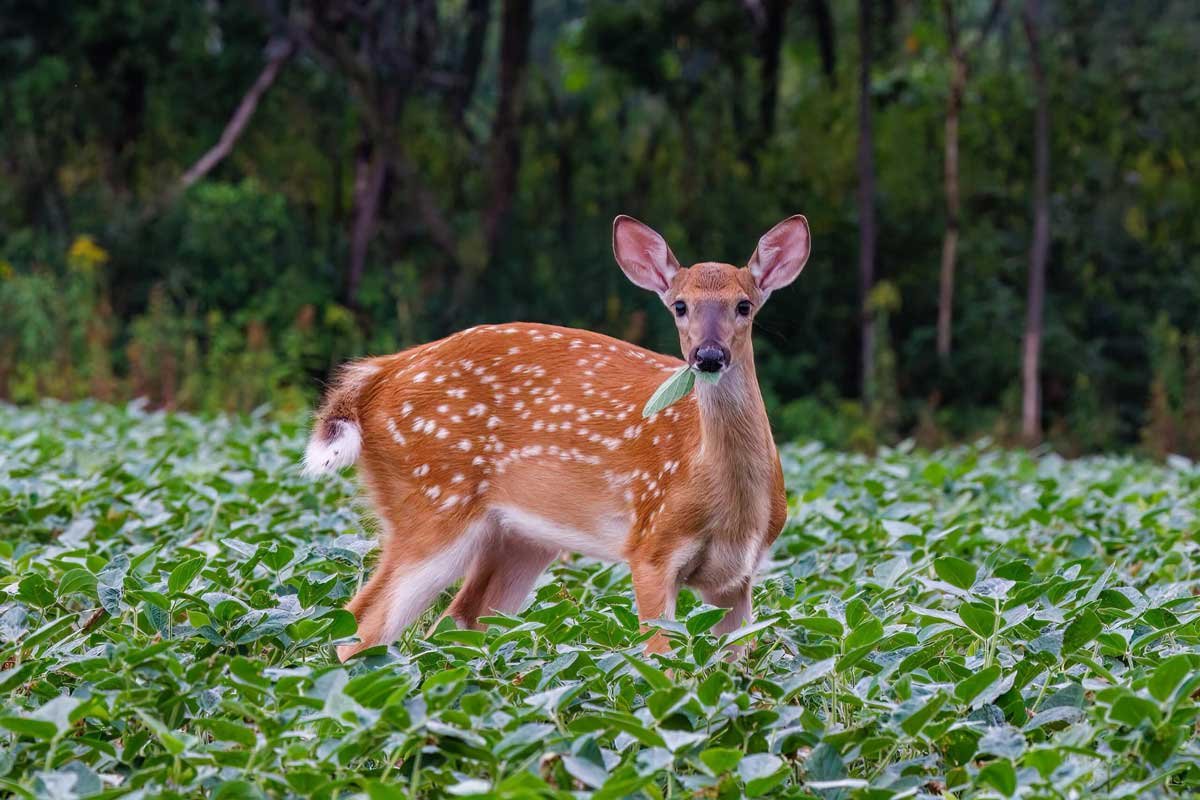
Deer are picky for a reason. A narrow snout and long tongue let them strip single leaflets and buds, and unusually active salivary glands produce enzymes that neutralize tannins, the bitter compounds in acorns and oak leaves. The MSU Deer Lab puts it memorably: those enzymes let a whitetail eat a quantity of acorns that would kill a cow.
The trade-off is a smaller, faster gut that demands high-quality, digestible forage. On overpopulated, depleted range, deer have starved to death with stomachs full of low-grade filler their systems could not extract energy from.
A full deer is not necessarily a fed deer.
Should You Feed Wild Deer?
No. Feeding wild deer harms them: winter handouts can trigger fatal gut acidosis, feed piles concentrate animals and spread disease, and many states ban the practice outright, which is why wildlife agencies are close to unanimous against it.
The Missouri Department of Conservation’s deer management guidance is typical: deer do best on the natural forage their habitat grows, and the right way to help them is planting and managing that habitat, not putting out food.
The winter case is the deadly one. A winter deer’s rumen microbes are calibrated to woody browse. Dump a pile of corn in front of a starving animal, and the starch can trigger acidosis before the gut adapts, killing deer that appeared rescued.
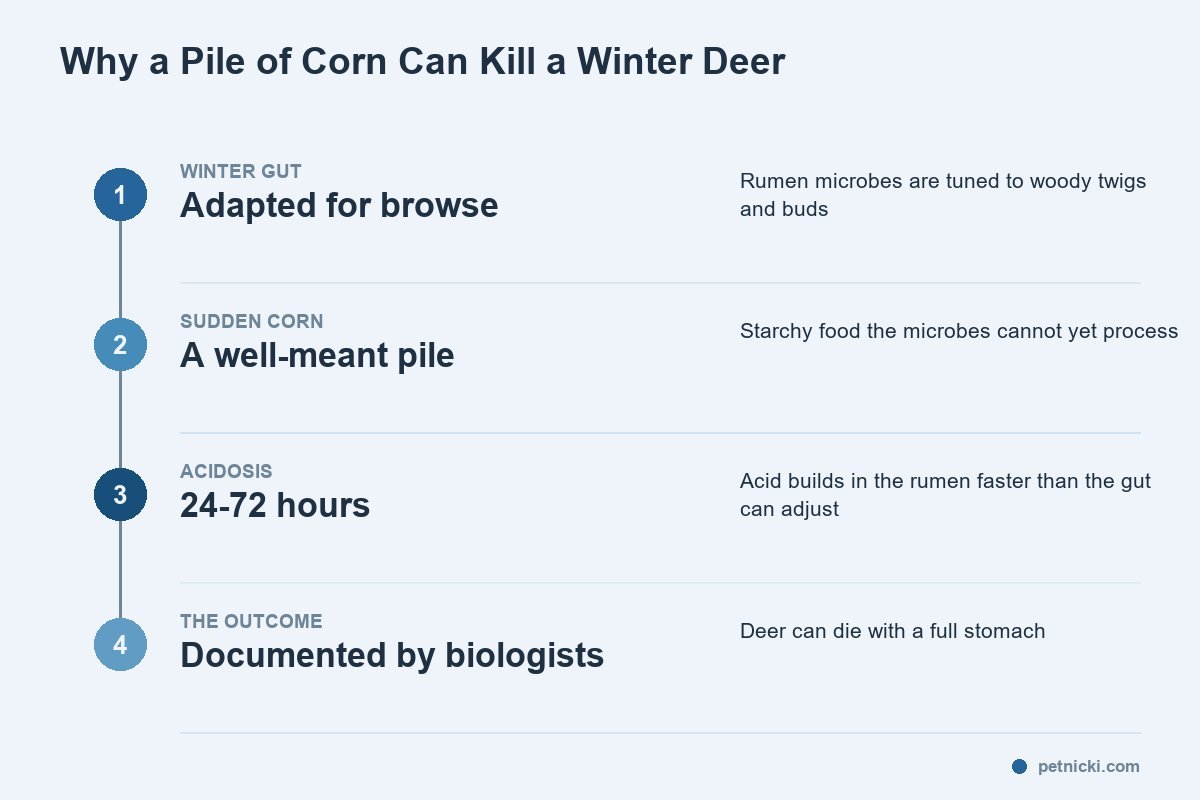
Feeding piles also concentrate animals nose-to-nose, which spreads disease, including chronic wasting disease where it exists, and several states ban feeding outright for that reason. Check your state’s rules before putting anything out; in much of the country the kind-hearted option is illegal.
Deer vs. Your Garden
The same adaptable appetite is why gardeners meet deer as adversaries. The most-upvoted deer question in gardening forums is not “what do they eat” but “what won’t they eat”:
“Oh deer- this guy is destroying my garden. What can I plant in arid / sunny climate that he won’t eat?”
– r/gardening, October 2025 (362 upvotes)
The thread’s most honest reply: a hungry deer will eat anything, including plants that are toxic to it. Hostas, tulips, daylilies, and most vegetables rank as deer candy; strongly scented or fuzzy plants like lavender, Russian sage, and lamb’s ear get skipped when better options exist. “Deer-resistant” is a preference ranking, and preference collapses in a hard winter; a tall fence is the only answer that holds year-round. And if the intruder has charmed you anyway, we keep a list of deer names.
FAQ: Feeding and Deer Diets
What can I leave outside for deer to eat?
Nothing is the answer wildlife agencies give: feeding harms deer through gut shock and disease spread, and it is illegal in many states. If you want deer on your land, plant what they browse naturally, like oaks, clover, and native forbs.
What is a deer’s favorite food?
Acorns are the closest thing to a universal favorite; mast rises to about 28% of the fall diet per MSU’s Deer Lab. Among crops, soybeans and corn top the list, and among garden plants, hostas and tulips vanish first.
What foods are toxic to deer?
Large amounts of corn or grain in winter can cause fatal rumen acidosis, and bread and other human starches carry the same risk. Hungry deer will also eat plants toxic to them, like yew, which has killed deer that fed on discarded trimmings.
Do deer eat meat, carrots, or apples?
Deer happily eat apples and carrots, which is separate from whether you should offer them; the feeding problems above still apply. And though they are ruminant herbivores, deer have been documented opportunistically eating eggs and nestling birds when protein is scarce.