
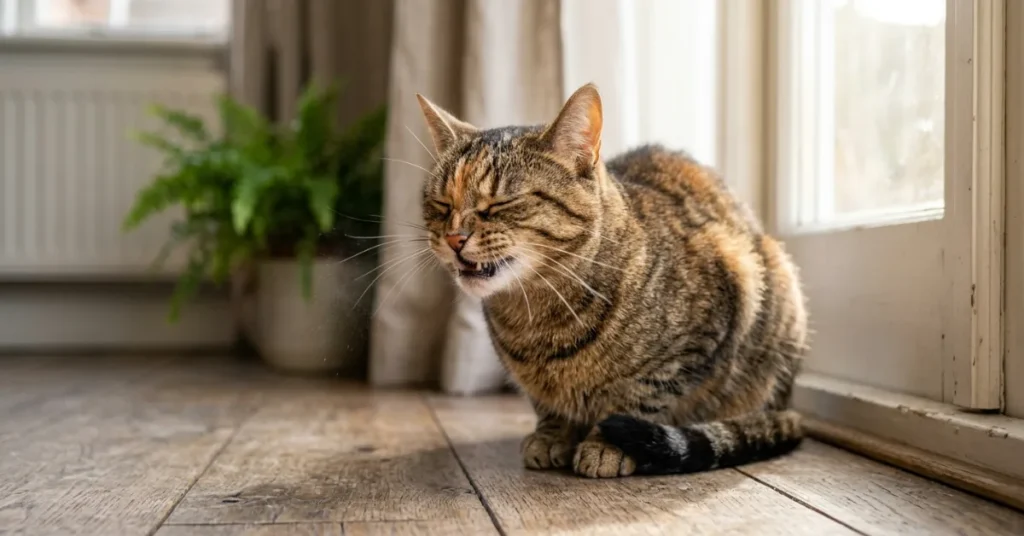

My neighbor called me last week, panicking because her cat had been sneezing for three days straight. She thought it was just dust. Turned out it was a bacterial infection that needed antibiotics.
That is how fast things can shift with cats.
A sneeze or two is nothing to stress about. But when your cat keeps sneezing day after day, something is going on. This guide breaks down the real reasons it happens, what the warning signs look like, and what you can actually do about it.
What Does It Mean When a Cat Keeps Sneezing?
Sneezing in cats works the same way it does in people. Something irritates the nasal passage and the body pushes it out fast. It could be dust, a virus, a tooth infection, or something stuck up there. One-off sneezes are fine. But if your cat is sneezing multiple times a day for more than two or three days, that is worth paying attention to, especially if there is discharge coming out.
Common Reasons Cats Sneeze
Sneezing in cats is more common than most pet owners realize — and it’s not always a sign of something serious. Just like humans, cats sneeze for a wide range of reasons, from a simple tickle in the nose to an underlying health condition that needs attention. While an occasional sneeze is completely normal, frequent or persistent sneezing can be your cat’s way of telling you something isn’t quite right. Understanding the common triggers behind feline sneezing can help you know when to relax and when it’s time to call your vet.
1. Upper Respiratory Infections
This is the most common culprit, and it catches a lot of cat owners off guard.
Feline herpesvirus and feline calicivirus are the two big viral causes. They spread fast between cats, so if you have a multi-cat home or recently adopted from a shelter, this is the first thing to consider.
Bacterial infections can pile on top of viral ones and make things worse. You will usually see thick discharge from the nose when bacteria are involved.
Watch for these signs alongside the sneezing:
- Yellow or green gunk coming from the nose
- Eyes that look watery, crusty, or swollen
- Your cat not finishing meals
- Sleeping more than usual
- Warm to the touch (fever)
Most cases respond well to antibiotics or supportive vet care. The sooner you go, the easier it is to treat.
2. Something in the Air
Cats have a nose that is far more sensitive than ours. What smells mild to you can genuinely irritate their nasal lining.
Common triggers people do not think about:
- Cigarette smoke drifting through the room
- A new plug-in air freshener
- Cleaning sprays used on floors or counters
- Dusty litter (especially clay-based kinds)
- Pollen coming in through open windows
- Mold growing somewhere in the home
Try to notice patterns. Does your cat sneeze more after you clean? After you light a candle? In one specific room? That pattern usually points straight to the cause.
3. Allergies
Yes, cats get allergies too. Pollen, dust mites, mold spores, and even certain fabrics can set off a reaction.
Unlike people, cats with allergies do not always get a runny nose. The sneezing might be mild. But you will often see other signs like:
- Scratching at the face or ears
- Overgrooming certain spots
- Red or irritated skin
- Symptoms that get worse at certain times of year
Figuring out exactly what your cat is allergic to takes time and usually involves your vet.
4. Dental Disease
This one throws people off completely. A bad tooth causing sneezing? It sounds strange, but it makes sense once you know the anatomy.
The roots of the upper back teeth sit right next to the nasal cavity. When a tooth gets infected, that infection can push into the nasal area and cause inflammation and sneezing. Sometimes there is blood in the discharge too.
Look for these clues:
- Bad breath that seems worse than usual
- Your cat dropping food while eating
- Drooling more than normal
- Pawing at the side of the face
- Sneezing with a little blood mixed in
A vet can spot this in a basic oral exam. Catching it early matters a lot.
5. Something Stuck Up There
Cats are curious. A blade of grass, a small seed, even a bit of string can get inhaled and lodge in the nasal passage.
When this happens, the sneezing comes on suddenly and hard. Your cat will sneeze over and over trying to get it out. One side of the nose might have discharge while the other is clear. If the sneezing started out of nowhere with no other symptoms, a foreign object is worth considering.
6. Feline Herpesvirus Flare-Ups
Feline herpesvirus never fully leaves the body. Once a cat has it, the virus stays dormant and can flare up again when the cat is stressed, sick, or run down.
This is why some cats have sneezing episodes that seem to come and go with no clear cause. A move, a new pet in the house, a change in routine, even a vet visit can trigger it. According to VCA Animal Hospitals, upper respiratory infections are especially common in cats with shelter histories or early exposure to other cats.
What Color Is the Discharge? It Matters.
Do not ignore what is coming out of your cat’s nose. The color tells you a lot about what is happening inside.
| Discharge Type | Likely Cause |
|---|---|
| Clear and watery | Irritant, early viral infection, or allergy |
| White or cloudy | Viral illness or mild secondary infection |
| Yellow or green | Bacterial infection |
| Bloody | Dental issue, foreign object, polyp, or serious infection |
Clear discharge on its own is usually not an emergency. Yellow, green, or bloody discharge means call your vet.
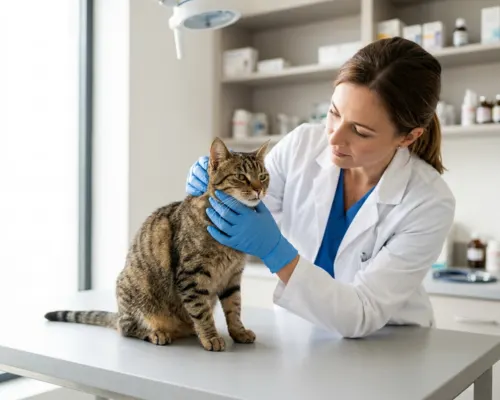
When to See a Vet
Most cat owners wait too long. Here is a simple rule: if the sneezing has gone on for more than two to three days without getting better, make the call.
Also contact your vet if your cat:
- Has colored or bloody nasal discharge
- Has stopped eating or is barely drinking
- Seems withdrawn, weak, or unusually still
- Is breathing with an open mouth, which in cats is always an emergency sign rather than a way to cool down
- Has lost weight recently
- Has any puffiness or swelling around the nose or eyes
Kittens and older cats need to be seen faster. Their immune systems handle infections less easily and things can get serious quicker. The cat years to human years chart shows when a cat counts as older.
What You Can Do at Home
You cannot treat an infection at home, but you can make your cat more comfortable and reduce some of the triggers.
Clean Up the Air
Switch to unscented litter. Put away the plug-in fresheners. If you use cleaning sprays, keep your cat out of the room until things dry and air out. A HEPA air purifier can cut down on dust and allergens over time.
Clean Around the Nose
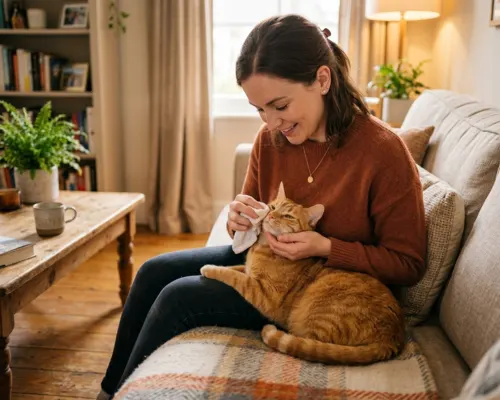
Use a soft damp cloth to wipe away any discharge around your cat’s nose and eyes. Letting it dry and crust makes breathing harder and is uncomfortable for them.
Add Some Moisture to the Air
A cool-mist humidifier near where your cat sleeps helps, especially in dry weather or during winter when indoor air gets really dry. It softens the nasal passages and can reduce irritation.
Keep Stress Low
If your cat has herpesvirus, stress is the main trigger for flare-ups. Stick to routines where you can. Give them a quiet corner with their own space. Avoid big changes all at once.
Dust More Often
Run the vacuum regularly. Wash your cat’s bedding weekly. Damp-wipe shelves and surfaces. Dust buildup is a silent trigger that most people underestimate.
Could It Be More Than Sneezing?
Sometimes sneezing is just one piece of a bigger problem. If your cat is also throwing up or having stomach issues alongside the sneezing, something systemic might be going on. It is worth reading about cat throwing up food to know when those two things together are a reason to act faster.
FAQ: Cat Sneezing Questions Answered
Q: Is it normal for cats to sneeze every day? One or two sneezes a day is usually nothing. If it is happening multiple times throughout the day, or if there is any discharge, something is off.
Q: Can cats catch colds the way people do? Sort of. Cats get upper respiratory infections that look a lot like human colds. But the viruses behind them are cat-specific. You cannot catch them, and your cold cannot pass to your cat.
Q: Will my sneezing cat make my other cats sick? Possibly yes. Feline herpesvirus and calicivirus spread easily between cats. Keep the sneezing cat separated until a vet has had a look and told you it is safe.
Q: My cat only sneezes right after eating. What does that mean? That is often a dental clue. Infected upper teeth sit very close to the nasal cavity. Eating can put pressure on that area and trigger sneezing. Get the teeth checked.
Q: Can I give my cat any over-the-counter medicine for sneezing? No. Do not try it. Common human cold medicines and antihistamines can be toxic to cats. Only give your cat something a vet has specifically prescribed for them.
Q: Do vaccines help with sneezing? Yes, though not perfectly. The core vaccines cover feline herpesvirus and calicivirus. They do not always stop infection completely, but they usually make symptoms much milder. Staying current on vaccines is worth it.
Conclusion
Cats sneeze for all kinds of reasons, and most of them are treatable. The trick is knowing when to wait it out and when to pick up the phone and call your vet.
Pay attention to how long it has been going on, what the discharge looks like, and how your cat is acting overall. Those three things together will usually tell you what kind of situation you are dealing with.
If something feels off, trust that feeling. You know your cat better than anyone.
For more practical guides on cat health and behavior, browse our other articles to help you stay one step ahead.