
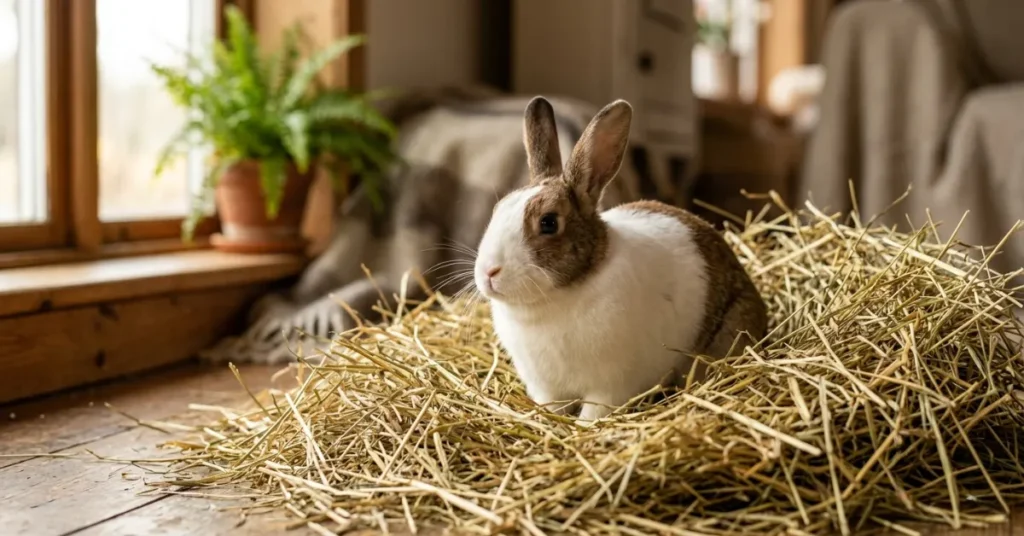

Feeding a rabbit looks easy from the outside. Most new owners assume pellets and carrots are enough. That assumption is one of the main reasons pet rabbits develop serious health problems within the first two or three years of life.
Rabbit digestion is sensitive and needs very specific nutrition to stay healthy. The wrong diet leads to GI stasis, overgrown teeth, urinary problems, and obesity. The right diet prevents all of these. This guide tells you exactly what to feed, how much, and what to keep away from your rabbit entirely.
What do rabbits eat? A balanced rabbit diet is 80 to 85 percent grass hay, 10 to 15 percent fresh leafy greens, and small amounts of vegetables, fruit, and pellets. Hay is the core of everything. Without enough fiber from hay, a rabbit’s digestive tract slows down and can shut down completely. That condition is called GI stasis, and it can be fatal within 24 to 48 hours.
Hay: The Foundation of Every Rabbit Diet
Hay must be available at all times, not just at mealtimes.
Rabbit teeth grow continuously for their entire life and only wear down through the grinding motion of chewing long-strand hay. Without it, teeth overgrow, press into the jaw, and cause pain most owners never notice until the rabbit stops eating entirely.
Beyond teeth, the digestive tract needs constant fiber movement. When fiber drops, gut motility slows. When it stops completely, you have GI stasis. This is not rare. It happens regularly in rabbits fed too many pellets and not enough hay.
Best Grass Hay for Adult Rabbits
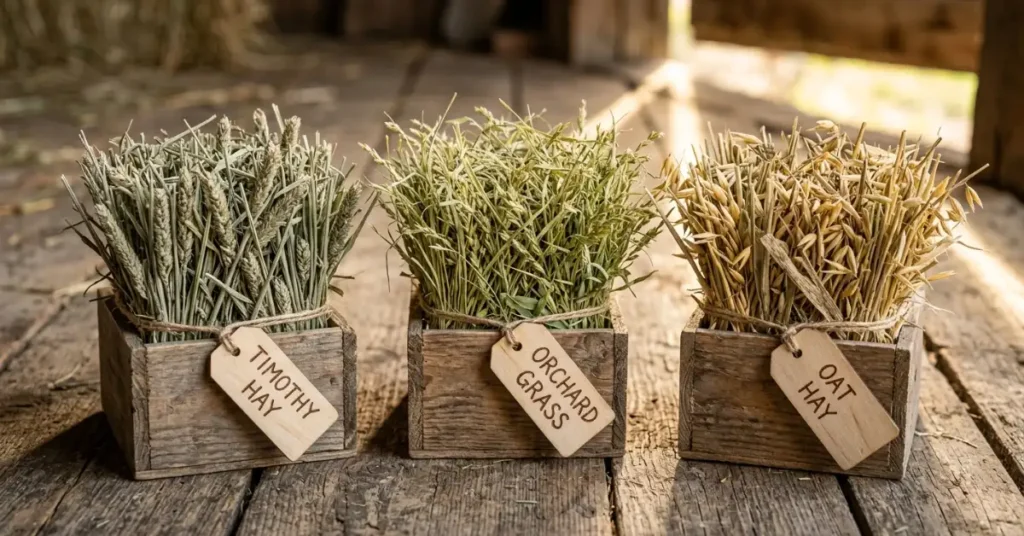
- Timothy hay is the most widely recommended. High in fiber, widely available, and most rabbits accept it well
- Orchard grass hay is softer in texture, often preferred by picky eaters
- Oat hay has a slight crunch and a bit more fiber, good for rotation
- Meadow hay is a natural blend of grasses, useful for variety
Any of these work well. Rotating between two types keeps things interesting and ensures a broader nutrient profile.
Alfalfa Hay vs Grass Hay
Alfalfa is a legume hay, higher in calcium, protein, and calories. It works for rabbits under 7 months, pregnant females, and nursing mothers. For healthy adults, excess calcium forms urinary sludge and bladder stones over time. Switch to grass hay at 7 months and stay on it.
Never Use Straw Instead of Hay
Straw looks similar to hay but has almost no nutritional value. It fills the stomach without feeding gut bacteria, causing nutritional deficiencies over time. Always buy proper hay, smell it before purchase, and store it somewhere dry with the bag open for airflow.
Fresh Leafy Greens: Feed Every Day Without Skipping
After hay, leafy greens are the most important daily food. They add hydration, vitamins, and minerals that hay cannot provide. Feed about 1 packed cup of mixed greens per 2 lbs of body weight each day. Always rotate between at least 3 to 4 different types at a time.
Safe Greens to Feed Freely
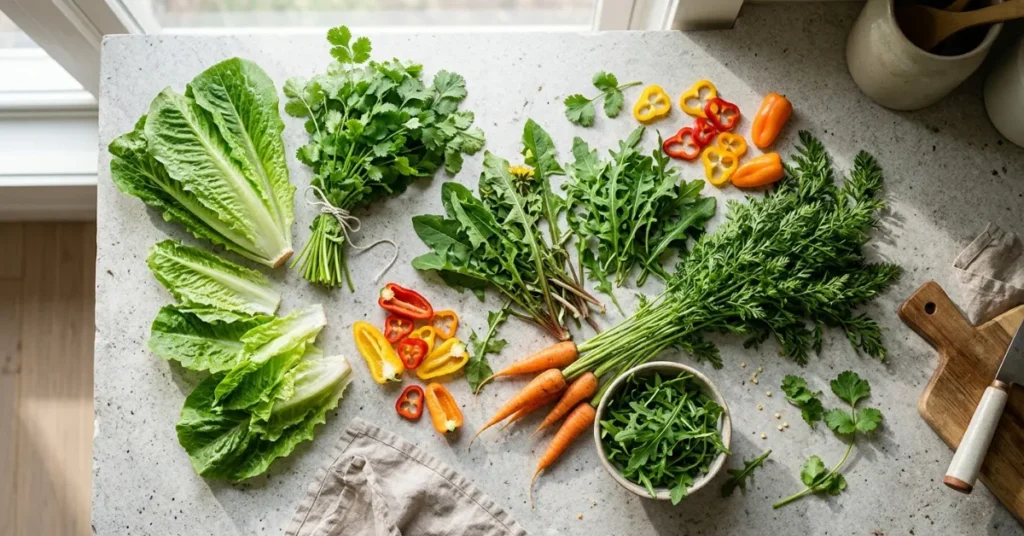
These are low in oxalic acid and safe to include as regular daily items:
- Romaine lettuce, green leaf lettuce, red leaf lettuce
- Arugula, watercress, radicchio
- Cilantro, basil, mint, dill leaves
- Dandelion greens, pesticide-free only
- Carrot tops, fennel tops, turnip greens
- Endive, escarole, chicory, bok choy
- Wheatgrass, cucumber leaves, raspberry leaves
High Oxalic Acid Greens: Rotate, Do Not Feed Daily
These greens are nutritious but feeding them as the only green every day causes oxalic acid to build up in the kidneys. Use one of these as part of a varied mix, alongside two or three low-oxalate options.
- Spinach, parsley, Swiss chard, beet greens, mustard greens, radish tops
What to Never Feed
Iceberg lettuce has almost no fiber and no real nutrition. It contains a mild compound called lactucarium that causes loose stools in larger amounts. It does nothing useful and should never go in the bowl.
When you introduce any new green, add one type at a time and watch droppings for 48 hours. Soft, mushy, or fewer droppings tell you that food is not agreeing with that particular rabbit’s digestive system. Remove it and try something else next week.
Vegetables: A Small Daily Addition That Adds Real Value
Non-leafy vegetables add extra vitamins and texture. Keep them to about 1 tablespoon per 2 lbs of body weight per day.
Safe vegetables: Bell peppers, zucchini, summer squash, broccoli leaves and stems, celery cut short, cabbage, Brussels sprouts, broccolini, Chinese pea pods, edible flowers like roses and hibiscus.
Carrots are higher in sugar than most people expect. A few thin slices two or three times a week is enough. Carrot tops are different though, they are leafy and low in sugar, great as a daily green.
Add new vegetables one at a time and watch droppings for 48 hours. Soft or fewer droppings mean that food is not agreeing with your rabbit.
Fruits: A Treat, Not a Daily Food
Fruit is high in fructose. Too much upsets bacterial balance in the cecum and causes gas and bloating. Feed fruit a few times a week only. Portion is 1 teaspoon per 2 lbs of body weight per serving.
Safe fruits: Strawberries, blueberries, raspberries, blackberries, apple with seeds fully removed, papaya, pineapple, pear, peach, apricot, mango, kiwi, nectarine, cherries and plums with pits removed, any melon variety.
Banana and grapes are safe but highest in sugar. Once a week at most for both.
If you are unsure whether a food from your kitchen is safe for your pet, this guide on safe and unsafe human foods for pets covers it clearly.
Pellets: Useful in Small Amounts, Not the Main Meal
Pellets are a convenient supplement that fills nutritional gaps. They are not the main meal. Many rabbits do perfectly well with minimal pellets when hay and greens are consistent.
Daily Pellet Portions by Body Weight
- Under 5 lbs: 1/8 cup per day
- 5 to 10 lbs: 1/4 cup per day
- Over 10 lbs: 1/2 cup per day
These are upper limits, not targets. Choose plain timothy-based pellets only. Avoid anything with seeds, dried fruit, nuts, corn, or colored pieces mixed in. Those additions are marketing choices, not nutritional ones. They raise sugar and calorie content without adding real value. Switch from alfalfa-based to timothy-based pellets at 7 months of age.
Foods That Are Dangerous for Rabbits
Some are toxic in any amount. Others cause serious harm when fed regularly.
Never feed: Chocolate, onions, garlic, leeks, chives, avocado, rhubarb, apple seeds, and pits from cherries, peaches, apricots, and plums.
Avoid completely: Raw or cooked potato, sweet potato, corn in any form, all nuts and seeds, bread, pasta, cereal, oats, grains, beans, dairy, and meat.
Many treats sold in pet stores for rabbits contain refined sugar and corn syrup. According to VCA Animal Hospitals, high-sugar foods disrupt bacterial balance in a rabbit’s gut and can trigger digestive shutdown. Read the label before giving anything packaged.
What Are Cecotropes
New owners often panic the first time they see their rabbit eating directly from its backside. This is called cecotrophy and it is completely normal.
Rabbits produce two types of droppings. The round firm pellets in the cage are waste. The soft grape-cluster droppings called cecotropes come from the cecum and are packed with amino acids, B vitamins, fatty acids, and beneficial bacteria. Rabbits eat these directly in the early morning hours, which is why you rarely see them.
Finding many cecotropes left on the cage floor means the diet is too high in concentrated nutrients, or the rabbit has a physical issue preventing it from reaching them. Either way, mention it to a vet.
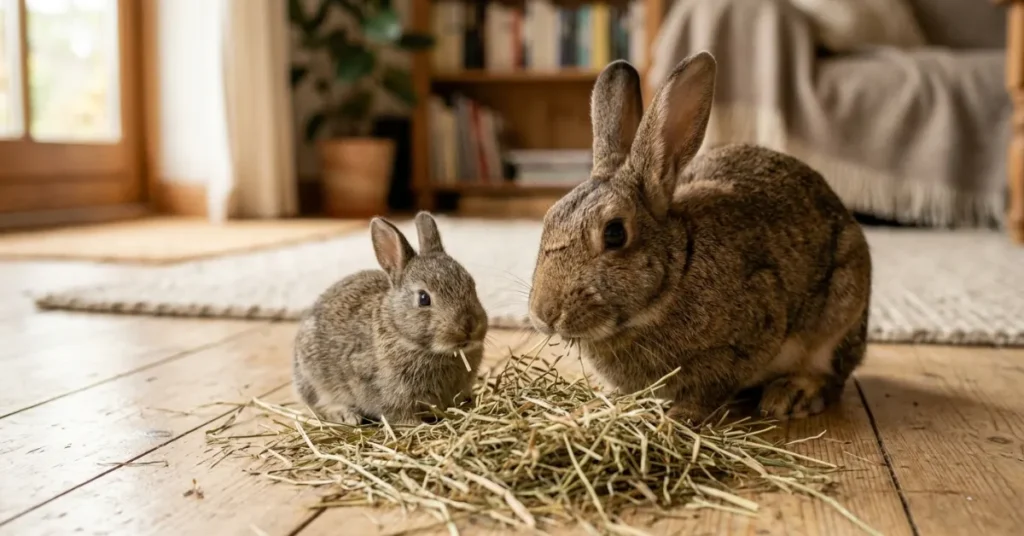
Feeding Your Rabbit Through Different Life Stages
| Life Stage | Hay | Pellets | Greens | Fruit |
|---|---|---|---|---|
| Under 7 weeks | Mother’s milk only | None | None | None |
| 7 weeks to 7 months | Alfalfa hay freely | Freely | Introduce from 12 weeks | None |
| 7 to 12 months | Transition to grass hay | Reduce slowly | Increase daily amount | Tiny amounts only |
| Adult 1 to 5 years | Unlimited grass hay | By weight guide above | 1 cup per 2 lbs daily | Few times a week |
| Senior over 5 years | Unlimited grass hay | Adjust if losing weight | Same as adult | Same as adult |
When switching from one diet to another, make changes gradually over two weeks. Introduce new items in small amounts and phase out old ones slowly. Sudden diet changes cause digestive upset even when the new food is healthier.
FAQ
Can rabbits eat spinach every day?
Spinach is not toxic but is high in oxalic acid. Feeding it as the only green daily causes calcium buildup in the kidneys over time. Use it as one item out of three or four in the rotation and there is no problem.
My rabbit refuses to eat any greens. What helps?
Rabbits raised mainly on pellets sometimes do not recognize greens as food. Mix a small piece of cilantro or romaine directly into the hay so the rabbit encounters it while eating. Most rabbits adjust within two to three weeks of consistent, patient exposure.
What if my rabbit suddenly stops eating?
Take it seriously the same day. A rabbit that stops eating and stops producing droppings may be in early GI stasis. Do not wait overnight hoping it resolves. Contact a vet immediately.
How do I know if I am giving too much fruit?
Droppings that become soft, mushy, or start clumping together are a clear sign that sugar intake is too high. Cut back fruit to once or twice a week and check whether droppings return to normal within 48 hours.
Final Takeaway
Hay first and always. Fresh greens every day with real variety. Vegetables and fruit in small controlled amounts. Pellets as a supplement, not a staple.
The rabbits that struggle are usually eating too many pellets, not enough hay, and getting fruit or store treats too often. These mistakes compound quietly over months. Fix them early and most diet-related problems either never start or gradually go away on their own. A rabbit fed this way can live a genuinely healthy 8 to 12 years.