


Feeding your cat correctly at each life stage is one of the most important things you can do for their long-term health. A kitten’s body is still developing, an adult cat needs to maintain a healthy weight, and a senior cat faces new challenges that require real dietary adjustments. Getting nutrition right at each phase has lasting consequences. If you are not sure which stage your cat is in, our cat years to human years chart sets the boundaries.
This guide covers exactly what to feed your cat, how much, and how often from the first weeks of life through their senior years.
Understanding Cat Life Stages
Cats move through three distinct life phases, and each one demands a different approach to nutrition.
- Kitten (0 to 12 months): Rapid growth phase requiring high-calorie, protein-rich food
- Adult (1 to 7 years): Maintenance phase focused on weight control and balanced nutrition
- Senior (7+ years): Aging phase with changing metabolism, organ function, and energy needs
Feeding an adult formula to a growing kitten leads to nutritional deficiencies. Feeding calorie-dense kitten food to a sedentary adult causes weight gain. Age-appropriate food reflects genuine differences in how a cat’s body works at each stage of life.
Feeding Kittens (0 to 12 Months)
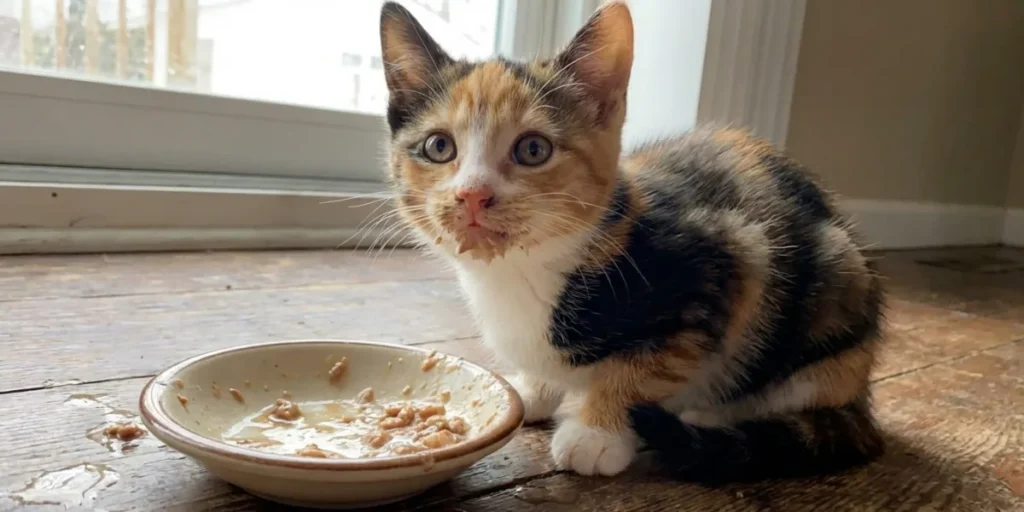
Kittens grow faster than almost any other domestic animal. In their first year, they go from helpless newborns to nearly full-grown cats. That growth requires constant, high-quality fuel.
Birth to 8 Weeks
For the first four weeks, kittens should nurse exclusively from their mother. Her milk provides the right balance of nutrients and immune-boosting antibodies no commercial formula can fully replicate. If the mother is unavailable, use a veterinarian-recommended kitten milk replacer. Never substitute cow’s milk as it causes digestive problems and lacks the nutrients kittens need.
Around four weeks, begin introducing solid food. Mix high-quality wet kitten food with warm water to create a soft texture. By eight weeks, most kittens eat solid food entirely. Aim for four to six small meals daily to match their small stomachs and high energy needs.
2 to 6 Months: Peak Growth Phase
This is the most nutritionally demanding period of a cat’s life. Kittens need approximately 200 to 250 calories per day with high protein content of at least 30 to 40 percent, along with DHA for brain and vision development and calcium for bone growth. For the three-month mark specifically, we break down how much to feed a 3 month old kitten and how to check the portion against her body condition.
Always choose kitten-specific formulas that carry an AAFCO statement for growth. This label confirms the food meets established nutritional standards. Never feed adult cat food to kittens. It lacks the calorie density their developing bodies require. Before adding anything new to their diet, check our guide on safe and unsafe human foods for pets.
6 to 12 Months
Growth slows but calorie needs remain higher than in adulthood. Reduce feeding to two to three meals daily and monitor body condition closely. You should feel ribs with light pressure but not see them. Most cats transition to adult food around 12 months. Larger breeds like Maine Coons may benefit from staying on kitten food until 18 months.
When switching foods, use a gradual seven to ten day transition. Start with 75% current food and 25% new food, then move to 50/50, then flip the ratio, and finally switch completely. Rushing the change causes vomiting and diarrhea in most kittens.
Feeding Adult Cats (1 to 7 Years)
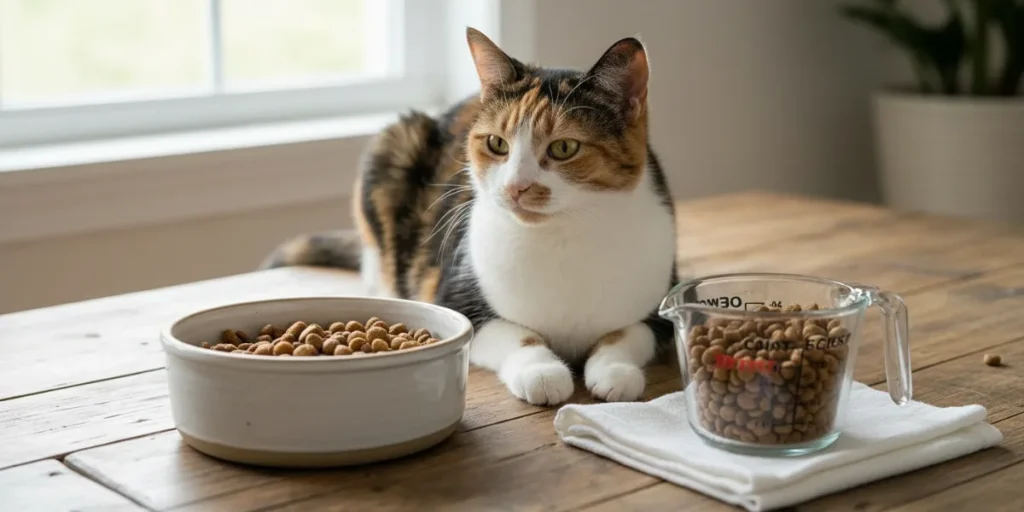
The adult years are when most cats develop weight problems. Obesity in cats is overwhelmingly a product of overfeeding during this phase. Getting portion control right from the start makes a significant difference.
How Many Calories Does an Adult Cat Need?
Adult cats generally need between 20 and 30 calories per pound of body weight each day depending on activity level.
- Sedentary indoor cat (10 lbs): around 200 calories per day
- Moderately active cat (10 lbs): around 250 calories per day
- Very active or outdoor cat (10 lbs): around 300 calories per day
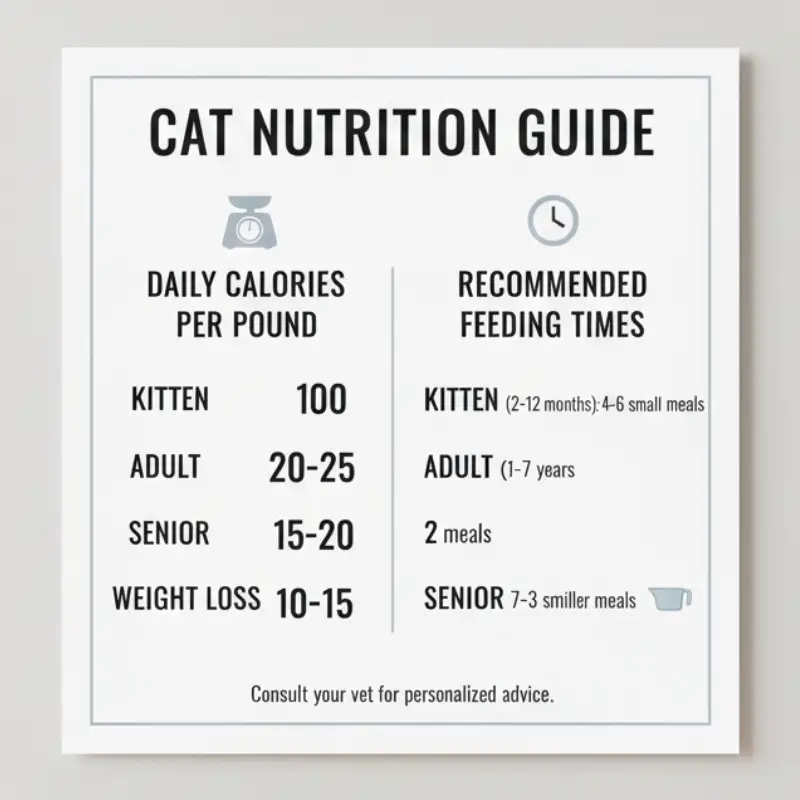
These are starting points. Metabolism varies between individuals, so monitor body condition and adjust accordingly.
Essential Nutrients
Cats are obligate carnivores and must get certain nutrients from animal-based protein. A complete adult diet needs high-quality protein at 26 to 30 percent minimum, fat at 9 to 15 percent, taurine for heart and eye health, and key vitamins including A, D, E, and B-complex. Cats have no biological need for carbohydrates.
The Association of American Feed Control Officials sets the nutritional standards commercial cat foods must meet to be labeled complete and balanced. Look for their statement on any adult food you choose.
Portion Control and Feeding Schedule
Do not guess your cat’s portions. Measure every meal with a proper measuring cup. At an ideal weight, you can feel the ribs with gentle pressure but they are not visible, there is a visible waist from above, and a slight abdominal tuck is visible from the side.
Two scheduled meals per day, morning and evening, work best for most adult cats. Free feeding leads to overeating in the majority of cats and is generally not recommended. Treats should account for no more than 10 percent of daily caloric intake.
Wet Food, Dry Food, or Both?
Wet food provides 70 to 80 percent moisture content, supporting kidney health and hydration. Dry food is more convenient and economical. Combining them, wet food at one meal and dry at the other, offers a practical balance most veterinarians recommend. If you are considering cooking instead, read our homemade pet food guide first, because a home diet that is not properly balanced causes more harm than kibble ever does.
Spaying or neutering reduces metabolism by 20 to 30 percent. After surgery, reduce daily calories by a similar margin. For ongoing weight management, our pet weight management guide covers the key steps in detail.
Feeding Senior Cats (7+ Years)
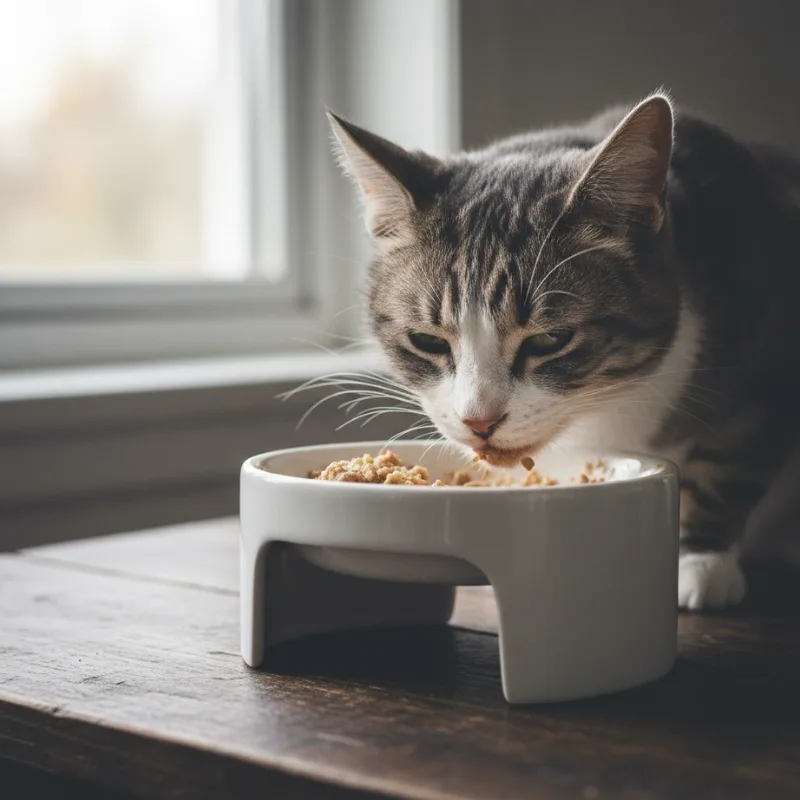
Senior cats are underserved by generic feeding advice. The assumption that older cats simply need less food misses the real complexity of feline aging. Some seniors need fewer calories while others actually need more. Individual assessment matters far more than general rules.
How Aging Changes Nutritional Needs
Common changes in senior cats include slower metabolism, loss of muscle mass even with adequate food intake, reduced sense of smell and taste which can decrease appetite, dental disease making eating painful, decreased digestive efficiency, and development of chronic conditions like kidney disease or arthritis.
The Protein Myth
One of the most persistent misconceptions about senior cat nutrition is that older cats need a low-protein diet. This is outdated and potentially harmful. Senior cats actually require higher protein at 30 to 45 percent to preserve muscle mass. Muscle loss in older cats is a serious health concern and adequate dietary protein is one of the main defenses against it.
The only exception is cats with diagnosed kidney disease requiring a phosphorus-restricted, protein-moderated prescription diet. For healthy senior cats, protein should be prioritized, not reduced.
Managing Common Senior Conditions Through Diet
Kidney Disease: Chronic kidney disease affects an estimated 30 to 40 percent of cats over 10 years old. Kidney-friendly diets include low phosphorus, omega-3 fatty acids, and increased moisture. The Cornell Feline Health Center provides research-backed guidance on managing feline kidney disease through diet.
Dental Disease: Soft or wet food is easier to manage for cats with tooth or gum problems. Warming food slightly enhances its aroma, which encourages eating in cats whose sense of smell has declined.
Arthritis: Elevated food and water dishes reduce neck strain. Foods with omega-3 fatty acids and added glucosamine provide anti-inflammatory support. Weight management plays a major role since every extra pound adds stress to painful joints.
Unintentional Weight Loss: If your senior cat is losing weight despite eating regularly, the cause needs investigation. High-calorie nutrient-dense wet food and frequent small meals can help while you consult your vet.
What to Look for in Senior Cat Food
Choose foods with high-quality animal protein as the first ingredient, low phosphorus for kidney protection, added glucosamine and chondroitin for joint support, antioxidants like vitamins E and C, and a texture suited to your cat’s dental health. Avoid foods with excessive fillers, artificial colors, or preservatives.
Feeding Guidelines That Apply at Every Age
Water Is Critical
Cats evolved in dry environments and have a naturally low thirst drive. They often do not drink enough water on their own, which contributes to urinary tract problems and kidney disease over time.
To encourage drinking, place multiple water bowls in different areas of your home, change the water daily, consider a cat water fountain since moving water attracts many cats, and feed wet food at least once daily for built-in hydration.
Foods That Are Toxic to Cats
Some common household foods are genuinely dangerous and should never be offered:
- Chocolate and caffeine: toxic to the heart and nervous system
- Onions and garlic: damage red blood cells
- Grapes and raisins: can cause kidney failure
- Xylitol: causes liver failure
- Alcohol: extremely toxic even in tiny quantities
If your cat eats anything from this list, contact your vet immediately. Our guide on are roses poisonous to cats also covers common household plants and other hidden hazards worth knowing about.
Warning Signs to Watch For
A well-fed cat has a shiny coat, bright eyes, consistent energy, steady appetite, and normal litter box habits. Contact your veterinarian if you notice weight change of 5 percent or more, vomiting or diarrhea lasting more than 24 hours, loss of appetite for two or more days, excessive thirst or increased urination, or a dull thinning coat.
If your cat is vomiting regularly after meals, read our article on why your cat is throwing up food to understand the most common causes.
Frequently Asked Questions
How much should I feed my cat daily?
Adult cats need 20 to 30 calories per pound of body weight. A 10-pound cat typically needs 200 to 300 calories split across two meals. Adjust based on your cat’s body condition, not just the packaging guidelines.
Can kittens eat adult cat food?
No. Kitten food is higher in protein, fat, and key nutrients like DHA. Feeding adult food to a kitten causes nutritional deficiencies during the most critical developmental window.
How often should I feed my cat?
Kittens under six months need three to four meals daily. Adult cats do best with two scheduled meals per day. Senior cats benefit from two to three smaller meals spread throughout the day. That schedule is also what decides how long a cat can be left alone, since a kitten on four meals cannot be covered by a single bowl the way an adult can.
When should I switch to senior cat food?
Most cats benefit from transitioning to a senior formula around age seven. Senior foods are higher in protein, lower in phosphorus, and include added joint support. Use the gradual seven to ten day transition to avoid digestive upset.
Final Thoughts
What your cat eats at each life stage directly affects how long and how well they live. Kittens need calorie-dense protein-rich food to grow properly. Adult cats need portion-controlled balanced meals to stay at a healthy weight. Senior cats need easily digestible high-protein food that supports aging joints, organs, and muscle mass.
Measure portions rather than guessing, feed on a schedule, check body condition monthly, and always provide fresh water. These simple habits done consistently make a real difference in your cat’s health over time.