

Introduction
Parrots are intelligent, social, and colorful birds that can live for decades when given proper care. Whether you have a budgie, cockatiel, conure, macaw, or African grey, understanding their needs is essential. These birds are highly interactive and need attention, mental stimulation, and a safe, healthy environment to thrive. Requirements differ sharply by species, which our guide to 50 parrot breeds and their care breaks down, and if your bird backs away every time you reach into the cage, start with why parrots become afraid of hands.
This comprehensive parrot care guide will cover everything you need to know, including choosing the right cage, providing a balanced diet, training and socializing your bird, maintaining hygiene, and keeping your parrot mentally and physically healthy.
Understanding Your Parrot Care
Parrots have a wide range of vocalizations and body language cues. Learning to interpret their behavior helps build a strong bond and prevents misunderstandings.
- Vocal Communication: Many parrots can mimic human speech, but they also use chirps, squawks, and whistles to express mood.
- Body Language:
- Fluffed Feathers: Can indicate comfort or illness.
- Tail Wagging: Usually a sign of excitement.
- Eye Pinning: Rapid eye constriction shows strong emotion, either curiosity or aggression.
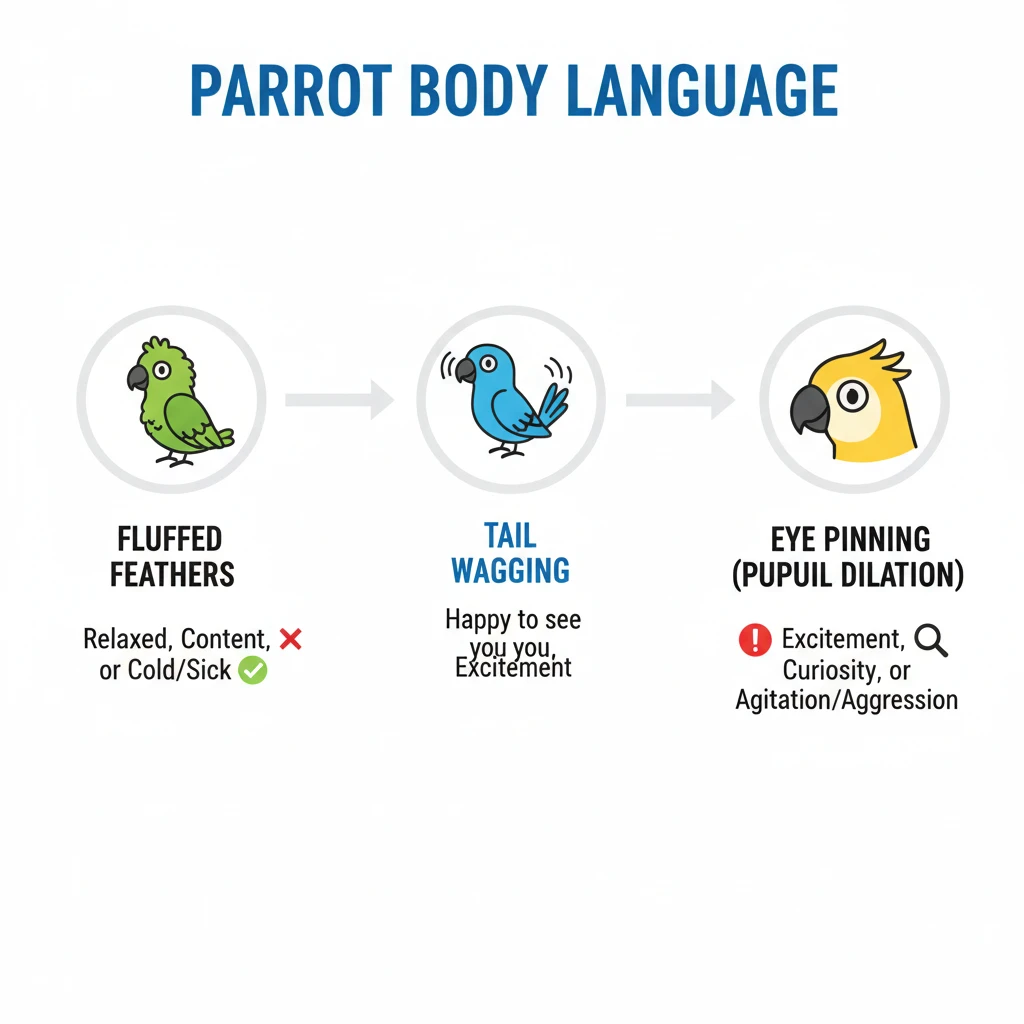
Understanding these cues helps you respond appropriately to their needs and emotions.
Parrot Behavior and Intelligence
Parrots are among the most intelligent bird species. They can mimic human speech, recognize faces, and even solve problems. Some parrots have vocabularies of over 100 words. Because of their intelligence, they require daily mental challenges, interactive toys, and human interaction to stay happy.
A bored parrot may scream excessively, pluck feathers, or become aggressive. Providing enough stimulation and social interaction is key to preventing behavioral issues.
Lifespan and Long-Term Commitment
Parrots live much longer than many pets. Small species like budgies can live 8–15 years, cockatiels 15–20 years, and larger parrots such as macaws and African greys often live 40–60 years. Some even reach 70+ years with proper care.
Owning a parrot is a lifelong commitment. Before getting one, consider whether you can dedicate time and resources for decades.
Choosing the Right Cage
Cage Size and Placement
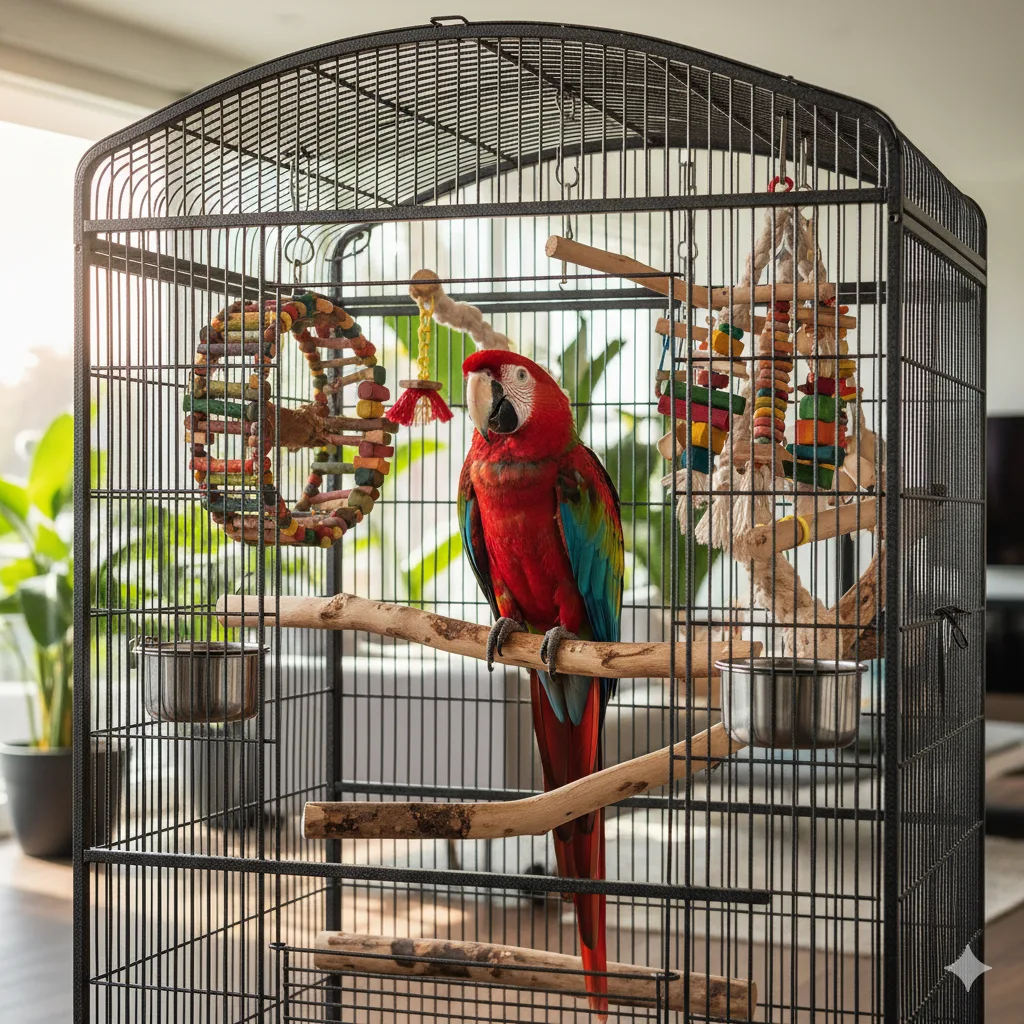
A parrot cage should be big enough for the bird to stretch its wings fully and move around comfortably. As a rule, the cage should be at least twice the bird’s wingspan in width. Bigger is always better.
Place the cage in a bright area with natural light but away from drafts, direct sunlight, and kitchen fumes (Teflon and smoke can be deadly).
Cage Setup and Accessories
- Perches: Use multiple natural wood perches of different diameters to exercise foot muscles.
- Food & Water Bowls: Stainless steel or ceramic bowls are safest and easiest to clean.
- Toys: Provide a mix of chew toys, ropes, bells, and foraging toys to keep your parrot engaged.
- Cage Liner: Use paper-based liners and change them daily for hygiene.
Nutrition and Feeding Proper Parrot Care
Balanced Diet
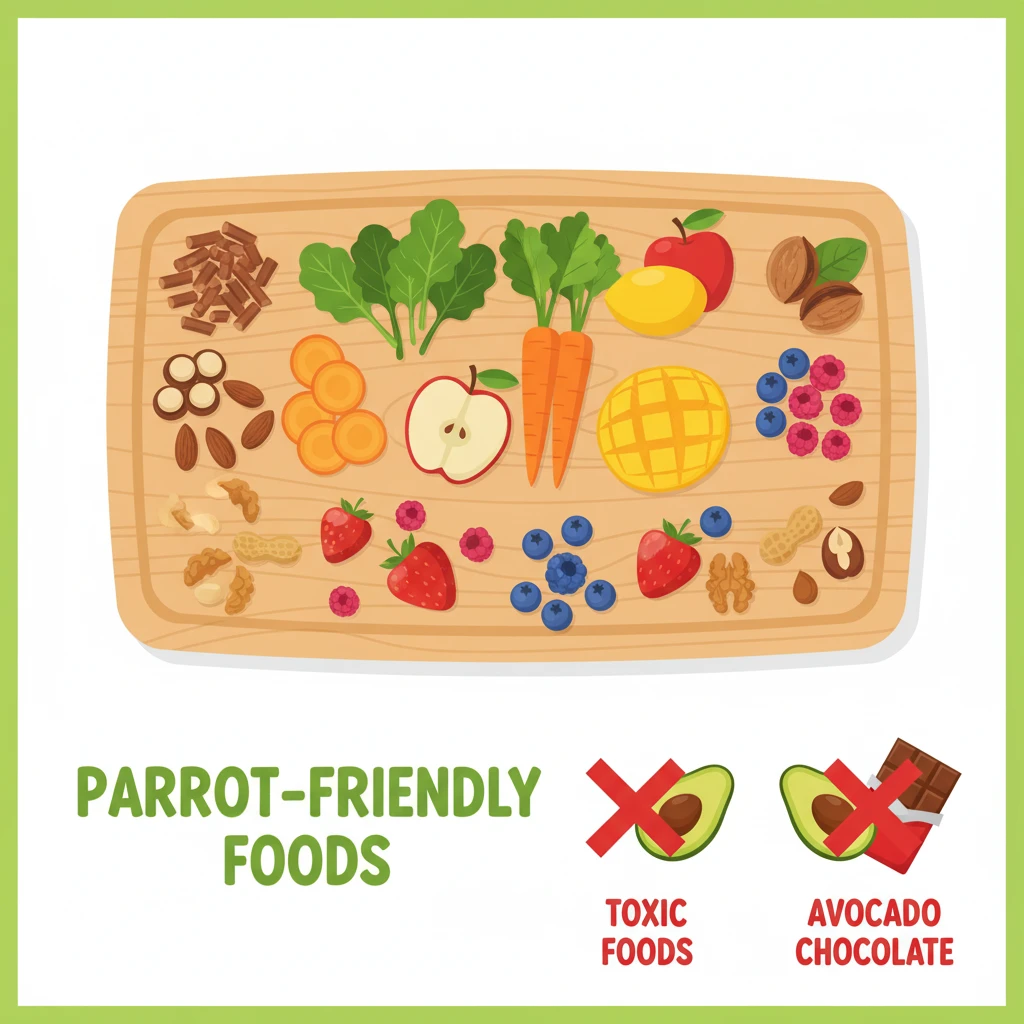
A healthy parrot diet should consist of:
- Pellets: 50–70% of the diet.
- Fresh Fruits & Vegetables: Leafy greens, carrots, peppers, apples, mangoes, and berries.
- Seeds & Nuts: Small amounts as treats, not the main food source.
- Protein Sources: Cooked beans, lentils, or eggs once or twice a week.
Toxic Foods to Avoid
Never feed parrots:
- Avocado
- Chocolate
- Alcohol
- Caffeine
- Salty or fried foods
- Onions and garlic
Feeding Routine
Offer fresh food twice daily. Remove uneaten fruits or vegetables after a few hours to prevent spoilage. Always provide clean water.
Seasonal Care Tips
Different weather conditions require adjustments in parrot care:
- Winter: Keep the room warm and draft-free. Consider using a bird-safe heater.
- Summer: Provide extra water, mist your parrot more frequently, and avoid overheating.
- Molting Season: Increase protein intake slightly and offer extra bathing opportunities
- Learn more about this in the Lafeber Bird Food Guide
Exercise and Mental Stimulation for Parrot Care
Parrots are active birds that need physical and mental challenges to stay healthy.
- Daily Out-of-Cage Time: Allow at least 2–3 hours of supervised time outside the cage.
- Toys & Enrichment: Rotate toys weekly to prevent boredom. Foraging toys are great for mental stimulation.
- Training Sessions: Short daily sessions (5–10 minutes) help teach commands and strengthen your bond.
Enrichment Beyond Toys
Toys are important, but parrots also benefit from real-world enrichment:
- Music and Sounds: Play soft music or nature sounds when you’re away.
- Training Sessions: Short, positive sessions improve their confidence and keep their mind engaged.
- Social Interaction: Allow supervised interaction with trusted family members to prevent over-bonding with a single person.
Training and Socialization
Building Trust
New parrots need time to settle. Sit near the cage, talk softly, and offer treats through the bars. Never force physical interaction.
Basic Commands
Teach simple commands like:
- Step Up / Step Down: For easy handling.
- Come: Call them to your hand or perch.
Use positive reinforcement with treats or praise.
Preventing Behavior Problems
Screaming, biting, and feather plucking are often caused by boredom or lack of attention. Provide plenty of playtime, toys, and human interaction every day.
Grooming and Hygiene
Bathing
Parrots love water. Offer a shallow dish or mist spray for bathing a few times a week. Bathing removes dust and keeps feathers shiny.
Nail and Beak Care
- Beak: Cuttlebones and wooden toys help maintain natural beak shape.
- Nails: If nails grow too long, have them trimmed by a vet to avoid injury.
Feather Health
Watch for bald patches or damaged feathers. These may indicate stress, poor diet, or illness.
Health and Veterinary Parrot Care
Regular Vet Visits
Schedule annual wellness exams with an avian veterinarian. Early detection of illness is crucial.
Signs of a Healthy Parrot
- Bright, alert eyes
- Smooth, clean feathers
- Good appetite
- Active and vocal
Warning Signs of Illness
- Fluffed-up feathers for long periods
- Loss of appetite
- Lethargy or weakness
- Wheezing or labored breathing
If you notice these symptoms, contact a vet immediately.
Traveling with Parrots
If you travel frequently, it’s essential to plan ahead to keep your parrot safe and stress-free.
- Travel Carrier: Choose a sturdy, well-ventilated travel cage.
- Familiar Items: Bring a favorite toy or perch to reduce anxiety.
- Temperature Control: Avoid extreme heat or cold during transport.
- Routine: Try to maintain feeding and sleeping schedules during trips.
Short practice trips help your parrot adjust before a long journey.
Creating a Safe Environment for Parrot care
Hazards to Avoid
- Non-stick cookware fumes
- Open windows, ceiling fans
- Toxic plants
- Electrical cords
Safe Interaction
Supervise interactions with children and other pets. Never chase or force the bird to interact — it can create fear and stress.
Just like toddlers, parrots explore everything with their beaks. Make your home safe before letting them out of the cage:
- Cover electrical cords or keep them out of reach.
- Close windows and doors during out-of-cage time.
- Remove toxic plants and secure breakable items.
- Avoid candles, aerosols, and strong scents that can harm their lungs.
Common Mistakes to Avoid
- Feeding only seeds
- Ignoring cage cleaning
- Not providing enough toys or stimulation
- Using scented candles or aerosols near the cage
FAQs
What is the best diet for a parrot?
The best diet includes pellets, fresh vegetables, fruits, and limited seeds. Avoid toxic foods like avocado and chocolate.
How often should I clean my parrot’s cage?
Replace liners daily, clean perches weekly, and do a full cage scrub every two weeks.
How much playtime do parrots need?
At least 2–3 hours of out-of-cage time every day for physical and mental health.
How do I stop my parrot from screaming?
Ignore attention-seeking screams, reward quiet moments, and keep the bird engaged with toys and training.
Do parrots need a companion?
Not always, but they need daily human interaction. If you cannot spend time, consider getting two parrots.
Conclusion
Parrots care are intelligent and affectionate birds that need more than food and water — they need mental stimulation, social interaction, and a safe, healthy environment. By following this guide on cage setup, diet, training, and healthcare, you can give your parrot a happy and fulfilling life that can last decades.