
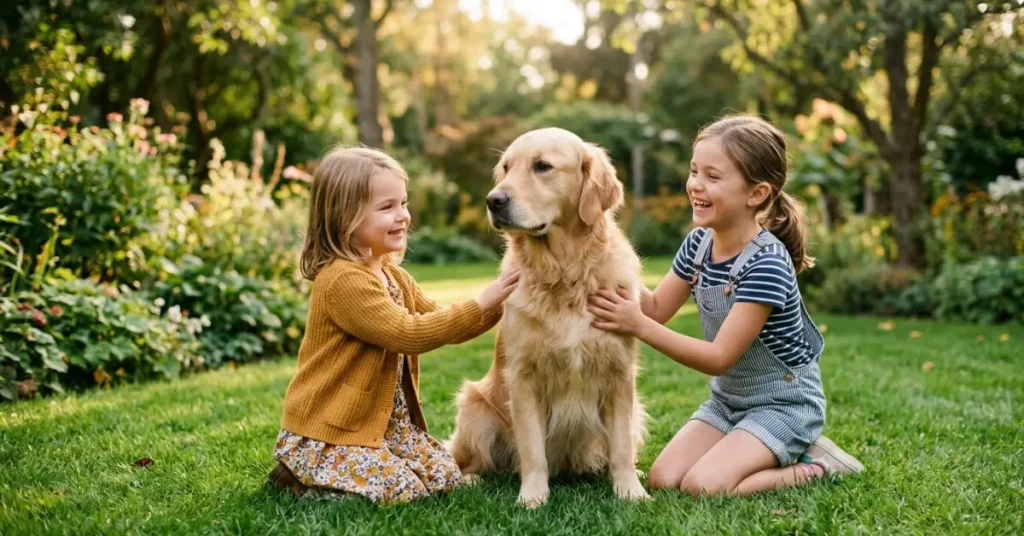

Picking a dog for your family feels exciting. But it can also feel confusing when every breed seems like a good option online. You want a dog that is safe with your kids, easy to manage, and fits your home and lifestyle.
This article will show you what actually makes a dog good for families, which breeds stand out, and how to match a breed to your specific situation. No guesswork.
What Makes a Good Family Dog?
A good family dog breed is patient with children, adaptable to home life, easy to train, and not prone to aggression. Key traits include a calm temperament, low reactivity, strong bonding behavior, and tolerance of noise and activity. Size, energy level, and grooming needs also matter depending on your living situation and the ages of your children.
The Key Traits to Look for Before Choosing a Breed
Not every friendly dog is a family dog. Some breeds bond with one person and become possessive. Others have high prey drives that make them unpredictable around small children.
Before you pick a breed, ask these questions:
- How old are your kids? Toddlers need a very tolerant, low-reactivity dog. Teenagers can handle more energetic breeds.
- Where do you live? Small apartments suit calm, low-energy dogs. Large yards work well for active breeds.
- How much time do you have? Some breeds need 2 hours of exercise daily. Others are happy with a short walk.
- Does anyone have allergies? Low-shedding, hypoallergenic breeds like Poodles are worth considering.
Best Family Dog Breeds
1. Labrador Retriever
Labs are consistently ranked the most popular family dog in the United States for a reason. They are naturally social, bond quickly with children, and tolerate rough handling without becoming reactive.
Behaviorally, Labs were bred as working dogs that cooperate closely with humans. This makes them highly trainable and motivated by praise and food rewards. They rarely show resource guarding with children, which is a major safety factor. Adopting an adult rather than a puppy changes the early work, and house-training an adult dog has its own method.
- Best for: Families with young children, active households
- Energy level: High, needs 60 to 90 minutes of exercise daily
- Weight: 55 to 80 pounds
- Watch for: Weight gain if under-exercised; hip dysplasia in older age
2. Golden Retriever
Goldens are patient, emotionally intuitive dogs. They tend to mirror the energy of the household, staying calm when things are quiet and playful when the family is active. This adaptability makes them ideal for homes with kids of different ages.
They also have low defensive aggression, meaning they rarely bite even when startled. According to the American Kennel Club, Goldens score among the highest for trainability and family compatibility.
- Best for: Multi-child households, families who want a loyal companion
- Energy level: High, needs regular outdoor time
- Weight: 55 to 75 pounds
- Watch for: Coat sheds heavily; needs brushing several times a week
3. Beagle
Beagles are sturdy, curious, and gentle. Their smaller size (20 to 30 pounds) makes them easier to manage around very young children. They were originally bred as pack dogs, so they thrive in social family settings and dislike being alone for long periods.
One behavioral note: Beagles are scent-driven and can become distracted outdoors. A secure yard matters. They also vocalize more than most breeds, which some families enjoy and others find challenging.
- Best for: Families with moderate activity levels, kids aged 4 and up
- Energy level: Moderate to high
- Watch for: Separation anxiety if left alone frequently
4. Poodle (Standard)
Standard Poodles are one of the most underrated family dogs. They are highly intelligent, respond well to positive reinforcement training, and shed very little, making them a practical choice for families with pet allergies.
Their intelligence means they need mental stimulation alongside physical exercise. A bored Poodle will find ways to entertain itself, which is not always ideal. Puzzle toys, obedience training, and interactive play keep them balanced.
- Best for: Families with allergy concerns, households that enjoy training
- Energy level: Moderate to high
- Weight: 45 to 70 pounds
- Watch for: Needs consistent grooming every 6 to 8 weeks
5. Cavalier King Charles Spaniel
For families in apartments or smaller homes, the Cavalier is an excellent fit. They are gentle, affectionate, and low-reactivity dogs that do well with toddlers and seniors alike. They tend to follow family members from room to room and are deeply attached to people.
Their moderate energy level means a daily walk keeps them satisfied. They do not require intense exercise, which suits busy parents.
- Best for: Apartment living, families with infants or elderly members
- Energy level: Low to moderate
- Weight: 13 to 18 pounds
- Watch for: Heart conditions (MVD) are common in this breed; regular vet checkups are essential
6. Boxer
Boxers are playful, protective, and deeply loyal. They behave almost like puppies well into adulthood, which makes them a favorite for families with active kids. They are also naturally watchful, providing a sense of security without being aggressive.
Socialization from a young age is important with Boxers. Without it, their protective instincts can become overly reactive. Early obedience training makes a big difference in their behavior as adults.
- Best for: Active families, kids aged 6 and up
- Energy level: High
- Weight: 50 to 80 pounds
- Watch for: Brachycephalic (flat-faced) breathing issues in hot weather
7. Border Collie
Border Collies are exceptional dogs for the right family. They are highly intelligent and deeply bonded to their people. However, they are not a good fit for every household.
They were bred to herd livestock and have strong instincts to chase and control movement. Without enough physical and mental stimulation (think 2 or more hours daily), they develop behavioral problems like excessive barking, nipping, or destructive habits. Families who hike, run, or have space for active play will find them rewarding companions.
- Best for: Very active families, older kids and teens
- Energy level: Very high
- Watch for: Not recommended for toddlers or low-activity households
8. Shih Tzu
Shih Tzus were bred as companion dogs and have no working dog instincts to manage. They are calm, affectionate, and adapt easily to different living situations. Their low exercise needs make them practical for busy families.
They bond warmly with children but are small enough that interactions with very young toddlers should be supervised. A child who plays too roughly can frighten or injure a small dog, which sometimes triggers defensive snapping.
- Best for: Apartment families, older children, multi-generational homes
- Energy level: Low
- Weight: 9 to 16 pounds
- Watch for: Coat requires regular grooming to prevent matting
Matching the Breed to Your Family’s Lifestyle
Here is a quick-reference guide:
| Family Type | Best Match |
|---|---|
| Toddlers at home | Golden Retriever, Cavalier, Labrador |
| Apartment living | Shih Tzu, Cavalier, Miniature Poodle |
| Very active family | Border Collie, Boxer, Labrador |
| Allergy concerns | Standard or Miniature Poodle |
| First-time dog owners | Labrador, Golden Retriever, Beagle |
| Families with seniors | Cavalier, Shih Tzu |

What About Safety? Understanding Breed Behavior and Risk
Even the friendliest breeds can behave unpredictably if they are not trained, socialized, or cared for properly. A dog’s individual history, treatment, and training matter more than breed alone.
That said, some breeds carry higher risk profiles and are not recommended for households with young children. If you want to understand which breeds require extra caution, read this detailed guide on dangerous dog breeds and what makes them high-risk. It helps to know the full picture before making your decision.
Tips for Introducing a New Dog to Your Family
Getting the breed right is step one. How you introduce the dog matters just as much.
- Meet the dog before adopting. Watch how it reacts to your children in a neutral space.
- Start with short visits. Let the dog adjust gradually rather than overwhelming it.
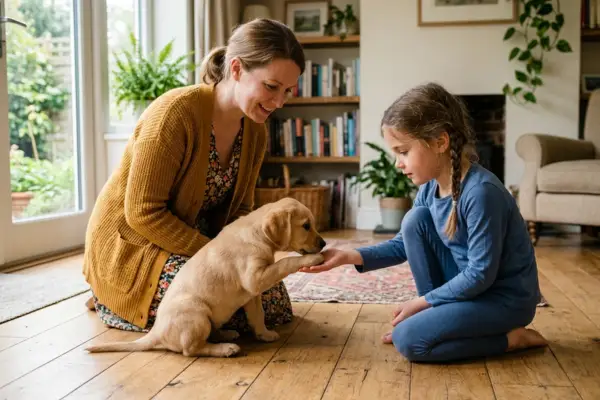
- Teach children how to interact. No pulling ears, no disturbing the dog while it eats or sleeps.
- Enroll in obedience classes early. Basic commands like “sit,” “stay,” and “leave it” are safety tools, not tricks.
- Give the dog its own space. A crate or quiet corner gives the dog a place to decompress.
Frequently Asked Questions
What is the calmest dog breed for families with young children? The Cavalier King Charles Spaniel and the Shih Tzu are among the calmest family breeds. Both have low reactivity, gentle temperaments, and adapt well to quiet households with toddlers.
Are large dogs safe around babies and toddlers? Many large breeds like Labradors and Golden Retrievers are very safe with young children. Size alone does not determine risk. Temperament, training, and supervision matter far more than a dog’s weight.
Which dog breed is easiest to train for first-time owners? Labrador Retrievers and Golden Retrievers are consistently the easiest for first-time owners. They are eager to please, food-motivated, and respond well to positive reinforcement without needing advanced handling skills.
Do family dogs need special training beyond basic commands? Basic obedience training (sit, stay, come, leave it) is the minimum. Dogs living with children also benefit from impulse control training, which teaches them to stay calm during chaotic play and not jump on small kids.
What should I consider if someone in the family has dog allergies? Look for low-shedding or hypoallergenic breeds like Poodles, Bichon Frises, or Portuguese Water Dogs. No breed is 100% allergen-free, but these produce significantly less dander than heavy-shedding breeds.
How long does it take a new dog to adjust to family life? Most dogs need 3 to 12 weeks to fully settle into a new home. This period, sometimes called the “decompression phase,” is normal. Consistent routines, calm introductions, and positive reinforcement speed up the adjustment.
Conclusion
The best family dog breed is the one that fits your home, your schedule, and the ages of your children. Labrador Retrievers and Golden Retrievers work for most families. Smaller breeds like Cavaliers and Shih Tzus suit apartment living. High-energy breeds like Border Collies reward very active households.
Breed is a starting point, not a guarantee. Training, socialization, and daily care shape how a dog actually behaves in your home.
For more guidance on responsible dog ownership, dog health, and choosing the right pet, explore the resources at Petnicki.com to stay informed before and after you bring a dog home.