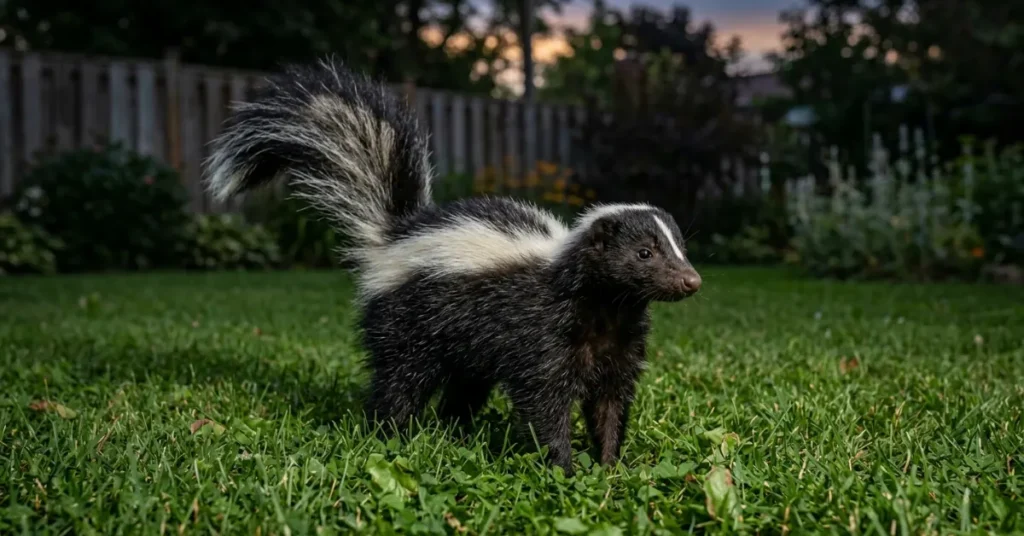

If you have noticed a stronger-than-usual skunk smell near your yard lately, you are not imagining it. Skunk activity increases sharply during breeding season, and many homeowners have no idea it is happening until the damage is done.
This article explains exactly when skunk mating season occurs, what behavioral changes to expect, and what you can do to keep skunks from nesting on your property.
Quick Answer: When Is Skunk Breeding Season?
Skunk breeding season runs from late February through March, with peak mating activity in February. Female skunks carry their young for about 60 days, meaning most litters are born between April and May. Young skunks stay in the den for 6 to 8 weeks before venturing out with their mother.
Understanding Skunk Reproductive Biology
Skunks are seasonal breeders. Their reproductive cycle is driven by changes in daylight length, a process called photoperiodism. As days grow longer in late winter, male skunks come out of their winter torpor and begin searching for mates.
Striped skunks (Mephitis mephitis), the most common species in North America, are polygamous. One male will mate with multiple females during the short breeding window.
Key Reproductive Facts at a Glance
| Detail | Information |
|---|---|
| Mating season | February to March |
| Gestation period | 59 to 77 days |
| Average litter size | 4 to 7 kits |
| Birth months | April to May |
| Weaning age | 6 to 8 weeks |
| Sexual maturity | 10 to 12 months |
How Skunk Behavior Changes During Mating Season
Most of the year, skunks are solitary and quiet. That changes fast during breeding season. Here is what you are likely to see and smell.
Increased Nighttime Activity
Skunks are nocturnal. During mating season, they travel much farther from their dens each night. Males can cover several miles in a single night searching for receptive females.
If you suddenly notice skunk tracks, dug-up lawn patches, or overturned garbage cans, breeding activity is a likely cause.
More Frequent Spraying
Skunk spray is a defense tool, but during mating season it becomes a social signal too.
- Male skunks spray each other when competing for a female
- Female skunks spray males they want to reject
- Stressed or cornered females protecting their territory spray more readily
This is why skunk odor near homes spikes between February and April. It is not random. It is communication.
Stomping, Hissing, and Raised Tail Warnings
Before a skunk sprays, it usually gives clear warning signs. During mating season, these happen more often because skunks are under more stress:
- Stamping front feet rapidly on the ground
- Arching its back and raising its tail
- Hissing or clicking teeth
- Turning its body into a U-shape so both eyes and scent glands face the threat
Understanding these warning signs helps you back away before you get sprayed.
Females Searching for Den Sites
After mating, pregnant females spend weeks searching for a safe, warm, and sheltered space to give birth. Common den locations include:
- Under porches or decks
- Beneath sheds or outbuildings
- Inside crawl spaces
- Underneath wood or debris piles
- In abandoned burrows dug by other animals
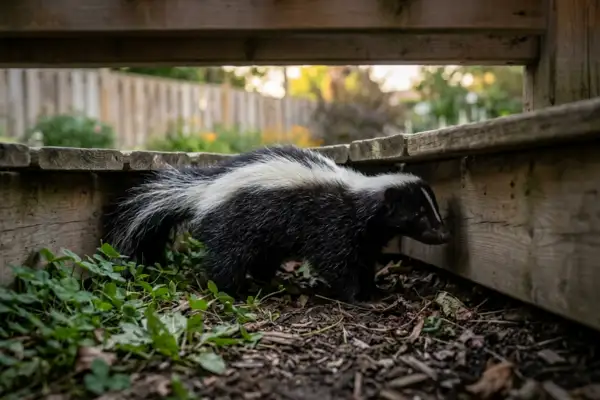
A female skunk nesting under your structure is harder to remove once she has given birth. Early identification is key.
Striped Skunk vs. Spotted Skunk: Do Seasons Differ?
Most of the information above applies to the striped skunk, which is the species found across most of the United States and Canada.
The eastern spotted skunk (Spilogale putorius) has a slightly different reproductive pattern. It can go through a period of delayed implantation, where a fertilized egg does not immediately begin developing. This means its birth season may be pushed slightly later than the striped skunk’s.
For most homeowners, the striped skunk is the species to watch. Its mating season in late February to March is well established and consistent year to year.
Research published by National Geographic highlights how skunk behavior, including their distinctive warning signals, is deeply connected to their seasonal activity cycles.
What Attracts Skunks to Your Yard During Breeding Season
During breeding season, skunks need more food to fuel their increased activity. They are opportunistic foragers, and residential yards often offer easy meals.
Common attractants include:
- Grubs and insects in lawns (skunks dig cone-shaped holes to find them)
- Bird feeders with seed spillage on the ground
- Unsecured garbage bins or compost piles
- Pet food left outside overnight
- Fallen fruit from trees
- Low-structure gaps under decks, stoops, or sheds
Removing these attractants before February significantly reduces the chance of a skunk setting up a den near your home.
Just as many bird owners manage their yards carefully during nesting periods, skunk season requires similar preparation. If you are interested in how seasonal cycles affect other small animals, this guide on quail bird breeding seasons and nesting behavior offers useful context on how wildlife activity patterns shift with the seasons.
How to Prevent Skunks from Nesting on Your Property
Prevention is far easier than removal. Take these steps before mating season begins each year.
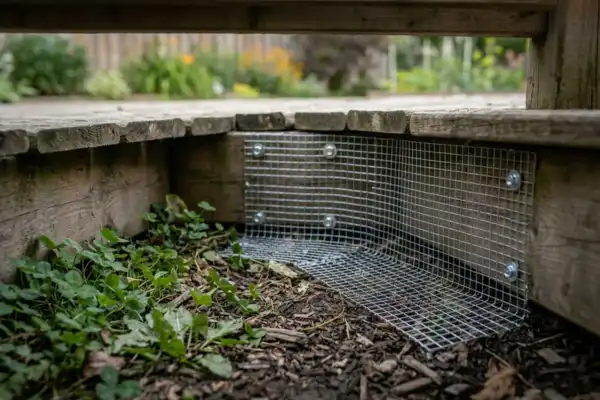
Before February
- Inspect the perimeter of your home, shed, and deck for open gaps
- Install L-shaped hardware cloth barriers around the base of structures, buried at least 12 inches into the ground
- Remove brush piles, wood stacks, and debris that could serve as shelter
- Secure all garbage cans with locking lids
- Stop leaving pet food outside after dark
Natural Deterrents
Some homeowners use deterrents with mixed results:
- Motion-activated lights near den-prone areas
- Ammonia-soaked rags placed near potential entry points (not inside)
- Predator urine granules (coyote or fox) sold at garden stores
- Cayenne pepper sprinkled near garden beds
These are not guaranteed. Physical exclusion barriers are more reliable.
What to Do If a Skunk Has Already Nested
If a skunk has already moved in under your deck or shed, do not attempt to seal the entry point immediately. There may be a litter inside.
Here is the right approach:
- Wait until late fall or early winter when the skunk family has naturally moved on
- Or contact a licensed wildlife removal professional to humanely relocate the family
- Only then seal entry points permanently
Sealing an occupied den can trap animals inside, which causes a far worse odor problem. It is also illegal in many states to trap and relocate wildlife without a permit.
FAQ: Skunk Breeding Season Questions
Q: When exactly do skunks mate? Striped skunks mate primarily in February and March. Some females born late in the previous year may mate a few weeks later as they reach maturity.
Q: How long is a skunk pregnant? The gestation period for a striped skunk is between 59 and 77 days. Most litters arrive in April or May.
Q: How many babies does a skunk have? The average litter size is 4 to 7 kits. They are born blind and hairless, and depend entirely on their mother for the first several weeks.
Q: Why do I smell skunk more often in late winter and spring? Increased spraying during the mating season is the main reason. Males spray rivals, and females spray unwanted suitors. This leads to a sharp rise in skunk odor near residential areas from February onward.
Q: Is it safe to approach a skunk I find in my yard? No. Skunks that feel cornered or surprised will spray. During breeding season they are more reactive than usual. Keep your distance and keep pets indoors.
Q: Can a skunk under my porch hurt my pets? Yes, indirectly. According to the CDC, skunks are among the wild animals most commonly found to carry rabies in the United States. Keep pets away from areas where skunks are active and make sure their rabies vaccinations are current.
Conclusion
Skunk breeding season runs from late February through March, with most litters born in April and May. During this window, skunks travel more, spray more, and actively look for sheltered spots on residential properties to raise their young.
The most important takeaway is this: prevention before February is far easier than dealing with a nesting skunk in spring. Seal entry points, remove food sources, and know the warning signs.
If a skunk has already settled in, give it space and contact a licensed wildlife professional. Attempting removal on your own during nesting season puts you, your pets, and the skunk family at unnecessary risk.
For more seasonal wildlife and pet-related guidance, explore the educational resources at Petnicki.