
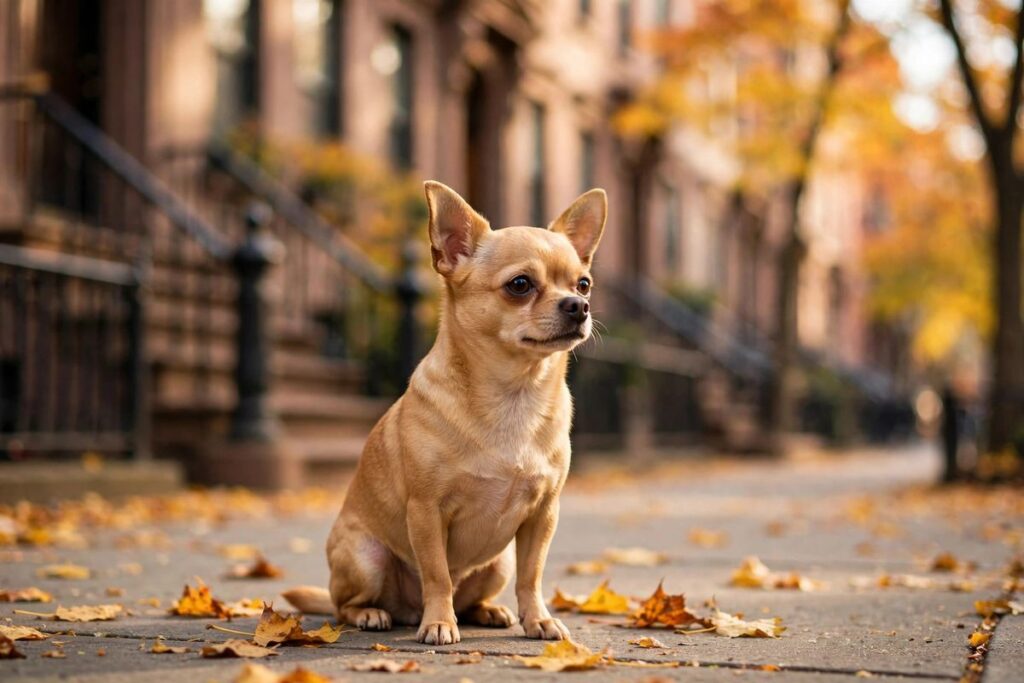

New York’s dog licensing file holds 18,351 Chihuahuas, and the chihuahua names on those records are strikingly repetitive: Coco leads with 188 dogs, Bella follows on 169, and only three names pass 130.
Charlie is the most common male name at 113 and Bella the most common female at 169. The lists below are grouped by sex, by Mexican and Spanish origin, by the joke of a heavy name on a small dog, and by food, with a line on why each suits the breed.
Names are cheap. A name that survives being shouted across a park isn’t, and that’s why we spend the last two sections on cue words, distance and renaming a dog that already answers to something else.
What New Yorkers actually call their Chihuahuas
The 20 most registered chihuahua names in New York run from Coco (188 dogs) to Toby (78), counted across 18,351 Chihuahua licences issued between September 2014 and December 2025, after duplicate entries and blank names were removed.
| Rank | Name | Dogs |
|---|---|---|
| 1 | Coco | 188 |
| 2 | Bella | 169 |
| 3 | Luna | 138 |
| 4 | Princess | 133 |
| 5 | Lola | 131 |
| 6 | Charlie | 130 |
| 7 | Rocky | 110 |
| 8 | Daisy | 109 |
| 9 | Max | 106 |
| 10 | Milo | 97 |
| 11 | Peanut | 94 |
| 12 | Lucky | 92 |
| 13 | Lucy | 92 |
| 14 | Penny | 84 |
| 15 | Chloe | 84 |
| 16 | Chico | 83 |
| 17 | Mia | 80 |
| 18 | Buddy | 79 |
| 19 | Lulu | 78 |
| 20 | Toby | 78 |
Our count comes from the NYC Department of Health and Mental Hygiene dog licensing dataset, which was updated on 15 July 2026 and covers licences issued from 12 September 2014 to 31 December 2025. We deduplicated on name, birth year, postcode and sex, then dropped every record marked UNKNOWN or NAME NOT PROVIDED; our count keeps crossbreeds in, because a Chihuahua crossbreed still answers to a Chihuahua name. The result is 12,462 purebred Chihuahuas, 5,796 Chihuahua crossbreeds and a tail of near-identical spellings, 18,351 animals in all. We treated close spellings as one name and kept crossbreeds in.
A licence is not a census. Owners who never register are invisible here, and the file describes one city rather than the country, so treat these figures as the best available sample of urban Chihuahua naming rather than a national ranking. The absolute numbers are worth more than the order: Coco carries about 110 more dogs than Toby in twentieth place. Crowded, certainly, but not compulsory.
Sex splits the file cleanly. Coco is the only name in both top tens, with 73 male dogs and 115 female; Charlie, Rocky and Max dominate among males, while Princess, Lola and Daisy appear only on the female side. For the national picture across every breed, our list of the most popular pet names runs the same comparison.
Male Chihuahua names
Charlie, Rocky, Max, Milo and Chico are the five most registered male chihuahua names in New York, with Charlie on 113 dogs. The 28 picks below add names that carry across a park, keep a Spanish sound, or set up the joke of a large name on a very small dog.
| Name | Male dogs |
|---|---|
| Charlie | 113 |
| Rocky | 109 |
| Max | 105 |
| Milo | 94 |
| Chico | 81 |
| Buddy | 79 |
| Lucky | 78 |
| Toby | 78 |
| Coco | 73 |
| Oliver | 59 |
Charlie’s lead is comfortable, and the sound explains it: two syllables, a hard opening consonant and a long vowel that travels. Rocky and Max follow the same pattern with fewer letters. We kept most of the editorial picks at two syllables for that reason, and marked the ones that break the rule.
- Charlie: the most registered male name in the city, and a name that survives distance because the vowel carries.
- Rocky: hard consonants at both ends, which suits a dog that announces itself before it arrives.
- Max: one syllable, one hard consonant, no ambiguity when called.
- Milo: softer than Max, with a long vowel that still projects.
- Chico: the Spanish diminutive of Francisco, and the only Spanish name in the male ten.
- Buddy: a name that sounds like a job description, which fits a dog that follows you room to room.
- Lucky: two syllables and a clear final vowel, popular with owners who rehome.
- Toby: the plosive in the middle makes it snap when called.
- Oliver: long on paper, but the dog will hear Ollie nine times out of ten.
- Diego: Spanish, three syllables, stress on the second, which makes it easy to stretch.
- Paco: short, sharp and unmistakably Spanish without being a cliché.
- Tito: a diminutive that sounds small even before the dog appears.
- Mateo: three syllables that roll, useful if you like a name with a rhythm.
- Cisco: two syllables, hard C at the front, and a western echo that suits a bolted little dog.
- Bruno: a heavy name on a light frame, and one of the few that sounds serious at the vet.
- Rocco: the doubled consonant gives it a growl without meaning anything threatening.
- Ted: one syllable, plain and easy, and it never sounds silly on a document.
- Ned: short, dry and quietly old-fashioned, which fits the site’s British ear.
- Pip: a high vowel that carries further than its size suggests.
- Sid: a single hard syllable, good for a dog that already ignores three others.
- Archie: two syllables, cheerful, and easy to shorten to Arch at the park.
- Reggie: a name with a bit of swagger that suits a Chihuahua’s self-image.
- Albie: soft but distinct, and rare enough that the dog will not meet three others with it.
- Otis: two open vowels, which makes it carry without volume.
- Wally: the sort of name that sounds like a dog with opinions.
- Percy: a literary name that stays short enough to call.
- Barney: two syllables, a hard B, and a friendly weight to it.
- Finn: one syllable with a clear ending, which suits a dog that comes when it feels like it.
Female Chihuahua names
Bella (169), Luna (138), Princess (132), Lola (131) and Coco (115) top the female chihuahua names in New York, and the spread from first to tenth is roughly 89 dogs. The 28 picks below mix those registered favourites with softer, sassier and Spanish alternatives.
| Name | Female dogs |
|---|---|
| Bella | 169 |
| Luna | 138 |
| Princess | 132 |
| Lola | 131 |
| Coco | 115 |
| Daisy | 109 |
| Lucy | 91 |
| Chloe | 84 |
| Penny | 83 |
| Mia | 80 |
Bella leads the female table by roughly 31 dogs, and the name has spread across breeds rather than staying a Chihuahua habit. If you want a name the dog will not share at the vet, the lower half of this table is a better starting point than the top five.
- Bella: the most registered female name in the city, and the safest bet if the dog will mostly meet strangers.
- Luna: two syllables, a soft start and a hard finish, which is why it carries so well.
- Princess: a name that fits a dog with a throne, and one that owners of small breeds keep returning to.
- Lola: short, rhythmic and easy to say twice in a row.
- Coco: the only name on both lists, and short enough to work as a recall word.
- Daisy: a long vowel and a soft consonant, which suits a gentle dog.
- Lucy: two syllables with a clear S sound, distinct from most commands.
- Chloe: starts with the breed’s own sound, which is a quiet nod without a joke.
- Penny: a name with a bit of grit under the sweetness.
- Mia: three letters, two syllables, and no chance of a mix-up at the door.
- Poppy: bright and short, and it suits a dog that runs before it thinks.
- Rosie: warm, common enough to be easy, rare enough at the top of this file.
- Tilly: a small name with a soft middle, good for a dog that is handled a lot.
- Winnie: an old-fashioned name that suits a Chihuahua with a stubborn streak.
- Minnie: literally small, which is either the point or the reason to avoid it.
- Pippa: two plosives, so it snaps when called.
- Dot: one syllable, and the shortest name on this list.
- Bea: a single open vowel, which carries further than its length suggests.
- Effie: soft but distinct, and rarely heard in a park.
- Hattie: a Victorian name that sounds sturdy, which is a useful joke on a two-kilo dog.
- Nell: short, dry and impossible to baby-talk into something else.
- Cleo: a hard C and a long vowel, which makes it a good recall name.
- Zelda: a name with a temper, suited to a dog that argues with the postman.
- Roxy: the sassy option, and one that survives being shouted.
- Jinx: a name for a dog that starts things, and short enough to say twice.
- Frida: a Mexican painter’s name that fits the breed’s origin without a costume.
- Chiquita: Spanish for little girl, and a name that has never quite left the breed.
- Paloma: Spanish for dove, with three syllables that soften a sharp little dog.
Mexican and Spanish Chihuahua names
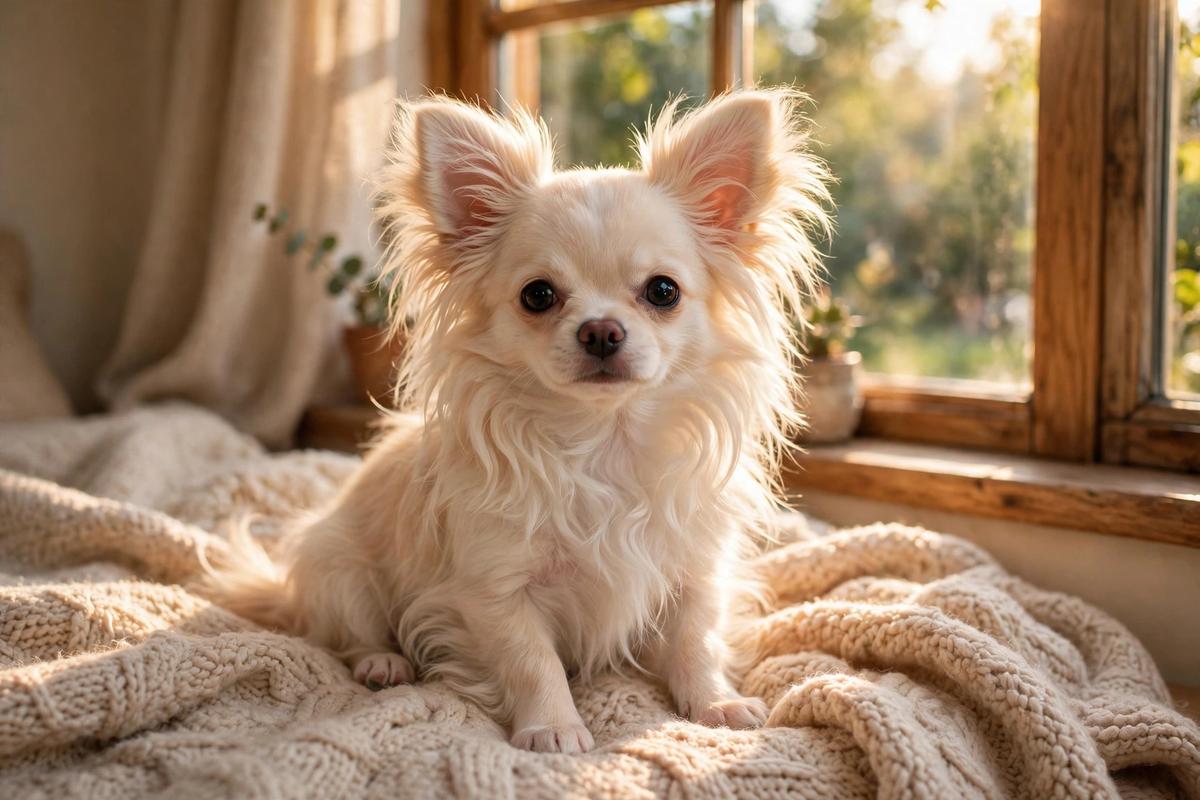
Chico, at 83 dogs, is the only Spanish name inside New York’s top 20, even though the Chihuahua is a national symbol of Mexico and takes its name from a Mexican state. The 24 picks below lean on that history rather than on tourist Spanish, and we kept the list to names a Spanish-speaking neighbour would recognise rather than ones that merely sound Spanish.
The AKC’s breed page gives the origin as the Mexican state of Chihuahua, places the breed in the Toy Group and dates recognition to 1904. Its recorded ancestor is the Techichi, a small dog kept by the Toltec. That lineage is why a Chihuahua name can sound ancient without sounding invented, and the same page calls the breed a national symbol of Mexico.
- Chico: boy, and the Spanish name New York owners actually use.
- Chiquita: little girl, with the diminutive doing the work.
- Techi: a shortened nod to the Techichi, and the most breed-specific name here.
- Alma: soul, for a dog with a stare.
- Luna: moon, and the second most registered female name in the city.
- Sol: sun, one syllable, and easy to call across a room.
- Cielo: sky, with two syllables that open on a soft C.
- Paloma: dove, a name that suits a quiet dog.
- Rosa: rose, short and round, and older than most name lists.
- Frida: after the painter, and the rare cultural reference that fits a two-kilo dog.
- Maya: two syllables, a hard M, and a civilisational echo the breed can claim.
- Diego: Spanish, three syllables, and a name that carries when stretched.
- Mateo: Matthew, with a rhythm that suits a dog that trots.
- Paco: from Francisco, short enough to be a recall word.
- Pancho: the fuller form, with a harder finish and more swagger.
- Pepe: from José, and one of the few Spanish names that is also a joke in English.
- Tito: little one, and a name that sounds its own size.
- Cisco: short, hard and western, with the Spanish Francisco underneath it.
- Lupe: from Guadalupe, two syllables, and rare in a New York park.
- Pilar: pillar, a name that suits a dog with a firm opinion.
- Bonita: pretty, and a name that has to be earned.
- Dulce: sweet, and the bridge between this section and the food shelf.
- Nopal: the prickly pear cactus, for a dog that looks soft and is not.
- Azteca: three syllables and a claim on the country’s older history.
If you want the wider vocabulary rather than the breed-specific half, our Spanish dog names list works through the language breed by breed, including the male and female forms that English speakers tend to blur.
Big names for a small dog
A heavy name on a light dog is the oldest joke in Chihuahua naming, and it works because the dog behaves as if the name fits. Rocky, at 109 male dogs, is the file’s proof that owners like the mismatch, and the pattern repeats in the forums: one r/Chihuahua naming thread runs to Tina, Athena and Tootsie, while a parallel r/NameMyDog thread on a male puppy collects Teddy, Moose, Bear and Zeus.
Irony only works if the name is still usable. A name you can’t shout without embarrassment gets shortened within a week, and the dog learns the short version instead. We chose the twelve below for callability.
- Tank: one syllable, hard consonants, and a fair description of how a Chihuahua takes a corner.
- Moose: the classic mismatch, and it survives being called in public.
- Bruiser: two syllables and a hard B, which makes it a real recall word rather than a caption.
- Goliath: the longest name here, and the one most likely to become Golly.
- Titan: two hard T sounds, and short enough for the park.
- Atlas: a name with geography in it, which suits a dog that carries its own harness.
- Thor: one syllable, a hard finish, and popular enough that the joke has worn thin.
- Zeus: the most overused heavy name in dog naming, and the one most likely to be shared at the vet.
- Hulk: the most literal version of the joke, and only workable if the dog is calm.
- Diesel: two syllables with a hard D, and it sounds like a dog that arrives before it is seen.
- Bear: soft, short and affectionate, which is why the joke lands without irony turning sour.
- Rambo: two syllables, a hard R, and a name that dates itself to whichever decade the owner grew up in.
Food and sweet-treat names
Peanut, at 94 dogs, is the clearest food name inside New York’s top 20, and Coco sits four places above it. Food names work on small dogs because most of them are two syllables with a clear vowel, which is also what makes a name easy to call. We counted Peanut and Coco in the city file before adding any of the sweets below.
- Peanut: the registered favourite, and an accurate description of a four-month-old Chihuahua.
- Coco: coconut if you want the food reading, and a top-five name either way.
- Churro: two syllables, a hard start, and a Spanish doughnut that suits a dog with a sweet face.
- Dulce: sweet, and the shortest route from the Spanish section to this one.
- Canela: cinnamon, with a soft middle that sounds affectionate.
- Mole: one syllable, and a name that needs the owner to enjoy explaining it.
- Nacho: two syllables and a built-in joke, which is why it survives being shouted.
- Queso: cheese, and one of the few food names that sounds like a proper dog name.
- Tamale: three syllables, warm, and rarely heard at the park.
- Bean: one syllable, and the smallest food name on the list.
- Pickle: two hard consonants, which makes it a better recall word than it deserves to be.
- Biscuit: a British ear will hear a dog name before it hears a food.
- Toffee: soft, sweet, and a good fit for a fawn coat.
- Mocha: two syllables and a dark-coat name in disguise.
- Truffle: an expensive name for a dog that will eat anything it finds.
- Muffin: the most affectionate option here, and the one most likely to become Muff.
For names that lean harder into the absurd, our funny dog names list collects the puns and the human names that this section leaves out.
Testing a name before it sticks
A name sticks when a dog can pick it out at ten paces and it does not sound like a cue. Test the shortlist against the words you already use, say each one aloud ten times, then give the winner three days before it becomes permanent.
Start with the cue collision, which eliminates more names than any other test. Sit, down, come, no, off and heel are the words a Chihuahua hears most, and a name that rhymes with one of them won’t survive the noise. Sid sits uncomfortably close to sit; Kit and Bit blur into it; Beau survives because the vowel is different. Say the name and the nearest cue in the same breath and listen for the overlap.
Then check the distance. Two syllables with at least one hard consonant carry better than one soft syllable — which is why Charlie, Rocky and Penny all rank highly in a city file full of small dogs. A name ending in a vowel is easier to stretch, and a name starting with a plosive cuts through wind. If you have to shout the name to test it, shout it, and notice whether you’d do it in front of neighbours.
Then give the winner three days. Use the name before meals and before the lead comes out, never as a reprimand, and say it once rather than repeating it. A dog that turns its head on the first or second day will keep the name; one that shows no response after three days of consistent use is telling you the sound doesn’t stand out from household noise.
Renaming a Chihuahua is a matter of sound rather than paperwork, even for a dog with a registered or breeder name. The registered name stays on the licence, and the call name is a separate thing, so a rescue’s paperwork doesn’t have to match what you shout in the park. Pick a new name that shares a vowel or a consonant with the old one, pair it with the thing the dog wants most, and use the old name as a middle if you are sentimental. A dog called Toot can become Tina in a week — the vowel and the plosive are already familiar.
If the shortlist is still open, the site’s pet name generator will throw combinations at you in less time than a page of notes.
Chihuahua quick facts that can inspire a name
The breed’s documented facts are unusually useful for naming, because most of them are short, pronounceable and specific to this dog rather than to small dogs in general.
- Group: Toy, which is why a heavy name reads as a joke.
- AKC recognition: 1904, early enough that the breed has a Victorian-era paper trail.
- Origin: the Mexican state of Chihuahua, which gives the breed its name and its Spanish vocabulary.
- Ancestor: the Techichi, a small dog kept by the Toltec.
- Nickname: Chi, already a usable name in its own right.
- Life expectancy: 14 to 16 years on the AKC breed page, which is a long commitment for a name chosen in a hurry.
- Status: described by the AKC as a national symbol of Mexico.
Chi works as a prefix, a suffix or a name on its own, and Techi is the one name on this list that could only belong to this breed. The state name is harder to use directly, though Chihuahua shortened to Hua is a joke that wears out quickly.
Chihuahua names: common questions
What is a good male Chihuahua name?
Charlie is the safest male choice, with 113 registered dogs in New York, followed by Rocky, Max, Milo and Chico. For something less crowded, pick Diego, Paco, Otis or Finn: two syllables, a hard consonant and no overlap with sit, down or come.
What is the cutest Chihuahua puppy name?
The cutest names tend to be short and slightly absurd on a tiny dog: Peanut, Bean, Poppy, Pip and Biscuit all fit a four-month-old Chihuahua better than they fit an adult. Peanut has the advantage of being the eleventh most registered name in the city, so it is cute with evidence.
What is a good name for a Mexican Chihuahua?
Chico and Chiquita are the obvious pair, and Chico is already the sixteenth most registered name in New York at 83 dogs. Canela, Dulce and Techi are less common and tie more directly to the breed’s Mexican origin and its Techichi ancestor.