
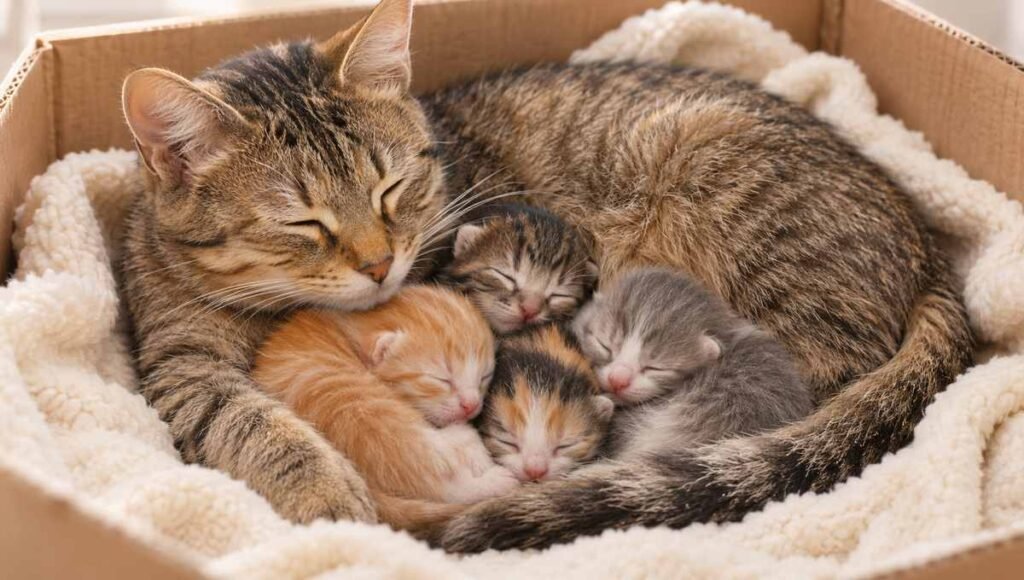

Kittens are born with their eyes sealed shut, and PetMD says they are typically fully open by 10 to 14 days. The first signs of opening come a little earlier, at 8 to 12 days on Royal Canin’s timeline, and the two eyes don’t always open together. If a kitten’s lids are still shut after 14 days, or swell and leak before then, you need a vet.
Why Kittens Are Born With Their Eyes Shut
PetMD’s vet author, Dr Hannah Hart, gives two reasons in her April 2024 article. Closed lids protect the eyes from infection and damage during birth, when a kitten leaves the sterile womb before its immune system has met any bacteria or viruses.
Tear production also takes a few weeks to begin, so the lids keep the surface of the eye moist in the meantime.
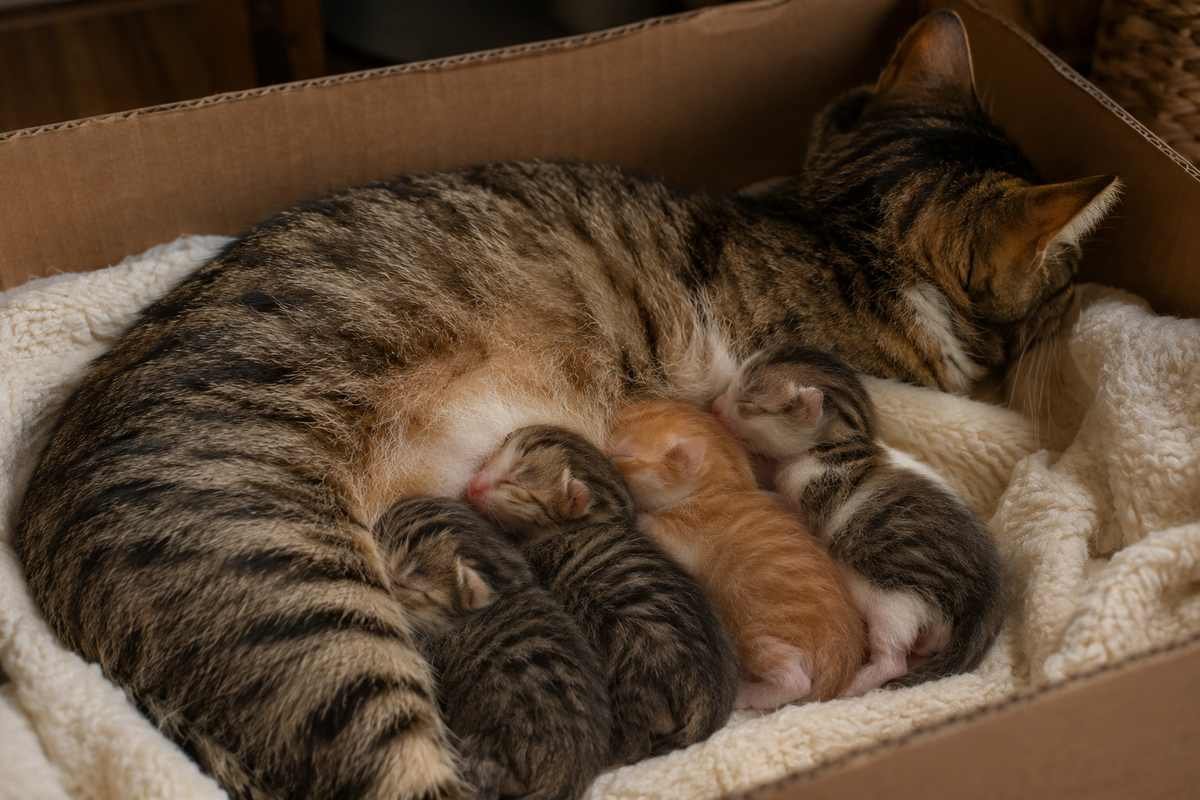
That second reason sits neatly with the advice every page on this subject repeats: wait. The lid is doing a job — and it will stop doing it when the eye is ready.
When Do Kittens Open Their Eyes? What Each Source Says
The sources disagree less about the facts than about how wide a window to draw. PetMD says eyes are fully open by about 10 to 14 days.
Five vet-clinic blogs held the top results for this question on 9 November, among them Concord Vets, Bound Brook Veterinary Clinic and Clover Veterinary Hospital. They repeat almost the same sentence: most newborns start opening their eyes between 2 and 16 days.
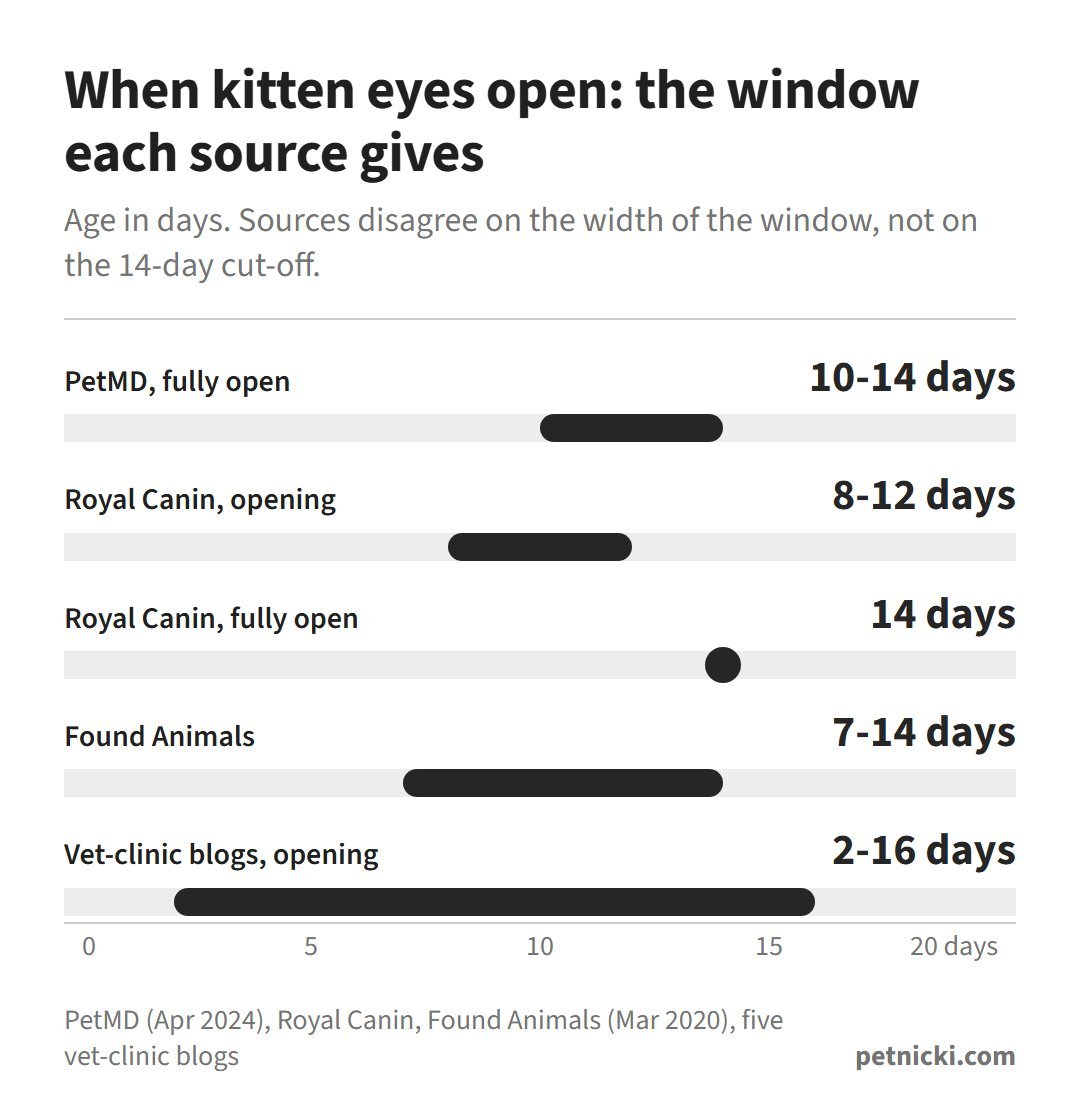
Royal Canin, which sells kitten food, puts the start at 8 to 12 days and says the eyes are completely open at around two weeks, or 14 days. Found Animals, a US animal charity, says about one to two weeks in a March 2020 article. Taken together, 2 to 16 days looks like the outer edge of what has been seen, handy for deciding when to stop worrying, while 7 to 14 days is the band most of the sources really share. International Cat Care repeats the 2 to 16 days and adds that around 7 to 10 days is common. The 7 to 14 day band is an inference from the sources, not a figure any single one of them prints.
The 14-day mark is the one that matters most for action. Royal Canin tells you to contact a vet if the eyes haven’t opened by two weeks, and PetMD’s page on newborn eye infections lists a lid that stays closed beyond 14 days as a warning sign. Both count from birth, so if you found the kitten and don’t know its age, the date is a guess.
Closed, Opening, Open: What to Expect by Age
Opening the eyes is only the first step. Royal Canin’s milestone list shows how slowly sight follows, and PetMD adds that vision can take another few months to develop fully once the lids are up.
| Age | What happens to the eyes | Source |
|---|---|---|
| Birth to about 8 days | Eyes and ear canals closed; the kitten cannot see or hear and depends on its mother for everything | Royal Canin |
| 8 to 12 days | Eyes and ear canals begin to open; sight and hearing still very undeveloped | Royal Canin |
| About 14 days | Eyes completely open and blue; no full vision for a few weeks yet | Royal Canin, PetMD |
| 4 weeks | Pupils dilate and constrict; depth perception developing | Royal Canin |
| 6 weeks | Vision well developed, though full development takes about two months | Royal Canin |
| About 8 weeks | Permanent eye colour usually settles | Vet-clinic blogs, Royal Canin |
The colour changes follow their own clock. PetMD explains that the pigment cells in a kitten’s eyes are not very active for the first six weeks, and without pigment the two layers of the iris look blue. Most adult cats end up with yellow, green, orange or brown eyes, though some keep the blue. Royal Canin gives Siamese as a breed that does. A blue-eyed three-week-old therefore tells you very little about the colour it will have as an adult.
One Eye Open and the Other Still Shut
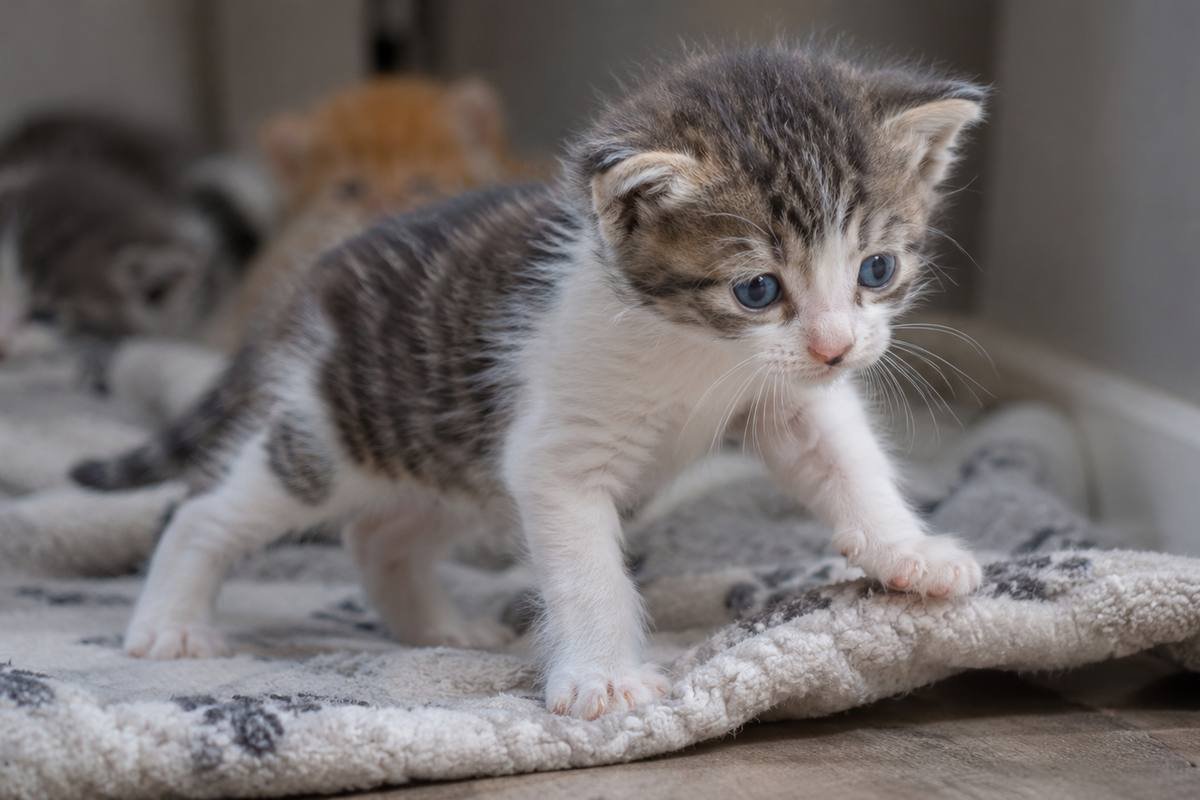
PetMD says that in most cases both eyes open at the same time, though the left and right can open separately. Royal Canin goes further and says one eye sometimes opens sooner than the other. A gap is not in itself a fault.
The worry usually starts with the very early or very late case. On r/CATHELP in April 2026, an owner posted about a three-day-old kitten with one eye open, the only one in the litter, after the kittens had arrived a week earlier than the vet expected. One reply drew 539 upvotes:
“Three days is quite early for a kitty to begin opening its eyes. It’s typically 7-10 days, though can be a little earlier. It is just one eye, but don’t try and open the other.”
– r/CATHELP, reply in the April 2026 thread (539 upvotes)
That 7 to 10 days is one commenter’s rule of thumb, not a sourced figure, but it sits inside the band the published sources give. The same reply went on to suggest a vet visit to rule out developmental problems and infection, which is sensible for a kitten that is ahead of every window in the chart.
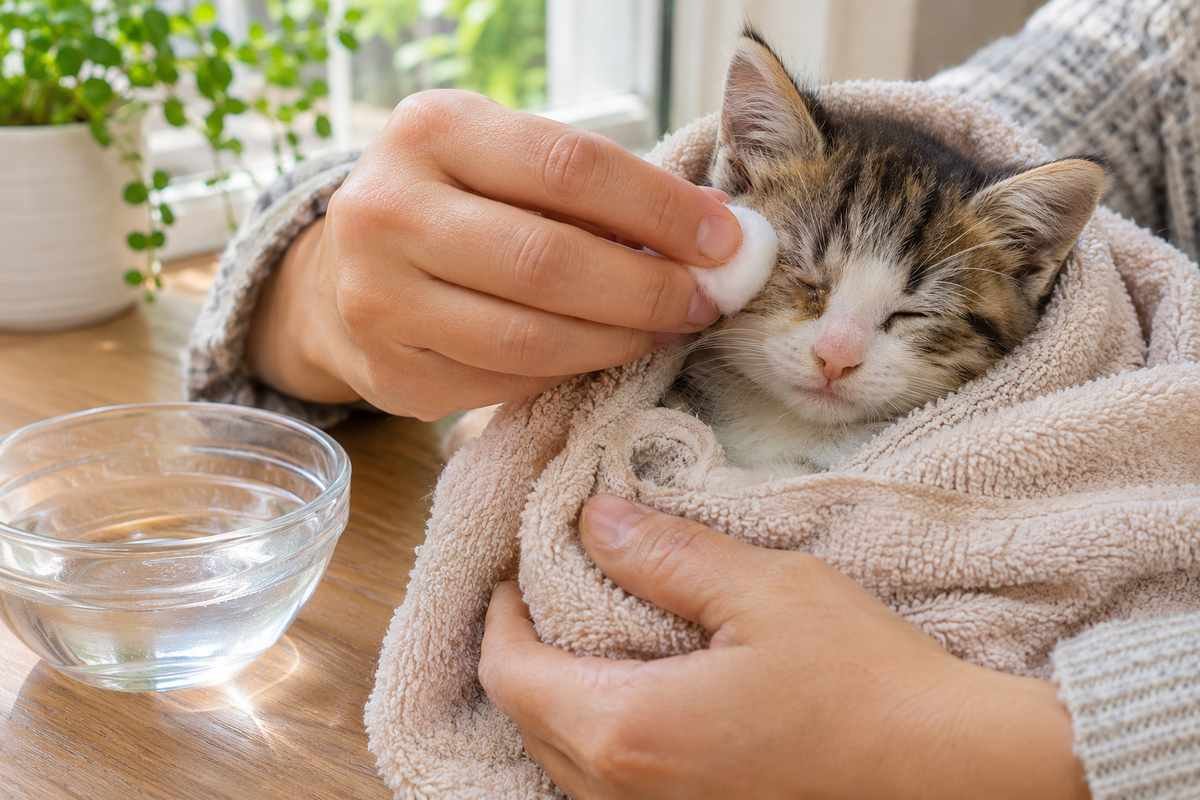
The opposite case is the lid that looks glued. A reply in an r/FosterAnimals thread about a twelve-day-old kitten with one eye partly closed suggested something gentler than pulling:
“Have you tried cleaning it with a warm, wet rag? It may just be stuck shut. I’d try that!”
– r/FosterAnimals (275 upvotes)
A later comment in the same thread, written as an update, says the other eye opened after cleaning. Clover Veterinary Hospital’s blog gives the same method with more caution: a cotton ball dampened with warm, clean water and no soap, and a call to the vet if the eyes show no improvement or get worse.
Signs of Trouble Before and After the Eyes Open
The closed lid is not a perfect seal. In its May 2023 article on eye infections in newborn kittens, PetMD’s Dr Shawna Abrams says bacteria and viruses can still get underneath, and that infections are generally noticed when a kitten is between 7 and 14 days old. In a kitten whose eyes are still closed or under 14 days, she lists:
- a swollen eyelid;
- clear or thick pus seeping from under the lid;
- crust around the lid or sores on it;
- a collapsed or deflated eye;
- sneezing or nasal discharge.
After 15 days the list adds a lid that is still closed, swelling and redness around the eye, and an eyelid that seems stuck to the eye. The stakes are why the list is worth knowing. PetMD says untreated infections can cause dry eye, corneal scarring, blindness and even rupture of the eye, and that treatment can run for up to four weeks. Because the infection can spread, the kitten and its litter should stay apart from other cats until everyone has recovered, and the mother cat should be examined as well.
Should You Ever Open Them Yourself?
No, and the sources agree on that more firmly than on anything else. Found Animals says never to try to open a kitten’s eyes early, because it could permanently damage eyesight, and the vet-clinic blogs say never to force them.
There is one apparent contradiction. PetMD’s infection page says that if a vet opens still-closed eyes for an examination, doing so early doesn’t hurt or damage them. The difference is who is doing it and why. A vet uses warm water, flushes the eye and applies a fluorescein dye to find any injury to the cornea. You, with a fingernail, would have none of that.
Once the Eyes Are Open: Light, Sight and the Weeks Ahead
Open eyes are still fragile eyes. Royal Canin, Found Animals and the Clover blog all say to keep young kittens away from bright light while their vision develops. Found Animals adds that kittens are not usually separated from their mother for adoption until about six weeks old, at which point, it says, the eyes and ears are fully developed.
Around the same time the milk diet gives way to solid food (see when kittens can eat dry food), and the cat feeding guide by age and the page on feeding a 3-month-old kitten take over from there. If the litter has reached the naming stage, Luna is the commonest cat name in Seattle’s licence records, with 111 cats, on the popular pet names data page.
Kitten Eye Questions
What if my kitten’s eyes haven’t opened by two weeks?
Contact your vet. Royal Canin gives two weeks as the point to ring, and PetMD treats a lid still closed beyond 14 days as a sign of possible infection. Go sooner if the lid is swollen, crusted or leaking.
Can I tell how old a kitten is from its eyes?
Only roughly. Closed eyes mean a very young kitten, probably under two weeks if the sources hold, but once both eyes are open they say little more. Weight helps as a second clue, and the cat weight page gives Alley Cat Allies’ figures of 3 to 5 ounces at birth, about 8 ounces at one week and roughly 2 pounds at two months.
How long until a kitten sees properly?
Royal Canin has vision well developed at about six weeks and fully adult-like at around two months. PetMD allows another few months after the eyes open, so a young kitten’s clumsiness at three or four weeks is expected rather than alarming.
How often do newborn kittens need to eat?
For orphans that you are bottle feeding, Clover Veterinary Hospital’s blog says kitten formula every two to four hours, with the vet choosing the formula and the amount. A kitten with its mother needs no schedule from you, only a warm, clean nest.