

Cat diabetes symptoms most often start with a cat drinking and peeing more and losing weight despite a good appetite, according to Cornell’s Feline Health Center. PetMD adds vomiting, a poor coat and a change in temperament, and calls ketoacidosis a dangerous medical emergency.
The signs are easy to miss early — a cat eating wet food gets much of its water from the food. Below, three veterinary pages are compared sign by sign, followed by the two emergencies, what else can look the same, who is at risk and what treatment and remission involve. It’s general information, not a diagnosis, so ring your vet if you’re worried.
Cat Diabetes Symptoms Vets List
Cornell names two signs as the most common at home: weight loss despite a good appetite, and increased thirst and urination. PetMD, whose page was written by Samantha Morici, DVM, and reviewed by Barri J. Morrison, DVM, in December 2024, lists eleven.
| Sign | Cornell | PetMD | VCA |
|---|---|---|---|
| More drinking and urinating | Yes | Yes | Yes |
| Weight loss | Yes, despite a good appetite | Yes, despite a normal appetite | Yes |
| Appetite change | Good appetite noted | Up at first, later down | Increased |
| Peeing outside the box | Not listed | Yes | Not listed |
| Vomiting, lethargy, muscle wasting | Not listed as signs | Yes | Not listed |
| Poor coat, behaviour changes | Not listed | Yes | Not listed |
| Flat-footed “plantigrade” stance | Rare; not painful | Yes | Not listed |
VCA’s page, updated in January 2024, adds that signs may go unnoticed early or in a cat that spends a lot of time outdoors, and that cats on canned or semi-moist food get much of their water from it, which hides the extra drinking.
A poster in r/FelineDiabetes described a 7-year-old cat whose first signs were not the textbook ones:
“A normally very social cat, he started isolating, very irritable, shedding lots of hair and just curled up in a ball/very lethargic. Also walking very strangely, head down low and back side up.”
– r/FelineDiabetes, August 2026 (5 upvotes)
That’s an owner’s account, not a diagnosis, but the temperament change echoes PetMD’s list, and the odd walk resembles the hind-leg stance Cornell and PetMD describe, though only a vet can say. A cat that has stopped eating is a separate worry. The site’s page on how long a cat can go without eating covers that.
The Two Emergencies: Ketoacidosis and Low Blood Sugar
Cornell says ketoacidosis happens in uncontrolled diabetes, when fat breakdown produces ketones that make the blood more acidic, and calls it a medical emergency needing hospital care. PetMD says untreated ketoacidosis is fatal and can follow undiagnosed diabetes, pancreatitis or an insulin dose that is no longer enough.
The second emergency belongs to cats already on treatment. Cornell lists low blood sugar signs as weakness, lethargy, vomiting, lack of coordination, seizures and coma, and says it can be fatal if untreated. VCA adds shaking and unsteadiness and says low blood sugar is a medical emergency.
Cornell’s instruction is to offer regular food at once and, if the cat won’t eat, to give oral glucose such as honey, corn syrup or dextrose gel and go to a vet immediately. It adds that nothing should be forced into the mouth of a convulsing or comatose cat. VCA adds one rule: never change the insulin dose without talking to your vet.
Is It Diabetes? What Else Looks the Same
Cornell says diagnosis needs persistently high glucose in blood and urine along with consistent signs, because one high reading can be stress hyperglycaemia. It lists urinary infection, chronic kidney disease, pancreatitis and hyperthyroidism as conditions to rule out.
For uncertain cases, Cornell recommends a fructosamine test, which gives an average over about two weeks, and VCA puts the window at 7 to 14 days. PetMD lists blood work, urinalysis and fructosamine as the tests. A commenter in the same r/FelineDiabetes thread explained why:
“BG can also be elevated for a week from an infection or other reasons so it helps rule that out.”
– r/FelineDiabetes, August 2026 (5 upvotes)
The same drinking and peeing can come from a bladder problem, which the site’s page on cat UTI symptoms covers, so a vet’s test matters more than a guess.
Which Cats Get Diabetes
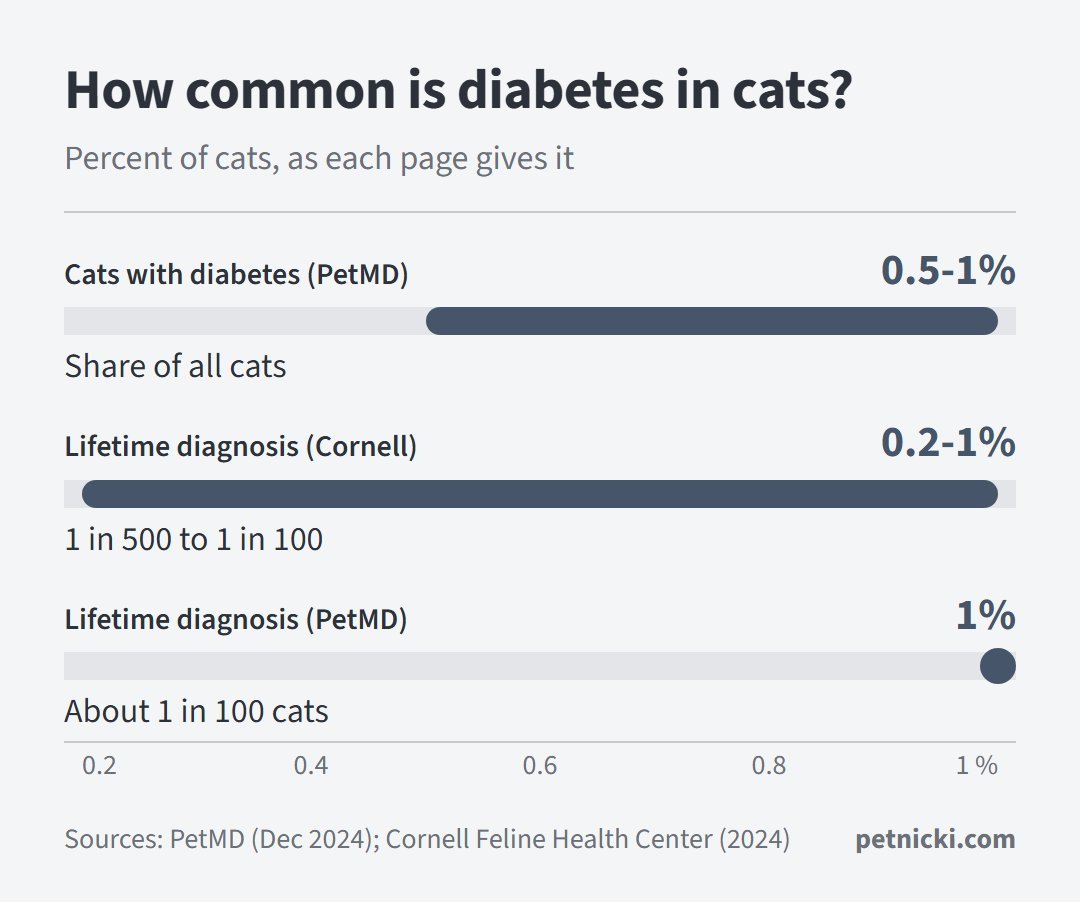
PetMD estimates that 0.5 to 1 per cent of cats have diabetes and that about one in 100 will develop it in their lifetime. Cornell puts the lifetime figure at one in 100 to one in 500.
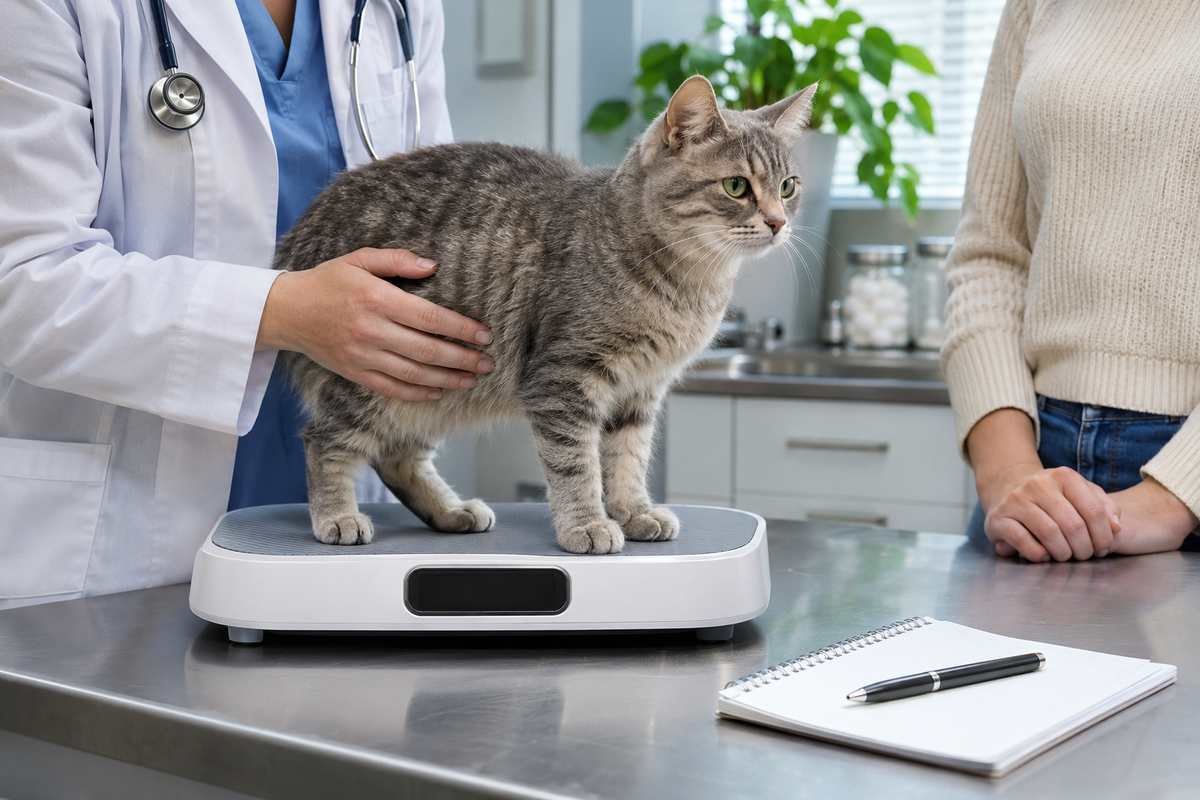
Cornell says obese cats are up to four times more likely to develop diabetes than cats at an ideal weight. The other risk factors it lists are increasing age, inactivity, male sex and steroid use. PetMD adds being neutered and says middle-aged, obese male cats are most often affected. VCA counts a cat three pounds over ideal weight as obese. If your cat is carrying extra weight, the site’s pet weight management guide is the place to start.
What Treatment Involves
Cornell lists four goals: restore normal blood glucose, stop or control weight loss, reduce thirst and urination, and avoid low blood sugar from the treatment itself. Insulin is given by injection about every 12 hours, and a low-carbohydrate diet improves control, with wet food possibly helping.
Cornell also notes an oral medicine approved in 2023 for newly diagnosed, otherwise healthy cats not previously treated with injectable insulin, which it says is more than 80 per cent effective in appropriate patients. None of the three pages gives a dose to try at home.
Can Cat Diabetes Go Into Remission?
Cornell says many cats enter remission with early, aggressive treatment, and that older cats, cats previously given steroids and cats treated with glargine are more likely to. PetMD says some diabetic cats may go into remission, and VCA says removing causes such as corticosteroids, or normalising weight, may resolve it in some cats.
The timing matters. Cornell says a cat that has not entered remission within the first six months after diagnosis will almost certainly need lifelong insulin. Cats in remission should stay on a low-carbohydrate diet with close monitoring, because some will eventually need insulin again.