
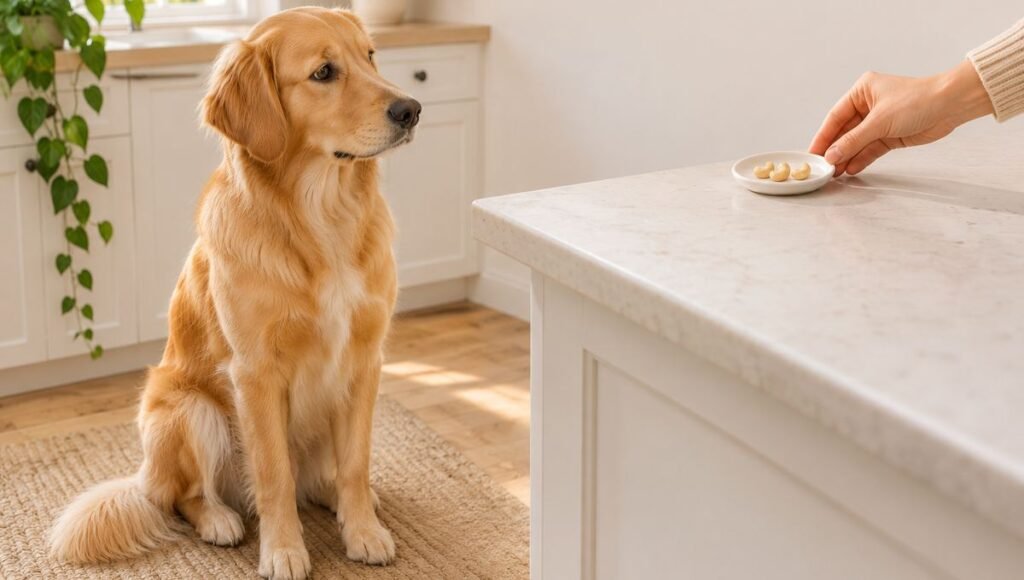

Yes, an occasional plain, unsalted cashew is generally fine, since cashews are not toxic to dogs. PetMD gives a count by weight band, while the American Kennel Club gives no number and says there is little reason to feed them at all.
Webvet’s veterinary-reviewed page goes further and says body weight alone is not a serving chart. Below, the three are compared on the verdict, the numbers, the salt and the fat, with a short section on what to do if your dog has already eaten a handful. It’s general information, not veterinary advice, so ask your vet if you’re unsure.
Can Dogs Eat Cashews? What the Three Pages Say
All three pages say cashews are not toxic to dogs, and all three attach a limit. PetMD says “moderation”, the AKC says they’re generally safe but aren’t good for dogs either, and Webvet says “safe in moderation” while calling them unnecessary.
| Question | PetMD | AKC | Webvet |
|---|---|---|---|
| Verdict | Not toxic; moderation only | Generally safe; little reason to feed | Safe in moderation; unnecessary in a complete diet |
| Serving numbers | 1 to 18 cashews, by weight band | None; an occasional plain one | None; says weight alone isn’t a serving chart |
| Salt | Plain cashews only | Usually salted; salt toxicity possible | Dose and water access matter; one salted nut doesn’t prove poisoning |
| Reviewer or date | Sandra C. Mitchell, DVM; Dec 2022 | No vet reviewer; Feb 2025 | Athena Gaffud, DVM; Aug 2026 |
Owners often read “safe” more loosely than the vets write it. A commenter in an October 2021 r/NoStupidQuestions thread, asked about a dropped cashew, answered flatly:
“Peanuts and cashews aren’t the same nut. Both are safe for dogs. Also, dogs love peanut butter.”
– r/NoStupidQuestions, October 2021 (6 upvotes)
That’s one old comment, not a vet’s view, and it leaves out the salt, the fat and the portion that the three pages keep returning to.
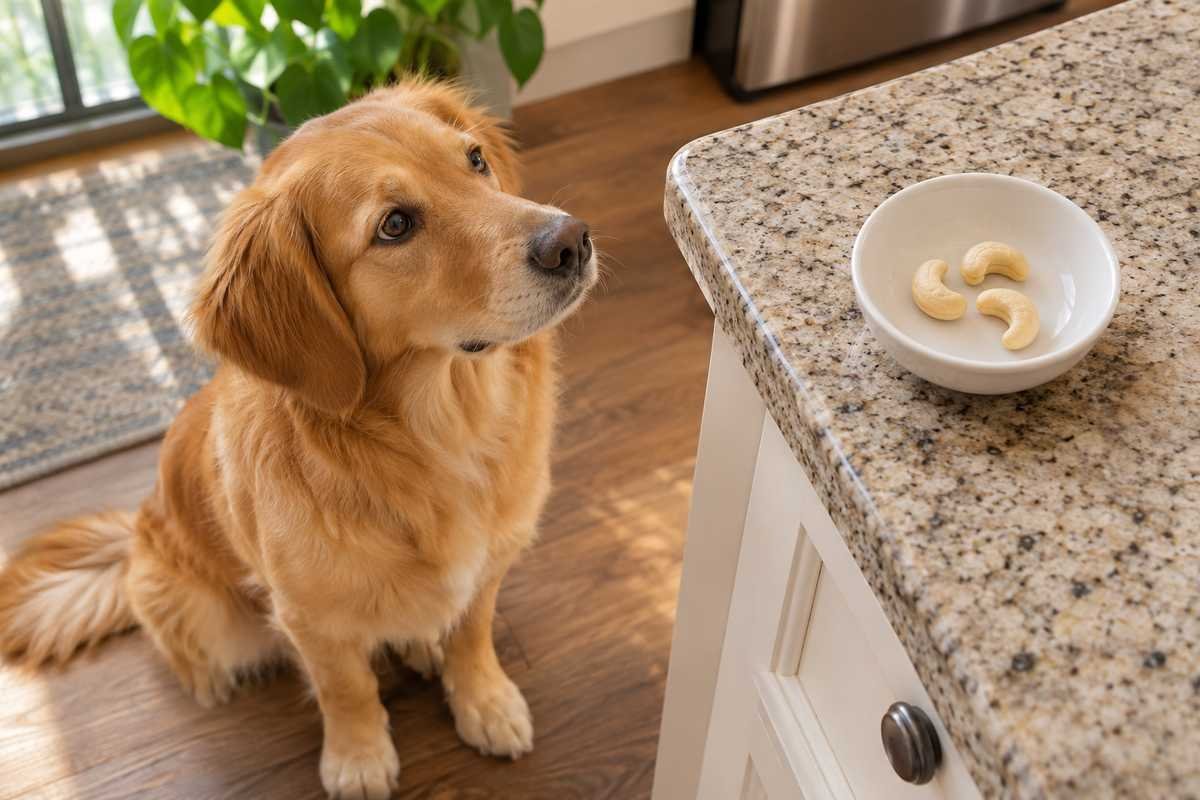
How Many Cashews Can a Dog Have?
Only PetMD gives numbers. Its page, written by Victoria Lynn Arnold and reviewed by Sandra C. Mitchell, DVM, DABVP, in December 2022, lists one or two cashews for dogs of 2 to 20 lb, up to 12 to 18 for dogs over 90 lb, and says treats of any kind should make up only 10% of the diet.
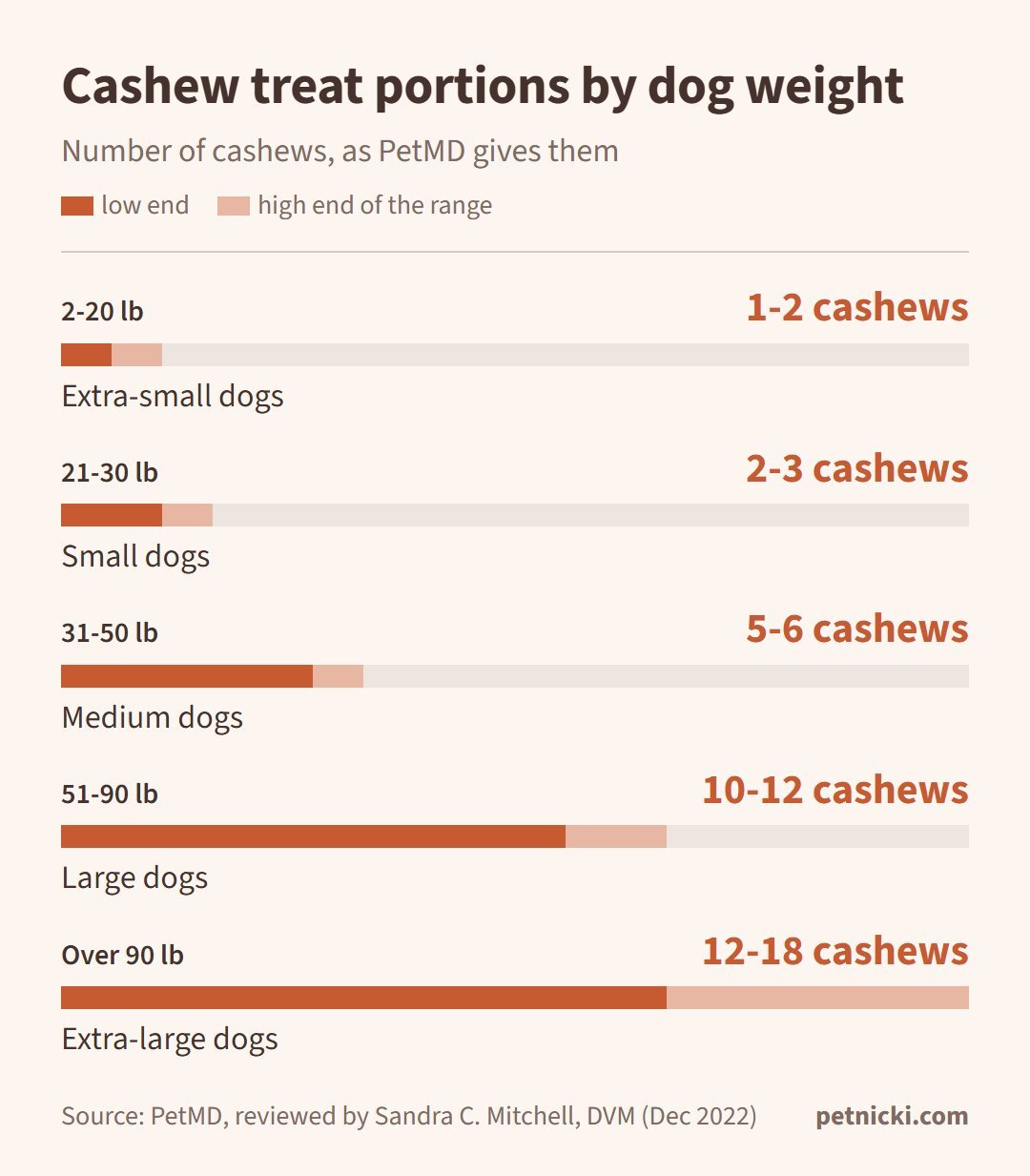
Webvet takes the opposite line. It says its page gives no nut counts and no body-weight table, because weight alone isn’t a serving chart, and offers one general figure: treats should stay under 10% of daily calories. The AKC says an occasional cashew won’t hurt, as long as it isn’t mixed with other nuts, salted or seasoned.
The sources agree on the ceiling and disagree on the number. For a dog of 2 to 20 lb, PetMD’s one or two is the top of its range, and the AKC’s “occasional” sets no number at all.
Salted, Flavoured and Mixed Cashews
The salt is where the three pages differ most in tone. The AKC points out that cashews are usually salted and that excess salt can cause vomiting, weakness, diarrhoea, muscle tremors and seizures, while Webvet says salt toxicity depends on dose and water access.
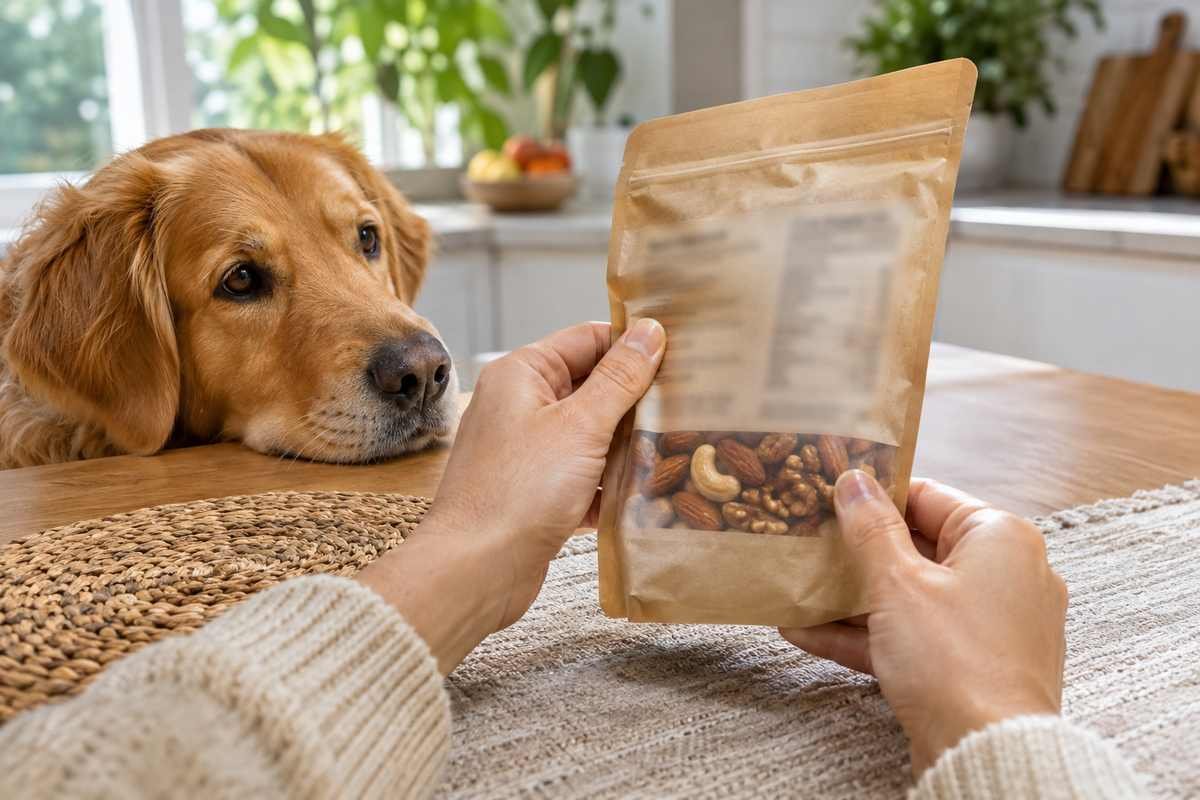
Webvet adds that one salted nut does not by itself prove sodium poisoning, which is a useful brake on panic. Read the whole label before you decide anything — Webvet names macadamias, raisins, chocolate or cocoa, xylitol and onion-family ingredients as needing separate assessment in flavoured or mixed products, and the AKC and PetMD both warn that macadamias are toxic and can turn up in mixed bags.
For cashew butter, PetMD says it should not contain xylitol, macadamia nuts or nutmeg, and gives amounts from a quarter of a tablespoon for the smallest dogs to one and a half to two tablespoons for those over 90 lb, twice a day. The 10% limit still applies to the butter.
Fat, Pancreatitis and Dogs That Should Skip Them
PetMD and the AKC both name fat as a main risk: cashews are high in it, repeated fatty foods may lead to obesity or pancreatitis, and the AKC says pancreatitis can be life-threatening and needs immediate veterinary care.
Webvet is more careful. It says dietary indiscretion and high-fat meals are associated with canine pancreatitis, but no cashew-specific trigger dose has been established. It says dogs with obesity, diabetes, a history of pancreatitis, gastrointestinal disease or a therapeutic diet need an individual plan, and that a vet may advise avoiding cashews altogether. PetMD agrees on one point: a dog on a prescription diet shouldn’t get food or treats outside it.
Gulpers carry another risk. PetMD and the AKC both mention choking and intestinal blockage, and PetMD advises chopping cashews or grinding them into a powder as a food topper. Allergy is described as unlikely: PetMD cites a 2017 study with no reported nut anaphylaxis in dogs, and the AKC calls a reaction relatively low in chance.
What to Do If Your Dog Ate a Handful
Webvet lists vomiting, diarrhoea or a change in appetite after larger amounts, and says to contact a vet for repeated vomiting, abdominal pain, marked lethargy, tremors, weakness, gagging, choking, trouble swallowing or breathing, or an inability to pass stool or urine.
The AKC gives no steps of its own beyond asking a vet and treating pancreatitis and salt toxicity signs as needing prompt care. PetMD says an intolerance to the fat can mean vomiting or diarrhoea, and the site’s page on what to give a dog for an upset stomach compares what vets say about that. For the wider list of what’s safe at home, see safe and unsafe human foods for pets.
None of the three pages gives a rescue dose or a home remedy for a dog that has eaten too many. Check the packet for the ingredients above, note how many went missing, and ring your vet if anything on Webvet’s list appears.