
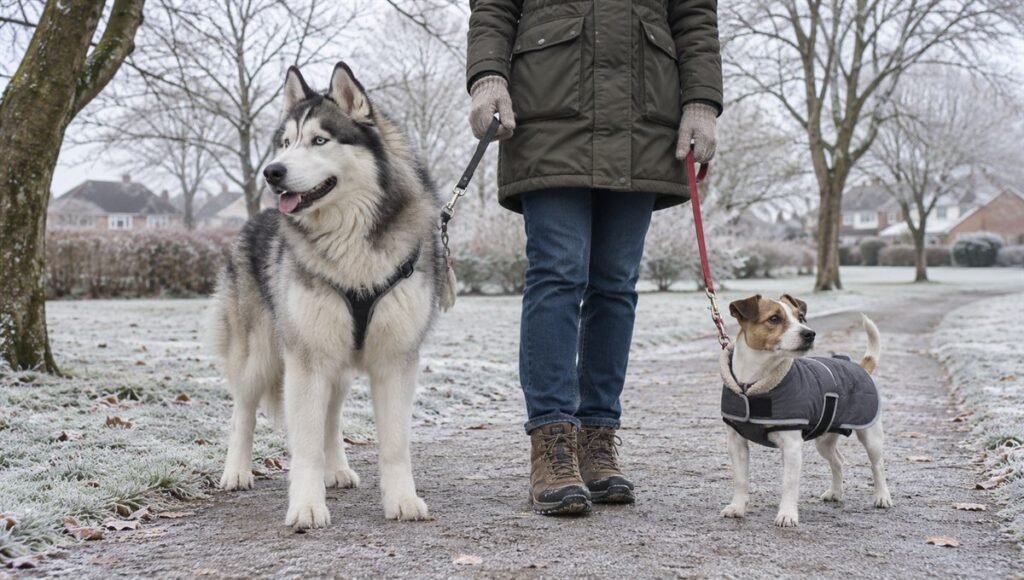

How cold is too cold for dogs? PetMD, in an article by Jennifer Coates, DVM, puts the first discomfort for cold-averse dogs below 45°F (7°C), danger for vulnerable dogs below 32°F (0°C), and a hypothermia and frostbite risk for every dog below 20°F (-7°C). Tufts veterinarian Jonathan Babyak says there is no single cut-off.
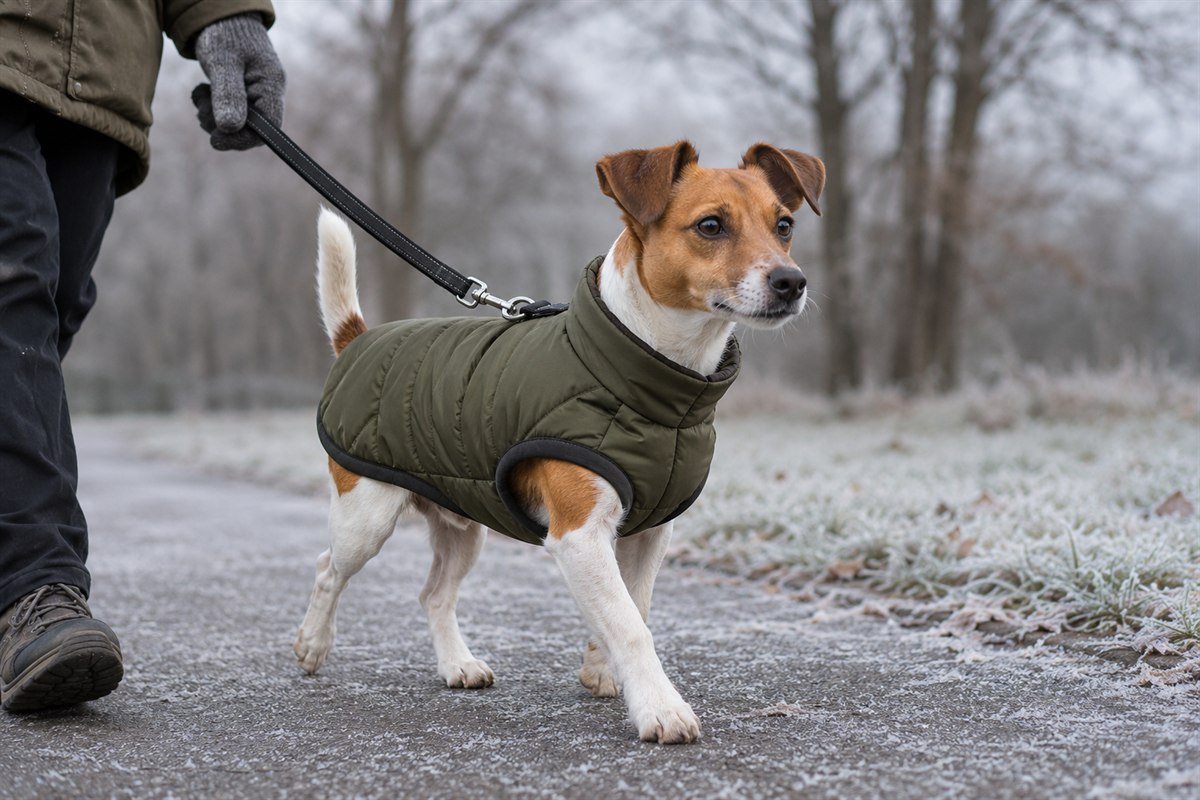
Both can be right, because they answer different questions. One draws bands for groups of dogs, the other reminds you that your dog is an individual. If you have a thin-coated terrier and a husky in the same house, you’ll need both answers before the first frost.
How Cold Is Too Cold for Dogs? Four Sources Compared
Four veterinary and pet-care sources give four different answers, from a three-band temperature scale to no number at all. The table lays them side by side, so the points of agreement and the places where they simply measure different things are visible at once.
| Source | What it says | What it is really telling you |
|---|---|---|
| PetMD (Jennifer Coates, DVM, updated 2 January 2024) | Below 45°F (7°C), cold-averse dogs may be uncomfortable. Under 32°F (0°C), small, thin-coated, very young, old or sick dogs could be in danger if outside too long. Under 20°F (-7°C), all dogs could develop hypothermia or frostbite. | Where risk begins, and for whom |
| PetSmart care guide (undated) | Under 40°F (4°C) can become risky. Limit time outside to 10 to 15 minutes below freezing and supervise closely. | A time limit once it’s freezing |
| Animal Humane Society (Dr Kate Farmer, undated) | Once temperatures reach the single digits Fahrenheit and below, limit dogs to potty breaks. | The point to stop walking and only toilet |
| Tufts University (Jonathan Babyak, vet, 3 January 2018) | There is no cut-off temperature for being too chilly to take a dog outside. Some tolerate snow for hours, others shiver after minutes. | Judge the dog, not the thermometer |
Read together, the sources suggest a working rule that is an inference rather than a quotation: treat 45°F as the line where watching starts, 32°F as the line where vulnerable dogs get short walks, and 20°F as the line where everyone does. Those are cautious readings of PetMD’s bands, not a promise that a dog is safe at 25°F.
Why Size, Coat and Age Change the Answer
PetMD lists the factors that move a dog’s tolerance up or down: coat, size, body fat, conditioning, age and health, plus the weather around the dog. A thick double coat copes best, while very thin coats, such as those of Basenjis and Xoloitzcuintlis, struggle most.
Size matters because small dogs lose heat faster than large ones, and thin dogs have less fat to insulate them. Dogs used to the cold cope better than those that have spent the autumn on the sofa. Puppies, seniors and sick dogs regulate body temperature less well, so they sit in the vulnerable band even in a thick coat. Owners unsure whether a dog counts as a senior can start with our dog age calculator.
Owners of double-coated breeds ask the question every winter. A first-time German shepherd owner put it plainly in a post that drew 366 upvotes:
“First time GSD owner here. I know they have a double coat and they were bred to withstand cold temps but in preparation for North east winters, should I be looking into jacket for when the temps drop below freezing?”
– r/germanshepherds, November 2025 (366 upvotes)
The coat is only part of it. PetMD adds that wind cuts through the coat and reduces its insulation, and that rain, snow, fog or a swim can chill a dog in air that is otherwise mild. Dark coats soak up sunshine on a clear day, but cloud takes that advantage away. Movement helps, because an active dog generates heat; a dog trotting beside you in a hard wind is in a different position from one standing at a bus stop.
Signs Your Dog Is Too Cold
PetMD lists shivering, anxiety or whining, slowing down, seeking warm spots and holding up one or more paws. The Animal Humane Society adds reluctance to walk, barking, and hunched paws with a tucked tail. Tufts adds a dog pulling on the lead to go back inside.
Shivering has other causes too, and our guide to sudden shaking in dogs covers the ones that have nothing to do with weather. In cold weather the simplest reading is usually the right one.
Plenty of owners trust the dog to speak up. One reply in that same German shepherd thread, with 108 upvotes, said:
“My GSD with same coat had to be drug out of the snow. They will let you know when they want in.”
– r/germanshepherds, November 2025 (108 upvotes)
That works for a dog that is enjoying itself — less well for one that has gone quiet, because PetMD warns that severe shivering may stop as hypothermia progresses. A dog that has stopped shivering isn’t automatically a warm dog, so check the other signs before you decide.
Frostbite and Hypothermia: When to Call the Vet
Call a veterinarian if your dog seems sluggish or confused, shivers severely, or has body parts that look pale and feel cool. Those are PetMD’s triggers for hypothermia. For frostbite, the Animal Humane Society says to see a vet for redness, swelling or darkening of the skin on the ears, tail tip, paw pads or nose.
Tufts calls hypothermia a veterinary emergency and says never to leave a dog alone in cold or bad weather. This is general information, not a diagnosis, so if you think your dog is hypothermic, ring your vet or an emergency clinic rather than waiting to see whether it passes.
Short Walks, Coats and Paw Care
For vulnerable dogs, keep walks short and stay close. PetMD says dogs still need bathroom breaks in the cold, so keep them brief and shovel a patch near the door if the snow is deep. PetSmart’s guide suggests 10 to 15 minutes below freezing.
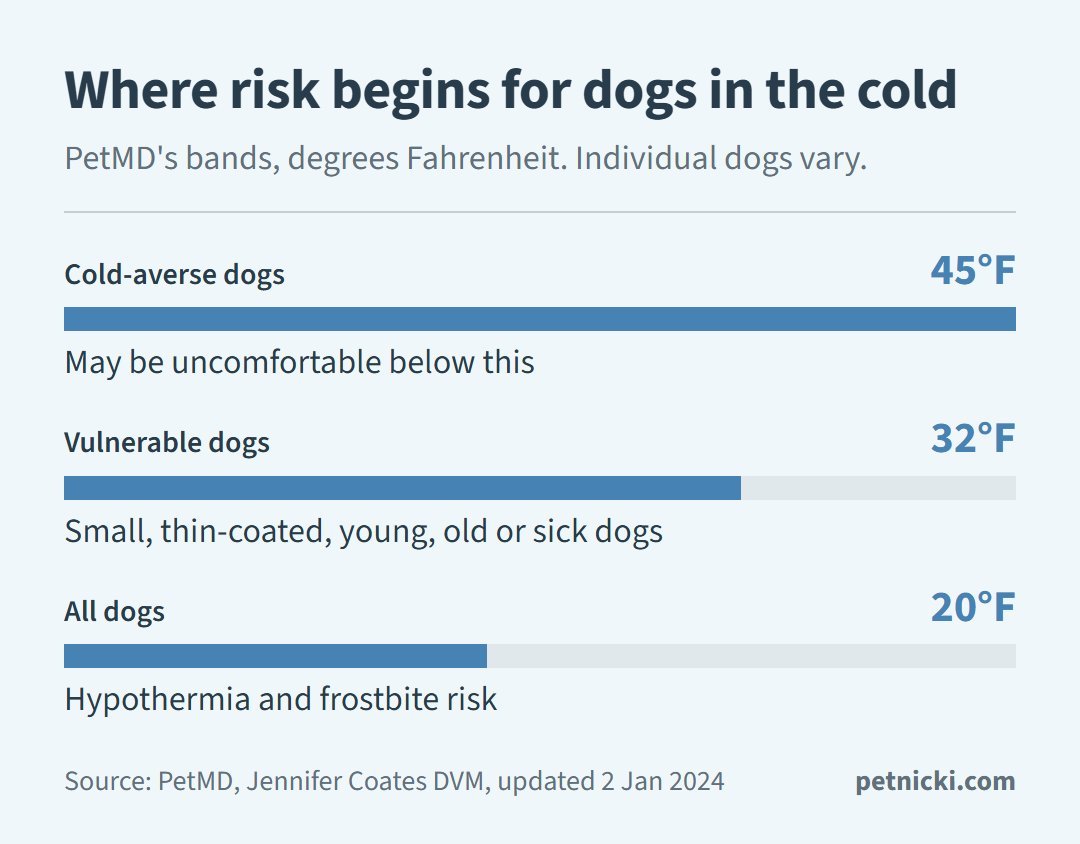
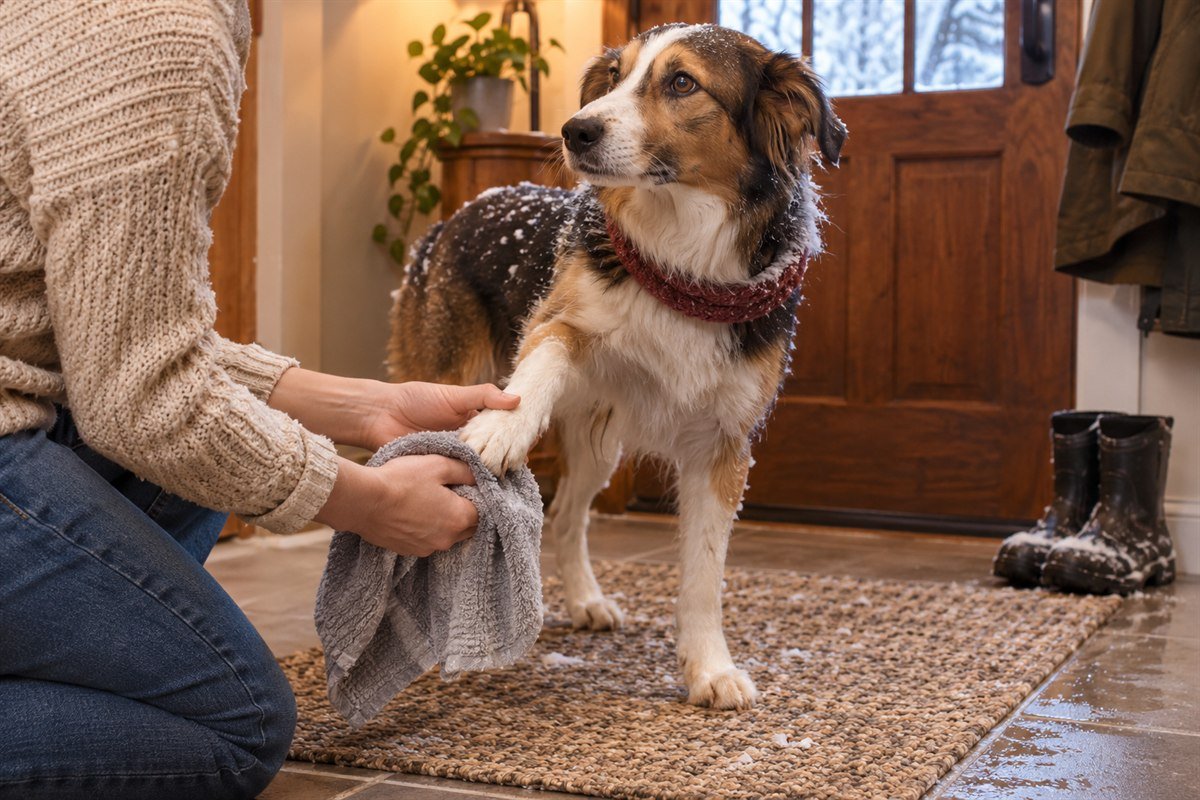
On a slightly chilly day, a sweater can help a thin-coated dog. In extreme weather PetMD says sweaters and fleece aren’t enough, and recommends an insulated, windproof, water-resistant coat. Booties should be waterproof, with traction. The Animal Humane Society suggests paw wax as an alternative, plus wiping snow and ice from paws and fur after the walk.
Salt and de-icer deserve a rule of their own. Tufts advises wiping the paw pads with a damp washcloth after each walk. Licking a little off the paws may upset the stomach, but eating a bag of the stuff warrants a trip to the emergency vet.
Night is the other question. PetSmart says that in most cases the answer is no to leaving a dog outside, because even a sturdy kennel may not stay warm enough below freezing. The Animal Humane Society adds that dogs should never be left in an unoccupied vehicle in weather that could affect their health.