
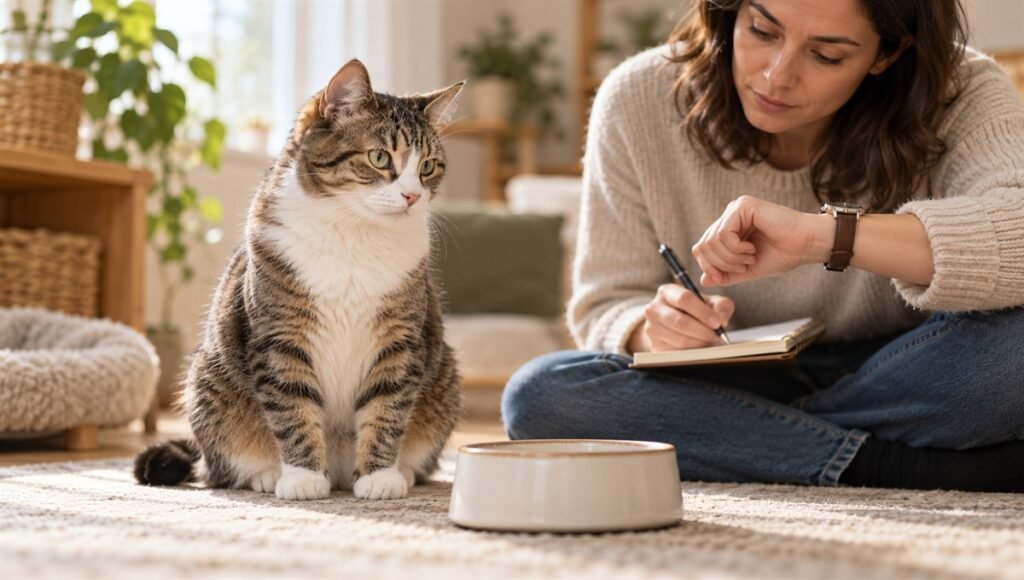

How long can a cat go without eating? Cats Protection says to call a vet at 24 hours for an adult, and sooner for kittens. The Cornell Feline Health Center says appetite loss lasting as little as 24 hours can seriously affect health, and that a kitten under six weeks faces a lethal threat after 12.
That’s a deadline for phoning, not a survival time, and none of the sources gives one safe figure for how long a cat can go without eating. They give the point at which to call a vet and, separately, the point at which fat breakdown starts to threaten the liver. The two sit days apart — which is why you’ll see 24 hours and four days quoted for the same question.
How Long Can a Cat Go Without Eating? The Numbers, Source by Source
The figures fall into two groups: 12 to 24 hours is when sources say to phone a vet, and three to four days is when fatty liver typically appears. The third column says which question each row answers.
| Time without food | Which cat | What it measures | Source |
|---|---|---|---|
| 12 hours | Kitten under 6 weeks | Food avoidance can be a lethal threat | Cornell Feline Health Center |
| 12 to 24 hours | Kitten | See a vet as soon as possible (or 12 hours without water) | Cats Protection |
| 24 hours | Adult cat | Speak to your vet | Cats Protection |
| 24 hours | Any cat | Appetite loss this long can seriously affect health | Cornell Feline Health Center |
| 2 to 7 days | Any cat | Body starts breaking down fat reserves, risking hepatic lipidosis | Cats Protection |
| 3 to 4 days | Cat with fatty liver | Usual run of little or no eating before the disease appears | VCA Animal Hospitals |
| 3 days or more | Reduced appetite, not zero | Contact your vet clinic urgently | International Cat Care |
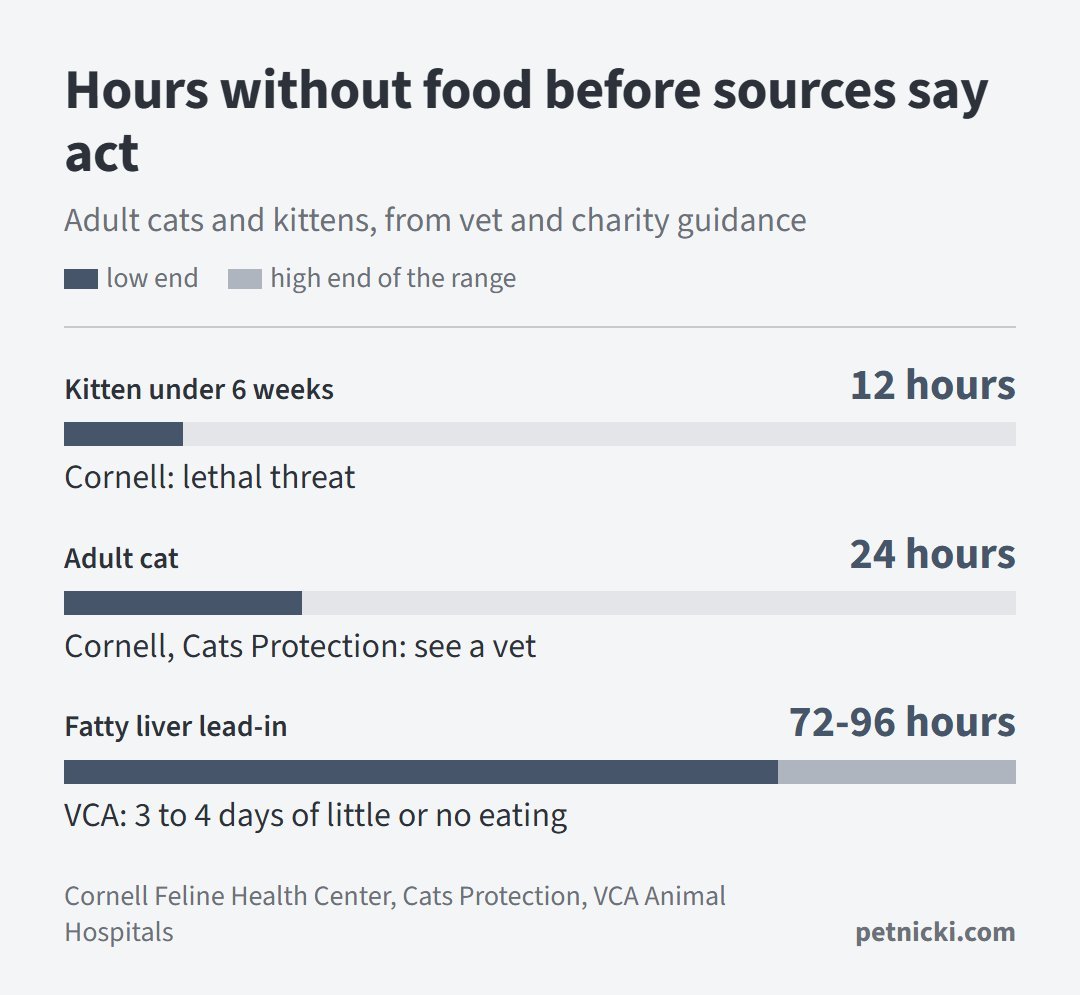
Read from the top, the first rows tell you when to pick up the phone, and the last rows describe when damage to the liver typically builds. A cat that has eaten nothing for two days is already well past the point where the charities say to call.
A January 2026 r/CatAdvice reply, with 123 upvotes, gave the version an owner is likely to remember:
“Serious health issues can arise after only 48 hours without food. You need to feed your cat every day.”
– r/CatAdvice, January 2026 (123 upvotes)
That’s one person’s shorthand, not a veterinary threshold. It falls inside Cats Protection’s two-to-seven-day range for fat breakdown and a full day after the 24-hour line, so it describes when harm can begin rather than when to start worrying.
Why an Overweight Cat Is Not Safer on Reserves
A plump cat has more in reserve, but that makes the risk higher, not lower, when it stops eating. VCA says the chances of hepatic lipidosis, or fatty liver, are greater if the cat was overweight or obese before the appetite loss began, and that affected cats are often middle-aged and have lost at least 25% of their body weight.
A University of Illinois College of Veterinary Medicine column from March 2023 makes the same point about overweight cats, and the Merck Veterinary Manual says a disease that causes appetite loss sets the stage for the liver problem in overconditioned cats. Merck calls fatty liver the most common acquired and potentially lethal liver disease in cats. VCA says it usually follows three to four consecutive days of little or no eating, and that a yellow tinge to the whites of the eyes or the skin is a sign the disease is serious. Recovery is slow. The average cat needs six to seven weeks of tube feeding before it eats on its own, although the outlook is reasonably good if the cause of the lost appetite can be treated or has resolved.
Eating less counts too, because International Cat Care, on a page updated on 26 September 2025, says to contact your vet clinic urgently if a cat’s appetite has been reduced for three days or more. A cat that only picks at its bowl isn’t exempt. The clock still runs.
Kittens and Cats That Have Stopped Drinking
Kittens run on a shorter fuse, and Cats Protection says a kitten that hasn’t eaten for 12 to 24 hours, or hasn’t drunk for 12 hours, should be seen by a vet as soon as possible, and Cornell’s limit for a kitten under six weeks is 12 hours without food. If your kitten is that young, don’t wait for the clock to run out. Call early.
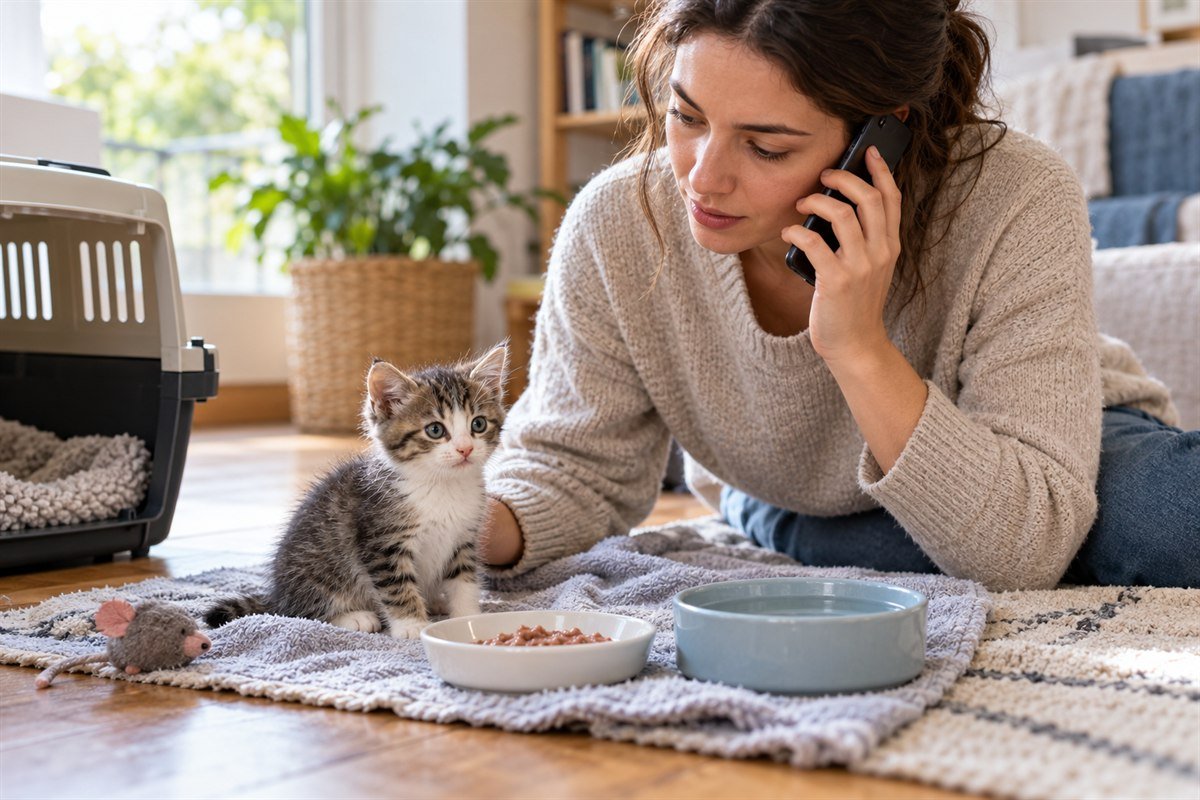
Water runs on its own schedule, and Cats Protection says a cat becomes dehydrated within 24 hours without drinking, that older kittens can survive only up to 24 hours without water, and that the average time a cat can survive without water is three to four days. A cat that refuses both food and water belongs on the shorter of the two timetables, so tell the vet about both. For what a kitten or senior should eat on an ordinary day, our cat feeding guide by age sets out each life stage.
What Happens After You Phone the Vet
Appetite loss is a symptom, not a diagnosis, and finding the cause is the vet’s job. Cornell lists diabetes, kidney disease, hyperthyroidism, pancreatitis and dental problems, and adds that a new food or a new animal in the home can also put a cat off. International Cat Care says pain, nausea and stress can do it too.
One r/cats post from May 2026, titled “My cat hasn’t eaten or drank in 3 days. Help!”, collected 4,757 upvotes. A reply with 409 upvotes offered a possible cause:
“It sounds like his respiratory issues are causing him not to eat. When a cat can’t smell their food, they won’t eat.”
– r/cats, May 2026 (409 upvotes)
That’s a commenter’s reading, not a diagnosis. Another reply, with 201 upvotes, said warming the “stinkiest” food on a vet’s recommendation hadn’t worked. A third, with 144 upvotes, came from someone who admitted they weren’t a vet:
“I would be going to syringe feeding at this point. And you need Mirtaz appetite stimulant. Not a vet but a foster.”
– r/cats, May 2026 (144 upvotes)
A later reply, with 105 upvotes, said “Mirataz was just prescribed”. Mirataz is a mirtazapine ointment made for cats, and Cornell names mirtazapine as a drug that stimulates a cat’s appetite and relieves nausea. In this thread it arrives as a prescription, which is the point: a stimulant is the vet’s call once they know why the cat stopped eating, not something to hunt for in advance.
What to Do Before the Appointment
Phone your vet as soon as the 24-hour line passes, then use the wait for the earliest slot to do four small things that make that call more useful.
- Note the clock. Write down when your cat last ate and drank, treats included, because every threshold above counts from that moment.
- Look for yellowing. A yellow tinge in the whites of the eyes or the skin is the sign VCA links with serious liver disease, so mention it on the phone.
- Phone the vet. Cats Protection’s advice is to speak to your vet to find out why the cat has stopped eating. Say how long it has been, whether your cat is drinking, and whether it’s a kitten, an overweight cat or one with a known condition.
- List what changed. A new food, a new animal in the home or a stressful week are worth passing on, even though none of them is a reason to wait.
Phoning too early costs you a short conversation — phoning late can cost weeks of tube feeding. A cat left alone for a weekend is a different question, covered in how long a cat can be left alone, and the dog equivalent is my dog is not eating. If other symptoms are showing too, the pet symptoms checker is a quick place to note them before you call. None of these figures replaces an examination, because only your vet can judge your own cat.