
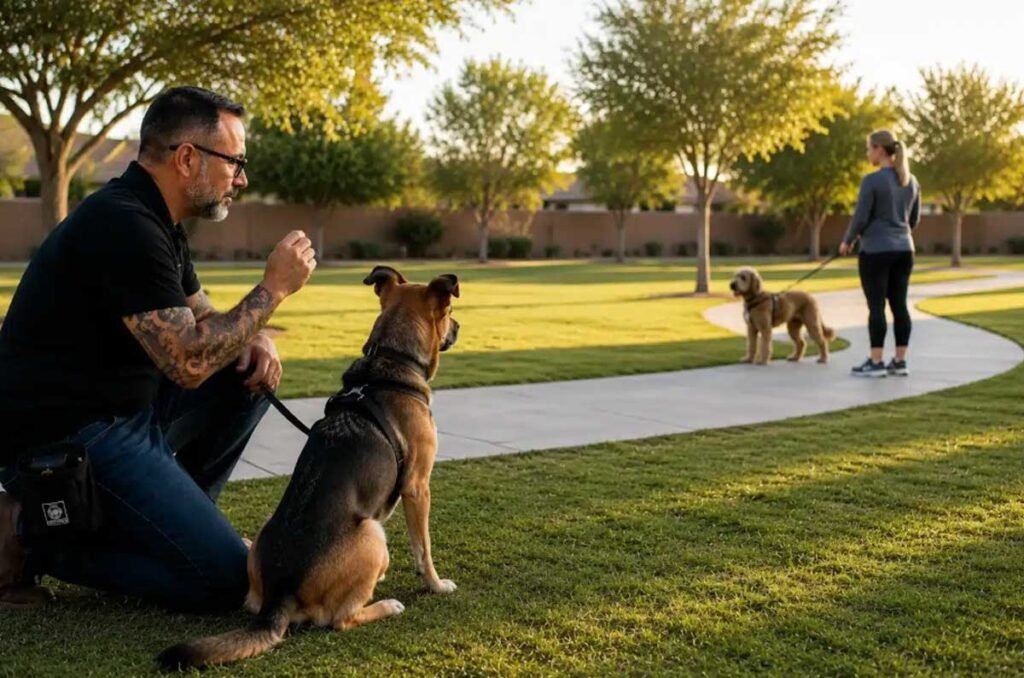

I have been writing about pets for ten years now, and I have interviewed trainers, behaviorists, and owners. One pattern I see over and over again is that most “bad” dogs are simply confused dogs. Professional dog training bridges that gap by teaching dogs what we really want and teaching people how to ask for it clearly. The eight lessons below are the ones I have seen work with puppies, rescues, and adult dogs, and each is based on humane, reward-based methods. For owners who need more than a book or a video, I’ll also explain where a hands-on team, such as Elite K9 Group, a training facility in Sherman Oaks, California, fits in.
1. Professional Dog Training Begins with Understanding Canine Behavior
Dogs do what works and repeat it. Jumping gets eye contact, and barking at the mailman seems to “work” because the mailman always leaves. The key to good professional dog training is to first ask what the behavior gets the dog and then give the dog a better way to get the same reward.
Why Understanding Dog Body Language Prevents Problems
Common signs of stress in a dog can include lip licking, yawning out of context, a tucked tail, and “whale eye” (when the whites of the eyes are showing). When I began to notice these signs in my own dog during vet visits, I stopped insisting on greetings and began rewarding calm distance instead. The first step in any dog behavior modification program is learning this silent language.
2. Puppy Socialization Is Time-Limited
The prime socialization window ends early, generally within the first three months of life. The American Veterinary Society of Animal Behavior (AVSAB) says puppies can join well-run socialization classes as young as seven to eight weeks of age, provided they have had their first vaccines and deworming. A friend of mine kept her puppy inside until 16 weeks “to be safe,” and that dog still panics at skateboards years later.
Training Your Puppy: It’s About Quality, Not Quantity
Socialization is not about meeting a hundred strangers in a weekend. Pair each new sight, sound, and surface with a treat, and let your puppy approach it at their own speed. Flooding means forcing a frightened puppy to face its fears, which can make the fear worse.
3. Science Backs Positive Reinforcement Dog Training
The AVSAB’s 2021 position statement on humane dog training recommends reward-based methods. Research backs up that view: a 2020 study published in PLOS ONE found that dogs trained using aversive tools, such as leash corrections, showed more stress behaviors and higher cortisol levels than dogs trained using rewards. In my experience, dogs trained with rewards are more likely to offer behaviors willingly rather than waiting to make a mistake.
Reward Timing and Value
When the desired behavior occurs, click or say a crisp “yes” within a second or two, then reward your dog. Use high-value treats for difficult situations, such as a busy park, and use kibble for easy practice at home.
4. Consistency at Home Is Better Than a Weekly Lesson
Even the best professional dog training session may last only one hour a week. Your dog lives with you for the other 167 hours. Agree as a household on the same cues so “off” doesn’t mean “get off the couch” to one person and “stop jumping” to another. A few five- to ten-minute sessions each day will build skills faster than one long drill.
5. Control the Environment While Your Dog Is Learning
In professional dog training, management simply means preventing your dog from practicing the behavior you are trying to change. Baby gates, a house line, a crate made comfortable with treats, and puzzle feeders can all help reduce mistakes. Every repetition you get right builds the habit you want, while every repetition you get wrong can reinforce the habit you don’t want.
6. Leash Pulling and Reactivity Need a Plan, Not Punishment
If your dog starts pulling on the leash, stop and reward your dog generously for coming back to your side. Distance is your friend when dealing with reactivity toward dogs or people. Work far enough away that your dog sees the trigger but stays calm. Then pair the trigger with food. I fostered a rescue terrier, and this approach helped him go from lunging at every dog to walking past neighbors calmly in about three months. Elite K9 Group and other professional trainers can help when progress stalls.
7. When to Bring in a Professional Dog Trainer
There are times when you need an expert’s help right away, such as when a dog bites or growls over food or toys, particularly around children, or experiences extreme separation anxiety. Start with your veterinarian. Changes in behavior can be signs of pain or other medical problems. When looking into professional dog training, seek credentials such as the CPDT-KA (Certification Council for Professional Dog Trainers), membership in the IAABC, or a board-certified veterinary behaviorist for more difficult cases.
Professional Dog Training Services at Elite K9 Group
Southern California owners looking for dog training in Los Angeles can consider Elite K9 Group for obedience programs, a puppy program focusing on socialization and confidence building, behavior work for common issues such as reactivity and leash pulling, board-and-train options, and service dog training. A free consultation is a useful way to learn how Elite K9 Group works before committing. Its Sherman Oaks team also serves nearby areas such as Burbank and Glendale.
Questions to Ask Before Hiring a Trainer
When selecting Elite K9 Group or another professional dog trainer, ask the trainer to explain exactly what happens when your dog does something right and what happens when your dog does something wrong. Ask how you will be involved in the training process. Owners who practice between sessions can achieve better long-term results. A good trainer welcomes these questions and never promises quick fixes.
8. Dog Training Is a Lifetime Relationship
Training doesn’t stop when your dog learns “sit” and “stay.” Adult and senior dogs continue to learn, and regular practice, enrichment games, and new tricks help keep their minds sharp. I still teach my nine-year-old dog a new trick every few months, and it remains one of the best parts of our week together.
Final Thoughts
Great dog behavior is built, not born. Socialize puppies early, reward the behaviors you like, manage the behaviors you don’t like, and stay consistent as a family. With professional dog training from an experienced team like Elite K9 Group, you can develop a clear plan and gain the confidence to follow it when problems seem to outweigh your skills. Your dog is always learning, so make sure the lessons are kind, clear, and rewarding.