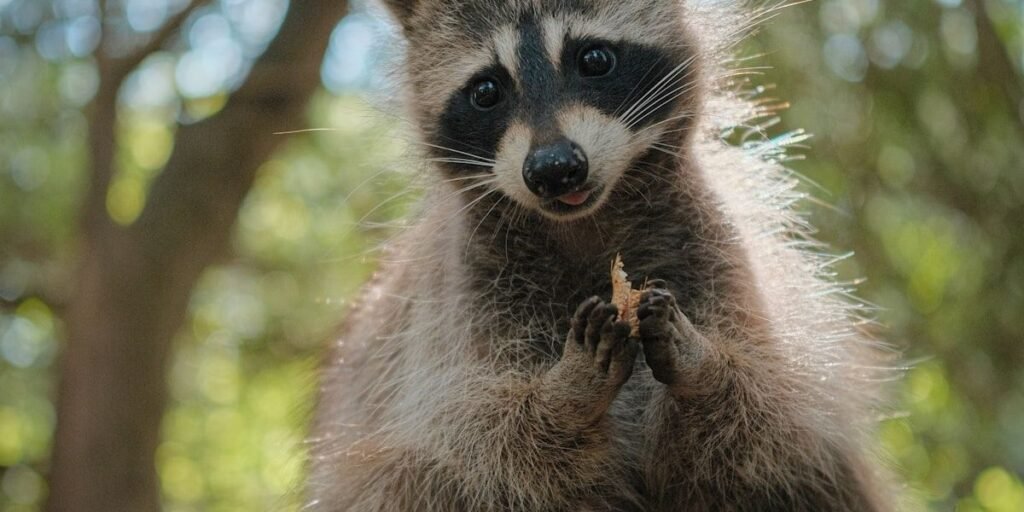

Raccoons eat almost everything: crayfish, frogs, insects, bird eggs, fruit, nuts, corn, rodents, carrion, and whatever a trash can offers. They share both the bins and the reputation with urban foxes, and they are among the most complete omnivores in North America, and the Chesapeake Bay Program’s field guide sums up the pattern: nearly any available food, with a strong lean toward whatever is easiest tonight.
That flexibility is the whole story. It explains why raccoons rule both creek beds and dumpsters, why the internet’s pet raccoons eat marshmallows on camera, and why feeding them is worse for them than the videos suggest.
The Wild Menu
Given a choice, raccoons forage where land meets water. The preferred list runs to crayfish, frogs, fish, snails, and clams, padded out with insects, grubs, worms, bird eggs and nestlings, small rodents, and seasonal plants: berries and soft fruit in summer, acorns and nuts in fall. Per the National Wildlife Federation, plant and animal matter split the diet roughly evenly, shifting with whatever the season makes cheap.
Fall is the serious eating season. Raccoons pack on fat through autumn because they spend stretches of winter denned up, living off reserves. A raccoon in November can look comically wider than the same animal in June.
Wild vs. City: Same Animal, Different Menu
| Setting | Staples | Signature move |
|---|---|---|
| Streams and woods | Crayfish, frogs, grubs, eggs, berries, acorns | Feeling out prey underwater by touch |
| Suburbs | Trash, pet food left outside, garden produce, birdseed | Opening latched cans and pet doors |
| Winter (north) | Fat reserves, cached mast, whatever thaws | Denning through the coldest stretches |
City raccoons are not a different species making worse choices; they are the same opportunist finding that a dumpster out-yields a creek. Bird feeders, outdoor cat bowls, and unsecured cans are the big three attractants. Remove those and you have removed most of a raccoon’s reasons to visit.
Why Raccoons “Wash” Their Food
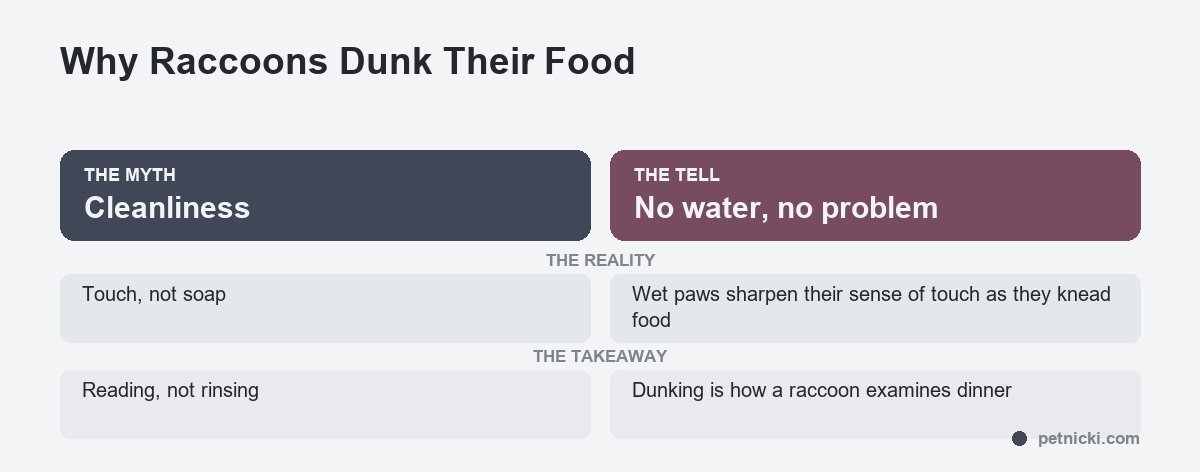
The dunking habit gave raccoons their reputation for tidiness and their Latin name, Procyon lotor, “the washer.” The cleanliness story does not hold up: raccoons eat happily where no water exists. What the water does is sharpen touch. A raccoon’s front paws are its primary sense organ, packed with nerve endings, and wetting them while kneading food gives the animal a better read on what it is holding.
The Marshmallow Problem
If your mental image of raccoon diets comes from viral videos, it involves marshmallows, donuts, and candy. People who feed yard raccoons confirm the preference:
“Marshmallows. I put a couple things out for the raccoons i feed and the first thing they go after is always the marshmallows.”
– r/Raccoons, March 2026 (5 upvotes)
A raccoon going crazy for sugar films well, and that is most of why the junk keeps appearing on camera. The sharpest answer in a thread asking why people do this:
“Because junk food makes for easy, dramatic videos and raccoons go crazy for it. People think “it’s just a treat” and don’t think about long-term health or the fact it can mess up their digestion and make them dependent on humans. It is bad for them, same way it’s bad for us. In the wild they’d eat things like insects, small animals, fruits, eggs. Pet raccoons that are cared for usually do get a more balanced diet, the junk is often just what ends up on camera.”
– r/NoStupidQuestions, November 2025 (29 upvotes)
Feeding wild raccoons anything, healthy or not, teaches them that humans mean food. Fed raccoons lose caution, den in attics, and get put down as nuisance animals when the boldness stops being cute; several municipalities fine residents for feeding them.
Admire the trash panda, secure the trash.
Raccoons vs. Your Chickens and Cats
Raccoons do kill poultry, and a coop raid is often the moment a homeowner starts researching them. They are skilled enough to open simple latches, so chicken keepers need carabiner-secured or complex locks, hardware cloth instead of chicken wire, and no food left in the run overnight.
Cats are a different story. Healthy adult cats and raccoons mostly ignore each other at shared food bowls, and genuine raccoon attacks on cats are uncommon; the realistic risks are a cornered raccoon defending itself, kittens outside at night, and disease transfer at shared bowls. The fix for all three is the same: feed pets indoors and keep small animals in after dark. For perspective on where raccoons actually sit among risky wildlife, they do not make our roundup of the deadliest animals at all. If a raccoon has charmed you into wondering about ownership, our guide on keeping a pet raccoon covers why that path is harder than it looks.
FAQ: Raccoon Diets
What do raccoons like to eat most?
Water foods top the wild preference list: crayfish, frogs, fish, snails, and clams, backed by grubs, eggs, and sweet fruit. In neighborhoods the ranking flips to whatever is calorie-dense and easy, which is why pet food and trash win.
Should I worry about a raccoon in my yard?
A raccoon passing through, even in daylight, is normal and not proof of rabies. Worry when one dens under your deck, shows stumbling or aggression, or keeps returning to a food source; then remove the attractant and call animal control if behavior looks wrong.
What do raccoons hate the most?
Nothing repels raccoons reliably for long; ammonia, mothballs, and predator urine mostly offend the humans who live there. What actually works is removing the payoff: locked cans, no outdoor pet food, secured coops, and motion-triggered lights or sprinklers as a supplement.
What can raccoons not eat?
Wildlife rehabbers keep chocolate, candy, processed junk, onions, and garlic away from raccoons, and the honest answer is that people should not be feeding wild raccoons anything at all. Dependence on handouts harms them faster than any single bad food.