






My dog Max grabbed a piece of fried chicken off the counter last spring. It took less than ten seconds. By that night, we were sitting in an emergency animal hospital, and I was terrified I’d done something I couldn’t undo.
If your dog just ate fried chicken, or you’re worried it might happen, you’re probably looking for the same answers I needed that night. What actually happens inside a dog’s body after eating fried chicken, when it turns into an emergency, and what treatment looks like once you’re at the vet.
Fried chicken is dangerous for dogs mainly because of the bones, the grease, and the seasoning. Bones can splinter and tear the digestive tract. The fat content can trigger pancreatitis, a painful inflammation of the pancreas. And seasonings like garlic or onion powder add a separate layer of toxicity. None of this means panic is the right response, but fast attention matters.
Why Fried Chicken Is So Risky for Dogs
Most people know chicken bones are bad for dogs. Fewer realize the frying process makes things worse, not better.
How Cooked Bones Turn Dangerous
Cooked bones lose moisture and become brittle. Instead of bending, they shatter into sharp fragments. Those fragments can get stuck in the throat, puncture the stomach lining, or cause a blockage further down the intestines.
Why the Grease Matters Too
Then there’s the oil. A few licks of grease won’t hurt most healthy adult dogs. But a full piece of deep-fried chicken delivers a fat load their digestive system isn’t built to handle.
Some dogs shrug it off. Others, especially smaller breeds or dogs with a history of pancreas issues, react badly within hours.
Signs Your Dog Needs Emergency Care
Not every fried chicken incident ends in a vet visit. But certain symptoms mean you shouldn’t wait it out at home.
Watch for these warning signs:
- Repeated vomiting, especially if it continues past one or two episodes
- Visible distress, pacing, or a hunched posture
- Bloating or a hard, swollen belly
- Choking sounds, gagging, or trouble swallowing
- Blood in vomit or stool
- Lethargy that gets worse instead of better
If you saw your dog swallow a bone, even without symptoms yet, calling your vet right away is the safer move. Bone fragments can take hours to cause visible problems.
What Happens During Emergency Vet Treatment
This is the part most people don’t know until they’re living it. When we got to the emergency clinic, the vet didn’t just look at Max and guess. The first step was a physical exam followed by imaging.
Diagnosis: X-Rays and Imaging
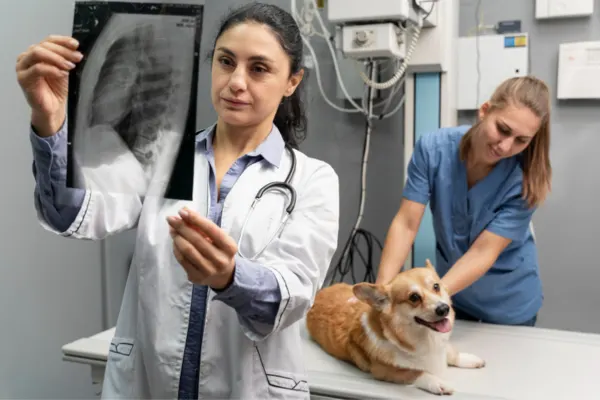
X-rays let the vet check for bone fragments, blockages, or signs of perforation in the gut. If something looks unclear, they may follow up with an ultrasound.
Common Treatment Options
Depending on what they find, treatment for fried chicken ingestion can include:
- Inducing vomiting, but only if done quickly and under professional guidance
- IV fluids to support hydration and flush the system
- Anti-nausea medication to control vomiting
- Pain relief if there’s inflammation or internal irritation
- Activated charcoal in some poisoning-related cases
- Surgery, in rare cases where a bone has caused a blockage or tear
Max didn’t need surgery. He needed fluids, anti-nausea medication, and an overnight stay for monitoring. The vet explained that catching it early made a real difference in how mild his treatment ended up being.
A gastrointestinal obstruction happens when a dog swallows something, including bones, that becomes lodged and is too large to pass through the stomach or small intestine, and these obstructions are emergencies that often require surgical removal. According to the Cornell Riney Canine Health Center, prompt diagnosis and removal lead to the best outcomes for dogs in this situation.
Pancreatitis: The Hidden Risk After Fatty Foods
Bones get most of the attention, but fat is the quieter danger. Fried chicken skin and breading are loaded with grease, and that can inflame the pancreas.
Why Symptoms Show Up Late
Pancreatitis symptoms often show up a day or two after the meal, not immediately. Dogs may stop eating, vomit repeatedly, and act like their stomach hurts when touched.
Dogs with worsening pancreatitis often become severely dehydrated, lethargic, weak, and in pain, and may lose all interest in food even if they showed some appetite earlier. PetMD notes that dogs who have had pancreatitis before are more likely to have repeat episodes if they aren’t kept on a fat-restricted diet going forward.
This condition can range from mild to life-threatening. Dogs with pancreatitis usually need hospitalization, IV fluids, and a closely managed return to bland food over several days.
The Cost of Emergency Vet Treatment
Emergency vet visits are not cheap, and that’s something I wish I’d understood before that night. Between the exam, X-rays, bloodwork, and an overnight stay, costs can climb fast depending on your location and what treatment your dog needs.
This is where pet insurance starts to make sense for a lot of owners. A policy that covers accidental ingestion and emergency care can soften the financial blow of an unexpected trip like this. If you don’t have insurance, ask your clinic about payment plans before assuming you can’t afford care; many offer options for exactly these situations.
For a closer breakdown of typical costs, our guide on emergency vet costs walks through what to expect by region and type of visit.
What To Do If Your Dog Eats Fried Chicken
If this happens to you, staying calm and acting quickly matters more than anything else.
Here’s what to do:
- Call your vet or an emergency animal hospital right away
- Don’t induce vomiting unless a vet tells you to
- Note how much your dog ate and how long ago
- Watch closely for the next 24 to 48 hours, even if symptoms haven’t started
- Keep your dog calm and limit activity until you’ve spoken with a professional
If your dog starts vomiting yellow foam after eating something they shouldn’t have, that’s often a sign of stomach irritation. Our article on why dogs vomit yellow foam explains what that symptom usually means and when it’s a bigger concern.
Preventing It From Happening Again
After Max’s scare, I changed a few habits around the house. Counters get cleared immediately. Trash cans have locking lids now. Guests know not to feed him from their plates, no matter how convincing his begging looks.
Fried chicken isn’t the only risk hiding in a typical kitchen. Foods like onions, garlic, grapes, and chocolate are dangerous too, often in ways people don’t expect. Our guide on safe and unsafe foods for pets covers a fuller list worth keeping on hand.
FAQs
Can dogs eat fried chicken in small amounts?
It’s best to avoid it entirely. Even a small piece carries bone and fat risks that aren’t worth it, especially for smaller dogs.
How long after eating fried chicken would symptoms show up?
Bone-related issues can show up within hours. Pancreatitis symptoms sometimes take a day or two to appear, so don’t assume your dog is fine just because the first night went smoothly.
Should I make my dog throw up at home?
No. Inducing vomiting without guidance can cause more harm, especially if bone fragments are involved. Always call your vet first.
What’s the difference between mild upset and an emergency?
One episode of vomiting that resolves quickly is usually mild. Repeated vomiting, lethargy, a swollen belly, or visible pain means it’s time for emergency care.
Will pet insurance cover an emergency vet visit like this?
Many accident-and-illness plans do cover emergency treatment for situations like foreign body ingestion or pancreatitis, though coverage depends on your specific policy and whether the condition is pre-existing.
Is fried chicken skin worse than the meat itself?
Yes. The skin holds most of the grease and seasoning, making it the riskier part for triggering pancreatitis.
