
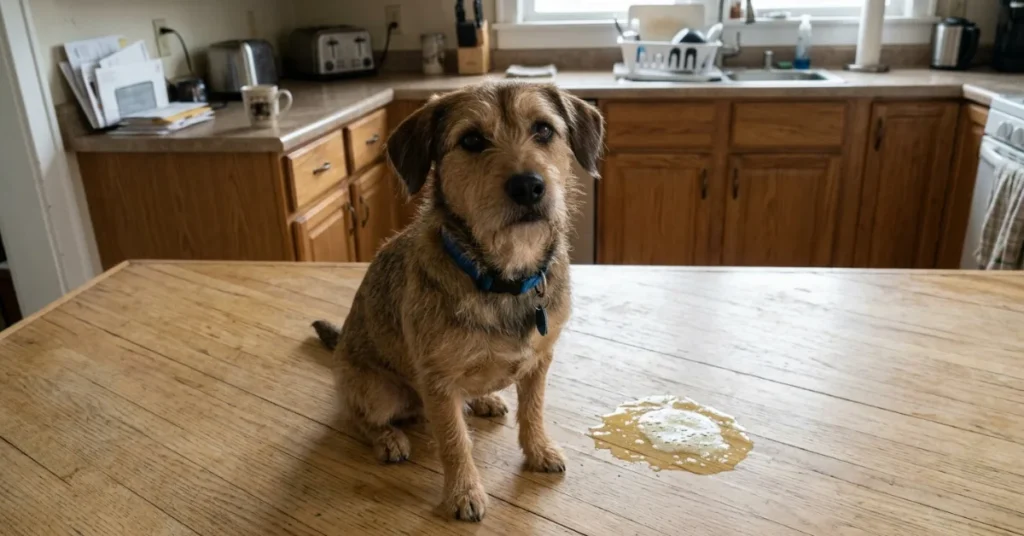

You come downstairs in the morning, and there it is on the kitchen floor. A small pile of yellow foamy stuff. Your dog is looking at you like nothing happened.
The first reaction is usually panic. The second is Googling. Both are totally normal. I had the same moment with my beagle a few years back, standing there in my socks at 6am trying to figure out if I needed to call an emergency vet or if this was just… Tuesday.
Here is what I wish someone had told me then. Most of the time this is not serious. But the times it is serious, you really do not want to wait and see. This guide helps you figure out which situation you are actually in.
Yellow foam vomit in dogs is almost always bile, a digestive fluid the liver produces to break down fat. When a dog’s stomach sits empty too long, bile irritates the stomach lining and gets vomited up. It can also signal acid reflux, gastritis, pancreatitis, or a blockage. One episode with no other symptoms is usually minor. Repeated or accompanied vomiting needs a vet.
What That Yellow Foam Actually Is
Bile. That is the short answer.
Your dog’s liver makes bile continuously. After a meal it flows into the small intestine to help with fat digestion. But when the stomach sits empty for a long stretch, that bile has nowhere productive to go. It backs up into the stomach, irritates the lining, and your dog brings it back up.
The foam happens because bile mixes with stomach mucus and air during vomiting. The color usually runs from pale yellow to bright yellow-green. Both are the same thing.
It is not blood. It is not toxic on its own. It is bile sitting where it should not be, and your dog’s stomach said no.
Why Is Your Dog Actually Doing This
There is more than one reason, and knowing which one applies to your dog matters a lot when deciding what to do next. Here is the honest breakdown, starting from most common to least.
Empty stomach overnight
This is behind the majority of yellow foam vomiting cases. Dogs that go 8 to 10 hours without food, meaning basically every dog overnight, can start vomiting bile early in the morning before their first meal. Vets call it bilious vomiting syndrome.
The fix is almost embarrassingly simple. Feed a small snack before bed. That is genuinely it for most dogs. If yours vomits yellow foam every morning and then eats breakfast and spends the rest of the day being completely normal, this is almost certainly what is happening.
Acid reflux
Dogs get it too. Stomach acid travels up into the esophagus, causes nausea, vomiting follows. This one tends to show up right after eating rather than on an empty stomach. Overweight dogs and dogs that eat very fast tend to have this more than others.
They ate something they should not have
Grass, garbage, a dead something in the backyard. Dogs are not exactly picky about what they put in their mouths. When the stomach reacts to something irritating, you get sudden vomiting, sometimes several times over a few hours. Mild cases like this usually clear up on their own in a day or two.
If what they ate was actually toxic, that is a different situation entirely. Do not wait for it to pass.
Pancreatitis
This is more serious than the ones above. When the pancreas gets inflamed, a dog feels genuinely awful, not just a little queasy. You will notice lethargy, visible abdominal pain, repeated vomiting, sometimes a hunched posture because their belly hurts.
Rich food and table scraps are common triggers. The American Veterinary Medical Association notes pancreatitis can range from mild to life-threatening. If your dog got into fatty leftovers and is now vomiting and lying around looking miserable, do not sit on that one.
Food sensitivity or allergy
Some dogs react badly to ingredients in their regular food. Unlike a sudden one-time reaction, this tends to build slowly, showing up as ongoing loose stool, intermittent vomiting, and a dog that just never seems fully comfortable after meals.
Worth noting: food sensitivities in dogs do not always stay in the gut. Some dogs develop skin issues at the same time, itching, hives, irritated patches. If yours is showing both digestive and skin symptoms, they might be linked. The Petnicki guide on dog hives and skin allergies covers that connection well.
Something stuck in the digestive tract
If your dog swallowed a sock, a toy fragment, a piece of bone, anything that should not be in there, it can get lodged somewhere. Vomiting happens because digestion cannot move forward. You will usually see other red flags alongside it: no bowel movements, a bloated or hard belly, a dog that will not eat or drink, obvious discomfort when you touch their abdomen.
This is a same-day emergency. Not a wait-and-see situation.
Something bigger underneath
When yellow vomiting keeps coming back without an obvious trigger and nothing helps, your vet needs to look deeper. Stomach ulcers, intestinal parasites, kidney disease, liver problems, Addison’s disease, and less commonly GI tumors can all cause this pattern. None of these can be worked out at home.
When You Need to Call the Vet Today
Do not wait. Call your vet if any of these are true:
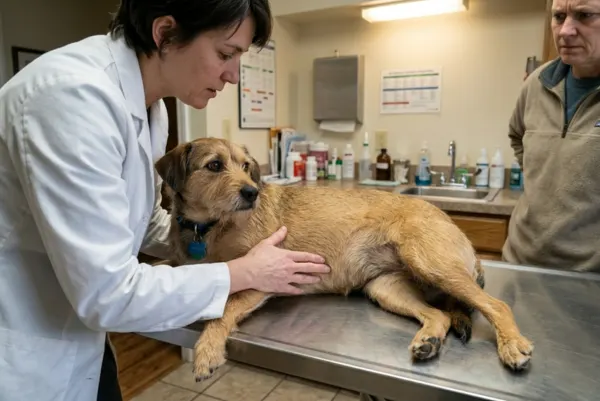
- Vomiting has happened more than two or three times in one day
- You see blood in the vomit, pink, red, or dark brown like coffee grounds
- Vomiting is paired with diarrhea and lethargy at the same time
- The belly looks swollen or feels hard to the touch
- You know or suspect your dog swallowed a foreign object
- They got into something toxic, plants, medications, household chemicals
- They have not touched water in over 12 hours
- This has been happening multiple days in a row
- Your dog is a puppy, a senior, or has an existing health condition
If toxic ingestion is a possibility, do not wait for symptoms to get worse. The ASPCA Animal Poison Control Center has a 24/7 hotline specifically for this.
What You Can Do at Home for a Mild Case
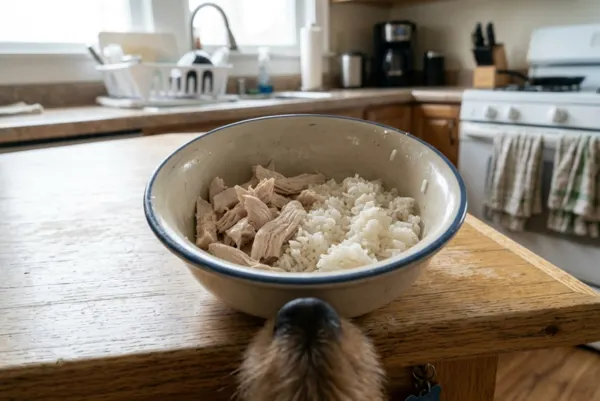
One episode, dog acting normal after, no signs from the list above. Here is what actually helps:
- Skip the next meal for 2 to 4 hours. Give the stomach time to calm down. Keep fresh water out the whole time and make sure they are drinking.
- Reintroduce food with bland options. Boiled chicken and plain white rice is the standard. Small amounts, a few times through the day rather than one big portion.
- Shift to smaller, more frequent meals going forward. Three smaller meals instead of two big ones keeps the stomach from going empty for too long. This change alone stops morning bile vomiting in a lot of dogs.
- Add a small snack before bed. If yours always vomits in the morning, a few pieces of kibble right before sleep can prevent bile from building up overnight.
- Try a slow feeder bowl. Fast eaters swallow a lot of air, which leads to nausea and vomiting. A puzzle bowl slows them down without much effort from you.
Skip the human antacids. Some are toxic to dogs. Nothing without checking with your vet first.
What the Vet Will Actually Do
If you bring your dog in, expect a physical exam plus questions about what the vomit looked like, when it started, and anything unusual in their diet or behavior recently. Depending on what they find, they may run:
- Blood work to check liver, kidney, and pancreas function
- X-rays or an ultrasound to look for blockages or organ changes
- A fecal test if parasites look likely
- A diet trial if food sensitivity is suspected
Treatment depends on what shows up. Mild cases may just need anti-nausea medication and bland food for a few days. Serious causes need more specific treatment, IV fluids, prescription meds, or in blockage cases, surgery.
Questions People Actually Ask
My dog vomited yellow foam once and is acting totally normal. Do I need to do anything?
Keep an eye on them for 24 hours. If they eat normally, drink water, stay active, and do not vomit again, you can manage it at home. Bland food for a day and smaller, more frequent meals going forward usually takes care of it. If anything changes, call your vet.
Why does this happen every single morning?
That pattern, morning vomiting followed by a completely normal day, almost always points to bilious vomiting syndrome from a stomach that sat empty too long overnight. Try a small snack before bed for a few nights. For most dogs, it stops pretty quickly.
Can stress or anxiety cause yellow foam vomiting?
Yes. Anxious dogs, dogs with separation stress, dogs adjusting to big changes in routine, they can all develop physical nausea that leads to bile vomiting. The gut and nervous system are tightly connected in dogs. If stress seems to be a consistent trigger, bring it up with your vet.
What is the difference between yellow foam and white foam?
Yellow or green foam almost always means bile, a stomach issue. White or clear foam without yellow color is usually saliva and mucus, which can come from bloat, nausea from a different cause, or sometimes a respiratory problem. Monitor either one if it happens more than once.
How long should I wait before feeding my dog after they vomit?
Give it 2 to 4 hours, then offer something small and bland. Boiled chicken with white rice is the go-to. If that stays down and they seem comfortable, you can gradually move back to their regular food over the next day. Do not rush it.
Can yellow foam vomiting ever be a sign of something really serious?
On its own with no other symptoms, usually not. But yellow vomiting alongside blood, lethargy, belly bloating, or obvious pain can point to pancreatitis, a blockage, toxic ingestion, or organ disease. Any combination like that means same-day vet visit, no waiting.
Conclusion
Yellow foam vomiting is something almost every dog owner deals with at some point. Most of the time it is a boring explanation, empty stomach, something they ate, minor irritation that clears up fast.
What matters is paying attention to the full picture. One isolated episode with a dog who seems fine afterward is manageable at home. Repeated vomiting, blood, bloating, or a dog that clearly feels awful is not a situation to sit on. Your gut feeling about your own dog is worth something too. If something feels off beyond just the vomit, call your vet.
For more practical dog health guides, visit Petnicki.com.