
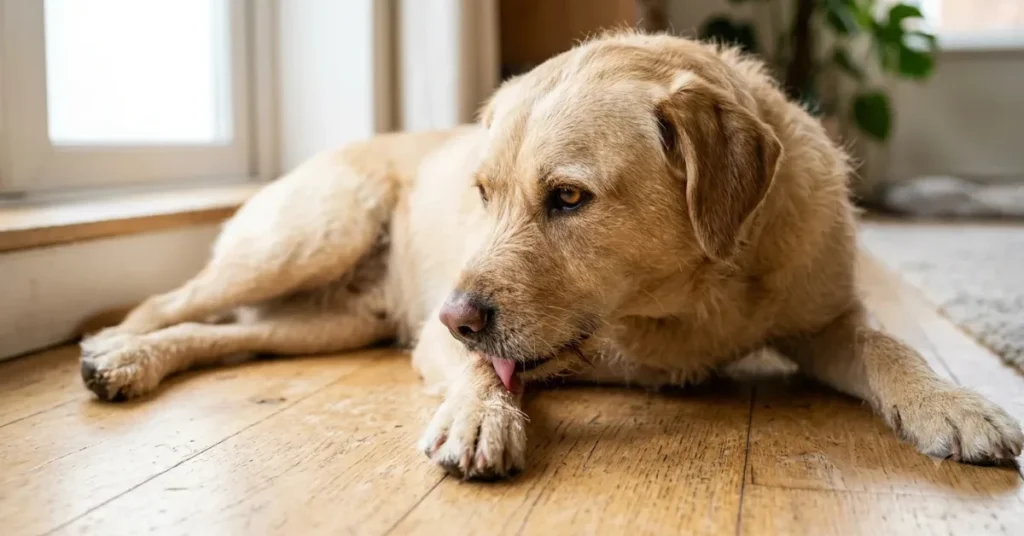

You notice it first at night. Your dog is lying down, half asleep, and still going at its paw. Or maybe it started after a walk and just never stopped. You wait a day, then two, and it is still happening.
Most owners search for answers at this point. Some get told it is just a habit. Others try changing the food or switching shampoo. Nothing works because the real cause is still unknown.
This guide covers every reason a dog licks its paws constantly, how to tell them apart without a vet, what you can safely do at home, and when it is time to stop waiting.
What Does It Mean When a Dog Licks Its Paws Constantly?
A dog licking paws constantly usually signals an underlying issue such as allergies, infection, pain, or anxiety. Occasional paw licking is normal self-grooming behavior. When it becomes repetitive, focused on one paw, or results in red or stained fur, it needs attention. The cause determines the right response, so identifying the pattern matters before treating it.
How to Tell Normal Licking from a Real Problem
Every dog licks its paws sometimes. After a walk, after a meal, or during a grooming session, a quick lick or two means nothing. It stops in under a minute and the dog moves on.
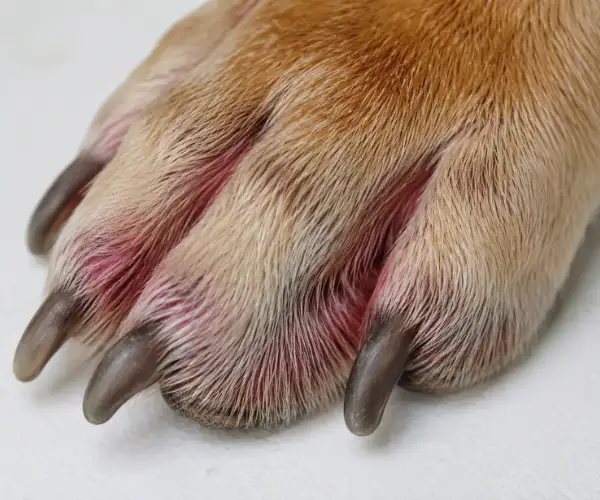
The licking you need to pay attention to is different. It goes on longer than it should. The dog comes back to the same paw again and again. You start noticing the fur between the toes turning pink or brownish. The skin underneath starts looking damp or red.
Watch for these signs:
- Licking that happens several times a day with no trigger
- The dog licks even when resting or trying to sleep
- One paw receives more attention than the others
- Pink, red, or brown staining in the fur near the toes
- Skin that looks raw, swollen, or wet under the fur
Two or more of these together means the licking has moved past normal grooming. Something is causing it.
Common Causes of Constant Paw Licking in Dogs
Dogs lick their paws for many reasons. Some causes are minor and easy to fix at home. Others need a vet visit. Here are the most common reasons behind constant paw licking and what each one looks like.
1. Environmental Allergies
Most people expect allergy symptoms in dogs to look like sneezing or runny eyes. They usually do not. In dogs, allergies show up in the skin, and the paws take the worst of it.
Every time your dog walks on grass, pavement, or soil, the paws pick up pollen, mold spores, and dust. The immune system reacts, and the skin itches. The dog licks to get relief. This is one of the most common causes vets see, and it is often dismissed for months because owners do not connect seasonal changes to paw licking.
Look for these patterns:
- Licking is worse in spring and autumn when pollen counts are high
- Your dog also rubs its face along the floor or scratches its ears repeatedly
- Things seem slightly better after rainy days or when your dog stays indoors
2. Food Allergies
Food allergies cause paw licking too, but the pattern is different. There is no seasonal change. The licking happens all year because the trigger is in the food bowl every single day.
Beef, chicken, dairy, wheat, and soy are the most common culprits. What makes food allergies confusing is that they can develop after years of eating the same food. A six-year-old dog that has eaten the same kibble since puppyhood can still develop a reaction to it. The immune system builds sensitivity slowly over time.
The only way to confirm a food allergy is a proper elimination diet supervised by a vet. It takes 8 to 12 weeks on a completely new protein source with nothing else added. No treats, no table scraps, nothing that could interfere.
According to VCA Animal Hospitals, food allergies in dogs typically develop after prolonged exposure to the same protein source, which is why a reaction can appear suddenly even in older dogs that have eaten the same food for years.
3. Yeast Infection
Yeast infections are behind a huge number of chronic paw licking cases, and they often go unnoticed for a long time because owners assume the licking is still just an allergy issue. Sometimes it is both.
The space between a dog’s toes is warm, enclosed, and often slightly moist after walks. Yeast grows well in exactly that environment. Dogs with allergies are especially prone because the skin barrier is already weakened.
Check for these signs:
- A musty smell or something like corn chips coming from the paws
- Brownish or dark staining between the toes
- Skin that looks thicker than normal or slightly greasy
- Your dog seems to chew and gnaw rather than just lick
Yeast infections need antifungal medication to clear. Washing the paws helps prevent them from coming back, but it will not treat an active infection on its own.
4. Bacterial Infection
Bacterial infections rarely start on their own. They develop when another problem, usually allergies or yeast, has already broken down the skin. At that point bacteria get in, and the situation gets worse fast.
More itching leads to more licking. More licking breaks the skin further. The cycle keeps going until treatment interrupts it.
Signs include visible redness, crusting around the nail folds, swelling, and sometimes small raised spots on the skin. Antibiotics prescribed by a vet are needed to clear it up properly.
5. Pain or an Injury in That Paw
When licking is focused on one specific paw and started suddenly, stop and check that paw before assuming it is an allergy. Dogs lick the spot that hurts. They cannot tell you what is wrong, so they show you.
Common causes of localized pain:
- A small cut or graze on the pad
- A thorn, splinter, or grit embedded in the skin
- A cracked or broken nail
- An insect bite or sting
- An interdigital cyst, which is a firm painful swelling between the toes
Part the fur carefully, look between every toe, and inspect the pads and nails under good light. Small objects are easy to miss on a quick glance.
6. Cracked or Sore Paw Pads
Hot tarmac in summer and grit-covered roads in winter both wear down paw pads over time. Cracked pads are uncomfortable, and dogs lick them the same way a person might rub a sore spot.
This tends to affect dogs that walk on hard or rough surfaces regularly. Vet-approved paw balm applied after walks helps the skin recover. Avoid using human moisturisers since some common ingredients are toxic to dogs, including certain essential oils and anything containing xylitol.
7. Anxiety and Stress
Paw licking is a self-soothing behavior. When a dog is stressed, anxious, or chronically under-stimulated, it finds ways to calm itself down. Licking releases endorphins. It feels good in the moment, which means the dog comes back to it again and again until it becomes a habit.
Anxiety-driven licking tends to follow a recognizable pattern:
- It happens most when the dog is alone or the house is quiet
- The paws look completely normal, no redness, no smell
- The dog shows other signs of stress like pacing, yawning repeatedly, or being destructive when left alone
The ASPCA notes that repetitive stress behaviors in dogs need both behavioral support and changes to the daily environment to improve. Treating only the paws without addressing the anxiety will not resolve the licking.
For practical guidance on building a daily routine that reduces stress and supports long-term health, the pet care guide at Petnicki covers exercise, enrichment, and preventive care that directly helps anxiety-prone dogs.
8. Hormonal Conditions
Hypothyroidism and Cushing’s disease both affect how the skin functions. They reduce the body’s ability to fight off infection and can cause persistent itching with no obvious external cause.
These conditions are more common in dogs over five years old. Other signs often include weight changes, low energy, a dull or thinning coat, and increased thirst or urination. A routine blood test can identify a hormonal issue if other causes have been ruled out.
What You Can Do at Home Right Now
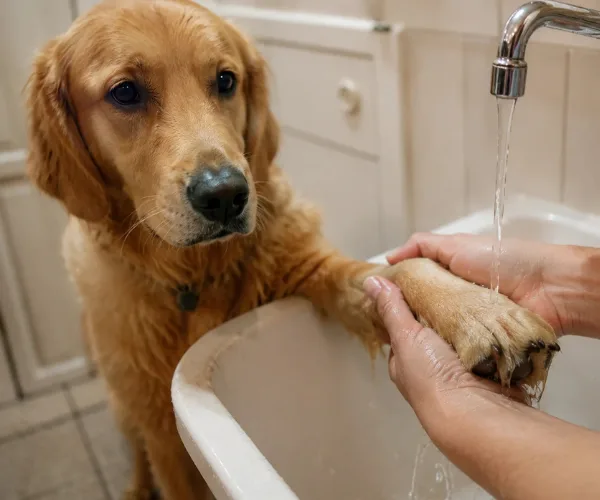
Before calling the vet, these steps are safe and worth trying:
- Rinse the paws after every walk using plain lukewarm water. Dry them well, especially between the toes, because leftover moisture encourages yeast growth.
- Check the paws properly once a week. Look between every toe, along the pads, and around the nails. You are looking for cuts, unusual smells, swelling, or color changes in the fur or skin.
- Keep a simple record. Note which paw, how often the licking happens, and whether it connects to walks, meals, or being left alone. This information helps a vet narrow down the cause quickly.
- Switch to unscented floor cleaners. Some dogs react to fragrances in household cleaning products. A change this small sometimes makes a noticeable difference.
- Add more activity and mental engagement. If anxiety seems likely, even 10 or 15 extra minutes of active time per day can reduce stress-driven licking.
Do not use human antihistamines, antifungal creams, or steroid products without asking a vet first. Several over-the-counter medications that are safe for people cause serious harm in dogs.
When You Should See a Vet
Home management works well for mild early-stage problems. These situations need a professional:
- The licking has continued for more than two weeks without any improvement
- There is swelling, bleeding, open sores, or discharge on the paw
- The skin between the toes looks dark, hard, or crusty
- Your dog is limping or avoiding putting weight on the affected paw
- The behavior is waking your dog up or causing obvious distress throughout the day
Waiting too long costs more time and money in the end. A yeast infection caught early clears up in two weeks. One that has been left for months causes permanent skin changes that are much harder to manage.
Frequently Asked Questions
Why does my dog only lick its paws at night? Dust mite levels in bedding rise at night, which can trigger allergy-related itching. Anxiety-driven licking also tends to get worse when the house is quiet and there is less stimulation. If the licking is mostly nocturnal, check the sleeping area first for potential irritants.
Can paw licking cause lasting damage? Yes. Repeated licking keeps the skin damp, breaks down the protective barrier, and opens the door to bacterial and yeast infections. Over time, the skin thickens and darkens in a way that does not fully reverse. The earlier you address it, the better the outcome.
What does brown staining between the toes mean? It is caused by porphyrins in dog saliva. The staining appears wherever a dog licks consistently. It confirms the behavior is ongoing but does not tell you the cause. Consider it a prompt to look closer rather than a diagnosis.
Is it safe to apply anything to my dog’s paws at home? Vet-approved paw balm is safe for dry or cracked pads. Some owners try a diluted apple cider vinegar rinse for mild yeast issues, but check with a vet before doing this. Do not apply anything to broken or inflamed skin without guidance.
My dog licks both front paws equally. Does that mean something specific? Symmetrical licking of both front paws usually points to a systemic cause like environmental or food allergies. The whole body is reacting and the paws just happen to be the most affected point. Licking focused on only one paw is more likely a local issue like injury or infection.
How long does it take to get the licking under control? A physical injury may settle within days. Bacterial or yeast infections typically clear in two to four weeks with proper treatment. Allergies need ongoing management. Anxiety-driven licking improves gradually but needs consistent effort over several weeks or months.
Conclusion
A dog licking its paws constantly is not a quirk to wait out. It is a signal. It might be something simple like a cracked pad or a small object stuck in the skin. It might be an allergy that has been building for months. Either way, identifying the cause is the only way to stop it properly.
Start by checking the paws, noticing the pattern, and making a few basic changes at home. If the licking is still happening after two weeks, or if the skin already shows damage, see a vet. Acting early makes every cause easier to treat.
For day-to-day guidance on keeping your dog comfortable and healthy long term, the pet care guide at Petnicki is a reliable starting point for building better habits around your dog’s health.