
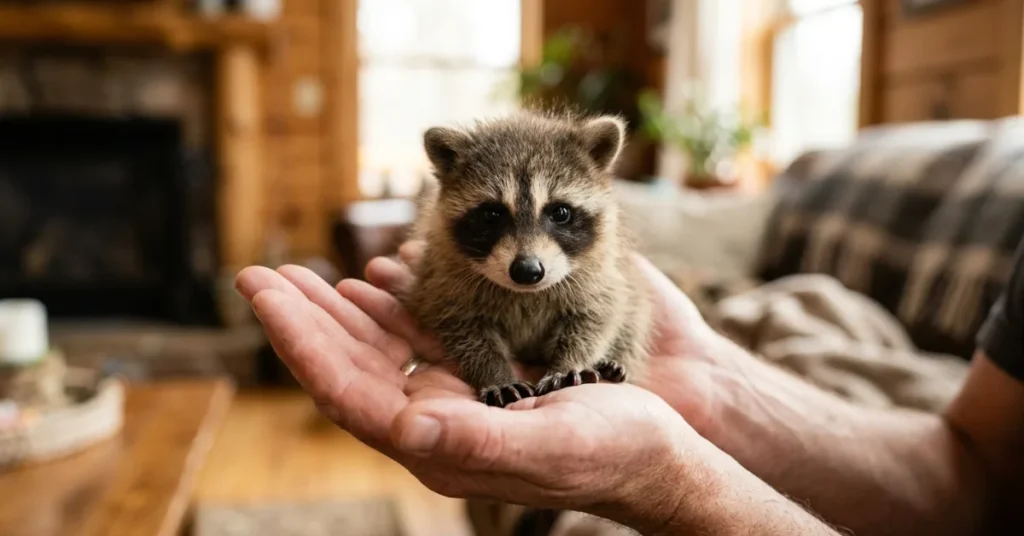

You have seen the videos. A fluffy raccoon sitting on someone’s lap, eating grapes with its tiny hands. It looks adorable. You get it.
But the reality of keeping a pet raccoon is far more complex than those videos show. This article gives you an honest, complete picture of what raccoon ownership actually involves: the behavior, the legal requirements, the daily care, and the risks. By the end, you will know exactly what you are getting into.
What Is a Pet Raccoon?
A pet raccoon is a North American raccoon (Procyon lotor) kept in a domestic setting rather than the wild. Raccoons are highly intelligent, nocturnal mammals with strong natural instincts that do not disappear in captivity. Unlike dogs or cats, raccoons are not domesticated animals. They retain their wild behaviors, even when hand-raised from birth.
Is It Legal to Own a Pet Raccoon?
This is the first question to answer, and the answer varies widely.
In the United States, raccoon ownership laws differ by state, county, and city. Some states allow it with a permit. Others ban it outright.
States where raccoons are generally illegal as pets include:
- California
- New York
- Texas
- Georgia
- Kentucky
States that may allow raccoon ownership with a permit include:
- Indiana
- Michigan
- Arkansas
- Wisconsin
- West Virginia
Always check with your state’s wildlife agency and local government before acquiring a raccoon. Owning one illegally can result in the animal being seized and euthanized. According to the AVMA (American Veterinary Medical Association), keeping wild animals as pets poses serious legal and public health risks.
Raccoon Behavior: What to Expect at Every Stage
Understanding raccoon behavior is critical. Their behavior changes dramatically as they mature.
Birth to 12 Weeks: The Honeymoon Phase
Baby raccoons, called kits, are irresistible. They are soft, vocal, and bond quickly with their caretakers. They sleep a lot, nurse from a bottle, and seem like perfect little companions.
This phase misleads many people into thinking raccoons make easy pets.
3 to 6 Months: The Chaos Begins
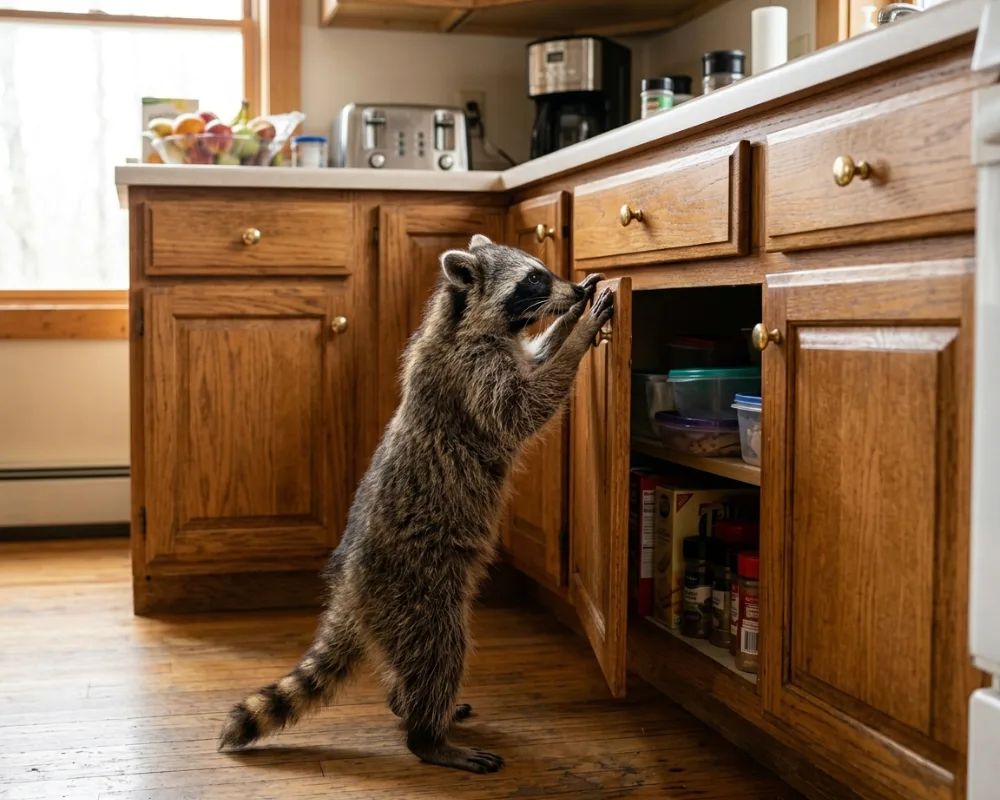
As kits grow, their natural curiosity and dexterity kick in hard. Raccoons can open latches, unzip bags, pull drawers open, and dismantle electronics. They will chew through wires, rip upholstery, and raid cabinets.
Biting also starts during this stage. Raccoons test boundaries with their teeth. These bites are not always aggressive, but they break skin and cause injury.
6 to 12 Months: Sexual Maturity and Aggression
This is where most people reach their limit. As raccoons approach sexual maturity, their behavior shifts noticeably. They become territorial, unpredictable, and sometimes aggressive. Even hand-raised raccoons may attack family members, visitors, or other pets.
Male raccoons, in particular, can become dangerous during mating season. Females with strong maternal instincts may bite without warning to protect perceived territory.
This behavioral change is not a training failure. It is normal raccoon biology.
Housing and Enrichment Needs
Raccoons cannot be kept in a small cage and expected to thrive. They need space, stimulation, and structure.
Minimum housing requirements:
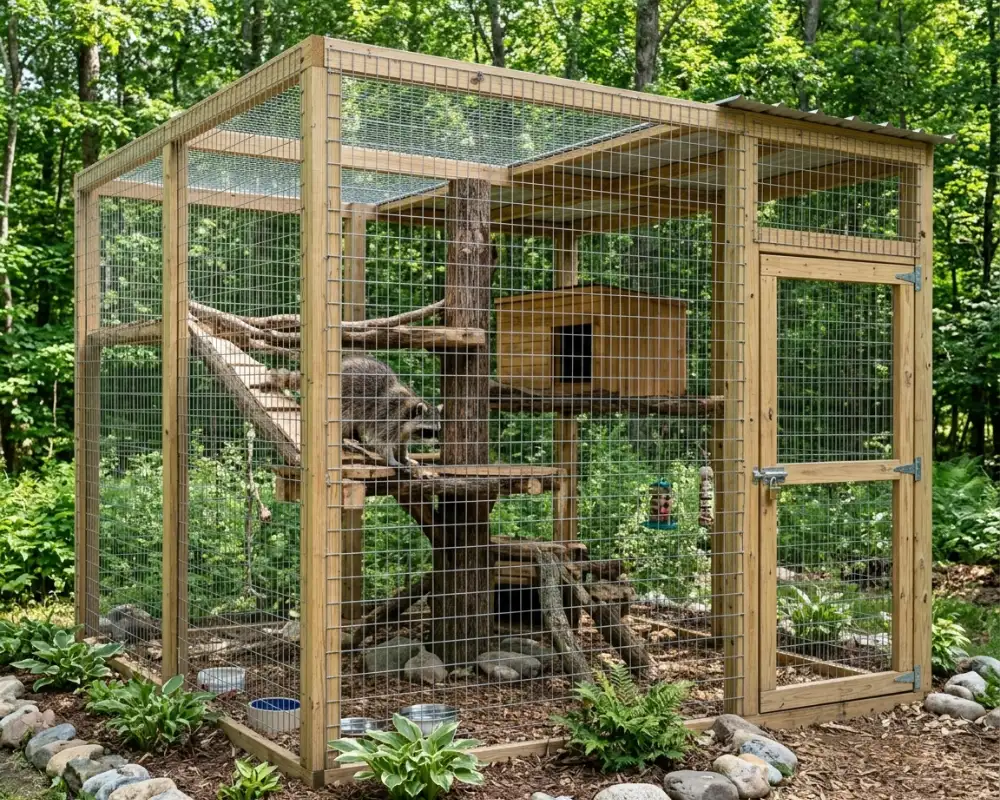
- Outdoor enclosure of at least 6 feet by 8 feet, ideally much larger
- Secure latches on every door (raccoons pick simple locks)
- Climbing structures, platforms, and hiding spots
- Access to water for washing food (a natural raccoon behavior)
- Temperature-controlled shelter for cold climates
Raccoons are nocturnal. They are most active at night, which means noise, activity, and potential destruction while you sleep.
Diet and Nutrition
Raccoons are omnivores. In the wild, they eat fruits, nuts, insects, frogs, eggs, and small animals. In captivity, their diet needs to reflect that variety. For the full picture of what raccoons eat in the wild and in cities, including what they should never be given, see our feeding guide.
A balanced pet raccoon diet includes:
- Fresh fruits and vegetables
- Lean proteins like cooked chicken, fish, or eggs
- Insects or grubs as enrichment
- Commercially prepared exotic animal food (available through specialty suppliers)
Avoid feeding raccoons processed human food, candy, chocolate, or anything high in sodium. Poor diet leads to obesity, liver disease, and shortened lifespan. Consult an exotic animal veterinarian for a personalized feeding plan.
Veterinary Care: A Major Challenge
Finding a vet who will treat a pet raccoon is genuinely difficult. Most general practice veterinarians do not see exotic or wild animals. You will need to find a vet who specializes in exotic or wildlife medicine before you acquire a raccoon, not after an emergency.
Raccoons also carry several zoonotic diseases, meaning diseases that transfer from animals to humans. The most serious is Baylisascaris procyonis, a roundworm parasite found in raccoon feces. This parasite can cause severe neurological damage in humans, including children.
Other health concerns include:
- Rabies (raccoons are a primary carrier species in North America)
- Leptospirosis
- Giardia
- Distemper
Rabies vaccines approved for raccoons are not widely available in the United States. Even if you vaccinate your raccoon with a dog or cat rabies vaccine, it may not be legally recognized, and your raccoon could still be seized and euthanized if it bites someone.
Raccoons and Other Pets
Raccoons can be unpredictable around dogs and cats, especially as they mature. Introductions need to be slow, supervised, and carefully managed.
Small pets like birds, hamsters, or rabbits should never be left unsupervised near a raccoon. Raccoon predatory instincts remain intact regardless of how they are raised.
If you already have pets at home, consider whether introducing a raccoon into that environment is fair to the animals already there. If you are curious about keeping other unusual animals, this guide on frilled lizards as pets covers another uncommon pet with specific care demands worth understanding.
The Emotional Reality of Raccoon Ownership
Many people surrender pet raccoons within the first year. Raccoon rescues and wildlife rehabilitators receive a steady stream of calls from overwhelmed owners who could not anticipate how demanding the animal would become.
A raccoon raised by humans cannot easily return to the wild. It lacks survival skills and may approach humans, which leads to it being considered a nuisance and potentially euthanized.
Surrendering a pet raccoon is not a neutral option. It often ends badly for the animal.
Frequently Asked Questions
Can a raccoon be potty trained? Partially. Raccoons can learn to use a litter box with consistent training, but they are not as reliable as cats. They may use the box most of the time but still have regular accidents in other areas.
Do pet raccoons bond with their owners? Yes, especially when raised from a young age. However, bonding does not prevent aggression. A raccoon that loves you can still bite you hard enough to require stitches.
How long do pet raccoons live? In the wild, raccoons live 2 to 3 years on average. In captivity with proper care, they can live 10 to 15 years. This is a long-term commitment.
Are raccoons smarter than dogs? Raccoons score impressively on problem-solving tests, often outperforming dogs on tasks involving locks, latches, and object manipulation. Their intelligence is a large part of why they are so destructive indoors.
Can I let my pet raccoon outside unsupervised? No. An unsupervised raccoon can escape, approach neighbors, raid trash, or get into dangerous situations. In many areas, an escaped pet raccoon will be treated as a nuisance animal.
Do raccoons get along with children? Young raccoons are tolerant and playful with children. As they mature, the risk of unprovoked biting increases significantly. Children and raccoons should always be supervised.
Final Thoughts
Raccoons are fascinating, intelligent animals. That is not in question. But intelligence in a wild animal does not make ownership easy. It makes it harder.
If you are serious about exotic pet ownership, the most responsible first step is researching your local laws, finding an exotic vet who accepts raccoons, and speaking with a wildlife rehabilitator. Many will tell you the same thing: raccoons belong in the wild, or in the hands of professionals.
For more guides on unusual and exotic pets with honest, practical advice, explore more at Petnicki.