


You’re drawn to the frilled lizard, also called the frilled dragon or frill-neck lizard, and it makes total sense. No other pet reptile looks quite like Chlamydosaurus kingii with that wide, prehistoric neck frill fully extended.
The truth is that this species can become a calm, rewarding pet. But it takes the right setup, consistent care, and a patient approach to handling. This guide covers everything you need before and after bringing one home, including what most other guides leave out: taming timelines, stress behavior, health warning signs, and enclosure cleaning.
What Is a Frilled Lizard?
A frilled lizard (Chlamydosaurus kingii) is a medium-to-large arboreal reptile native to northern Australia and southern New Guinea. It grows up to 3 feet in length, lives around 10 years in captivity, and is best known for the large skin frill around its neck used as a defense display. With proper care, captive-bred adults are generally calm and tolerate regular handling.
Key Facts at a Glance
| Feature | Details |
|---|---|
| Scientific Name | Chlamydosaurus kingii |
| Common Names | Frilled lizard, frilled dragon, frill-neck lizard, frillie |
| Adult Size | Up to 3 feet (males larger than females) |
| Lifespan | Around 10 years in captivity |
| Temperament | Defensive when young, calm with age |
| Diet | Live insects, occasional vegetables |
| Enclosure (adult) | 5–6 ft long × 2–3 ft deep × 4–6 ft tall |
| Difficulty Level | Intermediate |
| Origin | Northern Australia, Southern New Guinea |
Is a Frilled Lizard the Right Pet for You?
This is an intermediate-level species. Not a beginner lizard like a leopard gecko or blue-tongued skink. If you want the Australian agamid that is a beginner lizard, that is the bearded dragon, and our bearded dragon names list covers naming one. Be honest about your situation before buying.
Who Should Keep a Frilled Lizard
A frilled lizard suits you if you have space for a very large, tall vivarium, can provide live feeder insects several times per week, are comfortable managing temperature gradients and UVB lighting, and have the budget for a proper custom enclosure setup.
Who Should Avoid This Species
It may not suit you if you have no room for a tall custom enclosure, want a low-maintenance beginner pet, or are purchasing primarily as a pet for an unsupervised child.
Housing a Frilled Lizard
Getting the housing right is the single most important part of frilled lizard care. This species is arboreal and needs vertical space, structured climbing opportunities, and a substrate that supports the correct humidity level.
Enclosure Size and Type
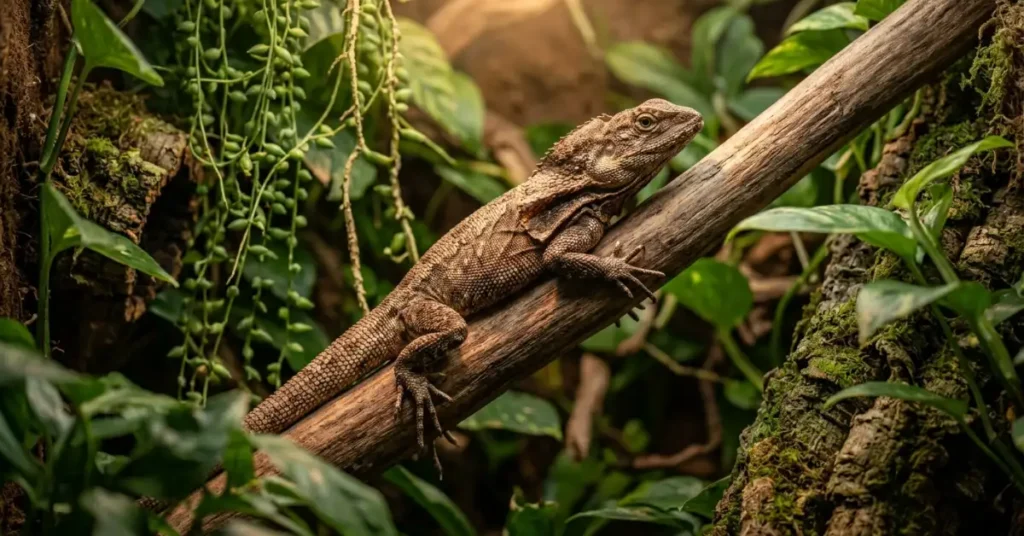
Adult frilled lizards need enclosures larger than most commercially available vivariums. For a single adult, the minimum is 5 feet long × 2 feet deep × 4 feet tall. Taller is always better because this lizard spends almost all its time climbing, not walking on the ground.
You will most likely need a custom-built wooden vivarium. Factor this cost in before you buy the lizard.
A juvenile can be housed in a smaller setup for the first 12–18 months, but plan for adult housing before the lizard outgrows its first enclosure.
Enclosure Decoration and Branches
Because frilled lizards climb constantly, branches are the most important décor item in the entire setup. Place them in all directions: vertical, horizontal, and diagonal. They can cling to vertical surfaces and will happily bask near the top of the enclosure.
Add a shelf or flat basking platform near the heat source. This gives the lizard a stable perching spot at the correct temperature zone.
Best Substrate Options
Choose a substrate that holds humidity without developing mold. Suitable options include orchid bark, tropical forest bedding, and bioactive soil mix made from coconut coir, organic topsoil, and play sand.
A bioactive substrate with a clean-up crew of isopods and springtails reduces odor naturally and can significantly reduce full enclosure cleans. Keep substrate depth at least 2 inches.
Spot clean waste every day. Perform a full substrate replacement every 3–4 months for standard setups, or twice per year for bioactive setups.
Temperature and Heating Requirements
Temperature is one of the most critical aspects of frilled lizard care. This species is an ectotherm, which means it cannot generate its own body heat. Every biological process, from digestion to immune function, depends on the thermal environment you create.
Why Getting Temperature Right Matters
When temperatures are consistently wrong, the immune system becomes suppressed and disease follows. This is not a species where “close enough” works. Incorrect temperatures are one of the leading causes of illness and early death in captive frilled lizards.
Target Temperature Zones
Maintain these temperature ranges inside the enclosure at all times:
- Basking spot: 115–120°F (46–49°C)
- Ambient cool side: 85–90°F (29–32°C)
- Nighttime: 75–80°F (23–28°C)
Because this lizard basks high in the enclosure, position your basking bulb at the height your lizard actually perches, not near the floor.
Heating Equipment Recommendations
Use a dimming thermostat on your basking bulb and a ceramic heat emitter on a thermostat for overnight warmth. Never use heat mats. Frilled lizards do not sense belly heat well and can burn themselves without realizing it.
Always use a cage guard around heat elements. The frilled lizard’s wide neck frill can accidentally contact an exposed bulb during a display.
Use both a probe thermometer and a spot temperature gun to verify temperatures independently of your thermostat.
UVB Lighting
UVB lighting is essential for frilled lizards, not optional. Without proper UVB exposure, they cannot synthesize vitamin D3, which means they cannot absorb dietary calcium. This leads directly to metabolic bone disease, one of the most common preventable deaths in captive reptiles.
How Many Hours of UVB Per Day
Provide 10–16 hours of UVB per day to simulate natural seasonal light cycles. Turn all lights off at night to maintain a proper day-night rhythm.
Choosing the Right UVB Bulb
The correct bulb strength depends on how far your lizard basks from the lamp:
- 12–15 inches from the bulb: T5 6% or T8 12% tube
- 15–24 inches from the bulb: T5 12% tube
UVB Bulb Replacement Schedule
Replace UVB bulbs every 6–12 months as specified by the manufacturer. The visible light may still work, but UVB output decays over time. Your lizard will show no visible reaction to a depleted UVB bulb until illness has already begun. Mark the replacement date on your calendar the day you install a new bulb.
According to Reptiles Magazine, one of the most established reptile publications in North America, frilled lizards are basking lizards that require a reliable UVB source positioned correctly in the upper section of the enclosure.
Humidity Requirements
Northern Australia receives heavy seasonal rainfall. Frilled lizards evolved in a humid tropical environment, and that must be reflected in captivity.
Target Humidity Level
Aim for around 70% humidity inside the enclosure at all times. Use a digital hygrometer to monitor this accurately, not just estimate it.
How to Maintain Correct Humidity
Keep a large water bowl inside the enclosure. Mist twice daily with room-temperature water for around 30 seconds each time. If you live in a very dry climate, you may need to mist more often.
Why Misting Still Matters With a Water Bowl
Even when your hygrometer reads correctly, continue daily misting. Frilled lizards are most likely to drink water droplets during misting rather than from a standing water bowl. Dehydration is a serious and recurring problem in this species, even in enclosures with a full water dish present.
Feeding Your Frilled Lizard
Frilled lizards are omnivores. Their diet should be built around live insect feeders, with vegetables offered as a supplement. Getting the diet right directly affects lifespan, energy levels, and long-term health.
Live Insect Feeders
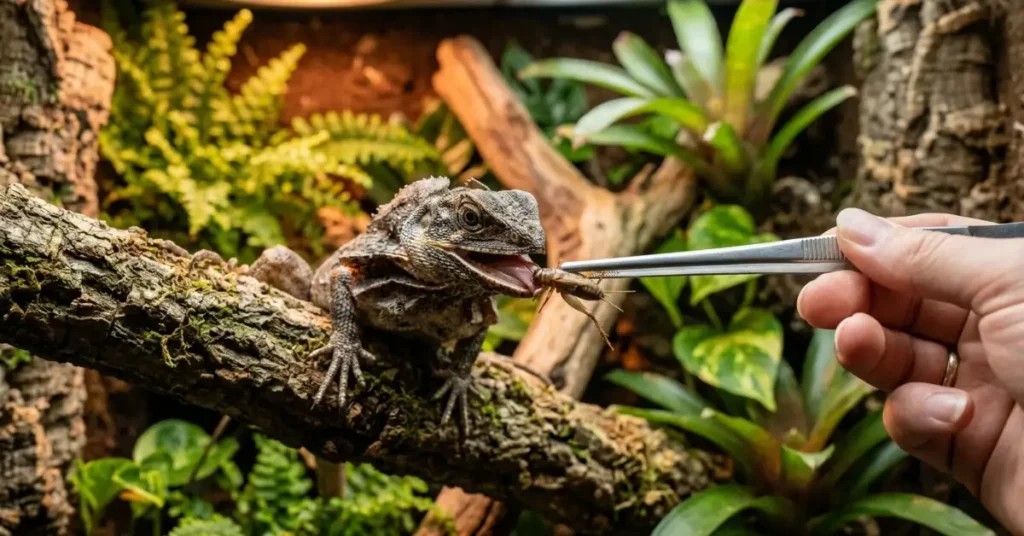
The majority of the diet should come from a variety of live feeder insects. Gut-load all live feeders before each feeding session with fresh vegetables or a commercial gut-load mix to improve nutritional value.
Safe live feeders include crickets, dubia roaches, locust hoppers, mealworms in moderate amounts, hornworms, silkworms, and waxworms as an occasional treat only due to their high fat content.
Vegetables and Fruit
Many frilled lizards refuse vegetables entirely, especially when they have reliable access to live insects. Keep offering anyway. Suitable vegetables include collard greens, turnip greens, mustard greens, bell pepper, butternut squash, sweet potato, and dandelion greens. Safe fruits include mango, papaya, blueberries, and watermelon in small amounts.
Avoid citrus fruits. Keep spinach minimal. High-water-content greens like iceberg lettuce can cause loose stools.
Calcium and Vitamin Supplementation
Dust live feeders with calcium and D3 twice per week. Use plain calcium on all other feeding days. Proper supplementation is the most reliable way to prevent metabolic bone disease. Do not skip this step.
Feeding Frequency by Age
Feed juveniles daily with multiple small prey items per session. Feed adults every 2–3 days.
Obesity is a real risk for adult frilled lizards in captivity. A lizard that is hand-fed and never hunts becomes sedentary and overweight. Release live feeders into the enclosure so your lizard has to move and hunt. This provides both physical activity and behavioral enrichment.
The detailed care resource at Dubia supports the importance of active foraging and covers feeder insect nutrition specifically for this species.
For practical guidance on reptile and exotic pet care across different species, the Petnicki pet care resource library is a useful starting point for both new and experienced keepers.
Understanding Frilled Lizard Behavior
Frilled lizards communicate through body language, not sound. Understanding what specific behaviors mean helps you respond correctly and build trust much faster.
The Frill Display: What It Actually Means
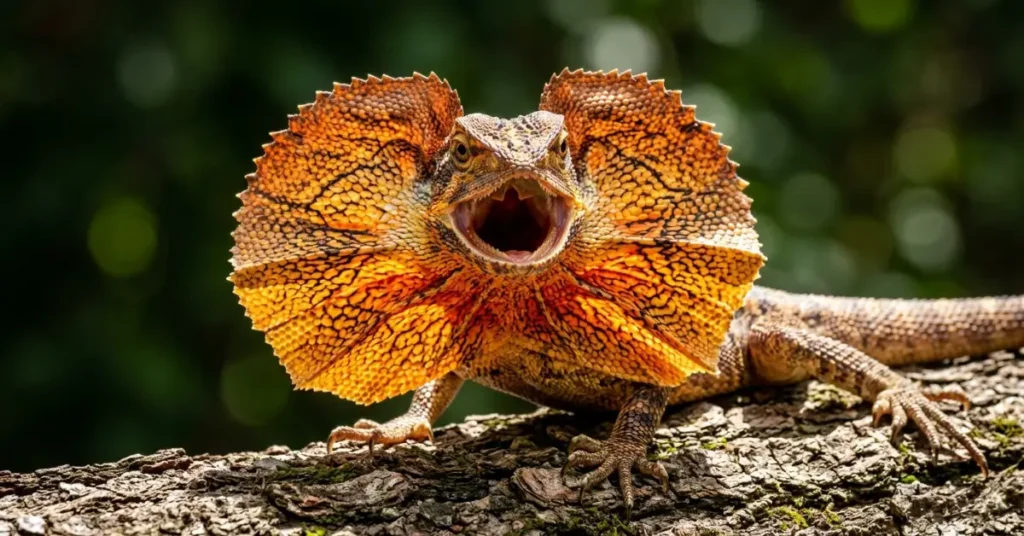
The neck frill is a defense mechanism, not aggression directed at you. In the wild, a fully extended frill combined with a gaping mouth, hissing, and bipedal running scares off predators. In captivity, a well-handled adult rarely needs to use the full display.
If your lizard frills at you during handling, stop immediately. Put it down, move slowly, and give it space to calm before trying again. Forcing interaction with a stressed lizard makes taming take longer and damages trust.
What an Open Mouth Means
A gaping mouth combined with the frill is a clear defensive posture. A gaping mouth without the frill, especially when paired with mucus, bubbling sounds, wheezing, or coughing, is a potential sign of a respiratory infection. Seek a reptile vet promptly if you notice these signs.
Stress Signals to Watch For
Watch for these behavioral signs that indicate your lizard is not settled or comfortable:
- Constant hiding with no interest in basking
- Refusing food for more than 10–14 days outside of a shed cycle
- Persistent dark or dull coloration
- Frill display every time you approach, weeks after the lizard has settled in
- Visible weight loss over a short period
Do Frilled Lizards Recognize Their Owners?
Yes. Frilled lizards can distinguish between different people and respond more calmly to familiar voices and faces. A consistent, calm routine speeds up the taming process considerably and deepens the bond over time.
Taming and Handling a Frilled Lizard
Baby frilled lizards come out of the egg with strong defensive instincts. They will frill, hiss, and run. This is completely normal. Taming takes months, not days, and patience is the most important tool you have.
Realistic Taming Timeline
Weeks 1–4: Let the lizard settle into its enclosure without unnecessary disturbance. Ensure it is eating, basking, and drinking. Let it see you regularly without feeling threatened.
Months 1–3: Begin short, calm daily interactions near the enclosure. Speak in a low, even tone. Start hand-feeding with feeding tongs to build a positive food association with your presence.
Months 3–6: Begin brief handling sessions. Move slowly. Support the full body under the belly and chest. Never grab by the tail or head. Keep early sessions under five minutes.
6 months and beyond: Most captive-bred individuals become calm and tolerant of regular handling. Some become noticeably relaxed in their owner’s presence.
Handling Tips to Avoid Bites and Stress
Always move slowly and deliberately during handling. Never chase a lizard around the enclosure to pick it up. Let the lizard walk onto your hand rather than grabbing it. Avoid sudden movements or loud sounds near the enclosure during the settling-in period.
Wild-caught or farmed import lizards take significantly longer to tame and some may never fully relax around humans.
Housing Multiple Frilled Lizards
Frilled lizards are naturally solitary animals and have no social needs. Understanding their social behavior prevents injuries and stress in multi-lizard households.
Can Two Males Live Together?
No. Two males should never be housed together. Male frilled lizards are highly territorial and will fight. Injuries from these encounters are serious and can be fatal.
Can a Male and Female Live Together?
A male and female may be kept together for breeding purposes, but this should only be attempted by experienced keepers with the space and knowledge to separate them when needed and manage eggs or offspring.
Can Two Females Live Together?
Two females may sometimes coexist, but it is not guaranteed. Since there is no social benefit for the lizard, solo housing remains the safest and most recommended option in almost all cases.
Common Health Problems in Frilled Lizards
Frilled lizards are hardy when their environment is correct, but several health issues appear regularly in captive individuals. Knowing the warning signs early gives you the best chance of a positive outcome.
Health Issues and How to Respond
| Health Problem | Warning Signs | Recommended Action |
|---|---|---|
| Metabolic bone disease | Soft jaw, tremors, bowed limbs | Vet visit; review UVB and calcium supplementation |
| Respiratory infection | Open mouth breathing, mucus, wheezing | Vet visit; check temperature and humidity |
| Dehydration | Sunken eyes, wrinkled skin, lethargy | Increase misting; warm soak; vet if severe |
| Parasite load (imports) | Abnormal stools, rapid weight loss | Fecal test with a reptile vet |
| Retained shed | Tight skin around toes or tail tip | Warm humid hide; 20-minute lukewarm soak |
| Burns from heat source | Blistered or discolored skin | Remove heat source risk; vet visit for wound care |
Finding a Reptile Vet
Identify a reptile-experienced vet in your area before you bring the lizard home, not during an emergency. Not all general vets have experience with exotic reptiles.
Captive Bred vs. Farmed Imports
Where your frilled lizard comes from has a direct impact on its health, temperament, and how easy it is to keep. This is not a minor consideration.
Why Captive-Bred Is Always the Better Choice
Captive-bred frilled lizards are easier to tame, carry far lower parasite burdens, arrive in better health, and have grown up with some human presence. Always buy from a reputable breeder in your own country.
The Problem With Farmed Imports
Captive-farmed imports, often originating from Indonesia, are farmed in outdoor conditions and shipped internationally under stressful conditions. Many arrive dehydrated, stressed, and carrying significant parasite loads. They require an experienced keeper and should never be a first reptile.
Australian vs. New Guinea Bloodlines
Australia has a complete ban on exporting its native wildlife. Any seller outside Australia claiming “Australian bloodline” frilled lizards should provide verifiable multi-generational breeding records. Without that documentation, treat the claim with skepticism.
FAQs About Frilled Lizards as Pets
Are frilled lizards good pets for beginners?
Not ideally. They need very large enclosures, precise environmental conditions, and regular live insect feeding. They are better suited to keepers who already have some reptile experience.
How long do frilled lizards live in captivity?
Around 10 years with proper care. Poor UVB lighting, incorrect temperatures, dehydration, and obesity are the most common factors that shorten captive lifespans.
Do frilled lizards bite?
They can, particularly when young or mishandled. An adult bite can break skin and should be cleaned immediately. The species is defensive by nature, not aggressive. Frequent biting usually points to a handling technique problem, not a dangerous animal.
Are frilled lizards venomous?
No. They are completely non-venomous and safe to handle with proper care and technique.
How do I know if my frilled lizard is stressed?
Watch for persistent hiding, consistent food refusal, dark coloration, repeated frill displays when approached after settling in, and visible weight loss. Any of these signs consistently over several days warrants a review of enclosure conditions or a vet check.
How often do frilled lizards shed their skin?
Juveniles shed every 2–3 weeks during rapid growth. Adults shed once or twice per year. They commonly eat their shed skin, so you may not always notice it.
Conclusion
A frilled lizard is one of the most visually impressive and behaviorally interesting reptiles you can keep. Adults that receive proper care from a young age become calm, recognizable companions that can live comfortably alongside you for close to a decade.
The core requirements come down to a tall enclosure with correct UVB and heat, live insect feeding with calcium supplementation, daily misting for hydration, and patient taming across the first six months.
Get the environment right before the lizard arrives. Buy captive-bred from a trustworthy source. Learn to read its behavior, and give it the time it needs to trust you.
For more practical guides on reptile and exotic pet care across species, explore the Petnicki pet care resource library.
10 SEO Headline Options
- Frilled Lizard as a Pet: Complete Care Guide for Beginners and Intermediate Keepers
- How to Care for a Frilled Lizard: Housing, Diet, Behavior, and Health Guide
- Frilled Dragon Pet Care: Everything You Need to Know Before Buying
- Is a Frilled Lizard a Good Pet? Honest Guide With Setup and Feeding Tips
- Frilled Neck Lizard Care Guide: Enclosure, Temperature, and Feeding Explained
- Frilled Lizard Care: Practical Owner’s Guide to Housing, Diet, and Handling
- Caring for a Frilled Dragon: Step-by-Step Guide for New Reptile Owners
- Frilled Lizard Lifespan, Diet, and Behavior: What Every Owner Needs to Know
- Frilled Dragon Care Sheet: Enclosure Setup, Health, and Taming Timeline
- Frilled Neck Lizard Pet Guide: Is It Right for You? Full Care Breakdown
3 Meta Description Options
- Thinking about a frilled lizard as a pet? This complete care guide covers enclosure size, temperature, UVB, diet, behavior, and taming. Read before you buy.
- Frilled lizard care guide with housing specs, feeding tips, health warning signs, and a realistic taming timeline. Practical advice for new and experienced keepers.
- Want a frilled dragon as a pet? Learn what it really takes — setup, feeding, stress signs, and health — in this detailed, competitor-beating care guide.