
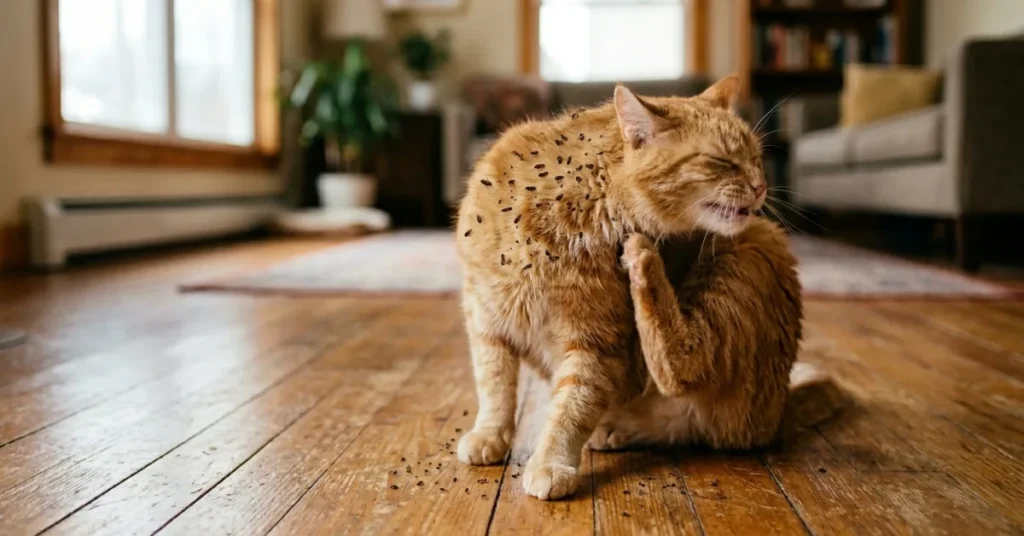

If your cat has suddenly started scratching more, biting at their fur, or acting restless, fleas are usually the reason. The frustrating part is that fleas spread fast, hide well, and come back if you only treat half the problem. This guide walks through exactly what to look for, how to treat your cat and your home properly, and how to keep fleas from coming back.
Getting rid of fleas on cats really comes down to one thing most people miss: you have to treat your cat and your home at the same time. Adult fleas live on your cat, but most of the flea population, often around 95%, is sitting in your carpets, bedding, and furniture as eggs, larvae, and pupae. Treat only the cat, and that hidden population just keeps the cycle going.
How to Tell If Your Cat Has Fleas
Scratching is usually the first thing owners notice, but by then the infestation is often already established. Fleas themselves are tiny, only 1 to 3 mm long, and move fast enough that you may never actually see one. What you’re more likely to spot is the evidence they leave behind.
Look for constant scratching or over-grooming, especially around the neck, belly, and the base of the tail. Tiny black specks in the fur that look like ground pepper, known as flea dirt, are another giveaway. You might also notice small bald patches from repeated licking and biting in one spot, red scabs or bumps from an allergic reaction to flea saliva, or a cat that seems unusually agitated and doesn’t want to be touched.
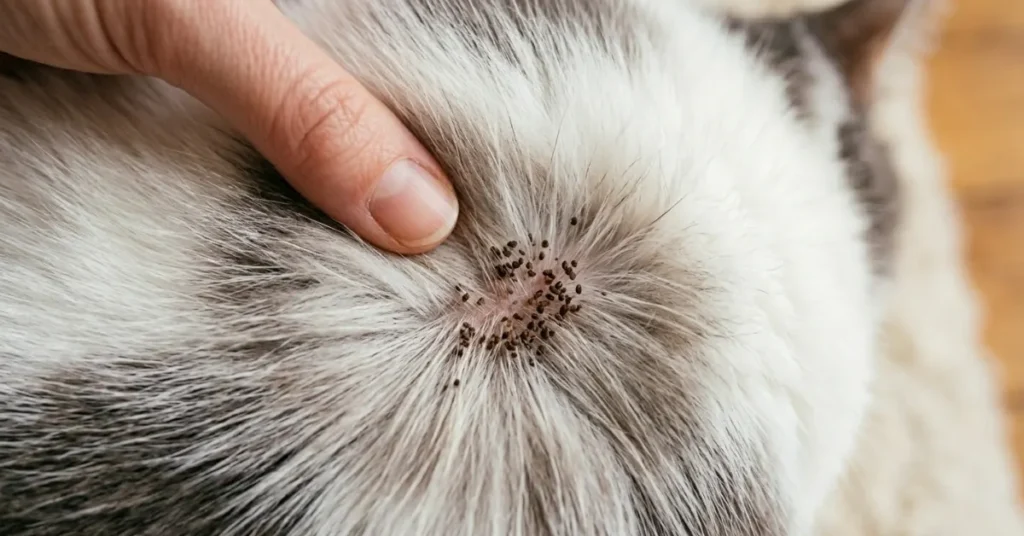
A simple way to confirm flea dirt is to place a few of those specks on a damp white tissue. If a reddish ring spreads out from them, that’s digested blood, and you’re dealing with fleas.
It’s worth knowing that cats are constant groomers, so they’ll often lick and bite fleas off before you ever see one. A cat that looks clean can still be carrying a fair number of fleas, so don’t rule it out just because the coat looks fine.
Why Your Cat Has Fleas Even If They Never Go Outside
This catches a lot of owners off guard. An indoor-only cat can absolutely pick up fleas, and it happens more often than people assume.
Fleas don’t need your cat to step outside to get in. They travel on visiting pets, hitch a ride on your shoes, clothes, or bags without you noticing, and can slip in through gaps near windows and doors that seem secure but aren’t quite sealed. Wildlife nearby, like raccoons, stray cats, or rodents, also drops flea eggs close to homes more often than people realize.
Once a flea makes it inside, it can survive for months in carpet fibers and floor cracks without needing a host at all, especially in warm, humid conditions.
Why Fleas Are So Hard to Get Rid Of
Understanding the flea life cycle explains why so many treatments seem to fail, and why patience matters here.
Fleas move through four stages. Eggs are laid on your cat but fall off within minutes into carpets, bedding, and furniture. From there, larvae hatch and burrow into carpet fibers and floor cracks where they hide and feed. Eventually they form pupae, wrapped in a tough cocoon that nothing, no spray, no powder, no treatment, can penetrate. When conditions are right, adults emerge and jump straight onto the nearest host.
One female flea can lay up to 50 eggs a day, which is why a small problem can turn into a full infestation within two weeks. The pupae stage is the main reason full eradication can take up to three months. The only thing that helps speed it up is frequent vacuuming, since the vibration and warmth trick pupae into hatching early, right when your treatment is in place to catch them.
How to Get Rid of Fleas on Cats
Most flea treatments fail for one simple reason: people treat the cat and stop there. A proper approach covers your cat, every other pet in the house, and every room at the same time. Here’s how that actually breaks down.
Start With a Flea Comb
Before reaching for any product, run a fine-toothed metal flea comb through your cat’s entire coat, paying close attention to the neck, behind the ears, the belly, and the base of the tail. These warm, sheltered spots are where fleas tend to gather.
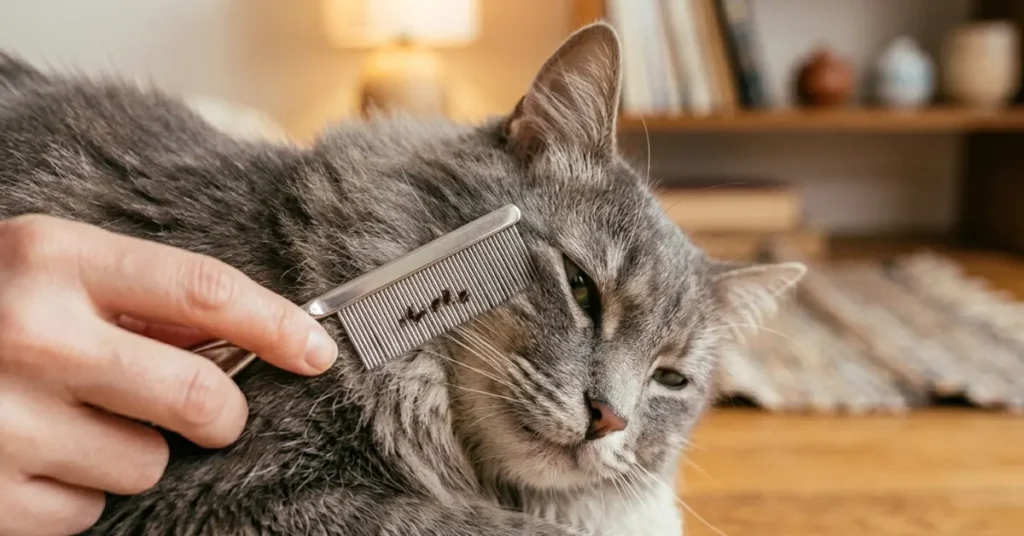
After every few strokes, dip the comb into a bowl of hot soapy water to kill whatever you’ve picked up. Doing this two or three times a day while the infestation is active gives your cat real relief and helps you gauge how bad things actually are before deciding on treatment.
Choose a Treatment That Actually Lasts
Flea shampoos and the powders you’ll find at the supermarket work on contact, but once they dry or wash off, your cat has no protection left. Any flea that jumps on afterward feeds without resistance.
Vet-recommended options work differently. Topical spot-on treatments, applied monthly to the skin at the back of the neck, kill adult fleas and often include insect growth regulators that stop eggs and larvae from developing further, hitting the life cycle at more than one stage. Oral flea medications can kill adult fleas within about 30 minutes, which makes them useful for getting a heavy infestation under control quickly, though they work best paired with a monthly preventative afterward. Flea collars vary a lot in quality, so it’s worth only using one your vet has specifically recommended for your cat.
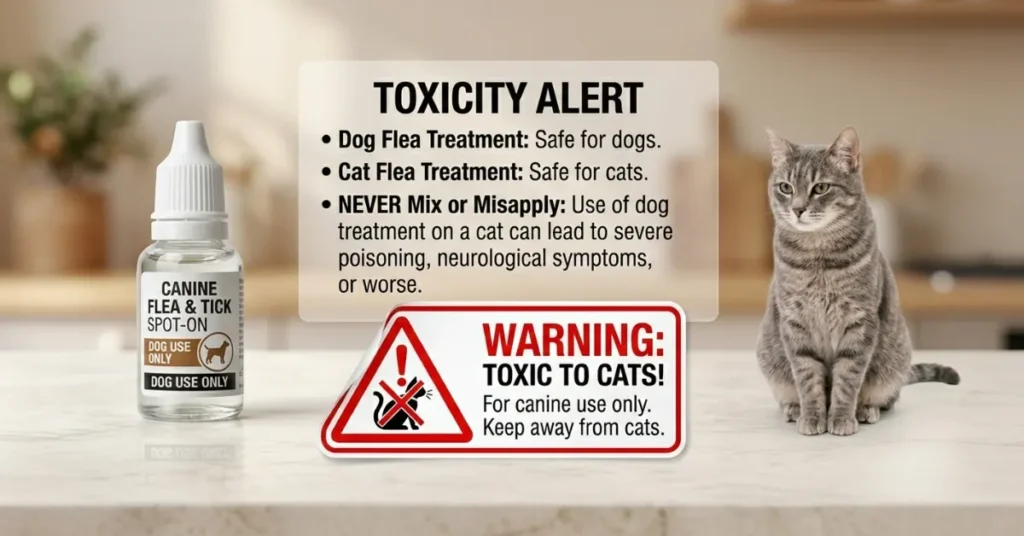
One safety point that can’t be skipped: never use a dog flea product on a cat. Many contain permethrin, which dogs tolerate but is highly toxic to cats, even in small amounts, and can cause tremors, seizures, or worse. The ASPCA’s poison control resources list permethrin as one of the most common causes of feline poisoning reported each year, so always double-check that a product is labeled for cats specifically.
If you’re also thinking about how your cat’s overall diet ties into their health, Pet Veterinary Diets: When Food Becomes Medicine is a useful read alongside this.
If You Have Kittens, the Approach Changes
Most flea treatments aren’t safe for kittens under 8 to 12 weeks old, or under a certain weight, and using an adult product on a young kitten can do real harm.
For kittens under 8 weeks, stick to manual flea combing twice a day, a warm bath with plain, gentle dish soap, and keeping them warm right after so they don’t get chilled. Talk to your vet before trying anything topical or oral. It’s also worth checking a young kitten’s gums during a heavy infestation. Pale pink or white gums can mean anemia from blood loss, and that needs same-day veterinary attention. Anemia also shows up as fast or laboured breathing, since a cat short on red blood cells has to move more air to get the same oxygen.
Treat Your Home at the Same Time
This is the step that determines whether your treatment actually works or just buys you a few weeks. Most of the flea population lives in your home, not on your cat, so your cat is really just the host.
Wash all bedding, blankets, soft toys, and cushion covers on a hot cycle, ideally 60°C or higher. Vacuum every carpet, rug, sofa, and floor crack thoroughly, and empty the canister or bag outside right after. A home flea spray containing an insect growth regulator on carpets and soft furnishings helps, and vacuuming again every two or three days encourages pupae to hatch early so the treatment can actually reach them. Pay extra attention to wherever your cat sleeps or spends most of their time.
One thing to avoid entirely is essential oils as a flea remedy. Tea tree, lavender, and eucalyptus are all toxic to cats, whose livers can’t break down many plant compounds the way ours can. Even diluted, these can cause drooling, tremors, and organ damage.
Treat Every Pet on the Same Day
If you have other cats, dogs, or small pets in the house, treat all of them on the same day. Any animal left untreated becomes a source that reinfests everyone else and restarts the whole cycle.
Stay Consistent With Monthly Prevention
Clearing an active infestation is only half the job. Keeping your cat flea-free afterward means using a vet-approved monthly preventative every month, including through winter. Most recurring flea problems trace back to owners stopping prevention too early or skipping just one month.
What Fleas Actually Do to a Cat’s Health
Show Image
Fleas cause more than itching. Left untreated, they can lead to conditions that need veterinary care. The Cornell Feline Health Center notes that flea infestations remain among the most common, and most preventable, health issues in domestic cats.
Flea allergy dermatitis is the most common flea-related diagnosis, where a single bite triggers an allergic reaction to flea saliva that causes intense itching, scabbing, and sometimes secondary skin infections. Tapeworms can develop after a cat swallows an infected flea while grooming, with small white segments near the tail being the visible sign. Heavy, prolonged infestations can also cause anemia, particularly dangerous in kittens, older cats, or cats already dealing with other health issues, with pale gums as the warning sign. Fleas can also transmit bartonellosis, a bacterial infection that cats can pass on to people through scratches.
When to Call the Vet
Some situations go beyond what you can handle at home. Get in touch with your vet without waiting if your cat’s skin looks broken, oozing, or infected from scratching, if a kitten has pale gums, seems unusually weak, or stops eating, or if you’ve been treating consistently for two weeks with no improvement. The same goes if your cat is pregnant, nursing, very young, or managing a chronic illness, or if you’re simply unsure which product is safe given their age, weight, or health.
Prescription-strength treatments tend to outperform over-the-counter options by a wide margin, and one vet-prescribed product often clears up what months of store-bought treatments couldn’t.
How to Keep Fleas From Coming Back
Prevention takes far less effort than dealing with another full infestation. A vet-approved monthly preventative used consistently, including through the cooler months, is the single most effective habit. Running a flea comb through your cat’s coat weekly as part of normal grooming helps too, along with vacuuming at least twice a week, more often if your cat spends any time outdoors. Washing your cat’s bedding every couple of weeks, discouraging stray animals and wildlife from hanging around your yard, and giving your cat a quick check after they’ve been around unfamiliar animals all add up to meaningfully fewer flea problems down the line.
Frequently Asked Questions
Can an indoor cat actually get fleas?
Yes. Fleas get into homes through shoes, clothing, bags, and contact with visiting pets, so your cat doesn’t need to go outside at all. Monthly prevention is still worthwhile even for strictly indoor cats.
How quickly can a flea infestation get out of control?
Faster than most people expect. A single female flea can lay up to 50 eggs a day, and in warm conditions those eggs mature within about two weeks. One unnoticed flea can turn into thousands of descendants within a month.
Are essential oils a safe natural option for treating fleas?
No. Tea tree, lavender, eucalyptus, and most other essential oils are toxic to cats because their livers can’t process these compounds. Even small, diluted amounts can cause neurological damage or liver failure, so it’s best to avoid them entirely.
Why do fleas keep coming back even after I treat my cat?
Usually because the home wasn’t treated at the same time. With most of the flea population living in your floors and furniture as eggs, larvae, and pupae, new adults keep hatching and jumping straight back onto your cat.
How long until my home is completely flea-free?
Your cat should feel noticeably better within 24 to 48 hours of effective treatment. Clearing the home fully can take up to three months because the pupae stage can’t be killed directly, so consistent treatment and vacuuming throughout that window is what gets you there.
Can fleas from cats bite people too?
Yes. They most often bite the lower legs, leaving itchy red bumps, and in some cases can also pass on tapeworms or bartonellosis to people, particularly young children.
Final Thoughts
Getting rid of fleas on cats comes down to two things happening together: treating your cat with a product that actually works, and clearing your home thoroughly at the same time. Add consistent monthly prevention afterward, and the problem stays resolved.
Most recurring infestations come down to one of those two pieces being skipped, either the home was never treated properly, or prevention stopped after the first clear month. Stay consistent through the weeks it takes to break the cycle, and your cat will be properly comfortable again.