
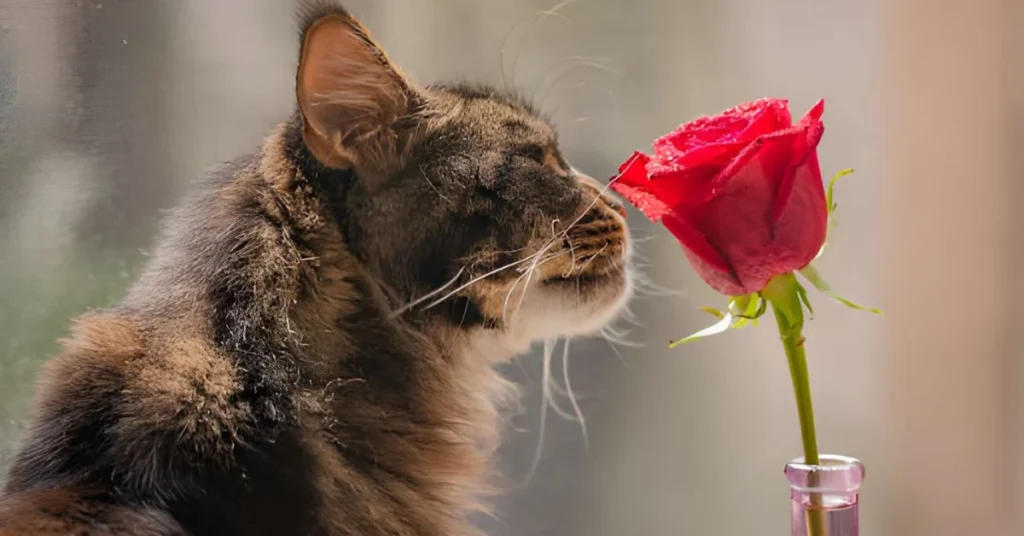

You found your cat nibbling on a rose. Now you are worried, and you want a real answer, not a vague “consult your vet” response.
Here is the truth: true roses are not poisonous to cats. But “not poisonous” does not mean “no risk.” Thorns can injure soft tissue. Pesticides on florist roses can cause real toxicity. Vase water can be contaminated. And some plants called “roses” are genuinely dangerous to cats.
This article covers all of it, clearly and completely, so you can decide exactly what to do right now.
Quick Answer
Roses (genus Rosa) are non-toxic to cats according to the ASPCA. Eating rose petals or leaves may cause mild vomiting or diarrhea, but the plant itself does not contain compounds that cause serious poisoning. The real risks come from rose thorns, pesticides sprayed on cut flowers, contaminated vase water, and toxic plants that share the “rose” name, such as Desert Rose or Christmas Rose.
Are Roses Toxic to Cats?
No. True roses, which belong to the genus Rosa and family Rosaceae, are listed as non-toxic to cats by the ASPCA. This covers all common varieties: hybrid teas, climbing roses, shrub roses, floribunda, and wild roses like Rosa canina and Rosa rugosa.
None of the roughly 150 natural Rosa species contain compounds known to cause organ damage or serious poisoning in cats. This is the most important fact to know.
That said, non-toxic does not mean zero consequence. Cats have a less efficient liver enzyme system (specifically UGT enzymes) compared to humans and dogs, which makes them more sensitive to certain chemicals. This is why pesticides on otherwise harmless plants become a bigger problem for cats than you might expect.
What Actually Happens If a Cat Eats a Rose?
Most cats that eat a petal or two show no symptoms at all. Cats that eat a larger amount, or cats with a sensitive digestive system, may experience mild upset. This usually clears up within 12 to 24 hours without treatment.
Mild symptoms to watch for:
- One or two episodes of vomiting, sometimes with petal pieces visible
- Loose stools or brief diarrhea
- Drooling more than usual
- Reduced appetite for a few hours
These are signs of normal GI irritation, not poisoning. Keep your cat comfortable, make sure fresh water is available, and monitor them closely.
Call your vet immediately if you see: repeated vomiting that does not stop, blood in vomit or stool, difficulty swallowing or breathing, pawing at the mouth, seizures or tremors, collapse, or extreme lethargy. These symptoms suggest thorn injury, pesticide exposure, or that a different, toxic plant was ingested.
The 4 Real Risks Roses Pose to Cats
Roses may not be toxic, but that does not make them completely harmless. There are four specific situations where a rose can genuinely hurt your cat. Knowing these helps you act fast and make smarter choices about flowers in your home.
1. Rose Thorns

Thorns are the most immediate physical danger. A cat that bites down on a thorny stem can puncture the gums, tongue, or inner cheeks. Swallowed thorns are more serious and can injure the esophagus or stomach lining.
Signs of a thorn injury include excessive drooling, pawing at the mouth, reluctance to eat, and visible distress. If you suspect a thorn was swallowed, do not wait to see if it improves. Contact your vet.
2. Pesticides and Fungicides on Cut Roses

This is the danger most cat owners miss. Roses sold at florists, supermarkets, and flower shops are routinely treated with pesticides, fungicides, and preservatives to extend their shelf life. Common chemicals include neonicotinoids and glyphosate, both of which can cause toxicity in cats.
Because cats groom themselves constantly, even residue picked up on paws or fur from brushing against treated stems can be ingested. If your cat interacted with store-bought roses, treat the situation with more caution than you would for garden roses you have grown yourself without chemicals.
3. Contaminated Vase Water
Cut flower vase water is often mixed with flower food packets that contain biocides, acidifiers, and sugar compounds. This water can also accumulate bacteria as flowers decompose. Cats that drink from flower vases are at risk of ingesting these substances. Always keep vase water out of reach and change it regularly.
4. Dyed and Artificially Colored Roses
Blue roses, rainbow roses, and other unusually colored cut flowers are created using artificial dyes and chemical colorants. The safety of these compounds for cats is not well studied, and ingestion could cause stomach irritation or unknown systemic effects. Keep dyed roses away from cats entirely, and move them out of the house completely before leaving a cat alone for a day or more, because nobody will be there to notice the chewing.
Toxic “Rose” Plants That Are Not True Roses
This is where genuine danger lies. Several popular plants carry the word “rose” in their common name but belong to completely different plant families and can cause serious harm to cats.
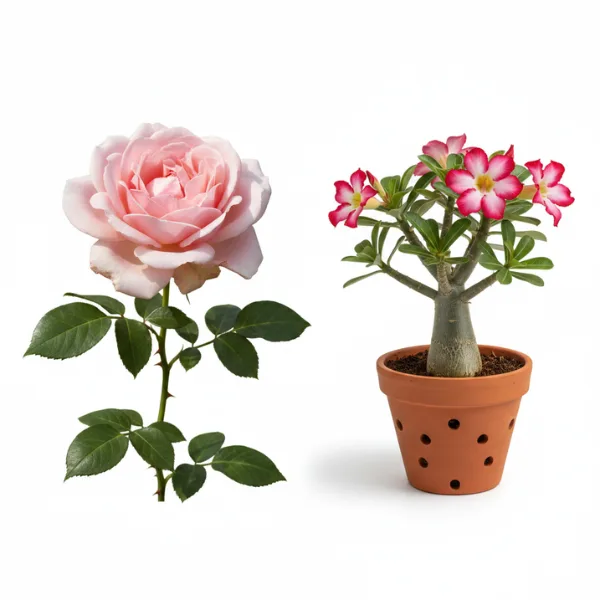
| Plant Name | True Rose? | Toxic to Cats? | Risk Level |
|---|---|---|---|
| Garden Rose (Rosa spp.) | Yes | No | Low (thorns, pesticides only) |
| Desert Rose (Adenium obesum) | No | Yes | High (cardiac glycosides) |
| Christmas Rose / Hellebore | No | Yes | High (saponins, glycosides) |
| Moss Rose / Portulaca | No | Yes | High (kidney damage risk) |
| Rosebay / Rhododendron | No | Yes | Severe (can be fatal) |
| Primrose (Primula spp.) | No | Yes | Moderate (GI, skin reactions) |
If you are not certain which plant your cat ate, treat it as potentially toxic and call your vet or the ASPCA Animal Poison Control Center at (888) 426-4435 right away.
Roses That Are Safe vs. Unsafe: At a Glance
To quickly compare your situation:
- Garden rose from your own yard, no sprays used: Very low risk. Watch for mild GI upset only.
- Store-bought or florist rose: Moderate risk due to pesticides and preservatives. Monitor carefully.
- Dyed or artificially colored rose: Unknown risk. Keep away from cats.
- Plant with “rose” in name but not a Rosa species: Potentially high risk. Contact vet immediately.
What to Do Right Now If Your Cat Ate a Rose
- Stay calm. True roses are non-toxic, and panic does not help you or your cat.
- Remove your cat from the plant immediately to prevent further ingestion.
- Check your cat’s mouth carefully for thorn punctures or plant material stuck in the gums.
- Identify the rose. Was it from a garden or a shop? Was it a true Rosa species?
- Check whether the flowers were treated with pesticides or came with flower food packets.
- Observe your cat for 24 hours and note any symptoms.
- Do not induce vomiting unless your vet specifically instructs you to do so.
- Call your vet if symptoms are severe, persistent, or if you are unsure what plant was eaten.
If your cat is showing unusual breathing changes alongside other symptoms after plant contact, this could signal a more serious reaction. Learn more about what heavy or labored breathing in cats can mean and when it requires emergency care.
How to Keep Roses and Cats Safely Together
You do not have to choose between your flowers and your cat. These steps reduce risk significantly:
- Place cut roses in high vases on shelves your cat cannot reach or jump to
- Remove thorny lower stems before bringing roses indoors
- Always cover or discard vase water; never leave it accessible
- Buy organic or untreated roses when possible, especially if your cat roams freely
- Use citrus-scented deterrent spray near rose plants, as cats dislike citrus strongly
- Keep roses in rooms you can close off from your cat
- Consider cat-safe flower alternatives like sunflowers, snapdragons, orchids, or African violets
Frequently Asked Questions
Are rose petals poisonous to cats?
No. Rose petals from true Rosa species are not poisonous to cats. Eating them may cause mild stomach upset, but the petals do not contain any compound that causes serious toxicity in felines.
What happens if a cat eats a rose?
Most cats show no reaction at all. Some may vomit once or twice or have loose stools for a short time. Symptoms typically resolve within 12 to 24 hours. Serious symptoms are more likely if pesticides were on the rose or if a thorn was swallowed.
Are wild roses safe for cats?
Yes. Wild roses such as Rosa canina and Rosa rugosa are also non-toxic to cats. The same thorn injury risk applies, but the plant material itself is harmless.
Can cats drink water from a rose vase?
No. Vase water from cut flowers often contains flower food packets with biocides and chemical preservatives. It can also harbor bacteria from decomposing stems. Always keep vase water out of your cat’s reach.
What flowers are actually dangerous for cats?
Lilies are the most dangerous, as even tiny amounts can cause fatal kidney failure in cats. Other highly toxic plants include oleander, sago palm, azalea, tulip bulbs, cyclamen, and yew. For a full list, see the ASPCA toxic plant database.
Should I go to the vet if my cat ate a rose?
If the rose was from your own untreated garden and your cat seems fine, you can monitor at home. Call your vet if the rose came from a florist, if a thorn was swallowed, if your cat shows persistent or worsening symptoms, or if you are unsure what plant was eaten.
What is the poison control number for cats?
The ASPCA Animal Poison Control Center is available 24 hours a day at (888) 426-4435. The Pet Poison Helpline is available at (855) 764-7661. A consultation fee may apply to both services.
The Bottom Line
True roses are not poisonous to cats. If your cat ate a petal from a garden rose, you can take a breath. The plant itself will not cause serious harm.
The real risks are thorns, pesticides on florist roses, contaminated vase water, and the genuine danger of mistaking a toxic “rose-named” plant for a true rose. Know what you have in your home, act quickly if symptoms appear, and when in doubt, call your vet or the ASPCA Poison Control line rather than waiting.
Keeping your cat safe starts with knowing what is in your home. For more practical cat health guides written in plain language, visit Petnicki.com, where you can find clear, honest information on cat symptoms, behavior, and everyday care.