
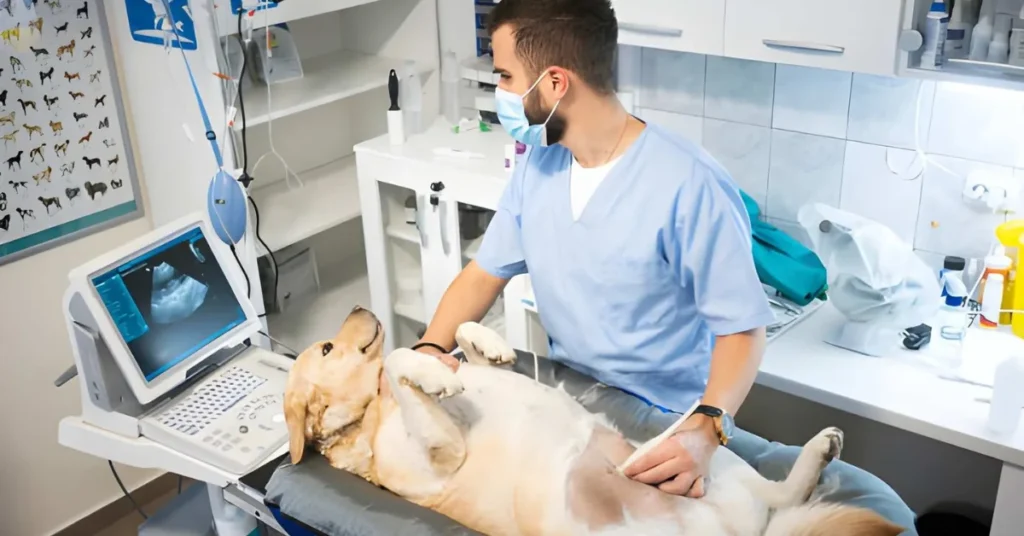

If you think your dog might be pregnant, or you are planning to breed her, you probably have a lot of questions. It is normal to feel uncertain. Dog pregnancy moves fast, and knowing what to expect at each stage makes a real difference.
This guide covers how long dogs are pregnant, what signs to watch for week by week, how vets confirm pregnancy, and how to prepare for the birth of a new litter.
Quick Answer: How Long Are Dogs Pregnant?
Dogs are pregnant for 58 to 68 days, with the average canine gestation period lasting 63 days from the date of ovulation. That works out to roughly two months. The exact length can vary by a few days depending on when ovulation occurred and litter size, but it stays consistent across all dog breeds and sizes.
Why Pinpointing the Due Date Can Be Tricky
You might assume you can count 63 days from the date of mating and land on an accurate due date. In practice, it is not that simple.
A male dog’s sperm can survive inside the female reproductive tract for several days. When the female ovulates, the egg still needs two to three more days before it can be fertilized. This means a dog can mate days before or after ovulation and still become pregnant, making the breeding date alone an unreliable predictor.
The most accurate way to estimate a due date is through progesterone blood testing, which tracks hormone levels to identify when ovulation actually occurred. Without hormone testing, most vets estimate delivery at 62 to 65 days from the last known breeding date.
Dog Pregnancy Week by Week
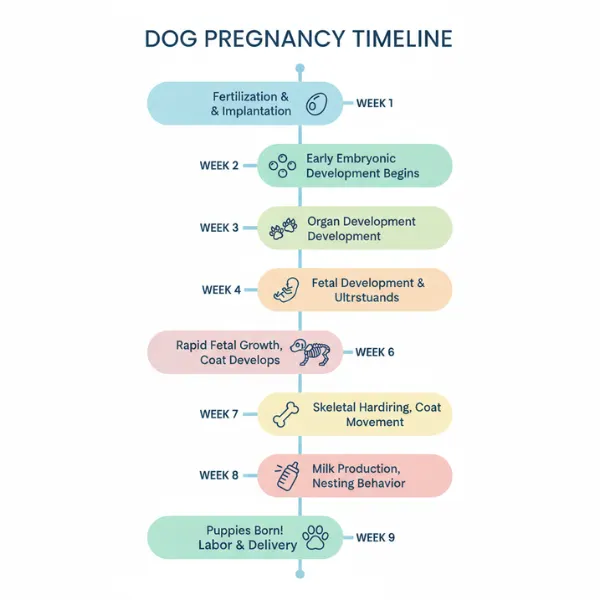
Dog pregnancy is divided into three trimesters, each lasting roughly three weeks. Changes in the first trimester are mostly internal and easy to miss.
Weeks 1 and 2: Fertilization
After mating, sperm fertilizes the eggs and embryos begin to form. Your dog will show no outward signs of pregnancy yet. Her energy and appetite should stay normal.
Week 3: Early Embryo Development
The embryos travel to the uterus and begin to implant in the uterine lining. Some dogs experience mild nausea around this time. Like humans, some dogs suffer from morning sickness and will vomit in the early stages of pregnancy.
Other subtle signs at this stage include:
- A slight decrease in appetite
- Increased tiredness or restlessness
- More affectionate behavior toward their owner
Week 4: Confirmed Pregnancy Window
This is when most vets can confirm pregnancy. A vet can perform gentle abdominal palpation between days 21 and 35 to feel for individual fetal swellings. Ultrasound is also reliable from around day 25 onward, when the embryos are large enough to be visible on a scan.
This is a good time to schedule your first prenatal vet visit if you have not already.
Weeks 5 and 6: Rapid Fetal Growth
The fetuses grow quickly during this phase. After around 40 days, once your dog enters her final trimester, fetal growth accelerates significantly. You will start to notice more obvious physical changes:
- An enlarged and rounded abdomen
- Darker and more prominent nipples
- Clear or slightly milky vaginal discharge
- A noticeably increased appetite
This is also the time to begin increasing her food intake gradually. Switch to a high-quality puppy or growth formula diet, as recommended by VCA Animal Hospitals, which supports both fetal development and future milk production.
Week 7: X-Ray and Litter Count
An abdominal X-ray during the last two weeks of pregnancy is the most accurate method for counting puppies before birth. Knowing how many puppies to expect is important so you know when labor is complete and do not miss a retained puppy.
At this point your dog may also start nesting behavior, circling, pawing at blankets, and seeking out a quiet and private space.
Weeks 8 and 9: Final Days Before Labor
Labor is approaching. Your dog may:
- Lose her appetite in the final 24 to 48 hours
- Become restless or pace around the house
- Pant more than usual even without exercise
- Have a drop in rectal temperature below 99 degrees Fahrenheit (37.2 degrees Celsius)
This temperature drop is one of the most reliable signs that whelping is coming, usually within 12 to 24 hours. Set up a whelping box in a warm and quiet area well before this point so she has time to get comfortable with it.
How Vets Confirm Dog Pregnancy
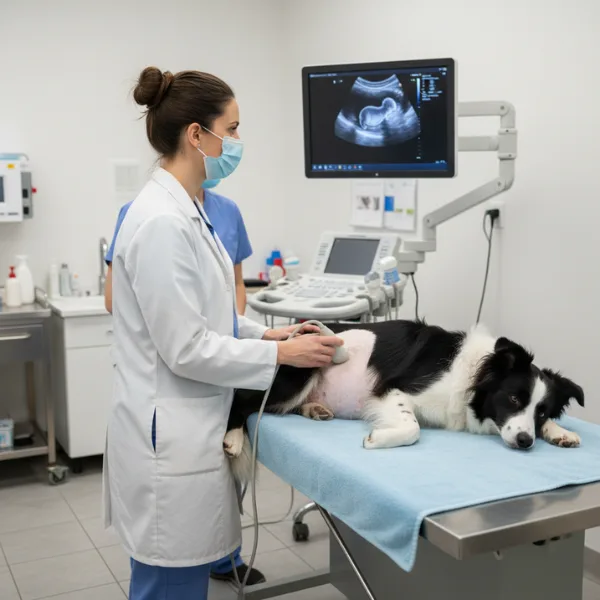
There are four main methods vets use, each suited to a different stage of pregnancy.
Relaxin hormone blood test: Detects the pregnancy hormone relaxin. The dog must be at least 30 days into her pregnancy for an accurate result. Earlier tests can produce false negatives.
Abdominal palpation: The vet gently feels the abdomen for fluid-filled fetal sacs. This works best between days 21 and 35 of gestation.
Ultrasound: The preferred early method. Can detect a fetus as early as day 20, though day 28 onward is most reliable for estimating litter size.
X-ray: Best done in week 7 or later. The most accurate way to count puppies before birth because fetal skeletons are visible by then.
For a detailed breakdown of what to expect after the puppies arrive, the Petnicki puppy growth chart is a helpful reference to bookmark now.
The Three Stages of Dog Labor

Labor in dogs happens in three distinct stages. Each stage has its own signs and timeline. Knowing what is normal at each point helps you stay calm.
Stage 1: Cervix Dilation (12 to 24 Hours)
Contractions begin internally. Your dog may seem restless, pant heavily, refuse food, and seek solitude. This stage ends when the cervix is fully dilated. You may not realize it has started because there are no visible contractions yet.
Stage 2: Delivery of Puppies
Each puppy is typically born within 30 minutes of active pushing. Up to two hours between puppies is considered normal as long as your dog is not actively straining the entire time.
Puppies can be born head-first or tail-first, and both are normal presentations. If more than two hours pass between puppies and your dog is actively straining without a delivery, contact your vet immediately.
Stage 3: Delivery of the Placentas
Each puppy has its own placenta. Count them carefully because one placenta per puppy should be delivered. A retained placenta can lead to serious uterine infection.
Contact your vet if labor lasts more than 24 hours total, or if your dog strains continuously for more than 30 minutes without a puppy being born.
Pregnancy Nutrition: What to Feed a Pregnant Dog
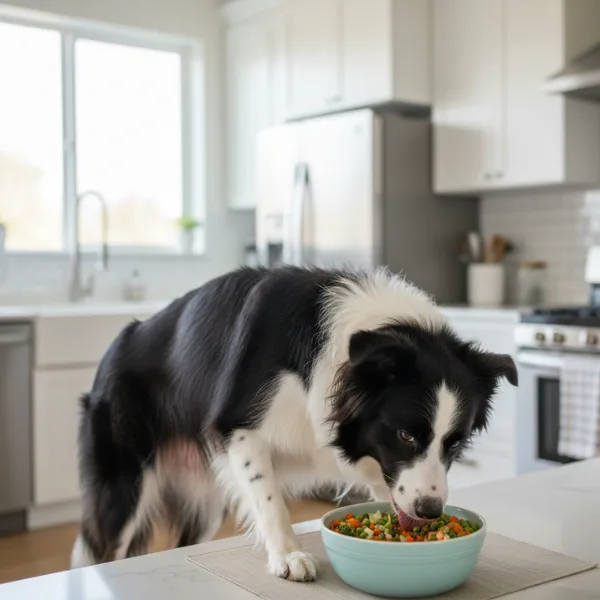
Diet matters more during pregnancy than at almost any other time in a dog’s life.
Weeks 1 to 6: Continue her regular adult food. Monitor her weight and avoid overfeeding, as excess weight gain during early pregnancy can cause complications.
Weeks 6 to 9: Increase calories by 25 to 50 percent. Feed smaller meals more frequently as her abdomen becomes crowded with growing puppies.
After birth: Her caloric needs peak during nursing. A high-quality puppy food helps maintain milk production and her own body condition.
PetMD’s guide on dog pregnancy nutrition offers vet-reviewed guidance on feeding through each trimester.
Always check with your vet before adding supplements. Some vitamins and minerals can cause harm during early gestation, particularly in the first 30 days when organ development is happening.
Signs of a Problem During Labor: When to Call the Vet
Most dogs give birth without complications. But some situations require urgent veterinary attention:
- No puppies after 24 hours of stage one labor beginning
- More than two hours of active straining without a puppy being born
- Green or black discharge appearing before the first puppy arrives
- Visible signs of severe pain or extreme distress
- A puppy visibly stuck in the birth canal
Save your vet’s emergency contact number before your dog reaches week 8. Do not wait until labor begins to look it up.
FAQ: Dog Pregnancy Questions Answered
How do I know if my dog is pregnant without visiting a vet? Early signs include subtle nipple changes, mild nausea, increased tiredness, and slight appetite shifts. However, these signs are easy to miss or misread. A vet visit around day 25 to 30 is the only reliable way to confirm pregnancy.
Can a dog’s gestation period be shorter than 58 days? Delivery before day 58 is considered premature. Puppies born this early may not survive without intensive veterinary care. If your dog goes into labor very early, contact your vet immediately rather than waiting to see how things develop.
Do larger dog breeds have longer pregnancies than smaller ones? Not significantly. The average gestation of 63 days applies to all breeds. Large litters may deliver slightly earlier and small litters slightly later, but the difference is rarely more than one or two days.
Can a dog get pregnant during her very first heat cycle? Yes. Dogs can become pregnant during their first heat, which usually starts between six and eighteen months of age. Most responsible breeders wait until the dog is physically and mentally mature before breeding, typically after the second or third heat.
How many puppies can a dog have in one litter? Litter size varies widely by breed and individual. Small breeds commonly have one to four puppies. Large breeds can have eight or more. An X-ray in week seven gives the most accurate count before whelping begins.
Is it normal for a dog to eat the placentas after giving birth? Yes. This is instinctive behavior. One or two placentas are generally harmless for the mother. Eating all of them can cause digestive upset. You do not need to intervene unless she is consuming every single one.
Conclusion
Dogs are pregnant for around 63 days, roughly two months, from the point of ovulation. The pregnancy moves through clear stages, with most visible signs appearing in the second half of the gestation period. Early vet involvement, good nutrition, and a prepared whelping space are the three most important things you can do to support a healthy outcome for both mother and puppies.
Once the litter arrives, the weeks ahead are just as important to track. For a clear guide on what to expect as your puppies grow, explore Petnicki’s puppy growth chart and age-weight guide, which breaks down development week by week so you always know what is normal.