
Every pet owner has experienced those pleading eyes at the dinner table. Your furry companion watches intently as you eat, hoping for just a small taste of your meal. While sharing food with pets seems like an act of love, certain human foods can range from mildly upsetting to potentially fatal for our animal companions.
Understanding which foods are safe and which pose serious health risks is essential for responsible pet ownership. This comprehensive guide provides current, science-backed information to help you make informed decisions about feeding human food to your pets.
Why Human Food Affects Pets Differently
The digestive systems of dogs and cats evolved differently from humans. What our bodies process efficiently can overwhelm or poison our pets. Understanding proper pet nutrition is crucial for keeping your furry friends healthy. Several factors contribute to this difference:
Metabolic Variations
Pets metabolize substances at different rates. Chocolate contains theobromine, which humans break down quickly but remains in a dog’s system much longer, potentially reaching toxic levels.
Size Matters
A small amount of food that seems harmless to a 70kg human can represent a massive dose for a 5kg cat or 10kg dog. Proportional toxicity becomes a critical concern.
Enzyme Deficiencies
Many pets lack specific enzymes humans possess. Cats cannot efficiently process certain plant compounds, while dogs struggle with lactose as they mature.
Biological Needs
Cats are obligate carnivores requiring specific amino acids like taurine found primarily in meat. Dogs are omnivores but still have different nutritional requirements than humans.
Dangerous Foods: The Critical Avoid List
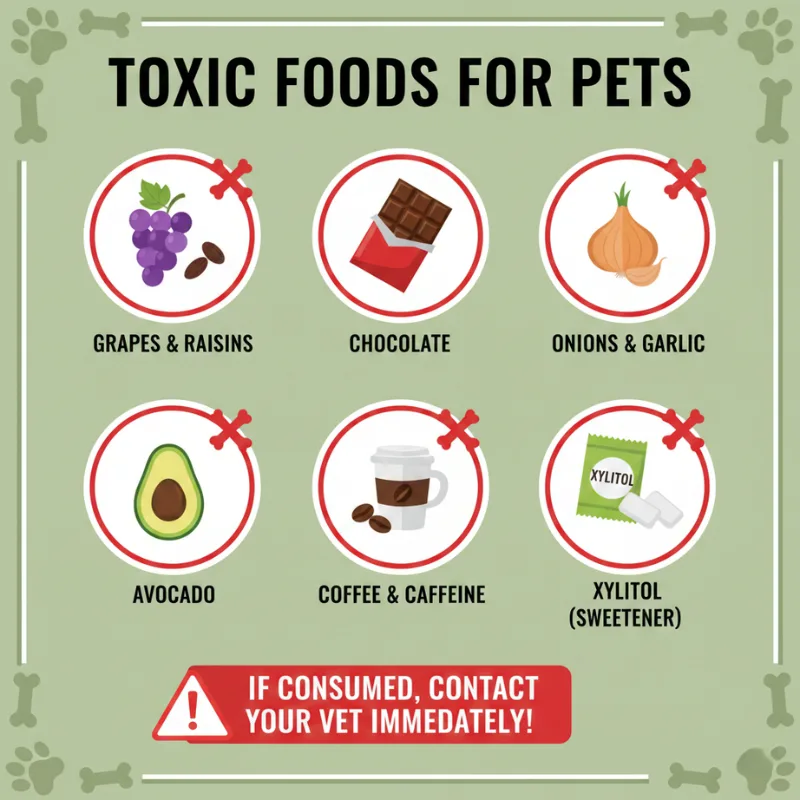
These foods are extremely toxic to pets and should never be given under any circumstances. Even small amounts can cause severe illness or death, making complete avoidance essential for your pet’s safety.
Chocolate and Caffeine
These remain among the most dangerous substances for pets. Theobromine and caffeine belong to a class of chemicals called methylxanthines that stimulate the nervous system. According to the American Kennel Club, even small amounts of chocolate can be harmful to dogs.
Dark chocolate and baking chocolate contain the highest concentrations and pose the greatest risk. Even small amounts can cause vomiting, diarrhea, rapid breathing, increased heart rate, and seizures. In severe cases, chocolate ingestion proves fatal.
Coffee, tea, energy drinks, and caffeine pills present similar dangers. Keep all caffeinated products completely out of reach.
Grapes and Raisins
The exact toxic compound in grapes remains unidentified, but the effects are well-documented. Even tiny quantities can trigger acute kidney failure in dogs. Individual sensitivity varies dramatically some dogs tolerate small amounts while others experience severe reactions from just a few grapes.
Symptoms include vomiting, lethargy, and decreased urination. Kidney failure may develop within 24 to 72 hours. Since there’s no way to predict which dogs are susceptible, complete avoidance is essential.
Onions, Garlic, and Related Vegetables
All members of the allium family onions, garlic, leeks, chives, and shallots damage red blood cells in both dogs and cats. This damage leads to hemolytic anemia, where the body destroys its own blood cells faster than it can produce new ones. Not every kitchen spice is in that category, though; cinnamon sits in a different risk class, and so does xanthan gum.
Garlic is particularly concentrated and dangerous. Symptoms may not appear for several days and include weakness, pale gums, orange-colored urine, and collapse. Both raw and cooked forms are toxic, including powdered versions in seasonings.
Xylitol (Artificial Sweetener)
This sugar substitute appears in sugar-free gum, candy, baked goods, peanut butter, and many diet products. In dogs, xylitol causes rapid insulin release, leading to severe hypoglycemia within 30 minutes of ingestion.
Symptoms include vomiting, loss of coordination, seizures, and collapse. Higher doses can cause liver failure. Always check ingredient labels, as xylitol appears in unexpected products including some medications and supplements.
Alcohol and Yeast Dough
Alcohol affects pets far more severely than humans. Even small amounts from spilled drinks, fermenting fruits, or unbaked bread dough can cause intoxication, respiratory depression, and metabolic disturbances.
Unbaked yeast dough presents a dual threat. It expands in the warm, moist stomach environment, potentially causing dangerous bloat. As the yeast ferments, it produces alcohol, leading to alcohol poisoning.
Macadamia Nuts
These nuts specifically affect dogs, causing weakness in the hind legs, vomiting, tremors, and hyperthermia. While rarely fatal, symptoms are distressing and can last up to 48 hours. The toxic mechanism remains unknown, but the effects are consistent.
Avocado
Persin, found throughout the avocado plant, poses risks primarily to birds, rabbits, and livestock. Dogs and cats show more resistance, but the high fat content can trigger pancreatitis. The large pit also presents a choking hazard and intestinal blockage risk.
Fatty and Fried Foods
Rich, fatty foods overwhelm the pet digestive system. Bacon, fried chicken, fatty meat trimmings, and oily foods can cause pancreatitis a painful and potentially life-threatening inflammation of the pancreas. If it has already happened, here is what treatment actually involves.
Symptoms include vomiting, abdominal pain, fever, and lethargy. Chronic exposure to high-fat foods increases obesity risk and associated health problems.
Foods Requiring Caution
While not immediately toxic, these foods can cause digestive upset, long-term health issues, or problems in certain pets. Moderation and careful monitoring are essential when offering these items.
Dairy Products
Most adult dogs and cats develop lactose intolerance after weaning. Their bodies produce insufficient lactase enzyme to properly digest milk sugar. Consuming dairy often results in digestive upset, diarrhea, and gas.
Small amounts of cheese or yogurt may be tolerable for some pets, but monitor carefully. Hard cheeses contain less lactose than milk or ice cream.
Bones
While seemingly natural for pets, cooked bones become brittle and splinter easily, creating sharp fragments that can pierce the digestive tract. Poultry bones are especially dangerous.
Raw bones present less splintering risk but can still cause tooth fractures, choking, or intestinal blockages. If offering bones, provide large, raw beef marrow bones under supervision, and remove them before they become small enough to swallow.
Salt and Salty Snacks
Excessive sodium causes increased thirst and urination. In severe cases, salt toxicity leads to sodium ion poisoning with symptoms including vomiting, diarrhea, tremors, elevated body temperature, and seizures.
Chips, pretzels, salted nuts, and processed foods contain levels inappropriate for pets. Even salt dough ornaments pose risks if consumed.
Raw Eggs and Meat
Raw eggs contain avidin, an enzyme that interferes with biotin absorption, potentially causing skin and coat problems. Raw eggs may also carry salmonella bacteria.
Raw meat carries bacterial contamination risks including salmonella and E. coli. While some advocate raw diets, proper handling and sourcing are critical. Consult veterinarians before implementing raw feeding protocols.
Safe Human Foods for Pets

Good news many human foods are perfectly safe and even beneficial for pets when given properly. These nutritious options make excellent treats and training rewards in appropriate portions.
Lean Proteins
Cooked chicken, turkey, and lean beef make excellent occasional treats. Remove all bones, skin, and excess fat. Plain, unseasoned meat provides high-quality protein without additives that might upset digestion.
Fish like salmon and tuna offer omega-3 fatty acids beneficial for skin, coat, and joint health. Ensure fish is fully cooked and boneless.
Certain Fruits
Apples (without seeds), blueberries, watermelon, and bananas provide vitamins and antioxidants. Remove all seeds and pits, as many contain cyanide compounds.
Cut fruits into appropriate sizes to prevent choking. The high sugar content means fruits should remain occasional treats rather than dietary staples.
Select Vegetables
Carrots, green beans, cucumber, and cooked sweet potato offer nutrients and fiber. Many dogs enjoy carrots as crunchy treats that help clean teeth.
Steam or cook vegetables for easier digestion. Avoid seasoning with butter, salt, or garlic.
Plain Rice and Oatmeal
These bland carbohydrates soothe upset stomachs and provide energy. Plain, cooked white or brown rice and oatmeal are safe in moderation. Avoid flavored instant varieties containing sugar and additives.
Peanut Butter
Natural peanut butter without xylitol makes an excellent treat and medication delivery method. Choose unsalted varieties with minimal ingredients. The high fat and calorie content means small amounts go far.
Plain Popcorn
Air-popped popcorn without butter, salt, or seasonings provides a low-calorie crunchy treat. Avoid unpopped kernels that present choking hazards and can damage teeth.
Portion Control and Treat Guidelines
Even safe foods should follow the 10% rule: treats and human foods should comprise no more than 10% of daily caloric intake. The remaining 90% should come from nutritionally complete commercial pet food or veterinarian-approved homemade diets.
Consider your pet’s size when determining portions. A treat appropriate for a large breed dog could represent a huge caloric load for a small cat.
Special Considerations for Cats
Cats have unique nutritional requirements as obligate carnivores. Learning about cat care essentials helps ensure your feline friend gets proper nutrition. They need:
- Taurine: Essential amino acid found primarily in animal tissue
- Arachidonic Acid: Fatty acid they cannot synthesize from plant sources
- Vitamin A: They cannot convert beta-carotene from vegetables into usable vitamin A
- High Protein: Cats require significantly more protein than dogs or humans
Many human foods nutritionally appropriate for dogs remain unsuitable for cats. Focus on animal-based proteins when offering treats to feline companions.
Signs of Food Toxicity
Recognize these warning signs requiring immediate veterinary attention:
- Vomiting or diarrhea, especially if severe or bloody
- Lethargy or unusual weakness
- Loss of appetite
- Excessive drooling
- Difficulty breathing
- Tremors, seizures, or loss of coordination
- Pale gums
- Increased thirst and urination
- Abdominal pain or bloating
Time is critical with food toxicity. Don’t wait to see if symptoms resolve. Contact your veterinarian or animal poison control immediately.
Emergency Response

If your pet consumes something potentially toxic:
- Don’t Panic: Stay calm to think clearly
- Identify the Substance: Note what was eaten, how much, and when
- Contact Your Veterinarian: Call immediately for guidance
- Have Information Ready: Pet’s weight, symptoms observed, and substance details
- Don’t Induce Vomiting: Unless specifically instructed by a veterinarian
- Bring Packaging: If visiting the emergency clinic, bring product packaging
The ASPCA Animal Poison Control Center provides 24/7 consultation at (888) 426-4435. For more pet safety tips, visit PetNicki.
Creating a Pet-Safe Home
Prevention remains the best protection:
- Store all foods in secure cabinets or containers
- Keep trash cans covered and inaccessible
- Educate family members and guests about feeding rules
- Avoid leaving food unattended on counters or tables
- Be mindful during holidays when toxic foods are more prevalent
- Consider pet-specific treats designed for nutritional needs
Final Thoughts
Sharing food with pets strengthens bonds and provides enrichment, but safety must come first. While many human foods pose serious health risks, others offer nutritional benefits when given appropriately. Every pet has individual health needs, sensitivities, and dietary requirements, so what works safely for one animal may cause problems for another. Your veterinarian remains your best resource for nutritional guidance tailored to your pet’s specific needs, age, health status, and lifestyle. Remember that commercial pet foods undergo extensive research and testing to provide complete, balanced nutrition human food treats should enhance, not replace, this foundation. When in doubt, stick to foods specifically formulated for pets or consult your veterinarian. By making informed choices about what you share from your plate, you demonstrate true love and responsible care for your four-legged family members.