
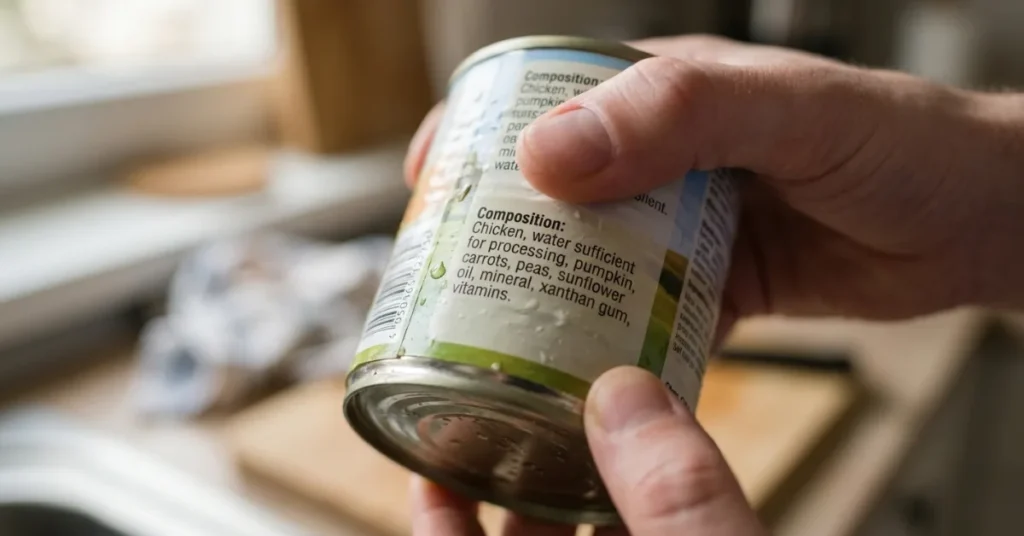

You spotted “xanthan gum” on your dog’s food label, and now you’re wondering if you should be worried. That’s a fair question, and you’re not the only pet owner asking it. Xanthan gum shows up in a lot of wet food, treats, and even some medications, so it’s worth understanding what it actually does before you decide whether to avoid it. In this guide, we’ll walk through what xanthan gum is, whether it’s bad for dogs, how it compares to similar additives, and what signs to watch for if your dog has a sensitive stomach.
Xanthan gum is not toxic to dogs. It’s a fermentation-derived thickener made from sugars, most often corn, soy, or wheat, and it’s used in small amounts to keep pet food smooth and stable. Most dogs tolerate it fine. A small number may get mild digestive upset, especially in large amounts.
What Is Xanthan Gum, and Why Is It in Dog Food?
Xanthan gum is made by fermenting sugar with a specific bacteria strain, then drying the result into a fine powder. Manufacturers add it to food and treats because it thickens liquid, keeps ingredients from separating, and gives wet food that gel-like texture dogs seem to like.
You’ll find it in:
- Canned and pouch wet dog food
- Some dental chews and soft treats
- Certain liquid supplements or medications
- Gravy-style toppers
It’s not there for nutrition. It’s there for texture and shelf stability. That’s an important distinction, since it means the amount in a typical serving of dog food is quite small.
So, Is Xanthan Gum Bad for Dogs?
For most healthy dogs, no. Xanthan gum is approved for use in human and pet food, and it passes through the digestive tract largely unchanged. It’s not absorbed in a way that builds up in the body, and it doesn’t carry the same risks as things like xylitol or chocolate.
That said, “safe” doesn’t mean “risk-free for every dog.” A few things matter:
- Dose matters. Commercial pet food contains only a small percentage of xanthan gum. Eating a bag of pure xanthan gum powder is a different story than eating food that contains it as one ingredient among many.
- Sensitive stomachs react differently. Dogs with existing gastrointestinal issues, food allergies, or inflammatory bowel conditions may notice more gas, softer stools, or mild bloating.
- Fiber-like effect. Xanthan gum absorbs water and can have a mild laxative effect in larger quantities, similar to eating too much fiber at once.
If your dog eats a normal serving of food containing xanthan gum, there’s generally nothing to worry about.
Signs Your Dog May Be Sensitive to Xanthan Gum
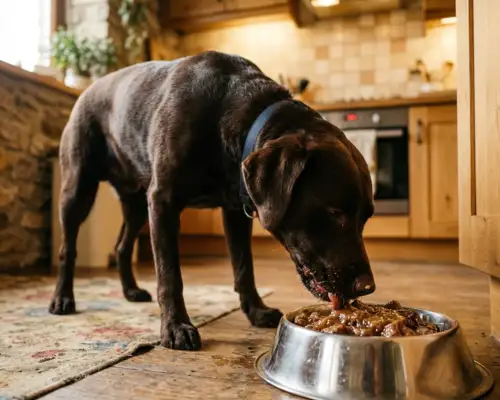
Every dog’s digestive system reacts a little differently to food additives. Watch for these signs after introducing a new food that contains xanthan gum:
- Loose stool or diarrhea
- Excess gas or bloating
- Reduced appetite
- Vomiting (uncommon, but possible in sensitive dogs)
Mild symptoms that clear up in a day or two usually aren’t a concern. Symptoms that persist, worsen, or come with lethargy are a good reason to call your vet.
Xanthan Gum vs. Guar Gum vs. Locust Bean Gum
Xanthan gum rarely travels alone. It’s often listed near other gums on pet food labels, and owners frequently ask which one is gentler on digestion.
Guar gum comes from guar beans rather than fermentation. It’s a thicker, more viscous additive, and some formulas use it specifically because it’s considered gentle for sensitive stomachs. Is guar gum bad for dogs? Generally, no. It’s used in similar small amounts and carries a similar safety profile to xanthan gum.
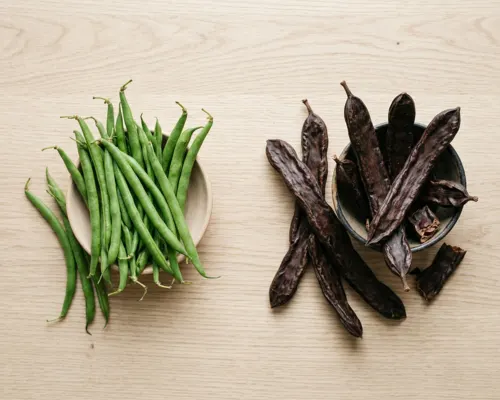
Locust bean gum comes from the seeds of the carob tree. It’s often paired with other gums to improve texture without needing much of any single ingredient. Locust bean gum in dog food is considered safe in typical amounts, and it’s a common choice in limited-ingredient formulas.
Here’s a quick side-by-side:
| Additive | Source | Common Use | General Safety |
|---|---|---|---|
| Xanthan gum | Fermented sugar (corn, soy) | Thickening wet food | Safe in small amounts |
| Guar gum | Guar bean | Thickening, gentler texture | Safe in small amounts |
| Locust bean gum | Carob seed | Texture stabilizer | Safe in small amounts |
None of these three are considered toxic. The main difference between them is texture and how a specific dog’s gut happens to respond, not toxicity risk. If your dog does better on one versus another, that’s usually about individual sensitivity rather than one ingredient being inherently worse. For a broader look at which everyday ingredients are fine to share and which ones to skip, this human food safety guide for pets is a useful reference to keep on hand.
Is Xanthan Gum Safe for Cats Too?
Yes, xanthan gum is generally considered safe for cats in the same small amounts found in commercial pet food. Cats can be a bit more particular about digestion than dogs, so some owners notice softer stools if a cat eats a large amount of a gum-thickened food quickly. A closer look at additive tolerance in cats can help if you’re managing a multi-pet household with different sensitivities.
What to Do If Your Dog Eats a Lot of Xanthan Gum
If your dog gets into a bag of pure xanthan gum powder (used in baking or gluten-free cooking, for example), that’s a different situation than eating flavored dog food. Larger amounts can cause more noticeable stomach upset because the powder absorbs water quickly in the gut.
Steps to take:
- Note how much your dog likely ate.
- Offer fresh water and monitor for vomiting, diarrhea, or bloating.
- Call your vet or an animal poison control line if your dog ate a large quantity or shows discomfort.
- Avoid inducing vomiting unless a vet tells you to.
For most dogs, even a larger accidental taste settles down within a day. This overview of common dog food additives walks through other stabilizers you might see on a label alongside xanthan gum.
How to Read Pet Food Labels for Gum Additives
Xanthan gum, guar gum, and locust bean gum are usually listed by name in the ingredient panel, often clustered together near the middle or end of the list. That placement matters, since ingredients are listed by weight. A gum showing up near the top of a short ingredient list is worth noting, though this is still rare for these additives.
If your dog has a known sensitivity:
- Introduce new foods gradually over 5 to 7 days
- Keep a simple food journal if symptoms show up
- Ask your vet about limited-ingredient formulas if gums seem to be a pattern
- Compare labels across a few brands, since gum type and amount vary
A practical breakdown of gum-based additives and dog reactions is worth a look if you want more detail on how veterinarians typically categorize these ingredients by risk level.
The Bottom Line
Xanthan gum isn’t something most dog owners need to worry about. It’s a common, well-studied thickener that shows up in small amounts across a lot of pet food, and it’s generally safe for both dogs and cats. The exception is sensitive dogs, who may show mild digestive symptoms, and dogs who eat a large amount of the pure powder rather than a normal serving of food.
If you’re ever unsure whether an ingredient is right for your dog, your vet is the best resource for advice specific to your pet’s health history. Checking labels and watching how your dog responds to new foods is a simple habit that goes a long way toward keeping mealtime worry-free.
FAQ
Is xanthan gum toxic to dogs?
No. Xanthan gum is not classified as toxic. It’s a food-grade thickener that’s safe in the small amounts found in commercial dog food.
Can dogs eat xanthan gum every day?
Yes, if it’s part of a normal serving of commercial food. It’s used in tiny quantities and isn’t something dogs need to avoid long term.
What happens if my dog eats a lot of pure xanthan gum?
Larger amounts can cause stomach upset, gas, or diarrhea since the powder absorbs water quickly in the gut. Contact your vet if your dog shows discomfort.
Is guar gum safer than xanthan gum for dogs?
Not necessarily safer, just different. Guar gum is often marketed as gentler for sensitive stomachs, but both are considered safe in typical amounts.
Is xanthan gum safe for cats?
Yes, in the small amounts found in cat food. Cats with sensitive digestion may show softer stools if they eat a large amount quickly.
Should I avoid pet food with xanthan gum?
Only if your pet has shown a specific sensitivity to it in the past. For most pets, there’s no need to avoid it.