


If your dog has ever stared at your plate of spicy food with those hopeful eyes, you already know the struggle. You want to share. They look so convincing. But before you give in, it is worth understanding what spicy food actually does to a dog’s body, because the answer matters more than most people realize.
You might assume dogs either love heat or feel nothing at all. The truth sits somewhere more complicated, and a bit more concerning.
This guide breaks down how dogs experience spicy food, what capsaicin does inside their system, which ingredients make certain spicy foods genuinely dangerous, and what to do if your dog already ate something hot.
Short Answer: Dogs cannot enjoy spicy flavors the way humans do. With roughly 1,700 taste buds compared to a human’s 9,000, their sense of taste is far less detailed. But spicy is not really a taste at all. It is a pain signal. Dogs have the same pain receptors that react to capsaicin, so they absolutely feel the burn. The result is mouth irritation, stomach upset, and real discomfort with zero upside for your pet.
How Dogs Actually Taste Things
A dog’s tongue works very differently from ours. Their taste buds detect four basic qualities: sweet, sour, salty, and bitter. That is it. None of the rich, complex flavor layering that humans experience. Dogs rely far more on their sense of smell to evaluate food than on actual taste.
The Water Taste Receptor Most Owners Do Not Know About
One fun fact most people do not know: dogs have special taste receptors near the tip of the tongue that are sensitive specifically to water. These become more active after eating something salty or sweet, which encourages drinking. It is a built-in hydration system of sorts.
Because their taste sense is limited, subtle or complex flavors like spice simply do not register the way they do for us. A dog smells the food first, picks up on the fat and protein signals, and decides whether to eat. The heat itself? That comes after, and it is not pleasant.
Spicy Is Not a Taste. It Is Pain.
This is the part that changes how most people think about it.
Capsaicin, the active compound in hot peppers, does not trigger taste buds. It activates a pain and heat receptor called TRPV1. When capsaicin binds to this receptor, the brain receives a message that something is burning. Nothing is actually burning. No tissue damage is happening in that moment. But the body cannot tell the difference, so it reacts as if there is real heat.
Why Dogs Cannot Build a Tolerance the Way Humans Do
Dogs have TRPV1 receptors in their mouth, throat, esophagus, stomach, and intestines. Every surface capsaicin touches will fire off that same burning signal. For humans, years of eating spicy food can build a kind of tolerance and even enjoyment. Dogs have no such framework. They did not grow up associating the burn with flavor, culture, or pleasure. For them, it is just an unpleasant, confusing pain with no clear cause and no end in sight.
What Actually Happens When a Dog Eats Something Spicy
The reaction usually starts within minutes. You might notice your dog suddenly pawing at their mouth, drooling more than usual, sneezing, or rubbing their face on the floor. These are all signs of oral irritation.
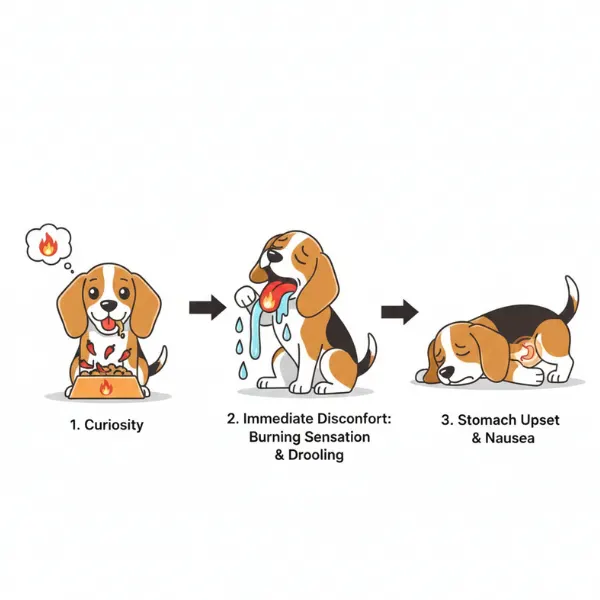
A few hours later, the digestive phase kicks in. The capsaicin that passed through the stomach and intestines causes inflammation in the gut lining. This leads to stomach pain, vomiting, diarrhea, and excessive gas.
Symptoms to Watch For
Right away:
- Heavy drooling
- Pawing at the face
- Sneezing or coughing
- Whining or unusual restlessness
- Drinking water frantically
Within a few hours:
- Vomiting
- Loose stool or diarrhea
- Bloating and gas
- Signs of stomach pain (hunching, reluctance to move)
According to the Whole Dog Journal, repeated exposure to spicy food can create a conditioned taste aversion in dogs, where they start refusing foods that smell similar to what caused them pain before. This can make future feeding more difficult and stressful for both you and your dog.
Which Spicy Foods Carry the Most Risk
Not every spicy food creates the same level of danger. Some are harmful mainly because of capsaicin. Others have extra ingredients that push them from uncomfortable into genuinely toxic territory.
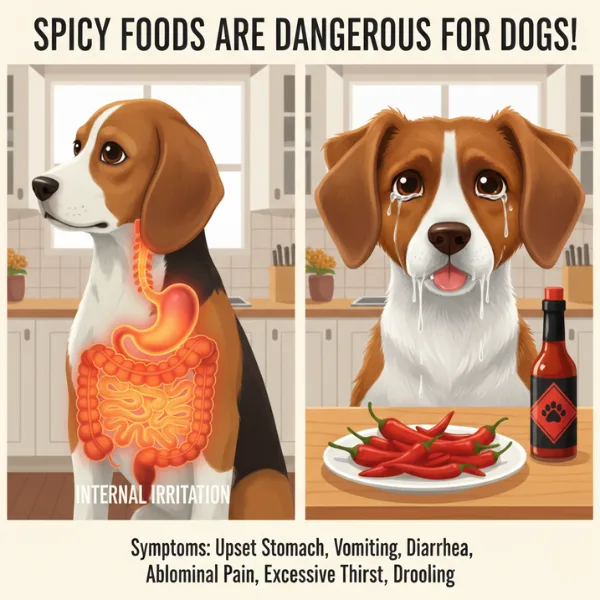
Jalapenos
A single bite causes real oral burning and stomach upset. Most dogs will not want a second bite once the pain starts, but some persistent dogs will keep eating if the food is mixed into something else.
Hot Sauce
This one is more dangerous than it looks. Most hot sauces contain garlic and onion in addition to capsaicin. Both garlic and onion are toxic to dogs and can damage red blood cells over time, leading to a condition called hemolytic anemia. Even small repeated doses matter here.
Cayenne Pepper
One of the most concentrated capsaicin sources. If a dog inhales cayenne powder, it causes respiratory distress and sneezing. If swallowed, the internal burning is intense. Some people apply cayenne to garden areas or furniture to keep dogs away, but this method is not recommended by veterinarians.
Chili and Curry Dishes
These typically combine capsaicin with garlic, onion, and other seasonings. The combination makes them far more dangerous than a plain hot pepper.
What about small amounts? Even a small quantity of capsaicin causes pain and mouth irritation. It is unlikely to be life-threatening in small doses, but there is no reason to expose your dog to any of it.
If you are curious about how other pets handle spice differently, this article on how cats respond to spicy food covers the key differences in how feline and canine biology processes these compounds.
What to Do If Your Dog Already Ate Spicy Food
Do not panic. Most accidental exposures are uncomfortable but manageable.

First, remove any remaining spicy food from reach. Then give your dog access to fresh water and let them drink as much as they want. Do not offer milk as a remedy. Some sources suggest it because milk proteins can bind to capsaicin, but most dogs are lactose intolerant and the resulting digestive upset can make the situation worse, not better.
Offer something bland instead. Plain boiled rice or unseasoned cooked chicken helps calm the stomach lining.
When to Call the Vet
Watch your dog for four to six hours. If vomiting or diarrhea is mild and settles on its own, they will likely recover without treatment. If symptoms are severe, the dog is very small, or you know the spicy food also contained garlic or onion, call your vet right away. You can also reach the ASPCA Animal Poison Control Center at (888) 426-4435 at any hour.
Do not try to induce vomiting unless a vet specifically instructs you to.
Safe Flavor Additions for Your Dog
Dogs do not need spice to enjoy food. Their sense of smell is so powerful that even plain cooked meat smells extraordinary to them. But if you want to add variety to their meals, a few herbs are safe in small amounts.
Herbs That Are Safe
Generally safe (with vet approval):
- Parsley
- Dill
- Thyme (avoid Spanish thyme)
- Rosemary in very small quantities
Herbs and Spices to Always Avoid
- Garlic and garlic powder
- Onion and onion powder
- Chives
- Chili powder and paprika
- Nutmeg
- Black pepper in large amounts
For a broader look at how animals differ in their experience of flavor, the cat taste facts guide at Petnicki offers an interesting comparison that many pet owners find useful.
A Note on Using Spicy Food as a Deterrent
Some dog owners apply cayenne pepper or hot sauce to furniture legs, cords, or garden beds to discourage chewing and digging. It does work as a deterrent because the smell and taste are unpleasant. But it is not a kind method, and veterinarians generally advise against it.
Better Alternatives to Cayenne
A dog that sniffs cayenne can inhale the particles and experience significant respiratory irritation. A dog that licks hot sauce off a surface gets the same internal burning as if they swallowed it directly. Commercial bitter sprays are non-toxic, designed specifically for this purpose, and just as effective without the risk.
Frequently Asked Questions
Can dogs taste spicy food at all?
They can detect some of the flavor compounds, but spicy heat itself is not a taste. It is a pain response triggered by capsaicin binding to TRPV1 receptors. Dogs feel the burn, they just do not experience it as an interesting flavor.
My dog ate a jalapeno. Should I call the vet?
Watch them for a few hours. Expect drooling, some vomiting, and loose stool. For a medium or large dog, one jalapeno is usually uncomfortable but not dangerous. If symptoms are severe or your dog is small, call your vet.
Is capsaicin actually toxic to dogs?
Capsaicin alone is not classified as toxic in small doses. The bigger risk with most spicy foods is the other ingredients, especially garlic and onion, which are genuinely toxic to dogs and require immediate veterinary attention.
Why does my dog keep trying to eat spicy food?
Most likely it is the smell of surrounding ingredients, fat, meat, or seasoning, that is attracting them. Dogs have 300 million olfactory receptors. They are chasing the smell, not the heat.
Can puppies eat spicy food?
No. Puppies have more sensitive digestive systems than adult dogs. Even a small amount of capsaicin can cause significant distress. Keep all spicy food well out of reach.
How do I stop my dog from stealing spicy food?
Train a reliable “leave it” command using positive reinforcement and high-value dog-safe treats. Keep plates and dishes on high surfaces or behind barriers. Never feed your dog from your plate, because it teaches them that human food is worth pursuing.
In Summary
Dogs feel the burn from spicy food as genuine pain, and they get nothing positive from it. No flavor reward, no health benefit, and no pleasure. Capsaicin irritates their mouth and gut, and many spicy dishes also carry toxic ingredients that go well beyond simple discomfort.
Keep spicy food away from your dog. If they eat some accidentally, stay calm, give water, and watch for symptoms. When in doubt, a quick call to your vet is always the right move.
For more practical guides on what dogs and cats can safely eat and how their senses actually work, Petnicki covers these topics in clear, vet-informed detail.