

Reverse sneezing in dogs is a reflex in which the dog pulls air in through the nose in loud, rapid bursts, usually because the back of the nose or throat is irritated. The Cornell Riney Canine Health Center says most episodes are sporadic and mild and need no treatment. The harder question is when frequent episodes point to something else.
Below, the vet-school advice sits next to the first published clinical study of the problem, a 2022 case series of 30 dogs from the University of Murcia, so you can tell what to do at home from what deserves an appointment.
What a Reverse Sneeze Looks and Sounds Like
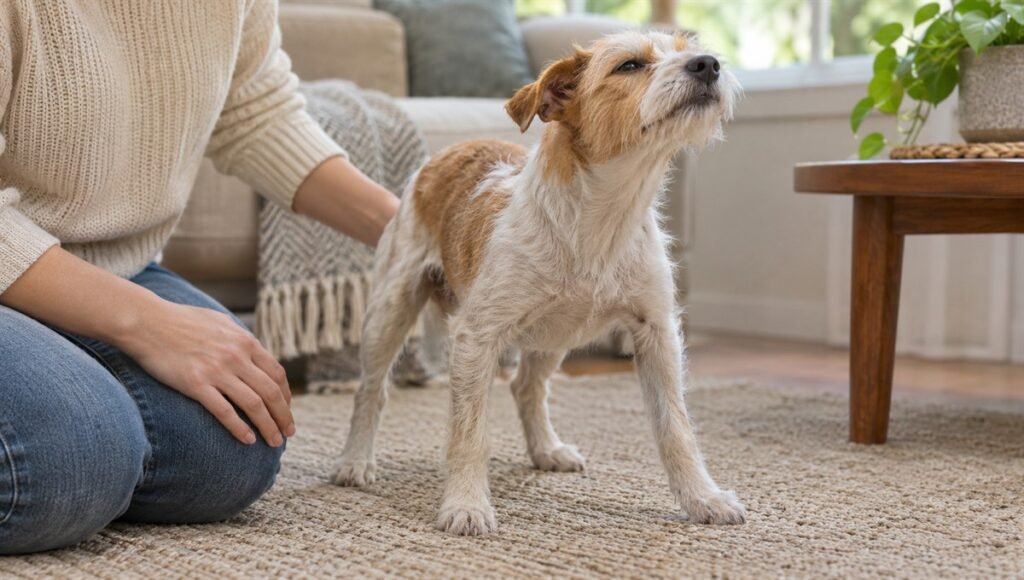
During a reverse sneeze the dog usually stands still, stretches the neck out and takes repeated, forceful breaths inward, according to VCA Animal Hospitals, and most episodes last from a few seconds to a minute. A normal sneeze pushes air out of the nose, and a reverse sneeze does the opposite.
Cornell adds that the elbows tend to point outwards, the nostrils flare, the mouth stays closed and the lips pull back. During an episode the glottis, the opening to the windpipe, is closed. VCA says the dog is typically normal before and after, and that is the pattern to hold on to.
The noise frightens owners. Veterinary Partner, the VIN owner-information site, says it can sound like the honking of a collapsing trachea, so it advises having a vet confirm it the first time you see it — and that is sensible advice for a frightening sound.
What Sets Off Reverse Sneezing in Dogs
Anything that irritates the nose, sinuses or back of the throat can trigger an episode, and Cornell notes that in many cases no cause is ever identified. It says the reflex may simply be a way of clearing dust, allergens or other irritants from the upper airway.
Cornell’s other triggers include excitement, pulling hard on the lead, eating or drinking too fast, plant material in the airway, infections, nasal mites, masses and an elongated soft palate. Veterinary Partner adds perfumes, household chemicals and a collar or tag pressing on the throat.
Size matters too. Cornell says it is reported more often in dogs under 15 kg and in flat-faced breeds, and VCA names pugs and bulldogs. Cornell sees it at any age, in males and females alike.
Helping Your Dog Through an Episode
Most episodes end without help. If you want to speed things up, the vet-school advice is to stay calm and encourage a swallow. The sources between them give a short list of options:
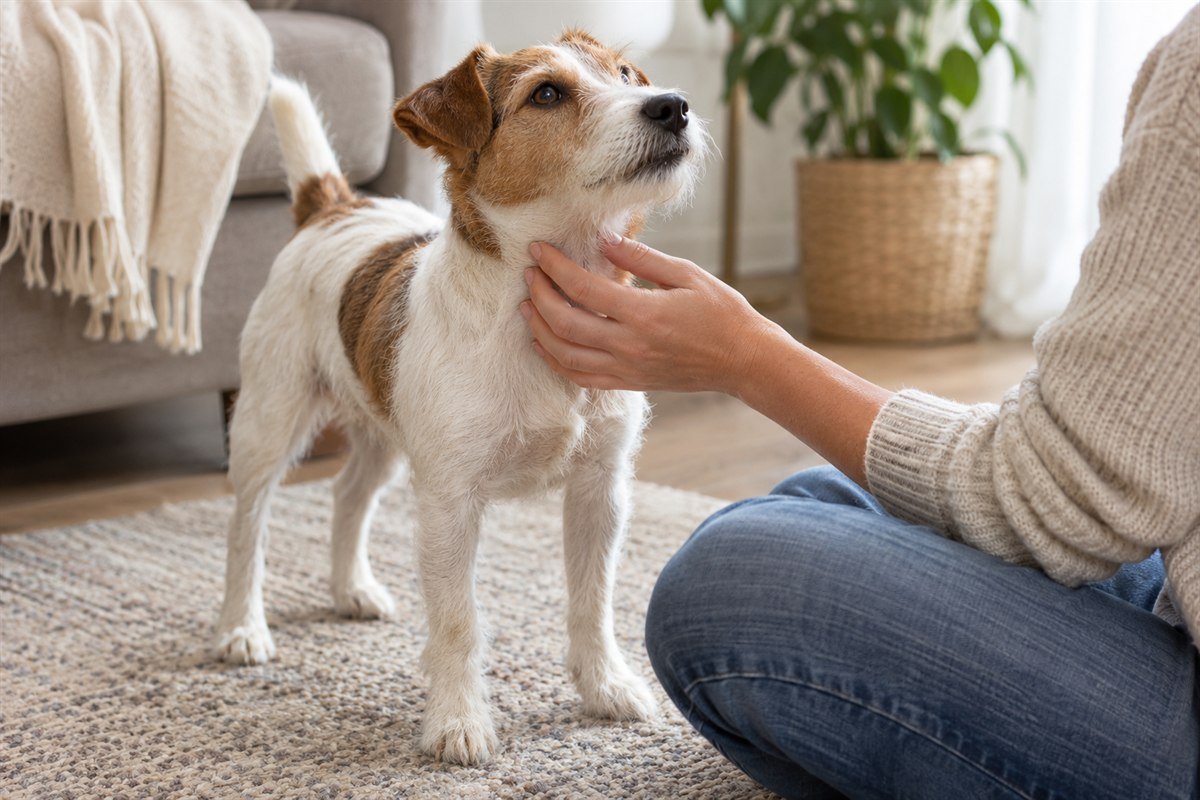
- Stroke the neck or head to calm the dog (VCA).
- Gently massage the throat (Cornell and Veterinary Partner).
- Hold the nostrils closed for a few seconds so the dog swallows (Cornell and Veterinary Partner).
- Offer something to lick or drink (VCA), or blow in the dog’s face (Cornell).
If the trigger is something in the room, such as a spray or perfume, Veterinary Partner points out that taking the dog outside helps simply because the dog stops breathing it in.
Reverse Sneezing in Dogs: What a 30-Dog Study Found
The first clinical study of reverse sneezing, by its authors’ account, reviewed 30 dogs with confirmed episodes at the University of Murcia’s veterinary teaching hospital. Seventeen had airway inflammation, eight had an anatomical or functional problem, three had a foreign body and two had no cause found.
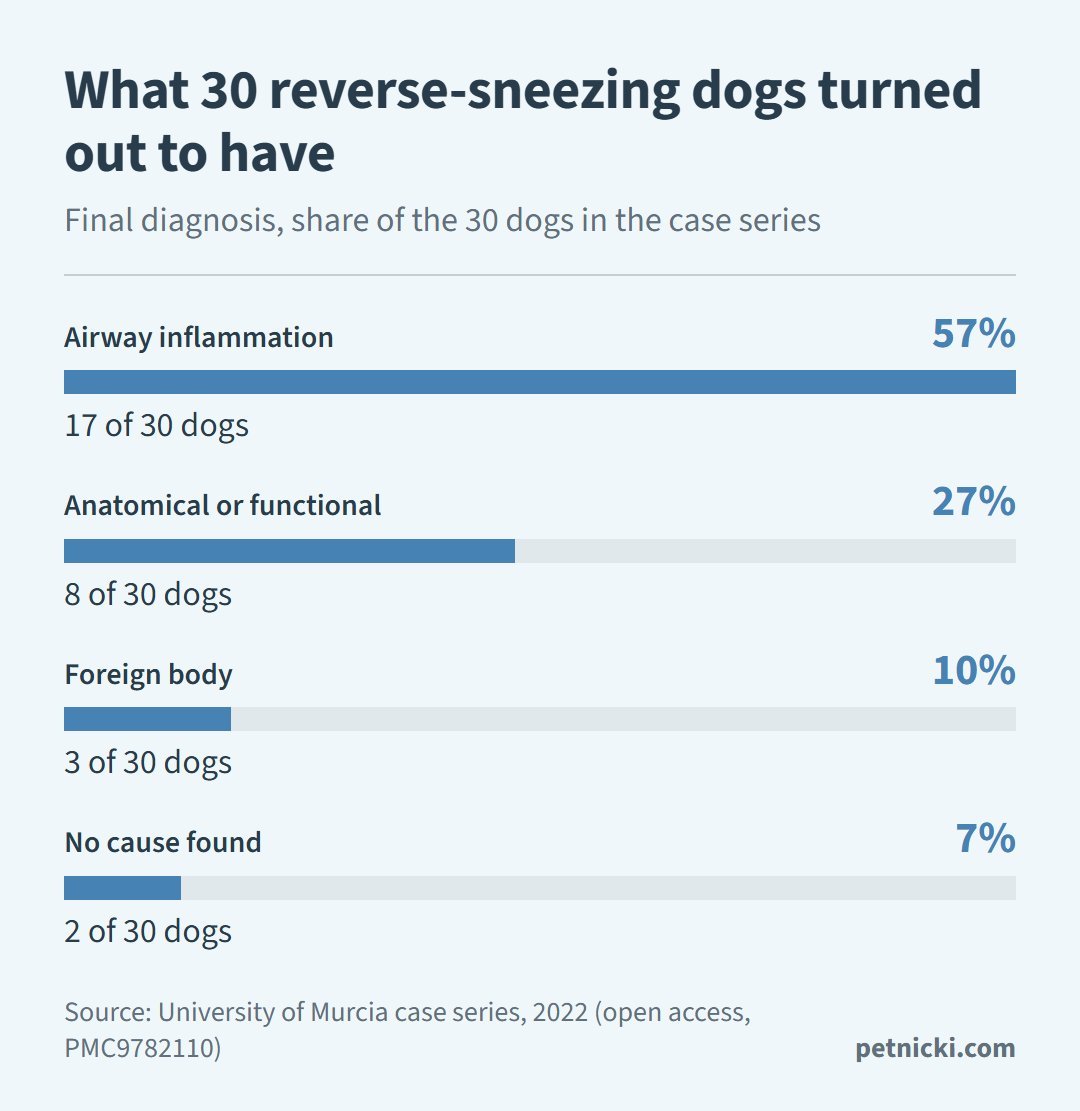
Referral dogs, all of them. The team started from 114 records and kept only dogs with confirmed episodes, complete files and an airway endoscopy, so the sample leans towards cases that needed a deeper look. Half the dogs weighed under 5 kg, and the authors put the dominance of small dogs down partly to the referral setting. The study can’t tell you how often a pet’s reverse sneeze means disease.
What it does show is the worrying end of the range. Nineteen of the 30 dogs had another respiratory sign, most often coughing, exercise intolerance, nasal discharge or ordinary sneezing. Eighteen had episodes at least once a week, and 18 had been having them for more than three months. For ten dogs it was the only sign.
Treatment was less tidy than the vet-school pages suggest. Of the 23 dogs with follow-up, episodes stopped in nine and carried on in 14, even after investigation and treatment. A vet visit is worth having, but it doesn’t guarantee a tidy ending.
When to Ask Your Vet About Reverse Sneezing
An occasional episode in a dog that is normal before and after fits the harmless pattern that VCA and Cornell describe. The Murcia dogs suggest a visit when episodes are frequent, have run for weeks, or arrive with coughing, nasal discharge or tiring on walks.
A dog that isn’t back to normal once an episode ends doesn’t match the pattern VCA describes, though that is an inference and not a rule from the source. A post in r/MiniatureSchnauzer, with 106 upvotes, describes the repeat-offender picture:
“For the past 2–3 months, he’s been having these reverse sneezing episodes multiple times a day, pretty much every single day. What’s weird is that he NEVER used to do this before.”
– r/MiniatureSchnauzer, October 2026 (106 upvotes)
That owner’s vet took an X-ray, saw no sign of a collapsed trachea and thought allergies were possible. A commenter on the same thread, with 6 upvotes, reported a different answer:
“Yes. It was a dental problem that affected her nasal passage and caused an infection revealed via intra-oral x-rays.”
– r/MiniatureSchnauzer, October 2026 (6 upvotes)
That is one dog’s story, not a pattern, but it shows why a vet may need more than one test. Cornell says a dog with frequent or severe episodes may first be treated for allergies and mites. If signs persist, the next steps are a sedated oral exam, head X-rays and rhinoscopy, a camera look up the nose.
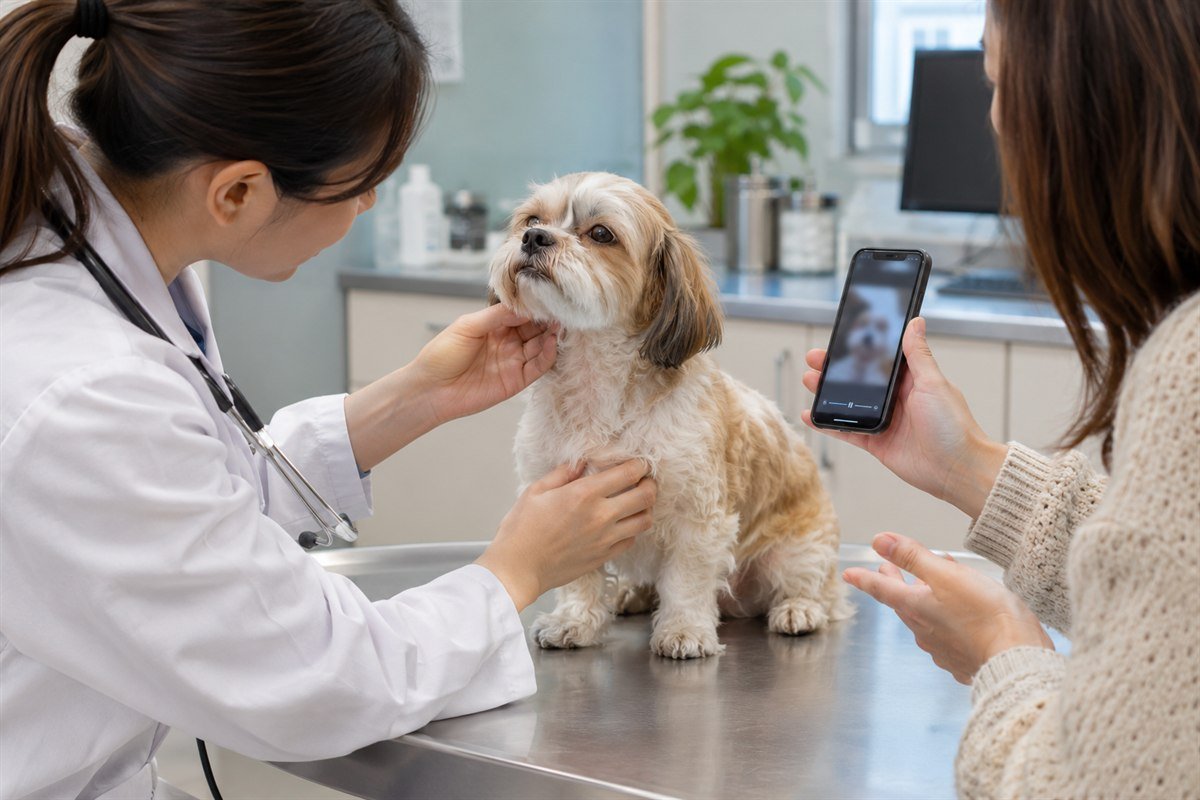
Film an episode on your phone before you go. The Murcia team confirmed reverse sneezing from video recordings supplied by owners, as well as from direct observation, and a clip gives the vet something to see if the dog is quiet in the consulting room. The tip itself comes from none of the sources. This is general information, not a diagnosis, so talk to your vet if the episodes worry you.
A reverse sneeze that comes now and then and leaves no trace is common. One that keeps coming back, or arrives with other signs, deserves a name. The cat sneezing guide on this site covers the feline side, since Veterinary Partner says a cat making this noise should be examined for asthma.