
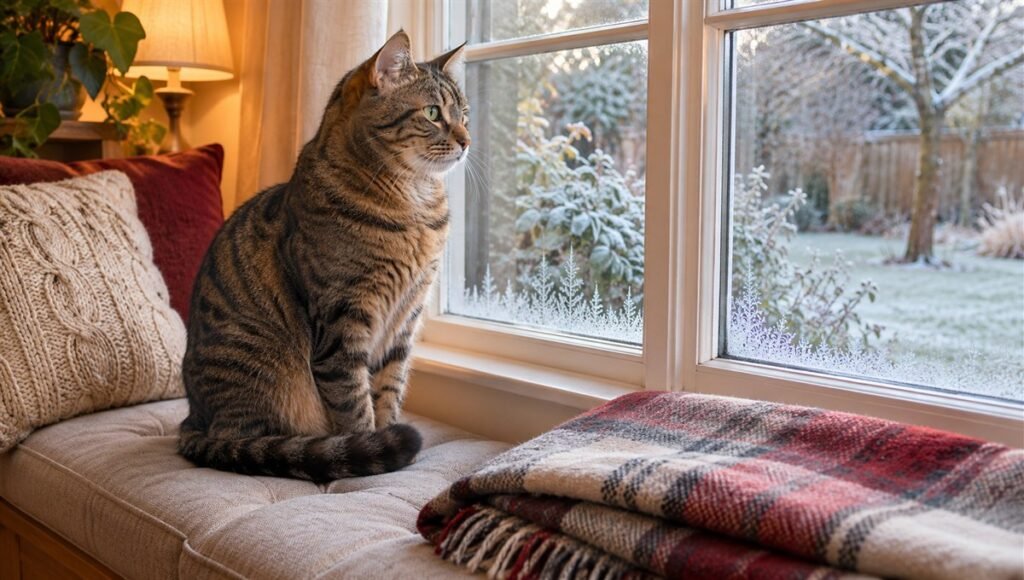

How cold is too cold for cats? PetMD says most healthy adult cats are uncomfortable between 32°F and 45°F (0°C to 7°C) over a prolonged period, that vulnerable cats feel it from 50°F (10°C), and that every cat risks frostbite and hypothermia below 32°F with prolonged exposure. Cats Protection adds that a cat in a warm house needs no extra heating unless the room falls to 45°F.
The question hides three situations: a cat outside, a cat in a cool room, and a cat that is already showing signs. The answers differ, though the 45°F figure keeps turning up.
How Cold Is Too Cold for Cats? The Four PetMD Bands
PetMD’s guide, written by Sandra C. Mitchell, DVM, and updated on 3 December 2025, splits the answer by temperature and by which cats are affected. Its bands run from vulnerable cats at 50°F to 60°F down to every cat below 32°F.
| Temperature | Cats affected | What PetMD says happens |
|---|---|---|
| 50°F to 60°F (10°C to 16°C) | Cats with significant weight loss or conditions such as arthritis | May be significantly uncomfortable |
| 45°F to 50°F (7°C to 10°C) | Small, thin-coated or hairless cats, and older or young cats | More sensitive to these temperatures |
| 32°F to 45°F (0°C to 7°C) | Most healthy adult cats | Uncomfortable over a prolonged period |
| Below 32°F (0°C) | All cats | Risk of frostbite and hypothermia with prolonged exposure |
PetMD’s shorter winter-mistakes article is blunter: cats can get dangerously cold below 45°F, and if you need a coat to go outside, your cat should probably stay in. Cats Protection, a UK charity, gives no outdoor number at all. It says cats are usually good at judging when to come in, and that kittens, elderly or sick cats, and breeds with little or no fur should stay indoors in cold weather.
Is Your House Too Cold for Your Cat?
For most healthy adult cats, an ordinary heated home is fine. Cats Protection says there is no need to put the heating on for your cat’s benefit unless the temperature indoors drops to 7°C (45°F) or lower, because their fur keeps them warm even when you feel chilly.
PetMD’s FAQ draws the line a little higher for some cats: indoor temperatures below about 45°F to 50°F can be uncomfortable for many, especially kittens, seniors, thin cats and hairless breeds. It also says older or thin cats may feel cold in rooms that feel comfortable to people. Owners who keep the heating low during the day will recognise the worry. One reply to a worried tenant in r/CatAdvice, with 25 upvotes, said:
“They are absolutely fine at 60 degrees. They are wearing fur coats.”
– r/CatAdvice, November 2025 (25 upvotes)
That sits well above PetMD’s 32°F to 45°F band for healthy adults. It is less reassuring for the cats in the top two rows — a senior or thin cat at 55°F is the case worth worrying about. Our cat age chart shows where your cat sits.
The usual fix is a bed rather than a radiator, and the thread had a warning about the other kind of fix:
“Do NOT use plug in or battery heated items when you aren’t home or asleep. That’s just asking for a fire.”
– r/CatAdvice, November 2025 (70 upvotes)
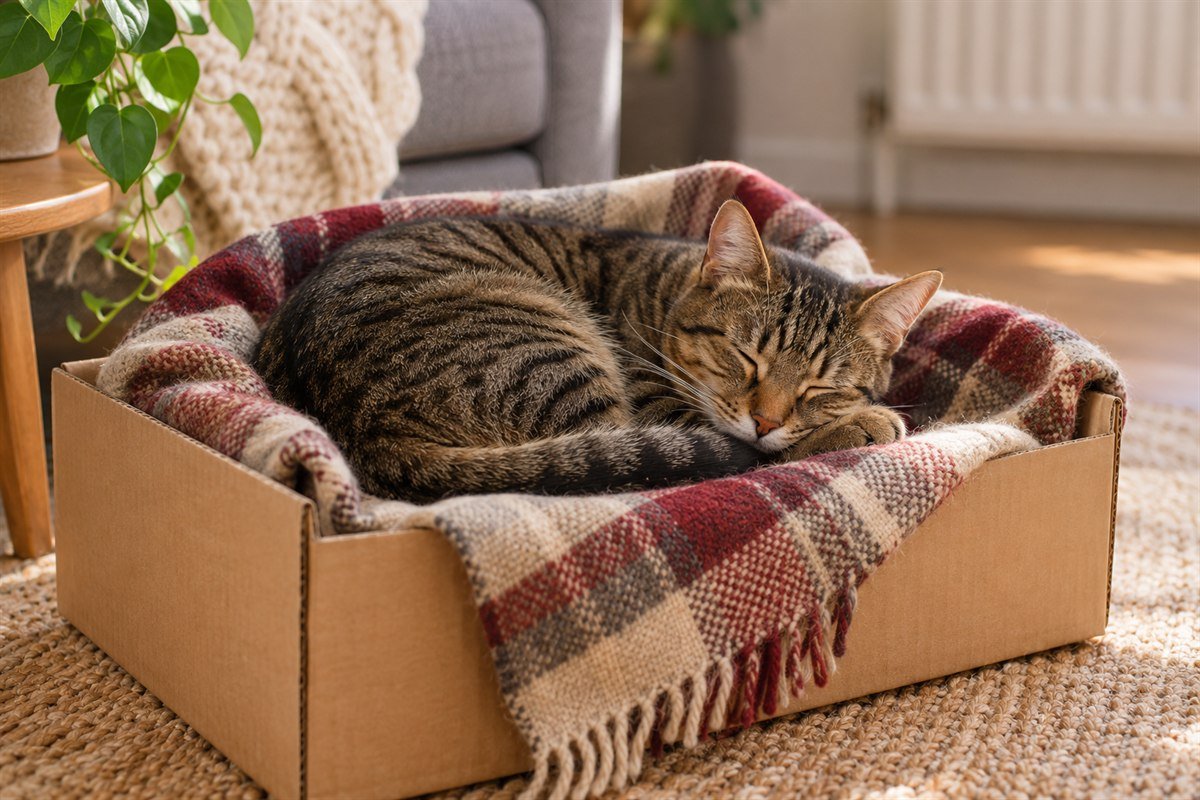
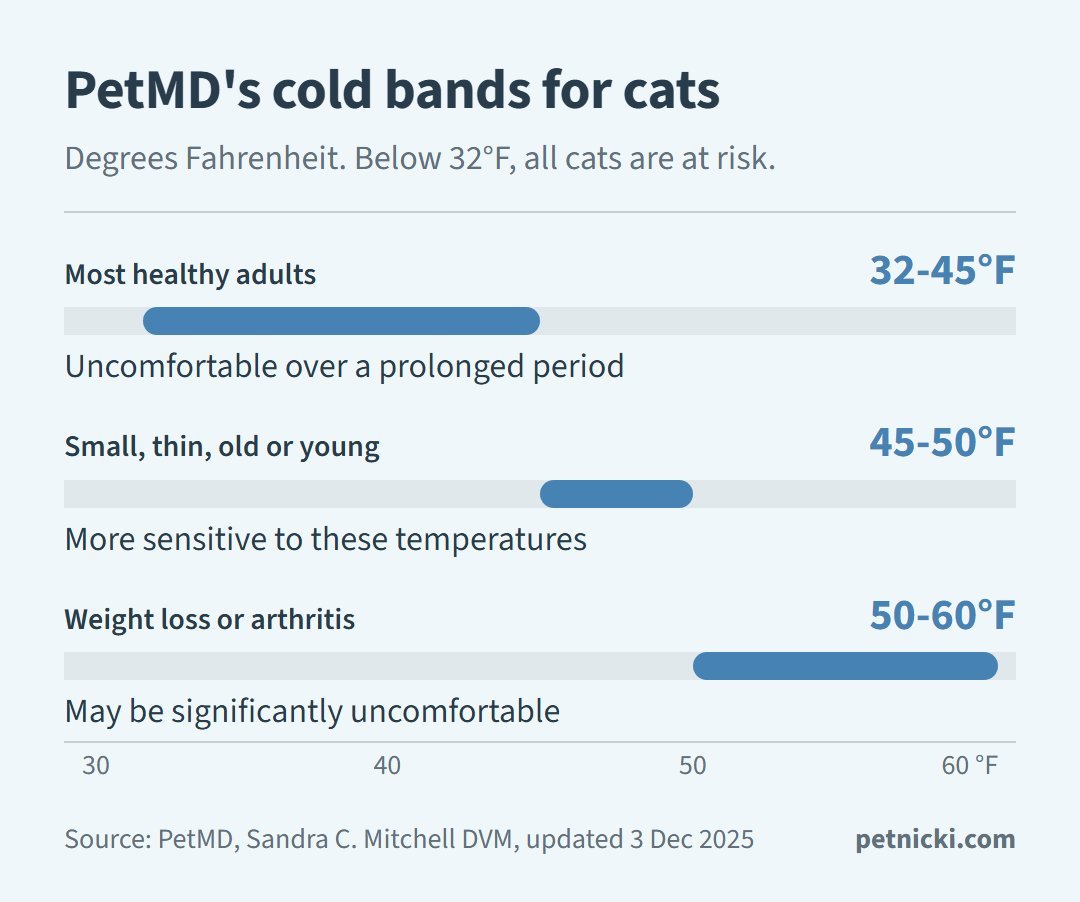
PetMD’s winter guide gives the same caution about electric blankets, which it calls a fire hazard for a curious pet. Cats Protection’s cheaper answer is a cardboard box lined with blankets or old jumpers, placed somewhere quiet, warm, dry and away from draughts, where the cat can reach it whenever it likes.
Signs Your Cat Is Cold
PetMD lists seeking the warmest spot, curling into a tight ball or covering the nose with the tail, shivering, lethargy, decreased appetite, weakness and a cold feel to the touch. Cats Protection adds that a cold cat which can find somewhere cosy and is otherwise behaving normally is nothing to worry about.
The difficulty is that cats hide discomfort. PetMD says they often don’t shiver or meow until they are quite cold, and Cats Protection notes that a severely cold cat may stop shivering. Quiet is not the same as comfortable.
Cats Protection lists these signs of hypothermia, which can also point to other serious illness:
- Shivering that may stop if the cat becomes severely cold
- Cold ears, paws and nose, and pale gums
- Weak, lethargic movements, with a slow heart rate and slow breathing
- Confusion and clumsiness, or collapse
Frostbite shows as a pale, grey or bluish area that hurts when touched, then blisters or ulcers, and in the worst cases blackened skin. Cats Protection says to contact your vet straight away for any of these. While you arrange care, it suggests drying a wet cat with a towel, wrapping it loosely in a blanket, offering lukewarm water, and warming the room gradually. It warns against hot water bottles and electric heat pads, because warming too fast risks burns. This is general information, not a diagnosis, so ring your vet or an emergency clinic if you’re worried.
Outdoor Cats, Strays and Winter Hazards
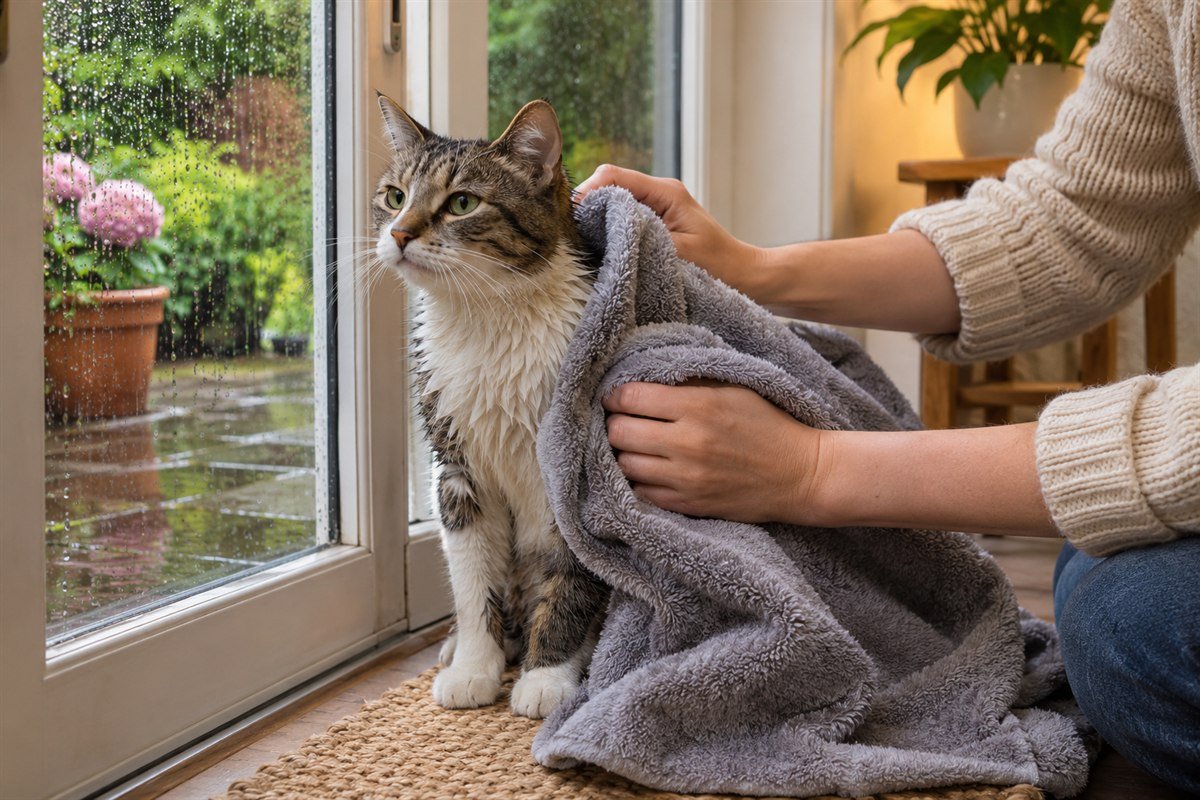
PetMD says to keep indoor-outdoor cats inside once the temperature is below 45°F, and not to let one out even if it asks. Cats Protection takes a gentler line, suggesting free access to the house so a cat can come in when it wants, and keeping cats in at night all year round. If a cat comes in wet from rain or snow and tolerates handling, dry it with a towel, because damp fur feels colder.
The cold isn’t the only winter hazard. PetMD warns that standing water by the road can contain de-icing salt, which is toxic to cats, and that cats sheltering under car bonnets or in garages meet antifreeze, which can cause kidney failure. Cats Protection adds a practical check: look in outbuildings before locking them, and under the bonnet before starting the car, in case a cat has crept in for warmth.
For a stray or community cat, PetMD recommends a warm, dry shelter, extra food and unfrozen water.