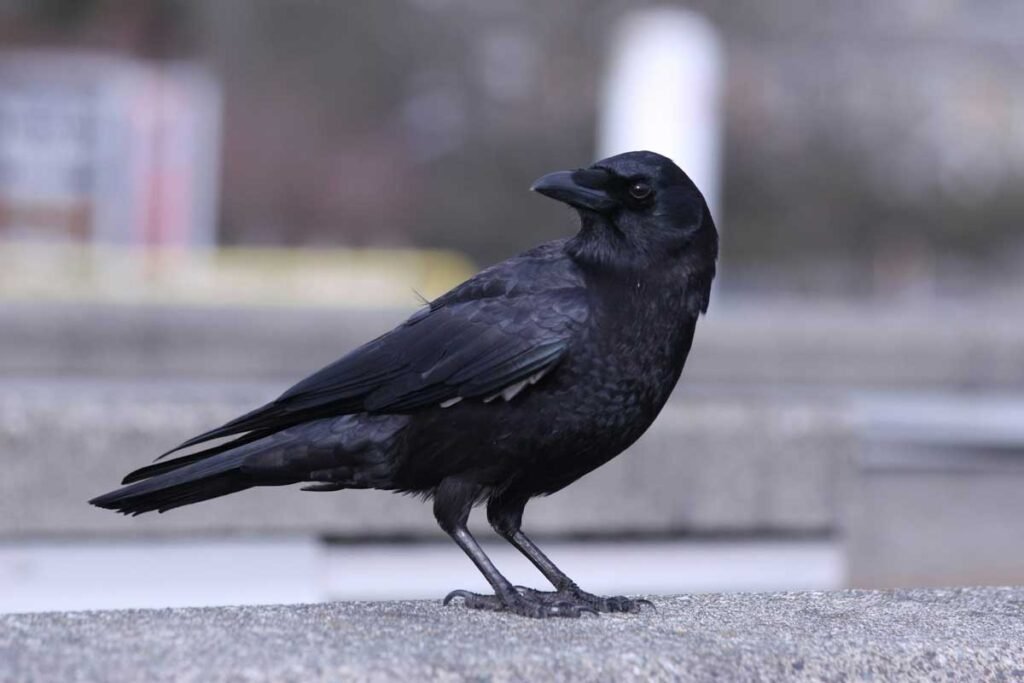

Crows eat almost anything: insects, worms, carrion, grain, fruit, nuts, eggs, nestlings, small mammals, and human food waste in whatever form it turns up. They are omnivores with no strong specialisation, which is why a species that evolved on open woodland edges now thrives in car parks.
Two questions sit behind most searches for this. What do crows eat when left to themselves, and what can you safely put out if you want one to notice you.
The answers differ, and the second has rules.
The Wild Diet
The American crow feeds on invertebrates of all types, carrion, scraps of human food, fruits, nuts such as walnuts and almonds, seeds, eggs, and nestlings. It also hunts actively, taking mice, young rabbits, frogs, and other small animals.
Proportions shift with whatever is going. A field crow in June works insects and grubs, the same bird in October is on waste grain and fallen fruit, coastal birds pry open shellfish and sometimes drop them onto tarmac to crack them, and roadside crows run a carrion route timed to traffic. This is the whole trick of the species: no specialisation to protect, and therefore no bad year that a crow cannot simply eat around by switching to something else.
Crows also cache. Surplus goes into grass, gutters, tree forks, and soil for later, so the bird taking six peanuts is not eating six peanuts.
Winter, Night, and Daylight
Crows feed almost entirely in daylight and eat nothing overnight. They forage from first light, and toward dusk they leave for communal roosts, which is the black river of birds people see crossing the sky in the evening. According to Mass Audubon, crows will travel up to 50 miles to a night roost holding anywhere from 100 to more than 10,000 birds.
Winter tightens the menu. Insects vanish, so the diet leans on waste grain in stubble fields, carrion, cached food, acorns and nuts, and whatever human settlements leave accessible. Cold months are when garden feeding actually helps a crow, and when fatty foods such as suet earn their place.
Do Crows Eat Other Birds and Squirrels?
Eggs and nestlings, yes, and often. Crows raid songbird nests during spring and are a genuine predator of nesting success, which is why small birds mob them so aggressively. Adult birds in flight are a different matter and are rarely taken.
Squirrels sit at the edge of what a crow can manage. An adult grey squirrel is too large and too well armed; a crow that appears to be eating one has almost certainly found roadkill. Nestling squirrels taken from a drey are within range, though this is opportunism instead of a habit.
Crows do harass animals far above their weight. Mobbing hawks and owls in noisy groups is standard corvid behaviour, and a daytime commotion in a tree is often a crow flock announcing a roosting owl to the whole neighbourhood.
What Do Baby Crows Eat?
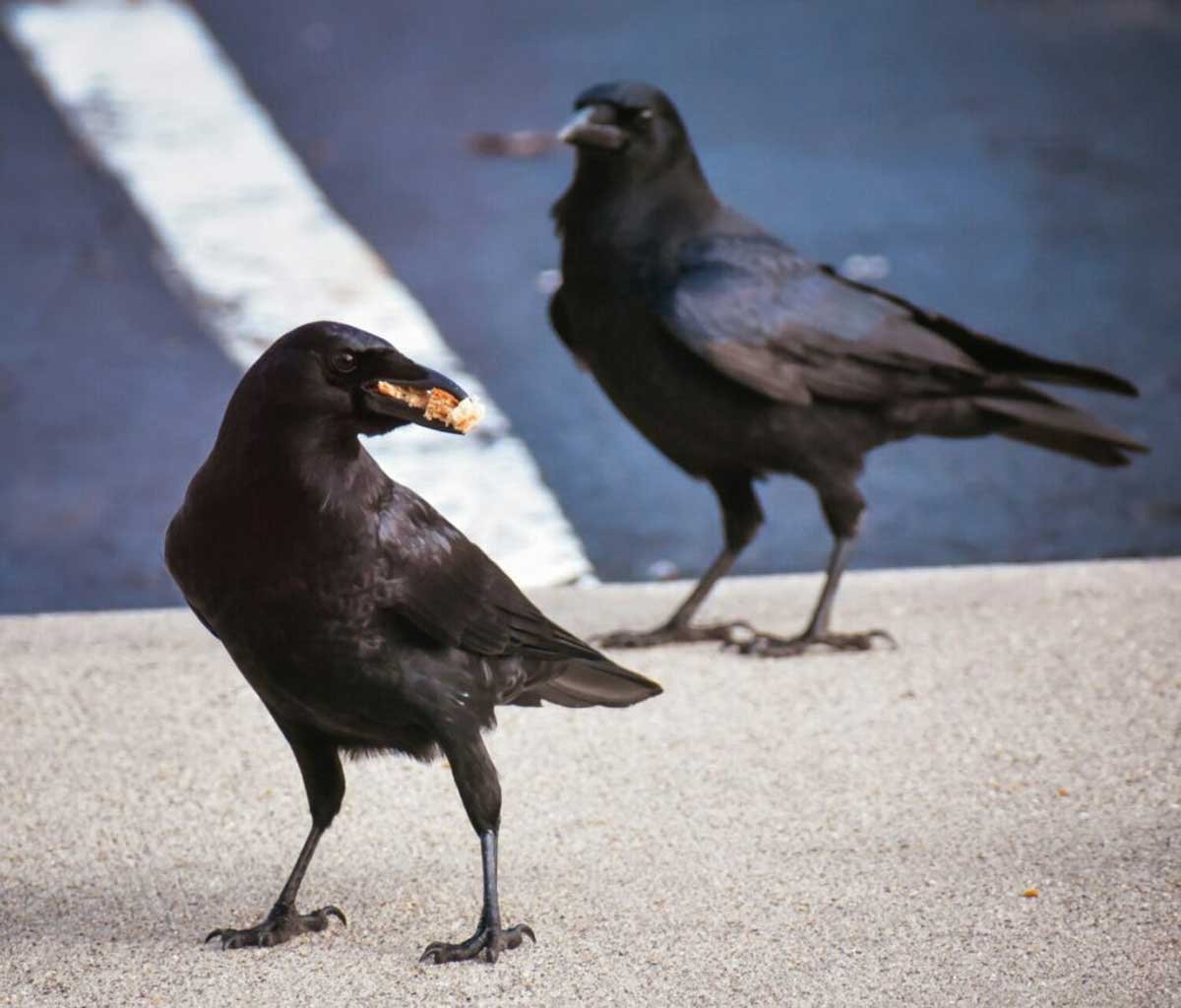
Nestlings eat what the adults eat, delivered as a soft, high-protein slurry of insects, worms, and torn animal matter. There is no seed stage. Both parents feed the brood, and older siblings from previous years frequently help, which is unusual among birds and one of the reasons crow families stay together.
Young crows are fed for four to five weeks in the nest and keep begging for weeks after fledging. A grounded fledgling with short tail feathers, hopping and squawking, is at a normal stage and is being watched by adults nearby. Leave it alone; the parents are better at this than you are.
Feeding Crows: A Routine That Works
Crows take almost anything on offer, and that is the problem. A bird that fills up on easy calories from one garden ends up with a skewed diet, so the goal is supplementing what it already finds instead of replacing it. The question comes up constantly:
“I want to start feeding/befriending crows and want to know what they like to eat the most in your experience! Obviously I only want to feed them whats healthy for them.”
– r/crows, April 2026 (22 upvotes)
A workable routine, in order:
- Check your local rules first. Wildlife feeding ordinances differ by city and county, and some ban it outright.
- Pick one spot and one time. Crows learn schedules fast. A consistent morning drop on the same patch of ground or flat roof does more than a larger quantity scattered at random.
- Offer small portions. Enough to interest a family group, gone within minutes. Leftovers feed rats and annoy neighbours.
- Rotate the food. Unsalted peanuts in shell, dry cat kibble, boiled or scrambled egg, suet in cold weather, chopped fruit, and cooked meat scraps all work. Variety keeps the supplement from becoming a monodiet.
- Step back and stay visible. Retreat well away and let them come down. Crows will not approach while you hover, and being seen consistently is how they learn to recognise you.
- Put out water. Crows dunk dry food before swallowing it, so a shallow dish nearby gets used constantly.
Keep these off the menu entirely: bread, which fills a crow with empty starch; anything salted, since salted peanuts and crisps are a common and avoidable harm; chocolate; onion; and raw meat left sitting, which turns into a public health complaint. Whole dry kibble is fine, though soaking it makes life easier for a bird feeding chicks.
Gifts, Faces, and Long Memories
Crows can remember and identify people based on their appearance. That is the mechanism behind every story of a crow following someone down a street: the bird has filed a face and attached an outcome to it, good or bad, and it holds that association for years.
Gifts are the famous version of this. Crows fed consistently sometimes begin leaving objects at the feeding spot: bottle caps, screws, beads, bits of glass, small bones, the occasional earring. It happens often enough to be documented and infrequently enough that it should be treated as a bonus. Feeding a crow buys you recognition; it does not buy you a gift.
The relationship runs the other way too. Crows that treat a person as a threat scold, dive, and follow, and the reaction can spread through the flock. This is a bird that keeps records, which is a strange and appealing thing to have living on your street.
FAQ: Feeding and Crow Diet
What should you not feed crows?
Bread, salted food of any kind, chocolate, onion, and raw meat left to sit outdoors. Bread displaces real nutrition, salt is genuinely harmful to birds at small doses, and standing raw meat draws rats and complaints.
What do crows eat in the wild?
Insects and worms through spring and summer, waste grain and fruit in autumn, carrion and cached food in winter, plus eggs and nestlings whenever a nest is reachable. No two months look the same.
Will crows eat squirrels?
Adult squirrels, no. They are too large and defend themselves well. Crows do take squirrel roadkill and will raid a drey for nestlings when the chance appears, but a healthy adult squirrel is not crow prey.
What does it mean when crows hang around your house?
Something on the property is feeding them. Food, water, or a good roost tree. Crows return to reliable resources and remember individual properties, so repeat visits point to something on your lot: an accessible bin, a fruit tree, pet food outside, or a neighbour feeding them.
What do crows like as gifts?
Crows bring gifts rather than receive them, and the objects they leave tend to be small, hard, and shiny: caps, screws, beads, glass. If you want to encourage the behaviour, offer food on a clean flat surface where an object left in exchange is visible.
Is it illegal to feed crows?
It depends on where you live. Crows fall under the Migratory Bird Treaty Act in the United States, though hunting rules vary by state, and feeding wildlife is governed separately by city and county ordinance. Check the local code before you start a routine.