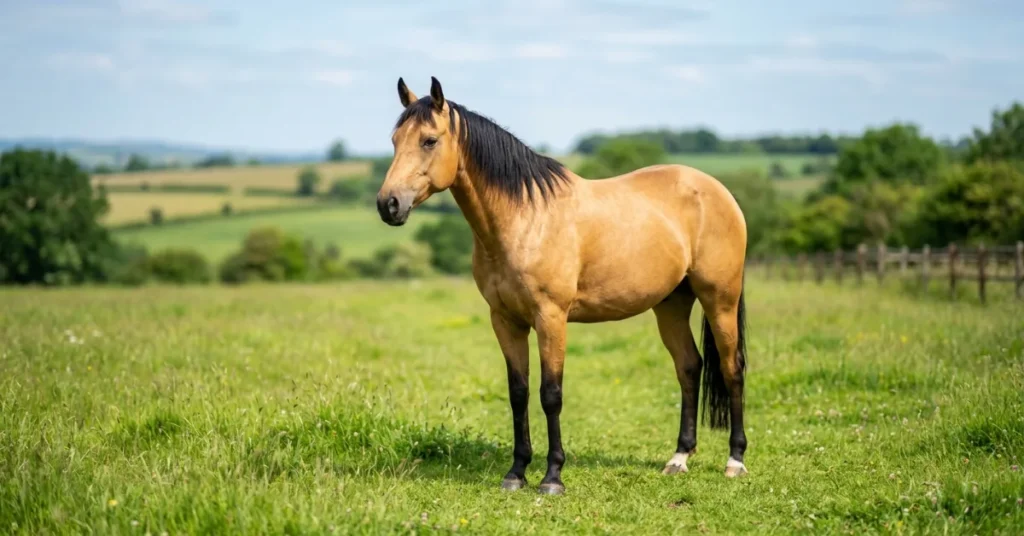

If you’ve ever seen a golden horse with a black mane, black legs, and a dark tail trotting across a field, you already know what a buckskin looks like. Most people just don’t know the name. You’re probably here because you want real, clear information about the buckskin horse. Not just a list of random facts. This article covers the buckskin’s genetics, temperament, care needs, and what makes this color so special across so many breeds.
What is a buckskin horse? A buckskin horse is not a breed. It is a coat color. It appears when a bay horse carries one copy of the cream gene. The result is a tan or golden body with black points on the legs, mane, and tail. The color can range from pale cream to deep golden tan depending on the horse’s base coat.
Where Did the Buckskin Color Come From?
The buckskin color has existed for centuries. Its roots trace back to the Sorraia horse, an ancient Iberian breed. When Spanish conquistadors arrived in the Americas during the 1500s, they brought horses with them, including those carrying the cream gene. These horses mixed with Andalusians, Barbs, and eventually wild Mustangs. That’s how the buckskin spread across North and South America.
The name itself came from the color of buckskin leather. Early American settlers and Native Americans both wore clothing made from deerskin, which had a similar tan shade. The comparison stuck.
The Genetics Behind the Color
This is where it gets interesting. Buckskin is not random. It follows a specific genetic pattern.
A bay horse has a black base coat with the agouti gene, which pushes black pigment to specific points on the legs, mane, and tail. When you add one copy of the cream gene on top of that, the body color dilutes to gold or tan. The black points stay dark. That contrast is what gives buckskins their sharp, clean appearance.
Two things to understand clearly:
- One cream gene = buckskin
- Two cream genes on a bay = perlino (a much lighter, almost white horse)
Buckskins cannot produce the blue eyes sometimes seen in double-dilute horses. That is a direct result of having only one cream gene rather than two.
Buckskin vs Dun: Not the Same Thing
The distinction matters when you name the horse, since half the colour-based horse names people reach for describe a coat the animal does not actually have.
This confusion comes up constantly, even among experienced horse people. A dun horse looks similar but comes from a completely different gene. Duns have primitive markings, including a dorsal stripe running down the back, leg barring, and sometimes a shoulder stripe. Buckskins do not have these markings as a rule.
The cream gene and the dun gene are separate. A horse can technically carry both, but a true buckskin is defined by the cream gene on a bay base, not the dun gene. If you see a golden horse with a clear dorsal stripe, it is likely a dun or a dunskin, not a pure buckskin.
Which Breeds Can Be Buckskin?
Buckskin is not limited to one breed. Any breed that can carry the cream gene can produce a buckskin. Some of the most common include:
- American Quarter Horse
- Morgan
- Tennessee Walking Horse
- Andalusian
- Lusitano
- Peruvian Paso
- Welsh Pony and Cob
- Spanish Mustang
The American Quarter Horse is probably the most common buckskin you’ll see today. Quarter Horses are widely used in Western riding, and the buckskin color is very common within the breed.
If you’re curious about other horses with striking natural appearances, this guide to the coolest animals on earth includes some fascinating equine examples worth exploring.
Temperament and Behavior
Because buckskin is a color and not a breed, temperament varies depending on the actual breed of the horse. A buckskin Quarter Horse will behave differently from a buckskin Andalusian.
That said, there are some general behavior patterns worth knowing for the most common buckskin breeds:
Quarter Horses are calm, responsive, and easy to work with. They are a good fit for beginners and experienced riders alike. They tend to be steady under pressure, which makes them popular in rodeo and ranch work.
Morgans are energetic and intelligent. They respond well to consistent training and form strong bonds with their handlers. They need mental stimulation. Routine boredom can lead to behavioral issues.
Tennessee Walking Horses are known for their smooth gait and gentle nature. They are often recommended for trail riding because of their steady temperament and comfortable movement.
No matter the breed, early socialization matters. A horse handled gently and consistently from a young age tends to be more trusting and easier to manage as an adult. According to Britannica, horses are highly social animals that rely heavily on consistent routine and familiar handlers for their sense of security.
Buckskin Varieties
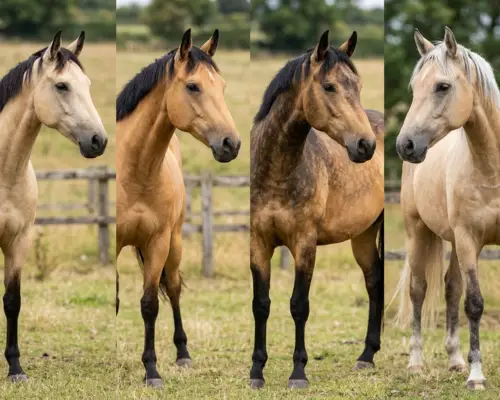
Not all buckskins look the same. The shade of the body coat can vary quite a bit:
Buttermilk buckskin is the lightest version, with a very pale cream or off-white body and sharp black points.
Standard buckskin is the most common, with a golden tan body.
Sooty buckskin has dark, smoky shading across the back and hindquarters. The body looks slightly dirty or shadowed.
Silver buckskin is rare. The silver dapple gene interacts with buckskin coloring, creating a lighter mane and tail with a golden body.
Caring for a Buckskin Horse
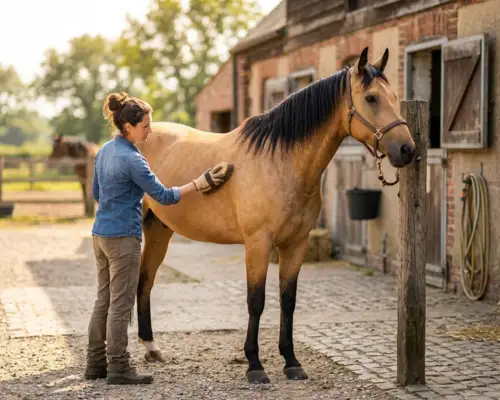
Buckskin horses have the same care needs as any other horse of their breed. Color does not change health requirements. However, there are a few practical things to keep in mind.
Coat care: The golden body coat can look dull if the horse is not groomed regularly. Regular brushing keeps the coat clean and brings out the natural shine. During shedding seasons in spring and fall, daily grooming prevents matting and skin issues.
Sun sensitivity: Light-coated horses can be more sensitive to sunburn, especially on pink-skinned areas around the muzzle or eyes. If your buckskin has unpigmented skin patches, use equine-safe sunscreen during peak sun hours.
Diet: A balanced diet of quality hay, pasture grass, and a mineral supplement suited to your region covers the basics. Most horses need roughly 1.5 to 2 percent of their body weight in forage daily. Always consult your vet before adding grain or supplements, especially for horses prone to weight gain.
Hoof care: Regardless of color, hoof care every 6 to 8 weeks with a farrier is standard. Buckskins with lighter hoof coloring may be more prone to soft or brittle hooves in wet climates.
Veterinary care: Annual vaccinations, dental checks, and parasite management are non-negotiable for any horse. Work with a vet who has equine experience.
The IBHA and Breed Registry
The International Buckskin Horse Association (IBHA) was founded in 1971. It serves as a registry for buckskin, grulla, and dun horses. The IBHA primarily registers stock-type horses and hosts competitions in various Western and English disciplines. Registration is based on color verification, not breed.
Buckskins in Pop Culture
Buckskin horses have appeared in film and television for decades. The TV show Gunsmoke featured a buckskin named Buck, which became so popular that the actor eventually bought the horse personally. Ben Cartwright’s horse in Bonanza was also a buckskin. The animated horse Spirit in the DreamWorks film is a buckskin Mustang.
Dale Evans rode a buckskin American Quarter Horse named Buttermilk. That is also the same name used for the lightest shade of buckskin coat today.
FAQ
Is a buckskin horse a specific breed? No. Buckskin refers to a coat color, not a breed. Any horse breed that carries the cream gene and a bay base coat can be buckskin.
Are buckskin horses rare? No, they are actually quite common. The cream gene is found across many popular breeds, and buckskin is one of the more frequently seen coat colors in North America.
What is the difference between a buckskin and a palomino? Both are produced by the cream gene, but palominos have a chestnut base coat, giving them a yellow-gold body with a light or white mane. Buckskins have a bay base, so their mane, tail, and legs stay black.
Do buckskin horses have any unique health issues? No health issues are tied specifically to the buckskin color. Health depends on breed, management, and individual genetics.
Can a buckskin horse compete in shows? Yes. Buckskins compete in Western, English, trail, dressage, and show jumping disciplines. In some parts of Northern Europe, the color is less favored in traditional English showing, but this is cultural, not a rule.
How long do buckskin horses live? With proper care, most horses live 25 to 30 years. Dale Evans’ buckskin Buttermilk lived to age 30, which is a good example of what good management can achieve.
Wrapping Up
The buckskin horse stands out because of a single genetic difference. One copy of the cream gene on a bay base. That’s it. But the result is a coat that has turned heads for centuries, from Spanish breeding programs to Hollywood westerns.
If you’re considering owning a buckskin, focus on the breed first. The color is beautiful, but the horse’s temperament, health, and purpose depend on what’s underneath that golden coat. Learn the breed, understand the care needs, and you’ll have a horse that is as reliable as it is striking.
For more information on remarkable animals and what makes them unique, explore our collection of fascinating animal guides to broaden your knowledge.