
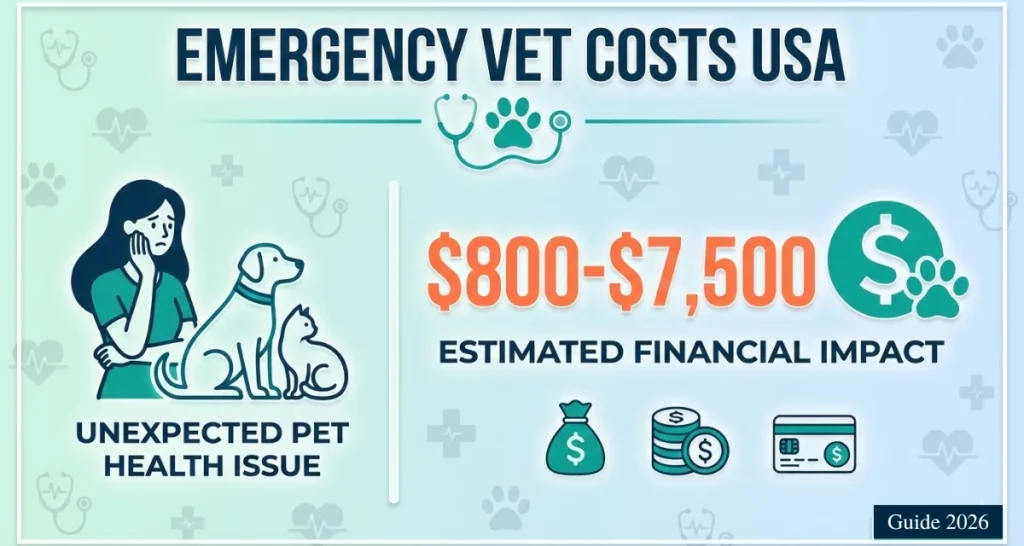

Nobody wants to think about their pet needing emergency care. But when your dog swallows something toxic at midnight or your cat stops eating over the weekend, you’ll face both emotional stress and a serious financial decision. Emergency vet visits cost significantly more than regular checkups, and knowing what to expect can help you prepare. For a worked example at the severe end, see what emergency surgery on a kitten involves.
This guide breaks down actual emergency vet costs across the USA, explains what drives these prices up, and shows you practical ways to manage unexpected veterinary bills without compromising your pet’s health.
What Is an Emergency Vet Visit?
Emergency veterinary care refers to urgent medical treatment for pets experiencing life-threatening conditions or severe injuries that cannot wait for regular clinic hours. This includes situations like difficulty breathing, severe bleeding, suspected poisoning, seizures, bloat in dogs, inability to urinate, trauma from accidents, or sudden collapse. Emergency clinics operate 24/7 and maintain specialized equipment and staff trained for critical care situations.
Average Emergency Vet Costs in the USA
Emergency veterinary care varies widely based on your location, the severity of your pet’s condition, and the treatments needed.
Basic Emergency Visit Fees
- Emergency exam fee: $100–$300
- After-hours surcharge: Additional $50–$150
- Weekend/holiday surcharge: Additional $75–$200
The exam fee alone is 2-3 times higher than a standard wellness visit. This covers the immediate assessment by a veterinarian, but it’s just the starting point.
Common Emergency Scenarios and Costs
| Emergency Condition | Typical Cost Range | What’s Included |
|---|---|---|
| Foreign body ingestion (non-surgical) | $800–$1,500 | Exam, X-rays, induced vomiting, monitoring |
| Foreign body removal (surgery) | $1,500–$5,000 | Exam, imaging, anesthesia, surgery, hospitalization |
| Hit by car (moderate trauma) | $1,000–$3,000 | Exam, X-rays, pain management, possible surgery |
| Severe poisoning | $500–$2,500 | Exam, bloodwork, IV fluids, activated charcoal, monitoring |
| Gastric dilation-volvulus (bloat) | $2,000–$7,500 | Emergency surgery, hospitalization, intensive care |
| Respiratory distress | $500–$3,000 | Exam, oxygen therapy, diagnostics, medications |
| Severe allergic reaction | $300–$1,000 | Exam, antihistamines, steroids, monitoring |
These estimates include diagnostic tests and initial treatment but may not cover extended hospitalization or specialist referrals.
What Drives Emergency Vet Costs Higher?
Several factors explain why emergency care costs so much more than routine visits.
Staffing and Operating Expenses
Emergency clinics must maintain fully staffed facilities 24/7, including veterinarians, veterinary technicians, and support staff. Night shifts, weekend coverage, and holiday staffing require premium pay rates that get passed to clients.
Advanced Equipment and Facilities
Emergency hospitals invest in specialized diagnostic tools and treatment equipment:
- Digital X-ray and ultrasound machines
- In-house laboratory for immediate bloodwork results
- Oxygen therapy and ventilator support
- Surgical suites ready for immediate use
- Intensive care units with monitoring equipment
Diagnostic Testing Costs
Emergency situations require immediate answers. Common diagnostics add up quickly:
- Blood chemistry panel: $150–$300
- Complete blood count (CBC): $80–$150
- Urinalysis: $50–$100
- X-rays (2-3 views): $200–$400
- Ultrasound: $300–$600
- CT scan: $1,000–$2,000
Treatment and Hospitalization
The actual medical intervention often represents the largest expense:
- IV fluids and catheter placement: $50–$200
- Pain medications: $30–$150
- Antibiotics: $40–$200
- Overnight hospitalization: $200–$500 per night
- Intensive care monitoring: $500–$1,500 per day
- Blood transfusions: $500–$1,500 per unit
Regional Cost Variations Across the USA
Where you live significantly impacts emergency vet costs. Urban areas and coastal regions typically charge more than rural or Midwestern locations.
High-cost regions (major cities in California, New York, Massachusetts, Washington):
- Emergency exam: $200–$350
- Average emergency visit total: $1,500–$3,000
Moderate-cost regions (suburban areas, mid-sized cities):
- Emergency exam: $150–$250
- Average emergency visit total: $1,000–$2,000
Lower-cost regions (rural areas, smaller towns in the South and Midwest):
- Emergency exam: $100–$200
- Average emergency visit total: $800–$1,500
These are general ranges. Individual clinic pricing varies based on their overhead costs and competitive market positioning.
How to Prepare for Emergency Vet Costs
You can’t predict when emergencies will happen, but you can prepare financially.
Pet Insurance
Pet insurance can cover 70-90% of emergency vet bills after you meet your deductible. Most policies cover accidents and illnesses that require emergency care.
A typical policy costs $30-$70 per month for dogs and $15-$40 for cats. Given that a single emergency can easily exceed $2,000, insurance often pays for itself with one major incident. Learn more about dog insurance costs and coverage options.
Emergency Savings Fund
Financial experts recommend saving $1,000–$3,000 specifically for pet emergencies. Set aside a small amount monthly in a dedicated savings account that you only touch for veterinary emergencies.
Payment Plans and Financing
Many emergency clinics accept:
- CareCredit is a medical credit card that offers deferred interest financing options, helping pet owners manage emergency vet visit costs more affordably.
- Scratchpay: Pet-specific payment plans
- Veterinary payment plans: Some clinics offer in-house financing
Ask about payment options when you arrive. Most emergency vets require at least a deposit upfront, typically 50% of the estimated costs.
Preventive Care Reduces Emergencies
Regular wellness visits and preventive care can help you avoid some emergencies. Keeping your pet current on vaccinations prevents diseases that might otherwise require emergency treatment. Understanding veterinary diets can also help prevent digestive emergencies and other health issues.
When to Go to the Emergency Vet
Some situations clearly require immediate care, while others can wait until morning.
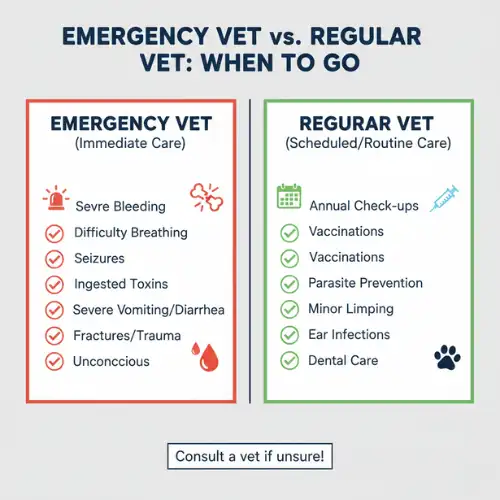
Go to the emergency vet immediately for:
- Difficulty breathing or choking
- Unconsciousness or unresponsiveness
- Severe bleeding that won’t stop
- Suspected poisoning or toxin ingestion
- Seizures (especially multiple or lasting over 5 minutes)
- Eye injuries
- Inability to urinate or defecate
- Bloated, hard abdomen (especially in large dogs)
- Heatstroke
- Severe pain or crying
- Trauma from being hit by a car
- Snake bites
Call your regular vet or an advice line for:
- Vomiting or diarrhea (mild, no blood)
- Limping but still bearing weight
- Ear infections
- Skin irritations
- Loss of appetite for less than 24 hours
When in doubt, call the emergency clinic. They can advise whether your pet needs immediate care or can safely wait.
How Emergency Vets Determine Treatment Costs
Emergency veterinarians face a difficult balance. They must provide life-saving care while being transparent about costs that many families find difficult to afford.
Most emergency clinics provide written estimates before beginning treatment. These estimates typically show:
- Low-end scenario (minimal complications)
- High-end scenario (if complications arise)
- Most likely outcome (middle range)
You’ll sign authorization forms acknowledging these estimates. Ask questions about what’s essential versus optional, and discuss your budget constraints honestly. Veterinarians can sometimes adjust treatment plans to fit financial limitations while still providing adequate care.
Alternatives to Traditional Emergency Clinics
Urgent Care Veterinary Clinics
Some areas now have urgent care clinics that bridge the gap between regular vets and full emergency hospitals. They handle moderate urgencies at lower costs than 24-hour emergency facilities but may have limited hours or capabilities.
Veterinary Schools and Teaching Hospitals
University veterinary teaching hospitals often provide emergency care at reduced rates. Students perform care under experienced faculty supervision. Treatment may take longer, but the quality is typically excellent. Find programs through the American Veterinary Medical Association.
Low-Cost Emergency Options
Some cities have nonprofit veterinary clinics that offer emergency care on a sliding fee scale based on income. Organizations like the Humane Society or local animal welfare groups may maintain lists of financial assistance programs.

People Also Ask
How much does an emergency vet visit cost without insurance?
An emergency vet visit without insurance typically costs $800–$1,500 for moderate issues, including the exam fee, basic diagnostics, and initial treatment. Severe conditions requiring surgery or intensive care can exceed $3,000–$7,500.
What happens if you can’t afford emergency vet care?
If you can’t afford emergency care, discuss payment plans immediately with the clinic, apply for CareCredit or similar financing, contact local animal welfare organizations for financial assistance programs, or ask if the vet can provide essential stabilization within your budget.
Is emergency vet more expensive than regular vet?
Yes, emergency vets cost 2-4 times more than regular veterinary visits due to 24/7 staffing, immediate diagnostic capabilities, specialized equipment, and the critical nature of conditions requiring urgent care.
Does pet insurance cover emergency vet visits?
Most pet insurance policies cover emergency vet visits for accidents and illnesses after you meet your deductible, typically reimbursing 70-90% of eligible costs. Pre-existing conditions are usually excluded.
How much does it cost to hospitalize a dog overnight?
Overnight hospitalization for a dog costs $200–$500 per night for basic monitoring and care. Intensive care unit hospitalization with continuous monitoring ranges from $500–$1,500 per day.
Final Thoughts
Emergency vet costs in the USA reflect the reality of providing critical care around the clock with specialized equipment and trained staff. While the prices can feel shocking in a crisis, understanding typical costs helps you prepare financially before emergencies happen.
The best approach combines prevention through regular wellness care, financial preparation through insurance or savings, and knowing when your pet truly needs emergency intervention versus routine care.
Nobody plans for their pet to get sick or injured at 2 AM on a Sunday. But having a financial plan in place means you can focus on your pet’s recovery instead of panicking about the bill. Explore pet insurance options, start an emergency fund, and research emergency clinics in your area now—before you need them.