

Introduction
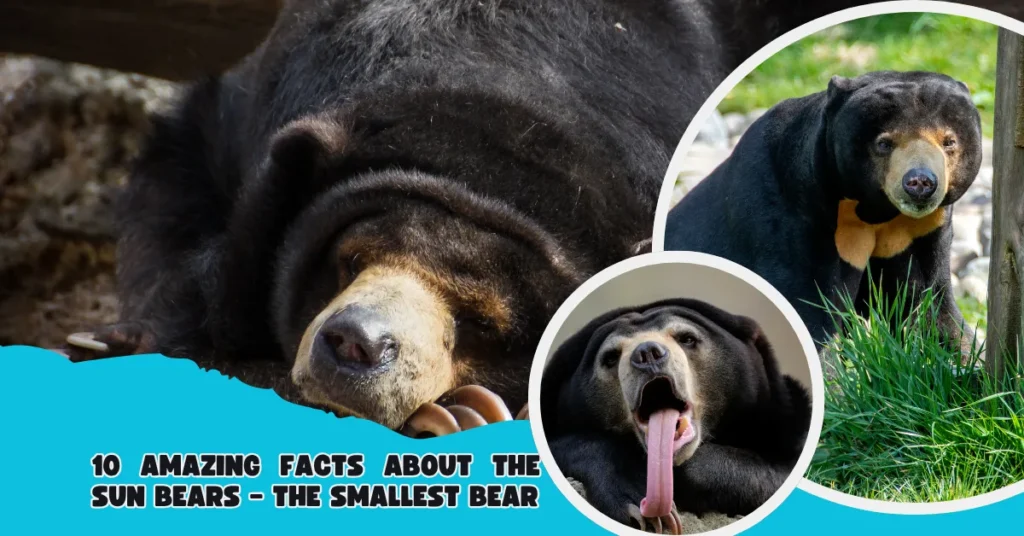
The sun bear (Helarctos malayanus) is a fascinating yet little-known animal found in the dense tropical forests of Southeast Asia. Known as the smallest bear species in the world, the sun bear has unique features that make it different from all other bears. Its glossy black coat, curved claws, and distinctive golden or orange chest patch give it a mysterious yet charming appearance.
Sun bears are also called honey bears because of their extraordinary love for honey. With their unusually long tongue—reaching up to 25 centimeters—they can easily extract honey and insects from tree bark. Despite their small size, these bears are powerful climbers, using their claws and strong limbs to scale tall trees in search of food.
Unfortunately, sun bears are among the most vulnerable bear species, facing severe threats from habitat destruction, hunting, and the illegal pet trade. In this article, we will cover everything about the sun bear—its habitat, diet, lifestyle, behavior, and conservation efforts—so you can truly understand why this species deserves our protection.
10 Amazing Facts
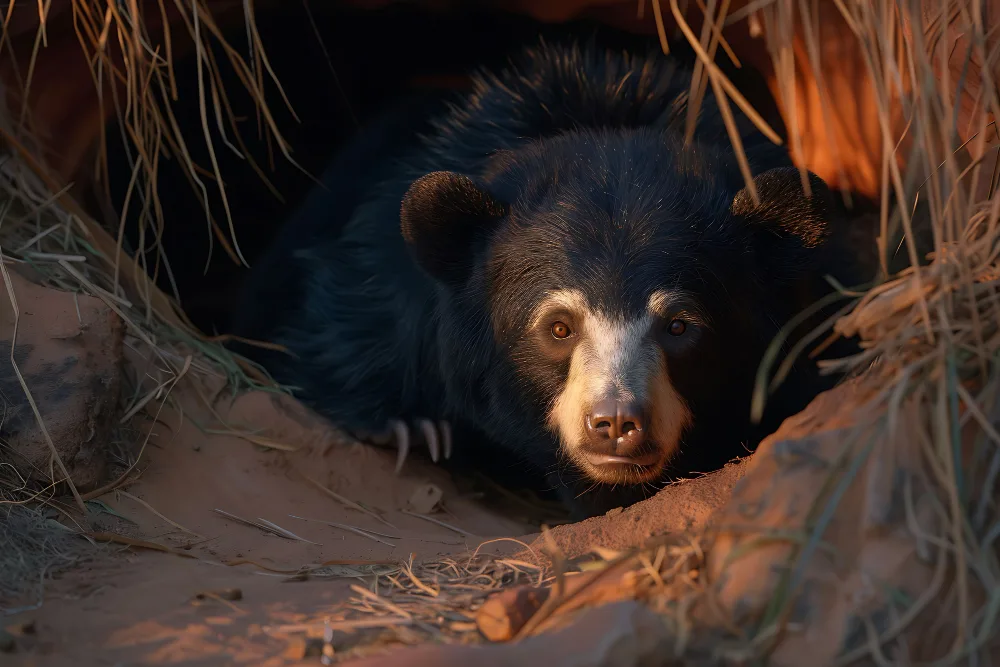
The sun bear is one of the eight recognized bear species worldwide and is considered the smallest. Its scientific name, Helarctos malayanus, comes from Greek and Latin roots meaning little bear from Malaya.
1. The Smallest Bear in the World
The Sun Bear is the tiniest among all bear species. It usually grows only 120–150 cm long and weighs around 25–65 kg, much smaller than polar bears or grizzlies.
2. Nicknamed the “Honey Bear”
Sun Bears love honey more than any other food, which is why they are often called “honey bears.” Their long tongues (up to 25 cm) help them reach deep into beehives.
3. Found in Southeast Asia
They are native to the tropical rainforests of Southeast Asia, including Malaysia, Indonesia, Thailand, and Myanmar.
4. A Unique Golden Chest Patch
Every Sun Bear has a crescent-shaped golden or orange patch on its chest, which looks like the rising sun. This is how they got their name.
5. Excellent Tree Climbers
Despite their small size, Sun Bears are great climbers. They can climb tall trees to find fruits, honey, and even to sleep safely away from predators.
6. Important for the Ecosystem
Sun Bears help the forest by spreading seeds through their droppings and by keeping insect populations under control.
7. A Noisy and Aggressive Bear
Don’t be deceived by their size—they can be very aggressive when threatened. They also make loud sounds like barks, roars, and huffs.
8. Threatened by Deforestation
Unfortunately, Sun Bears are losing their homes because of deforestation and illegal hunting. They are now listed as Vulnerable on the IUCN Red List.
9. Short but Strong Claws
Their curved claws are perfect for digging into trees and termite mounds. These claws also make them dangerous if provoked.
10. Mostly Nocturnal
Sun Bears are usually active at night, searching for fruits, insects, and small animals, which makes spotting them in the wild very rare. more details for Sun_bear
Physical Characteristics
- Size: 120–150 cm long, 70 cm tall at the shoulder
- Weight: 25–65 kg (males slightly larger than females)
- Fur: Short, sleek, and black, helping them stay cool in tropical heat
- Chest Patch: U- or crescent-shaped orange/golden mark that resembles the rising sun
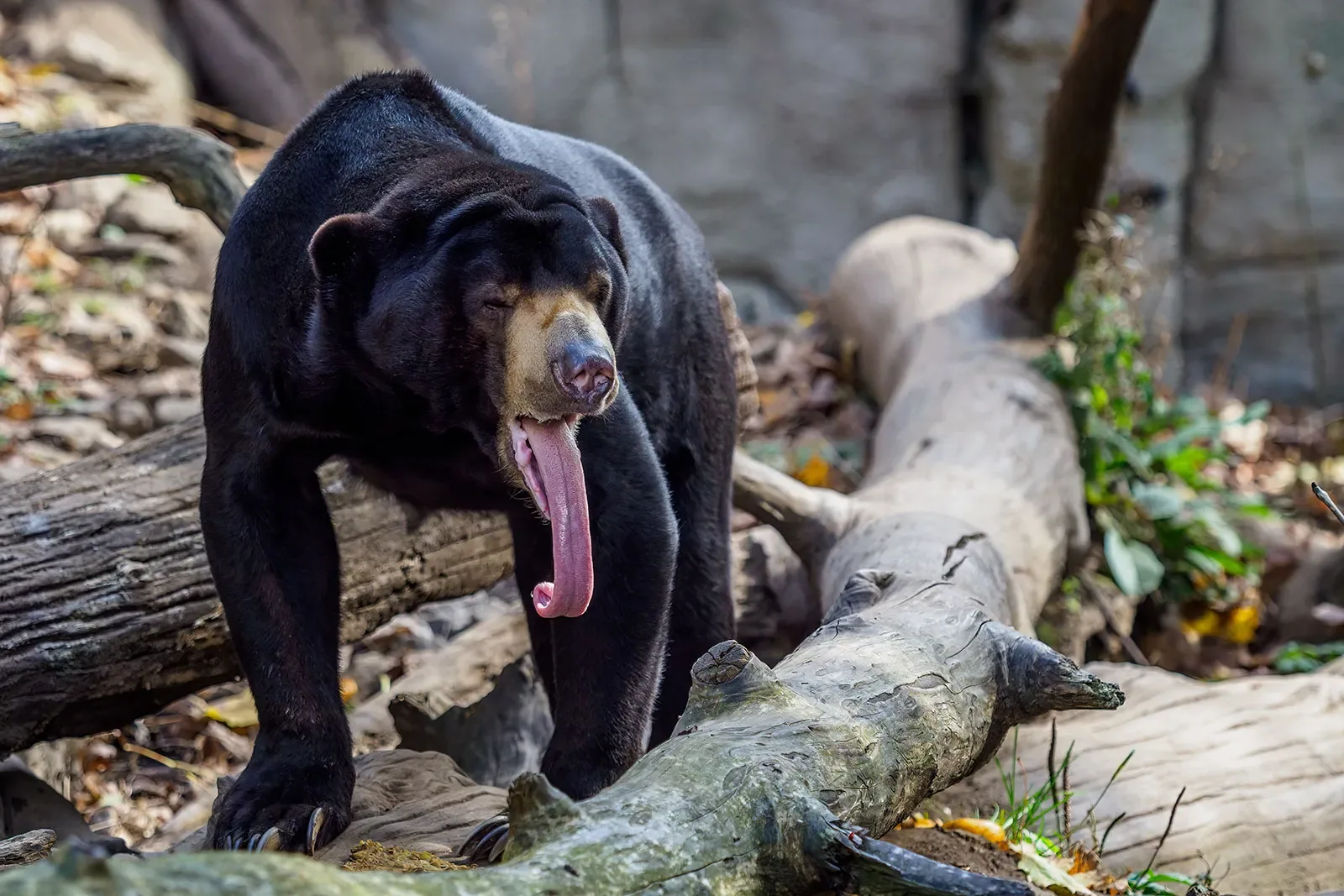
- Tongue: 20–25 cm long—longest tongue among bears
- Claws: Long, sharp, and curved for climbing trees and tearing bark
The sun bear’s appearance may seem cute, but its powerful jaws and sharp teeth make it a formidable animal when threatened.
Sun Bear Habitat
Sun bears thrive in lowland tropical rainforests across Southeast Asia, though their range has significantly decreased in recent decades. More idea panda bear names
Countries Where Sun Bears Live:
- Malaysia
- Indonesia (Sumatra & Borneo)
- Thailand
- Cambodia
- Vietnam
- Myanmar
- Laos
They prefer dense forests that provide both cover and access to fruits, insects, and honey. Sun bears are excellent climbers, often found resting in tree nests or searching for food high above the forest floor.
Unfortunately, large-scale deforestation, particularly for palm oil plantations, has caused massive habitat loss for these bears.
What Do Sun Bears Eat?
Sun bears are omnivores, meaning they eat a wide variety of foods. Their diet plays an important role in maintaining forest health by dispersing seeds and controlling insect populations.
Diet of Sun Bears:
- Fruits: figs, bananas, berries, and seasonal forest fruits
- Honey: their favorite treat, giving them the name “honey bear”
- Insects: ants, termites, beetles, larvae
- Small animals: birds, rodents, lizards
- Eggs: bird and reptile eggs
- Plant material: shoots, roots, and some flowers
Their strong teeth can break open hard nuts and coconuts, while their long tongue allows them to lick up honey and insects hidden inside tree trunks.
Interesting Facts About Sun Bears
- Smallest member of the bear family.
- Have the longest tongue among bears.
- Can climb tall trees with ease.
- Mostly nocturnal, active at night.
- Solitary in nature—unlike social bears like brown bears.
- Can stand upright like humans.
- Known to be excellent swimmers.
- Called “dog bear” because of their short snout and rounded face.
- Female sun bears are highly protective mothers.
- Play a crucial role in maintaining tropical forest balance.
Sun Bear Behavior & Lifestyle
- Solitary Animals: Except during mating season or when a mother raises her cubs.
- Climbing Ability: Spend much of their time in trees, building nests similar to orangutans.
- Reproduction: Females give birth to 1–2 cubs after a gestation period of 95–100 days. Cubs stay with the mother for about two years.
- Activity: Mostly nocturnal but sometimes active in the day.
- Lifespan: 20–25 years in the wild, up to 30 years in captivity.
Threats to Sun Bears
The sun bear population has declined sharply due to:
- Deforestation: Logging and palm oil plantations reduce natural habitat.
- Poaching: Hunted for meat, bile, and paws (used in traditional medicines and delicacies).
- Illegal Pet Trade: Cubs captured and sold as exotic pets.
- Climate Change: Affecting fruiting cycles in forests, reducing food availability.
Conservation Status
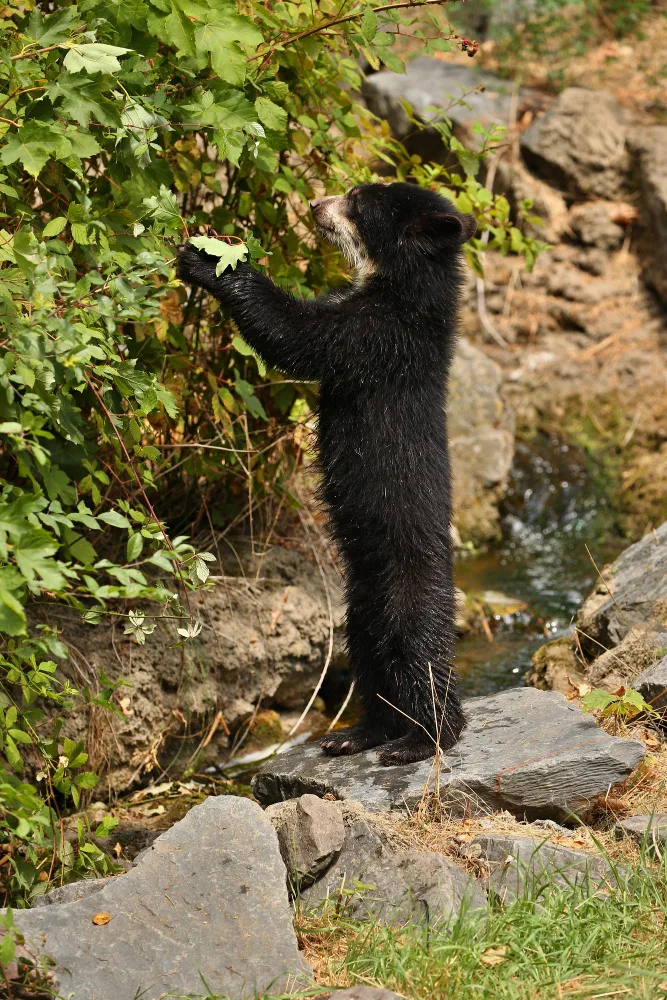
- IUCN Red List: Vulnerable
- Population Trend: Decreasing
- Protected under CITES Appendix I (international trade ban)
Conservation Efforts for Sun Bears
Several organizations are working to protect sun bears:
- Bornean Sun Bear Conservation Centre (BSBCC): Rescues and rehabilitates sun bears in Malaysia.
- World Wildlife Fund (WWF): Works on habitat protection and awareness campaigns.
- Local laws: Hunting bans and wildlife protection acts in Southeast Asian countries.
To save sun bears, it is crucial to reduce deforestation, stop illegal trade, and spread awareness.
Difference Between Sun Bear and Other Bears
| Feature | Sun Bear | Brown Bear | Panda Bear | American Black Bear |
|---|---|---|---|---|
| Size | Smallest (25–65 kg) | Largest (up to 600 kg) | Medium (70–120 kg) | Medium (90–270 kg) |
| Habitat | Tropical forests (Asia) | Europe, Asia, North America | China | North America |
| Diet | Fruits, honey, insects | Omnivorous | Bamboo | Omnivorous |
| Special Feature | Chest patch, long tongue | Massive size | Black & white coat | Strong climber |
Extended FAQs About Sun Bears
Q1: Why are they called sun bears?
They are named for the golden crescent patch on their chest, which resembles the rising sun.
Q2: Are sun bears dangerous?
Yes. Although they are shy, they can be very aggressive when threatened. Their sharp claws and strong jaws make them capable of inflicting serious injury.
Q3: Do sun bears hibernate?
No. Unlike brown or black bears, sun bears live in tropical climates where food is available year-round, so they do not hibernate.
Q4: How long do sun bears live?
20–25 years in the wild and up to 30 years in captivity.
Q5: What makes sun bears unique?
Their small size, long tongue, and distinctive chest patch set them apart from other bear species.
Q6: Where can I see sun bears in the wild?
In the forests of Malaysia, Borneo, Sumatra, and Thailand, though sightings are rare due to their shy nature.
Q7: Why are sun bears endangered?
Mainly due to habitat destruction, poaching, and illegal trade.
Q8: Do sun bears live in groups?
No, they are solitary animals except during mating or when a mother raises her cubs.
Q9: Can sun bears be kept as pets?
No. They are wild animals, dangerous, and illegal to own as pets in most countries.
Q10: What role do sun bears play in the ecosystem?
They disperse seeds through their diet and control insect populations, making them vital for forest balance.
Conclusion
The sun bear may be the smallest bear in the world, but its role in the ecosystem is huge. From spreading seeds to controlling insect populations, this fascinating species helps maintain the delicate balance of tropical forests. Sadly, human activities like deforestation, hunting, and illegal trade have pushed it closer to extinction.
If we want future generations to see the sun bear in the wild, urgent conservation measures are needed—protecting forests, banning illegal trade, and supporting organizations that rescue and rehabilitate these unique animals.